


Vasco Barata — Les Apaches
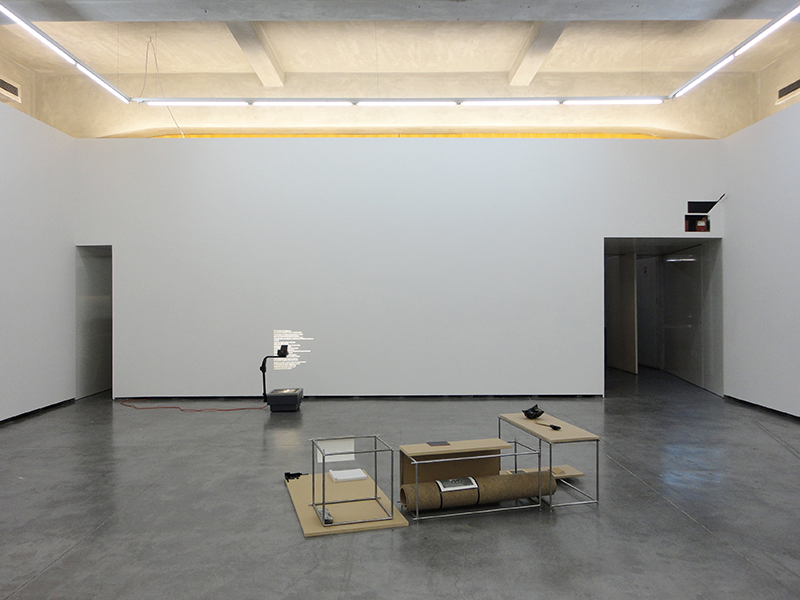
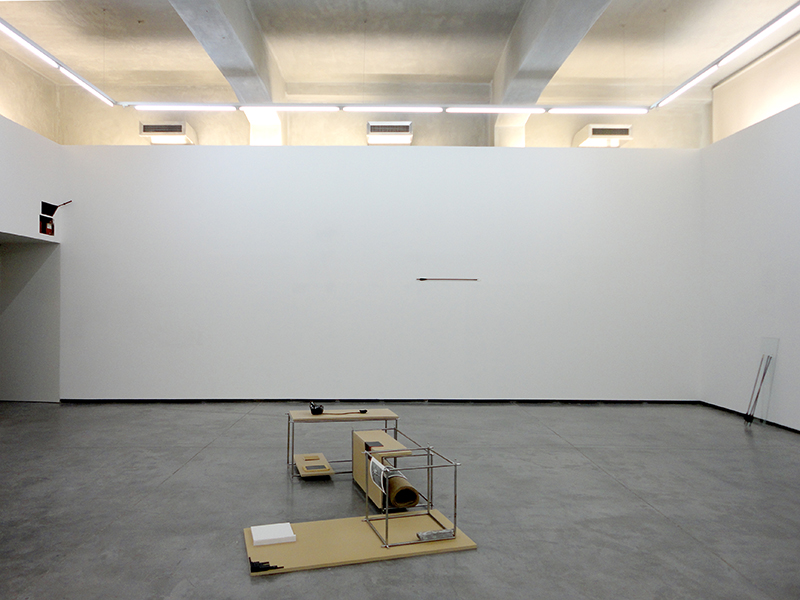
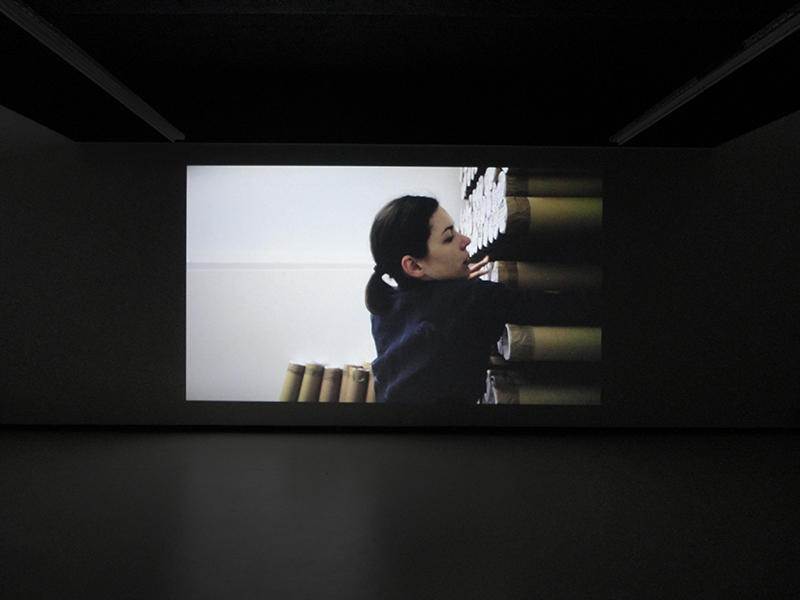
The aesthetics of violence is a delicate matter. To begin with, the boundary between ideas concerning the aesthetics of violence and the aestheticization of violence is a delicate one. Despite the simplicity of this line, it separates two regimes that are absolutely distinct in terms of their use of visual signs. In a more or less contingent way, and with practical aims, the former creates a series of codes that represent or project belligerent identities. Examples of this stance are abundant and broadly disseminated in our everyday lives, from the graffiti tags that define areas of criminal influence in all large cities around the world, via the dress codes of rival gangs, to such phenomena as clusters of tattoos (which, like a subterranean language, establish intra- and inter-group hierarchies), the pimping of cars[1], choreographic routines enacted at micaretas de feira[2] in Brazil, or even the slang that can be heard in the lyrics of the funk, crunk or snap music[3] on any mainstream radio station around the world. For its part, the second regime mentioned above involves a process of glorifying violence through which it is transformed into a pure spectacle whose aims may be simply to entertain, as in cinema, essentially economic, as in some areas of sport, or openly ideological, as in most extremist propaganda. In a certain sense, although they share the public space of the city, what is secret, concealed or unexpected in the aesthetics of violence is open, avowed or choreographed in the aestheticization of violence. Like two poles in tension, these two trends mark out the boundaries of a territory in which a series of determinant phenomena concerning the construction and expression of community-related meanings is enacted. The exhibition now being staged by Vasco Barata deals with this same tension in the form of an elliptical structure in which suggestion and ambiguity are more than merely triggers for the production of meaning.
Like most of the organised manifestations of violence mentioned above, this exhibition also has its own reference points and original mythology. Les Apaches, the title of the artist’s first collaboration with Appleton Square, was the name given to a particular group of delinquents and criminals who terrorised the streets of Paris in the late nineteenth and early twentieth centuries. A product of the growing social tensions brought about by the massive expansion of large cities, Les Apaches were so named because of the supposed similarities between the astuteness and brutality of their concerted attacks and the image that the French population had of the natives of the New World. Although they operated underground and on the margins of the law, Les Apaches were subjected to an unexpected degree of attention by an increasingly sensationalist press and by a considerable number of intellectuals of the period. For the press, as for popular folklore, these groups were the standard bearers not only of an exotic image of danger, aggression and survival but also of an irresistible expression of group identity and, above all, a visceral notion of freedom. While stories of their exploits were instrumental in creating this image, no less important was the careful construction of an aesthetic identity involving a series of rules and procedures that went beyond any notion of style: a preference for wearing tight-ankled trousers, hats and striped shirts; a love of colourful sashes and an obsession with polished shoes; carefully devised attack strategies evident in the conception of ritualised dances; the design of weapons and techniques for subduing victims; and a predilection for anything that favoured a bohemian lifestyle.
Les Apaches were at once a finished product of the Belle Époche and its worst nightmare. Curiously, or perhaps not, what particularly interested the group of intellectuals mentioned above was not the unusual sophistication of the Apache apparatus but the fact that it was completely devoted to shaking up the flourishing structures of Parisian bourgeoisie life. As Walter Benjamin noted[4], Charles Baudelaire’s relationship with this group was fed by the poet’s fascination with marginal characters and the way in which they embodied what was most radical about the modern spirit: its absolute disdain for the moralizing, rule-bound and doctrinaire conscience of the middle classes. For Baudelaire, the delinquent was the first of the revolutionaries, the furtive hero assailed by the inalienable impulse to shatter the image of unity, truth and progress that positivism served up to the masses in homoeopathic doses. Beyond ensuring his immediate survival or simply demanding the right to luxury, the delinquent’s true mission was to tear up the social contract and inscribe the formula of his own dissolution in the bourgeois cultural fabric. Violence was not just his method; violence was also his content.
On the cultural and political plane, the history of this peculiar kind of violence has a name: the avant-garde. The term has a military origin denoting the brutal confrontation between two opposing sides, the place of their mutual dissolution. The name avant-garde prevailed and made sense as long as this confrontation was based on a perfectly delineated ideological opposition. It is not by chance that the second reference point that runs through this exhibition should be the group that, under the name Indiani Metropolitani, symbolised one of the last waves of the insurgent energy of May 1968. Having enjoyed its period of greatest social influence between 1976 and 1977, the group was considered to be the creative faction of the hard left and anarchist movements that abounded in Italy at the time. Its members took part in public actions that involved wearing native American regalia, painting their faces and carrying totem poles. Setting aside the primitivist reference, the use of the aggregative power of the totem pole in the framework of a western society that was struggling with the symptoms of its intrinsic decay greatly exceeded all expected boundaries in the area of symbolic revindication. Ten years later, the matter was definitively settled and the political geography in which we move was left devoid not only of factions, confrontation and avant-gardes but also, in a certain sense, of violence. Today’s violence, they tell us, is ‘de-ideologised’. It is choreographed as a gang attack and aestheticised in successive close-ups; it is a symptom of a diffuse unease that cannot be oriented, interpreted or directed. It is also paradoxical because it measures the urgency of the need to open wounds in the current absence of a defined target.
The exhibition Les Apaches is the work of an artist who came of age in the aftermath of the disintegration of the grand ideological narratives. It is no coincidence that he has welcomed other creators who share this condition to construct this experience. As has been seen, the notion of the group is essential to this exercise. Particularly when the exercise involves drawing out paths in a field mined by the urgent need to reactivate and rebuild the community-based meaning that seems to have been cast permanently adrift by ideological collapse. Nevertheless, in the framework of the simulacrum that political action has become, and in view of the fact that it has been substantially emptied out, this reaction involves an approach that is capable of short-circuiting all rhetorical flows. Neither surprise nor numbness – ambiguity, imagination and alienation creating a field that is open to experiences of the senses, the place where the poetic stirs itself, the gap where subjectivity persists. On the plane of suggestion, not a pamphleteer’s resistance but a bio-political induction. And finally beauty, making use of violence… Let us therefore consider a building in ruins. In the doorway, a misshapen stone. On the inside, a fallen chandelier.
[1] Altering the mechanical characteristics or shape of a car with the aim of enhancing its performance or appearance.
[2] Off-season celebrations similar to Carnival that take place in Brazil and feature a large truck carrying loudspeakers. To be allowed to follow the truck, it is necessary to buy admittance from the organizing group.
[3] Sub-genres of hip-hop known for the aggressiveness and misogyny of the lyrics.
[4] Cf. Walter Benjamin, The Writer of Modern Life: Essays on Charles Baudelaire, Harvard University Press, Cambridge MA, 2006.

HCI / Colecção Maria e Armando Cabral /  /
/  /
/ 