MATERIALS LAB. A SPACE DEFERRED
David Barro
Fernanda Fragateiro gives documentation a poetic dimension in way which is dense, yet paradoxically light in its presentation. The fragility of many of her works is extrapolated here to the concept, to a body of work where the relational becomes fundamental. This is because Materials Lab is a kind of anti-monument, an open or uncovered question that enables various derivations of thought that shape new ways of understanding her works and, in this sense, the world. To do this, she combines the pre-discursive with the post-discursive, positioning her work in the middle to become that which is encrypted, that which escapes us. Like a puzzle without a definitive image, where the void acts like a trigger. Because in Materials Lab, documentation is a work in itself. The artist poses new enigmas with clues that, rather than revealing the mystery definitively, expand it to take the viewer to a series of crossroads between that which is remembered and that which is forgotten, between that which is uncovered and that which survives on the surface.
It is interesting when artists allow the latent to emerge to the surface. Recent years have seen a growing need for devices capable of revealing artists’ documentation or methods, in order to arrive at a final work that is less fixed and more performative. That is because the form of a work can change continuously, and not just in the eyes of the viewer. It is something we notice in this continuous archive that gives other lives to works virtually finished by the artist. Of course, we are not talking so much about revolutionising techniques as about revitalising formats and, in this sense, Fernanda Fragateiro manages to give her body of work the status as work-in-progress, pondering about the meaning of objects, the stories that have been investigated and those that might have been. The closed is here broken down and returns us to the place of learning, of experimentation. In the words of the artist, “one works with meaning as material and uses material as meaning”.
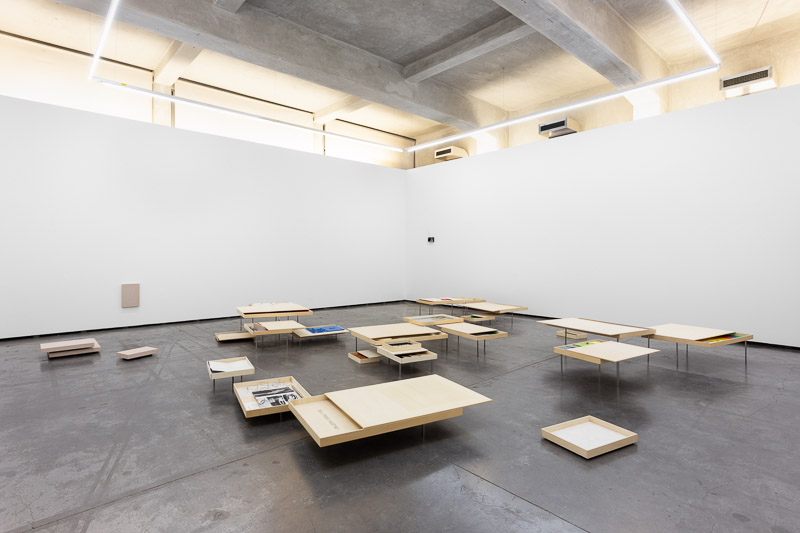
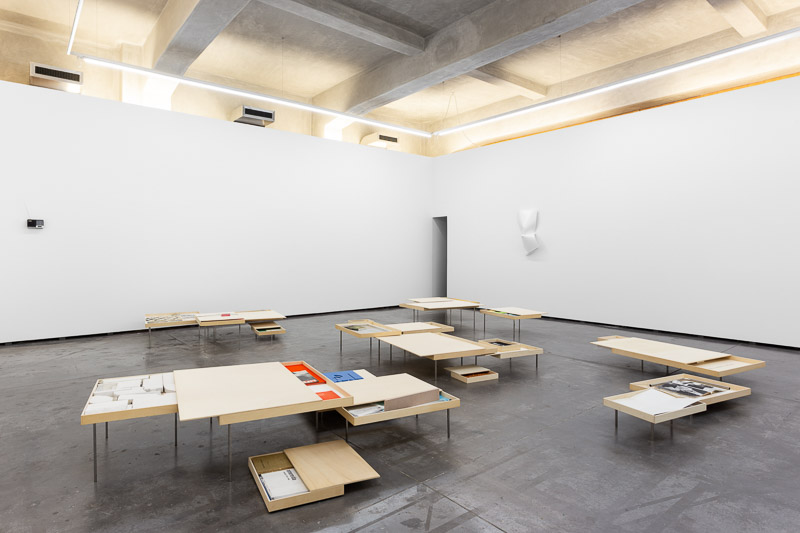
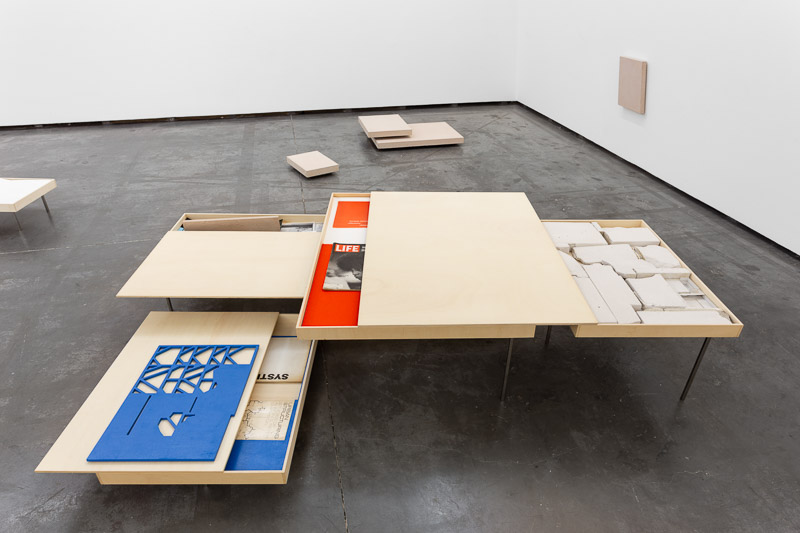
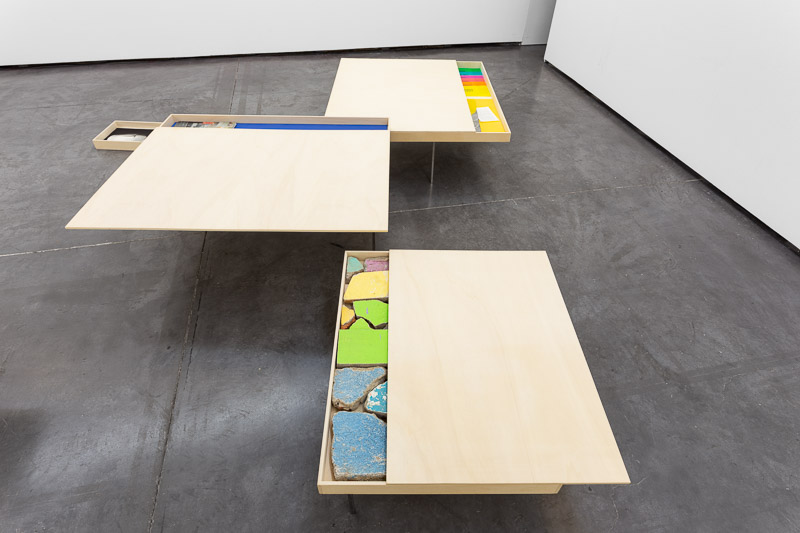
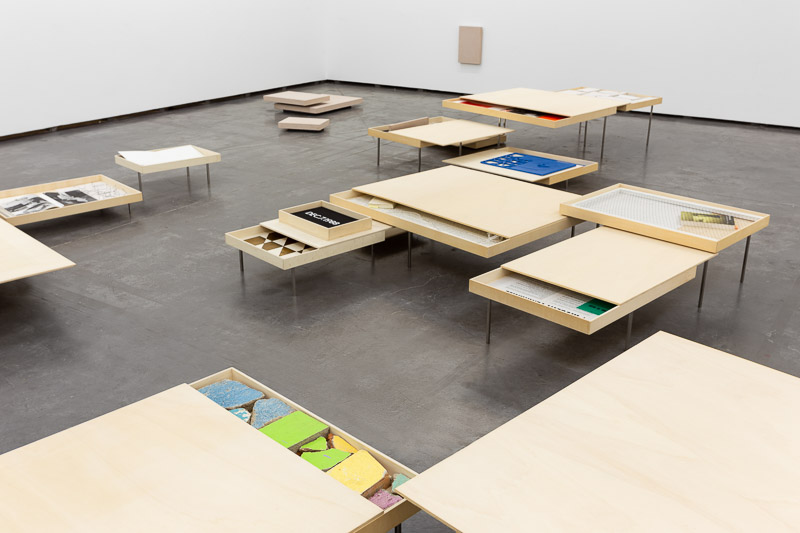
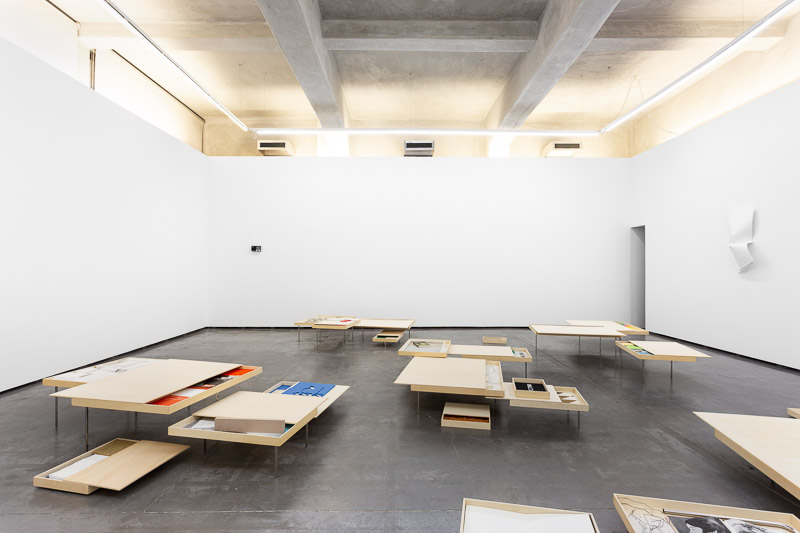
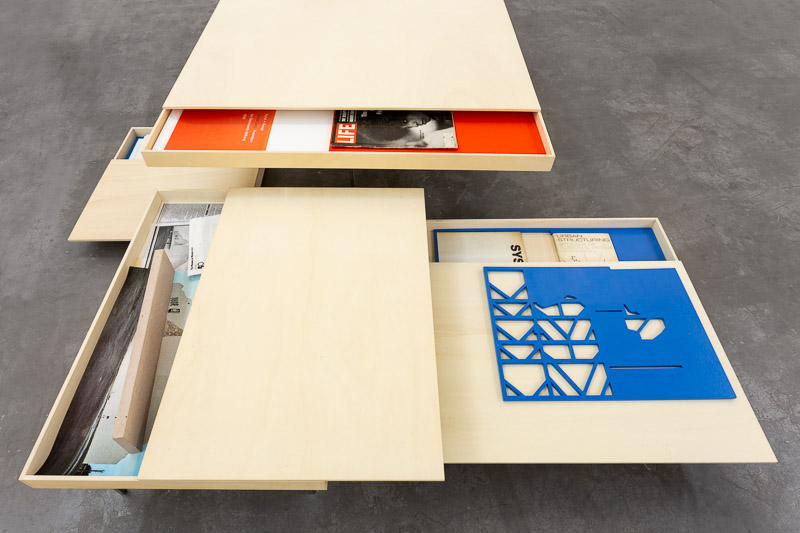
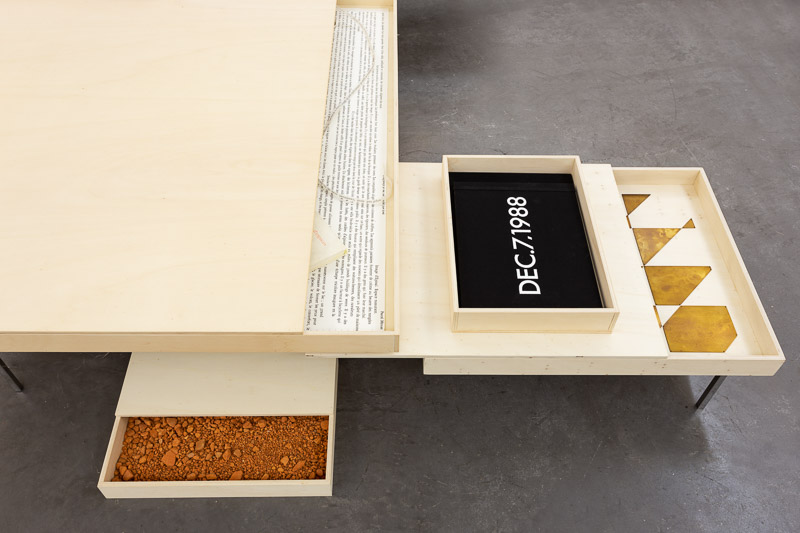
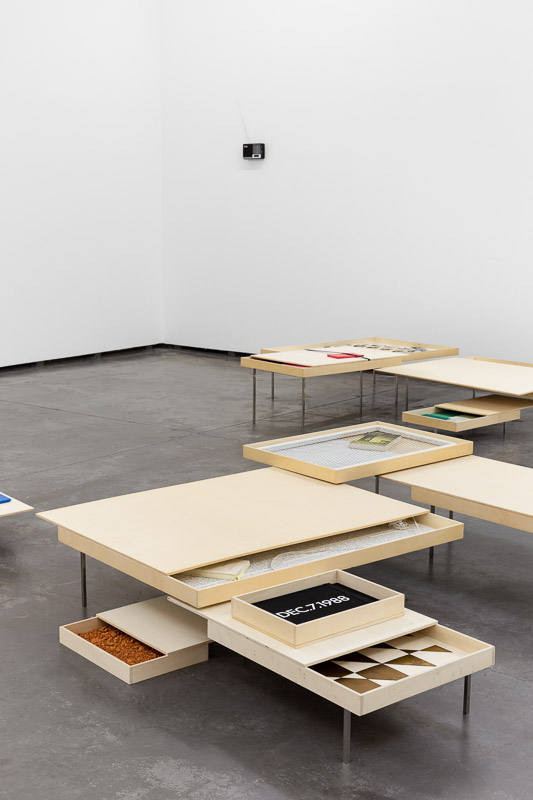
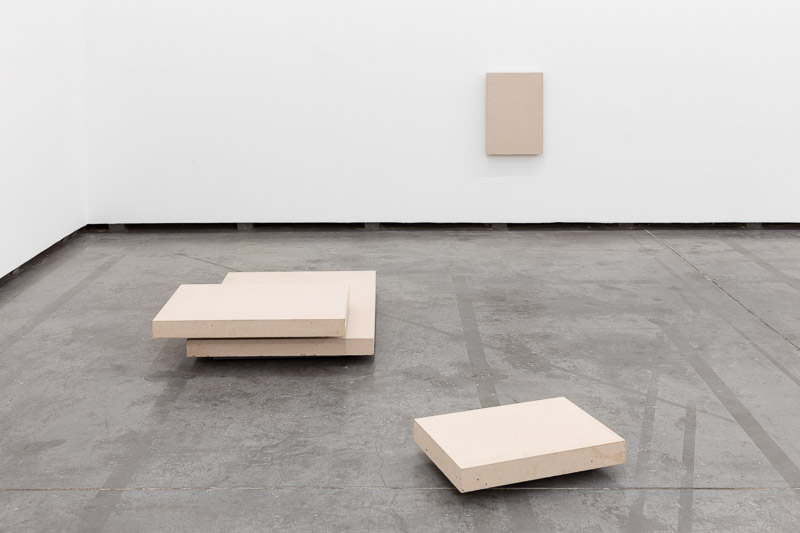
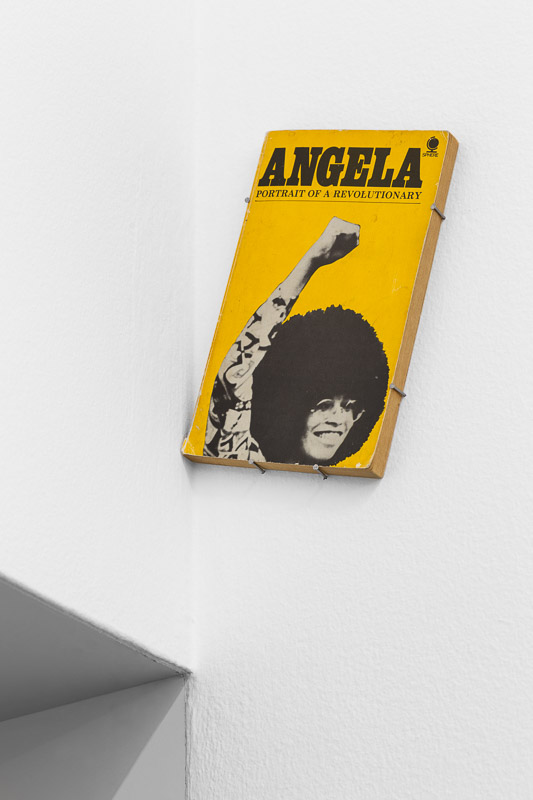
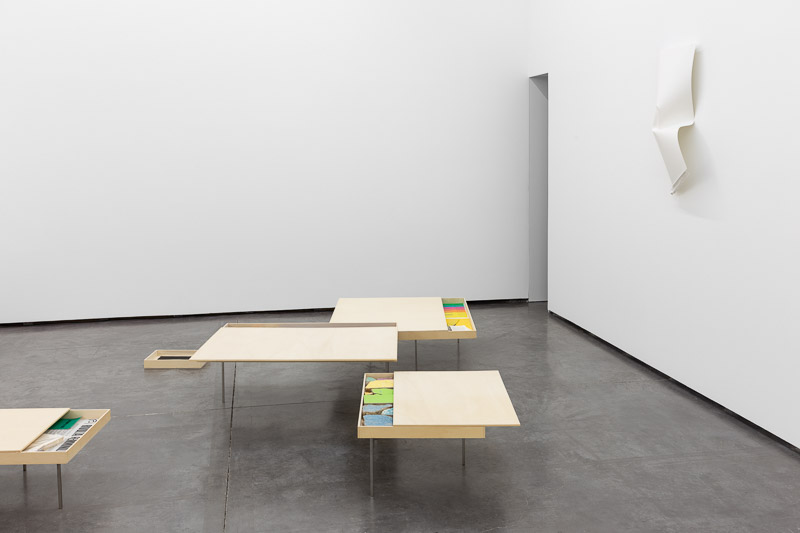
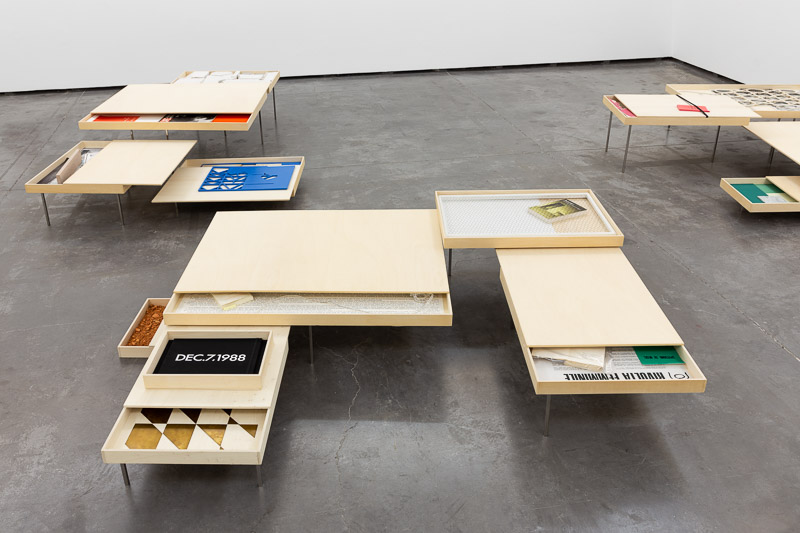
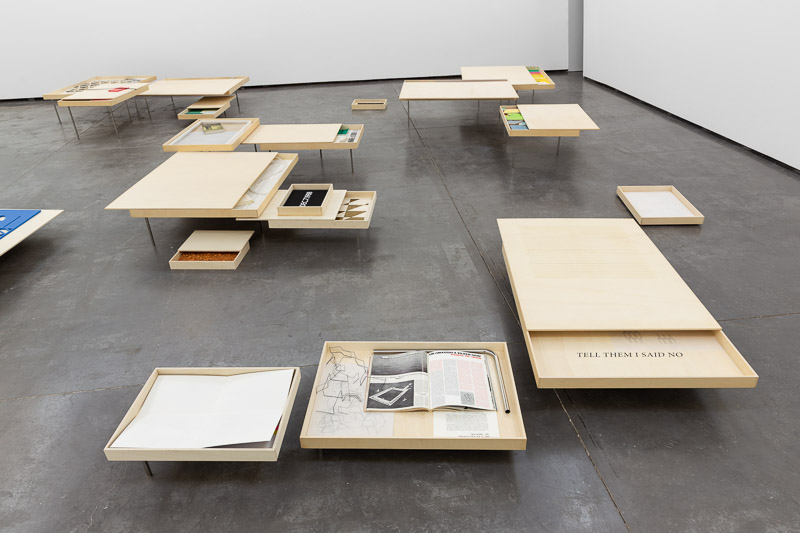
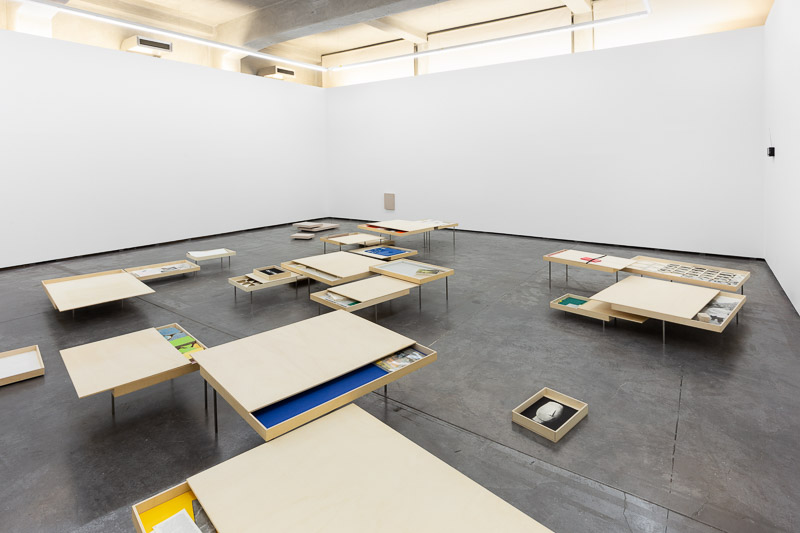
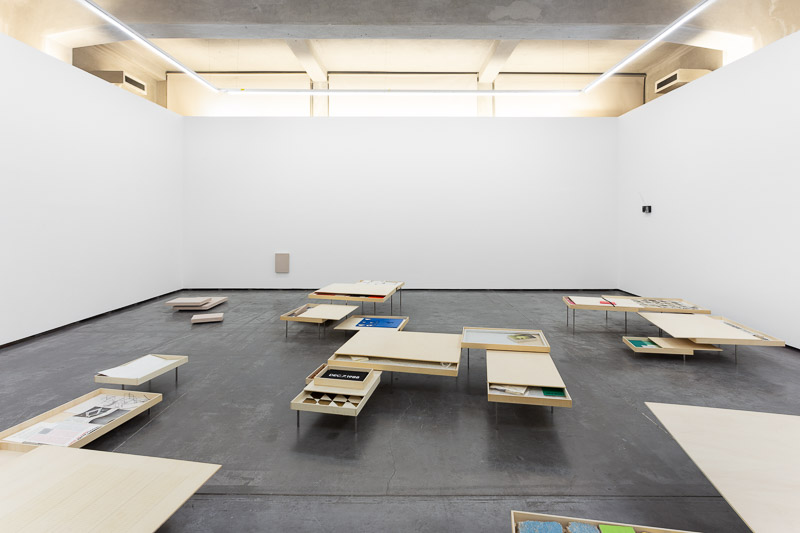
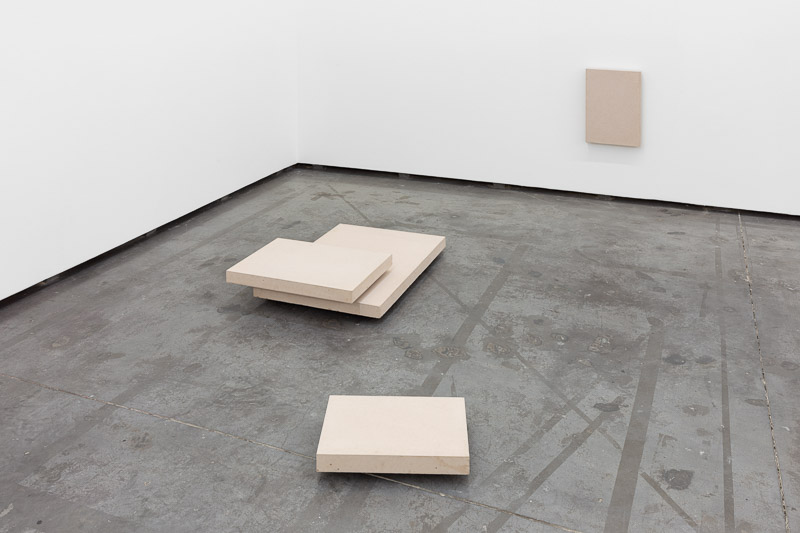
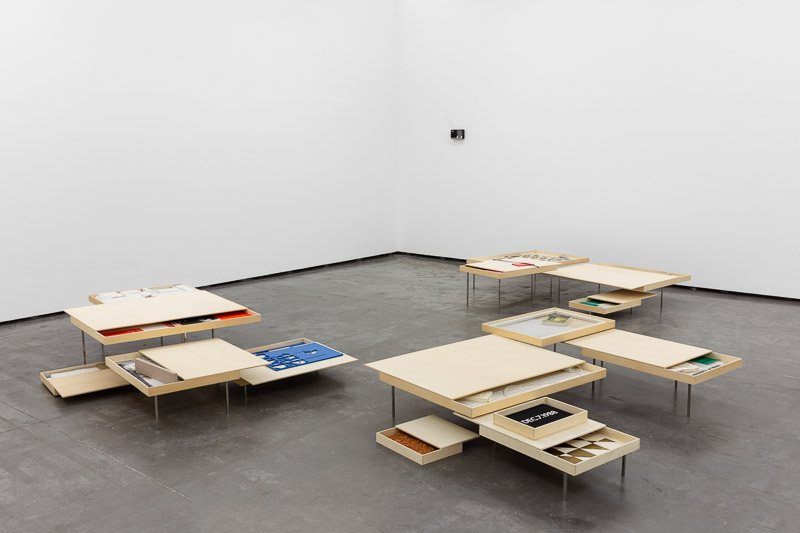
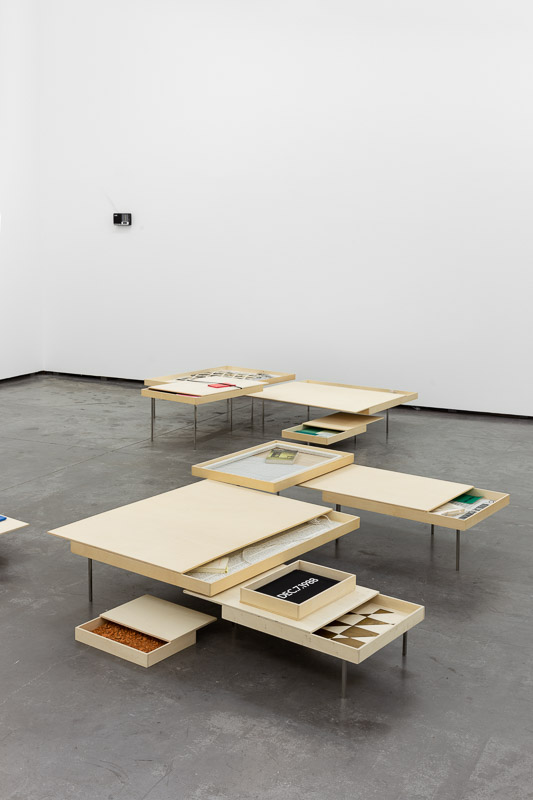
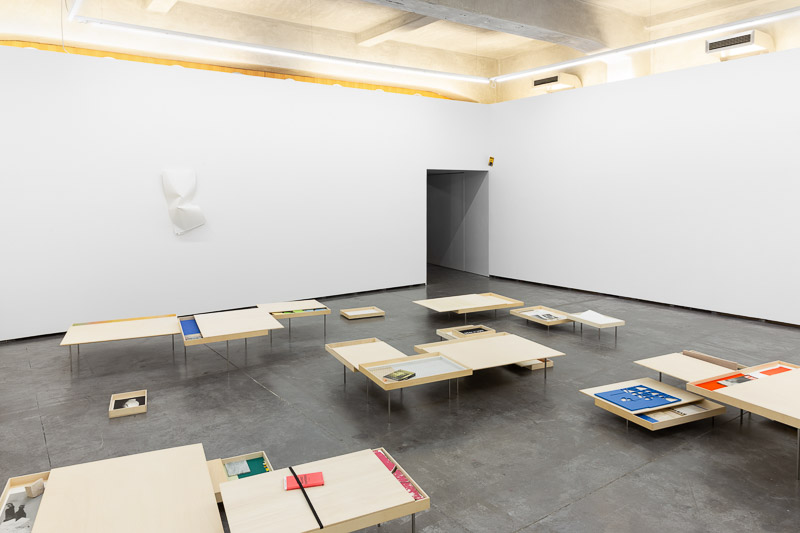
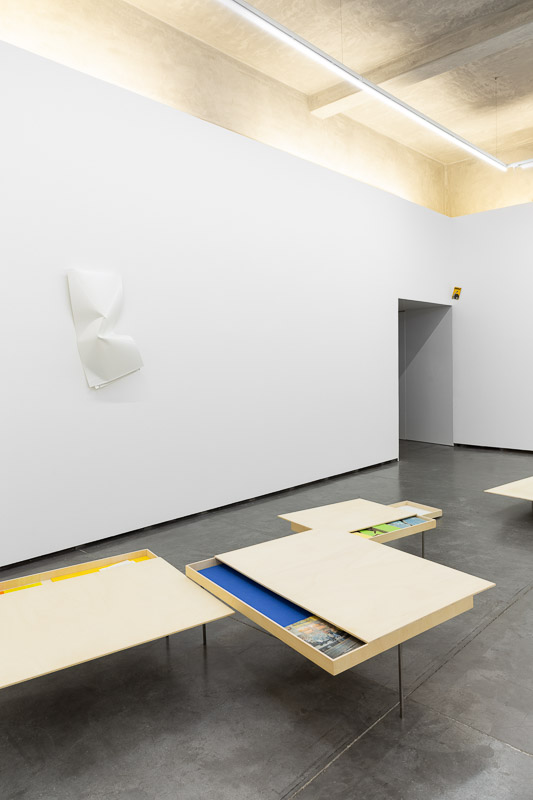
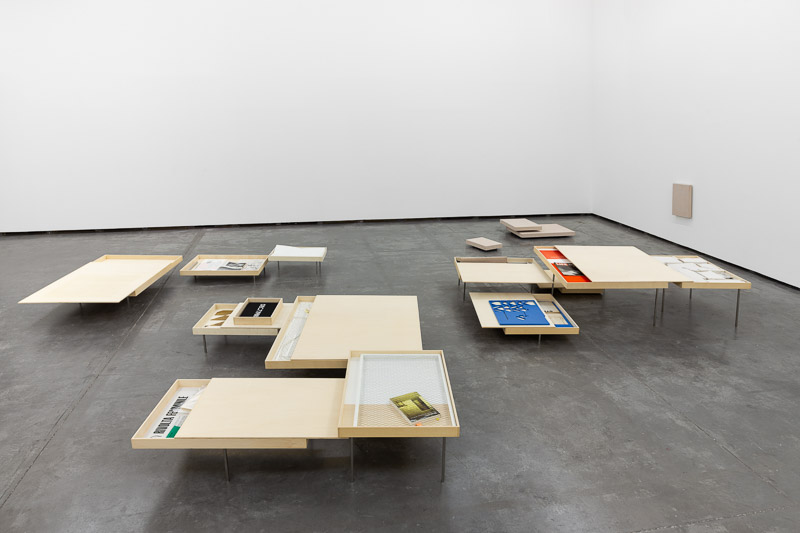
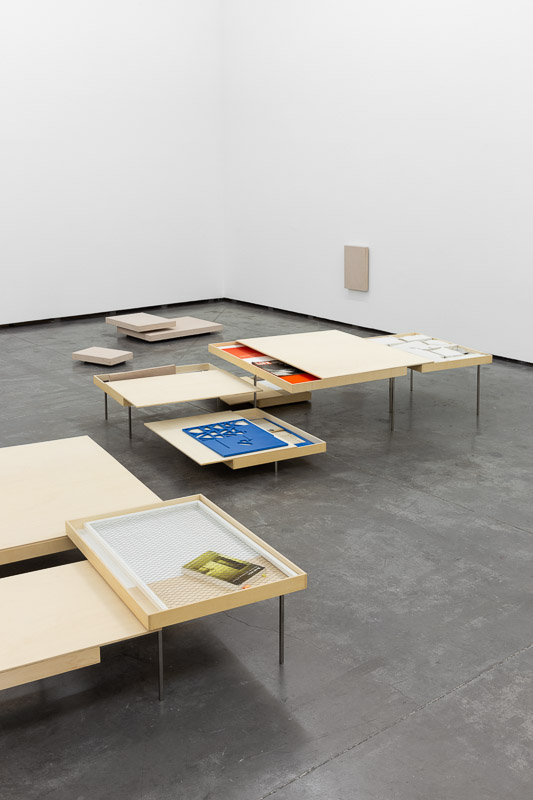
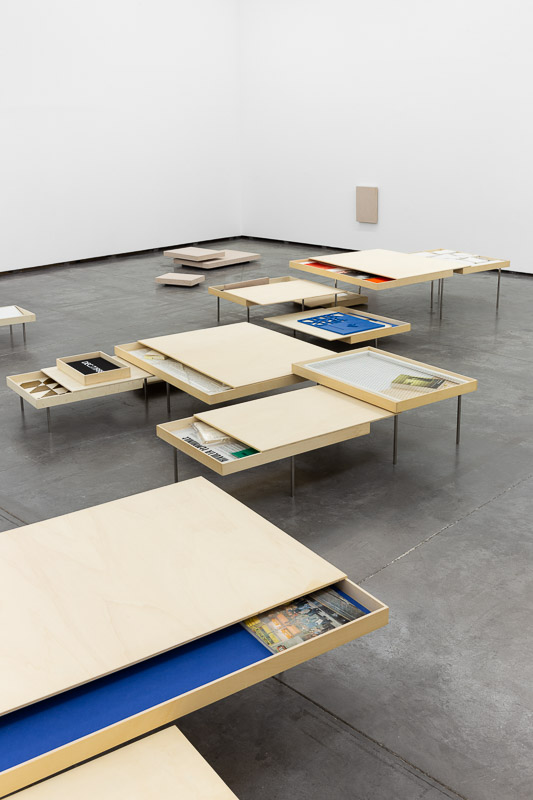
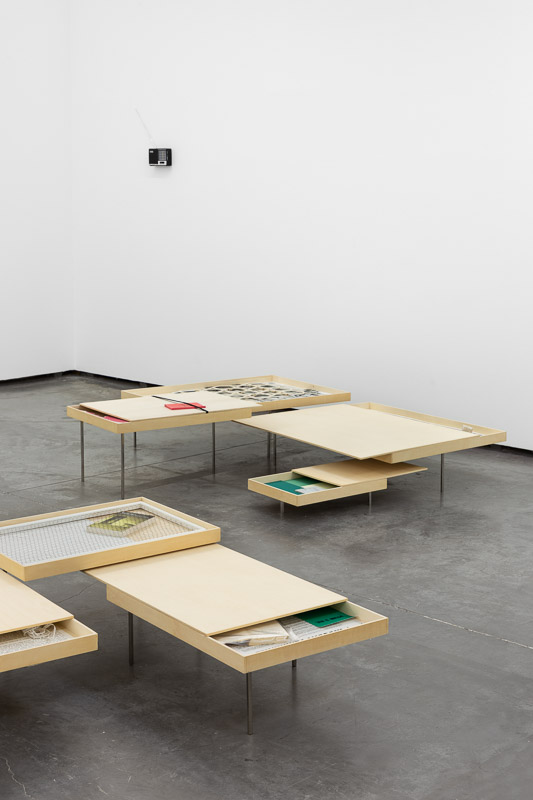
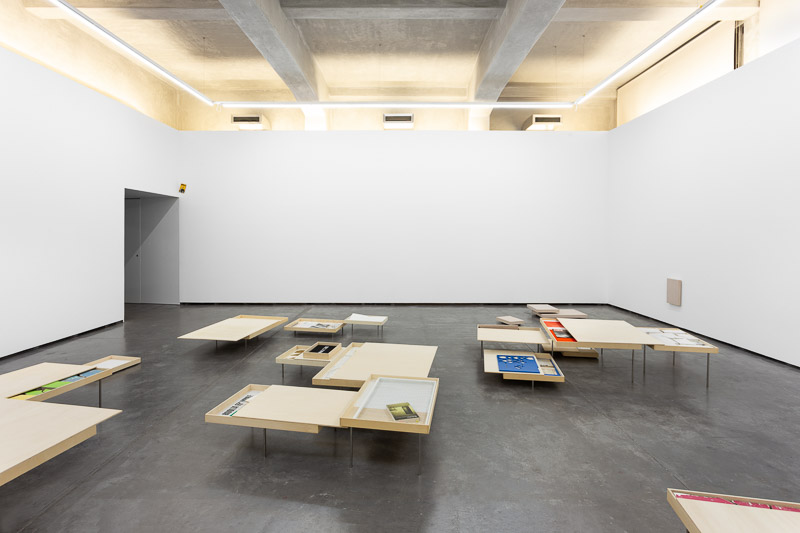
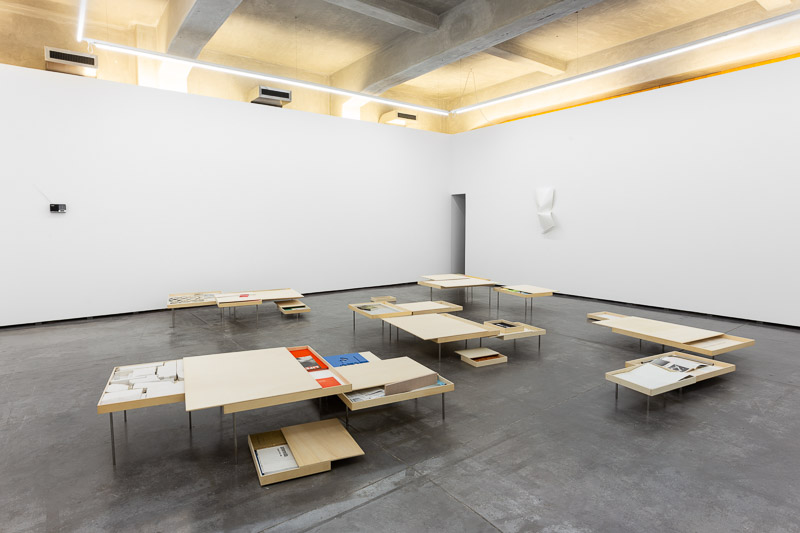
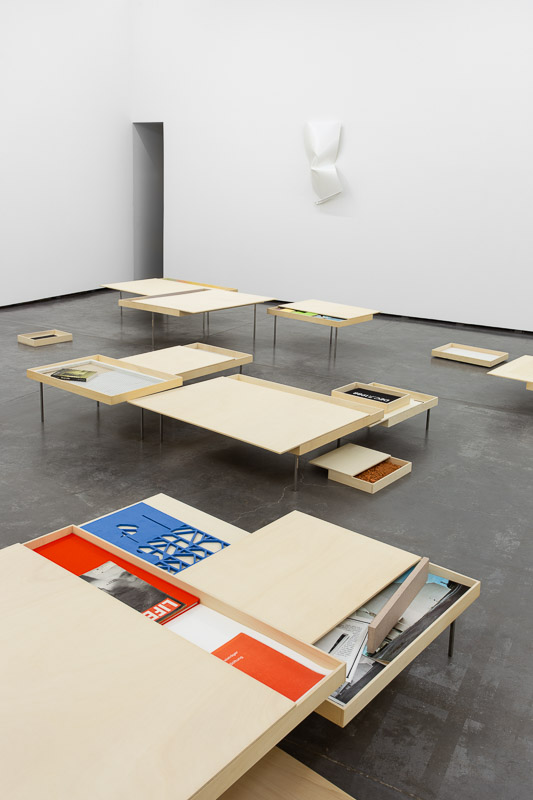
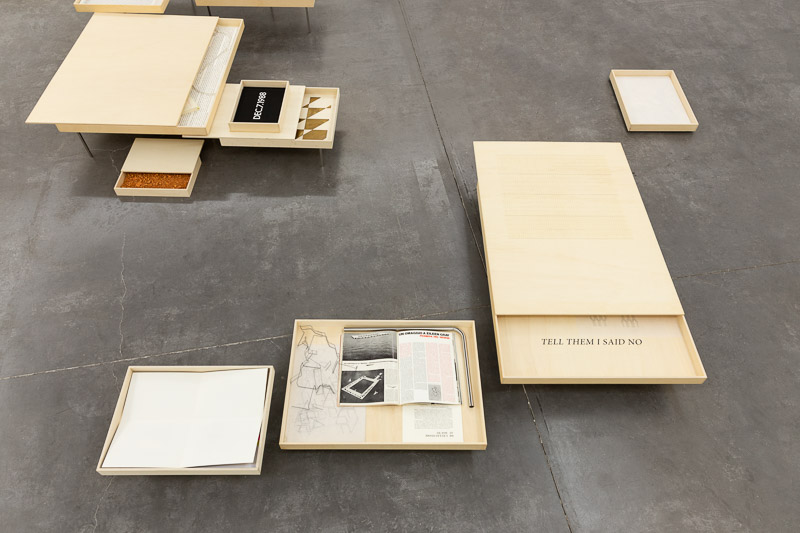
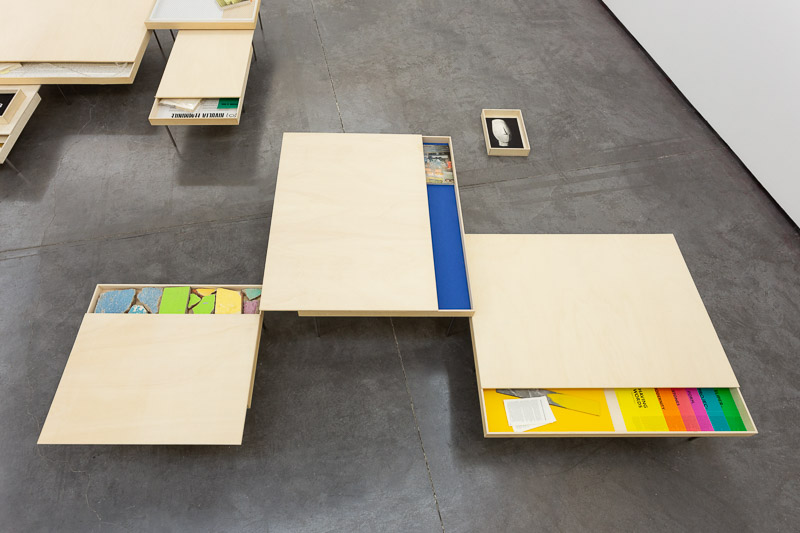
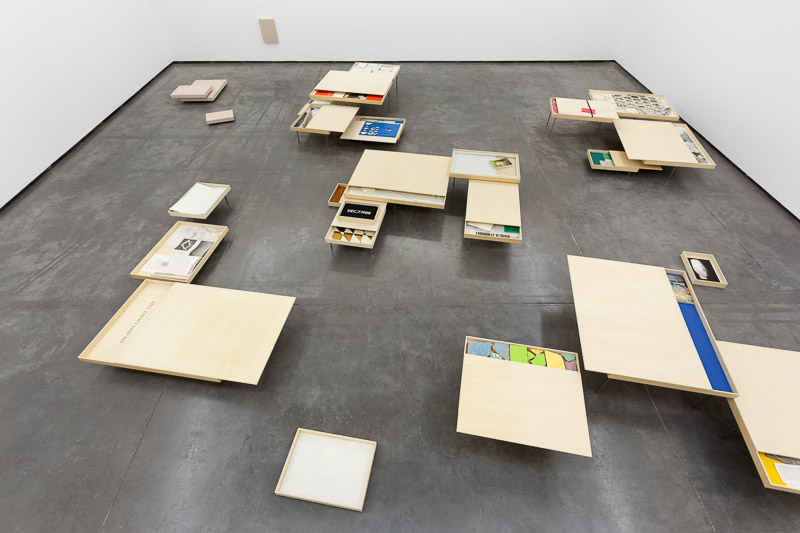
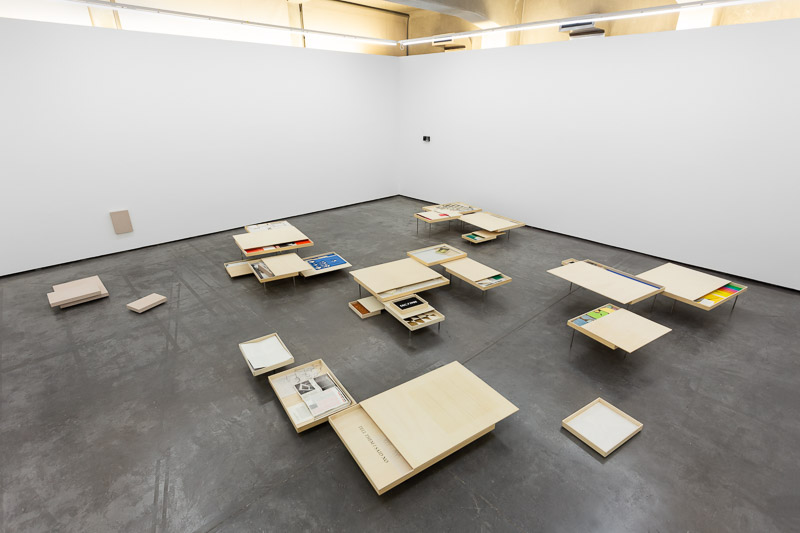
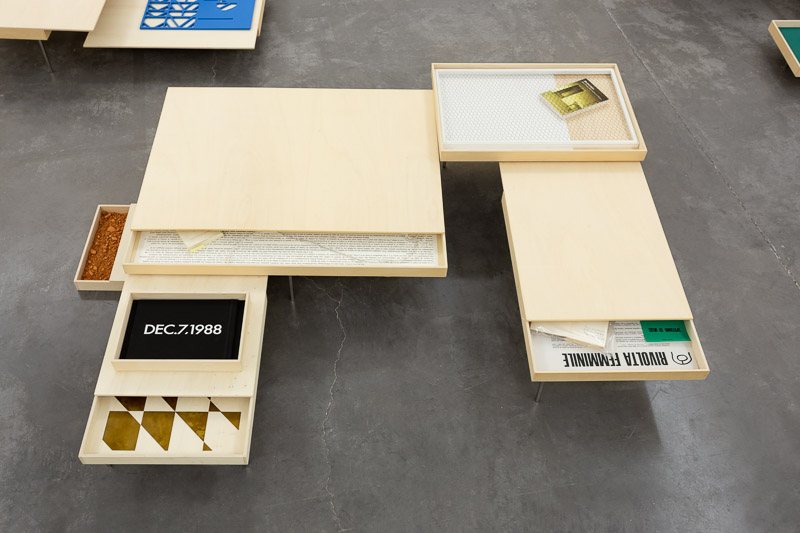
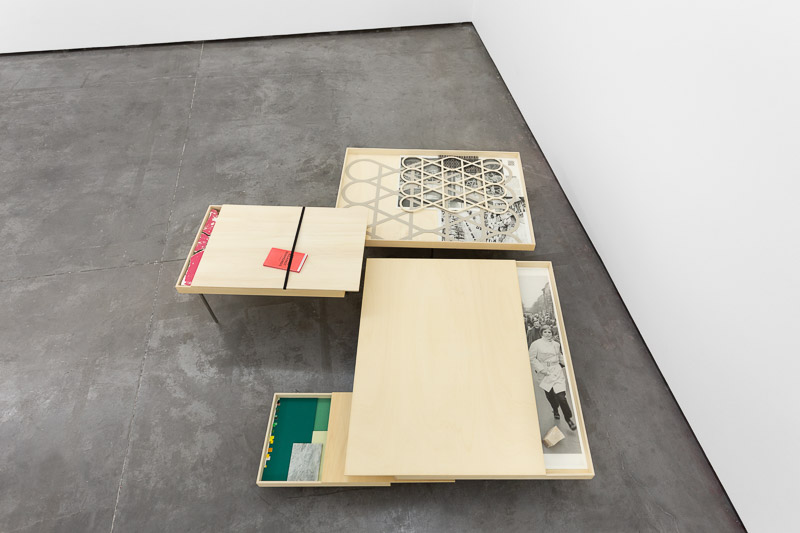
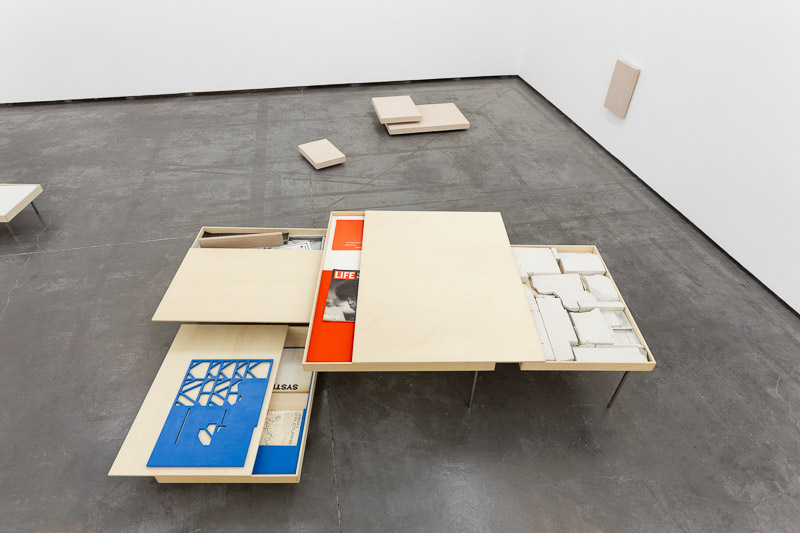
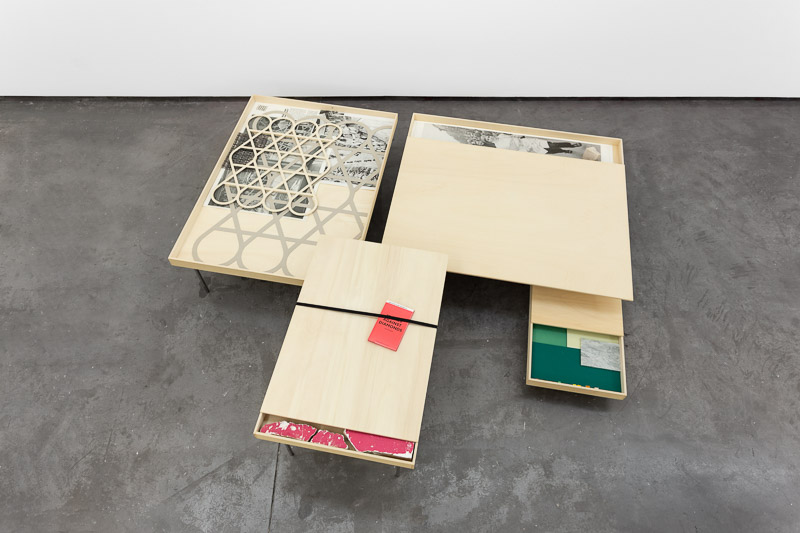
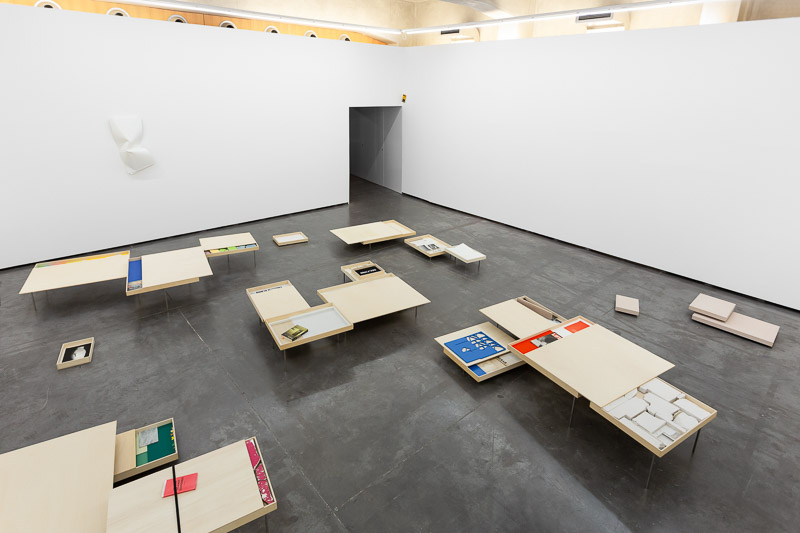
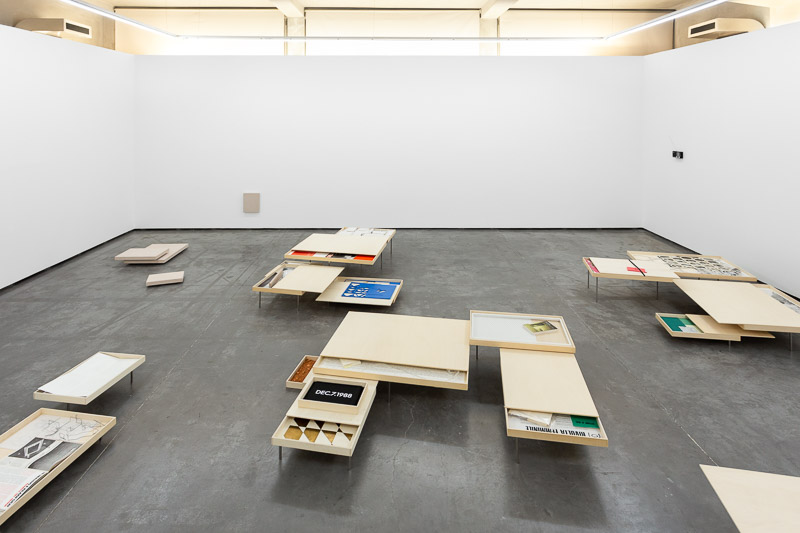
Materials Lab is both an open work and a work in suspension. Materials such as threads, magazine clippings, photographs, notebooks, wall fragments, text-drawings and brush strokes build a kind of personal archive that is open to the world. Beyond the found objects and materials selected, it is important to value the gaps, that which remains in parentheses. More than one poet has claimed that the poetic word begins precisely where speech is impossible. I think of Marcel Broodthaers and his decision not to make objects. To transcend words and images is to embark on the adventure of creation. That’s why the importance of what is undone, of what is unthreaded, of what is not produced, is also part of the equation of art; like the wall that supports the painting, the context that often ends up becoming content. Absence allows us to sound out what we see, to make sense of it, to provoke tension. Because these boxes containing materials are also capable of housing those voids. Materials Lab is space as pure absence yet remaining capable of all presences, like that creative nothingness of which Maria Zambrano speaks. Because while this project deals with materials and images, above all, it deals with time, memory and process. Fundamentally, these boxes are interstitial spaces, surfaces of transit between the internal and the external. The presences are minimal and the experience “infrathin”. Viewers need to let themselves go in order to extract the most they can from the poetic of the image as observation and the capacity to transit different scales and times. It is information as field of depth, as paradoxically impossible revelation. There is no way to access the mystery in its entirety, since any form of approach is also a distancing. This is what Georges Didi-Huberman means when he says that seeing is often feeling that something escapes us, when seeing is losing. Fernanda Fragateiro also seeks that empty space, an exercise that only makes sense if we manage to link up some of her many relationships.
Fernanda Fragateiro invites us to engage in a patient activity that, like much of contemporary art, is based on processes of discontinuity. Here the materials are cracks as well as scenarios, possibilities. The energy is derived from both collision and omission. Knowledge is actively constructed as in any collage experience, another process deeply ingrained in contemporary art. The discontinuous plot is based on uncertainty. I think about how Andrei Tarkovsky notes in his Diaries: “I could not have lived knowing what life had in store for me. If I knew for sure what was going to happen to me, what would it all mean?” For Tarkovsky, everything is arranged in such a way that our knowledge is incomplete so that the infinite is not desecrated. Meaning is the imminence of a revelation that is yet to occur. We can see the same in these boxes or small architectures of Fernanda Fragateiro’s knowledge. The window is always ajar, but never completely open because we can never comprehend the history and architecture of a work in a complete way.
In Materials Lab everything is compressed. The narrative is derived from the enigmatic, from the fragile. Fragateiro provides a space for experience, showing us the gaps left by literal sense. These works thus formulate their own vocabulary close to visual poetry, or to poetic documentation. Of course, the times of creation cannot be represented because it is not possible to reveal all the sensations, tensions and complicities that occur in the act of creation. It is thus a kind of deceitful narrative, a false chronology. We are presented with a statement which is minimalist, poetic, dense, seductive, capable both of acting as a resonance of artistic experience and – why not? – of dismantling the limits and rules of art to flirt with the unsayable, with that which is hidden from view on the surface, with inexhaustible capacity for incitement.
We thus understand that a work is a dialectic of junctions, a kind of fabric open to different interpretations. Materials Lab is configured as an archipelago of concepts that are offered to us as cracks of meaning, as folds of knowledge. Information is offered up at the same time it is retracted, concentrated. Formally, it is presented as a kind of poetic minimalism, but it really obeys a series of layers, like an infinite palimpsest that leads us to an always unfinished plot in the search for new readings. Because the proximate is combined with the encrypted, and the materials and images become a territory of shadows to be interpreted at the same time.
Fernanda Fragateiro incites us to look through the work and not so much at the work itself. What is proposed, therefore, is a reading capable of slipping through the cracks to comprehend the apparently random, the alternative, the transversal. Undoubtedly, this pleasant search for the experiential and the relational does not stray far from her intentions in previous works such as Caixa para guardar o vazio (Box to store the void, 2005), a wooden parallelepiped piece that can work when both open and closed, that is hermetic but includes windows, and which is capable of opening to the outside like one opens drawers in a wardrobe. The sensory and the performative expand their monolithic condition and lead us to inhabit the work as experience. In the end, this is also the proposal of Materials Lab. In both cases it is a question of exploring, of inhabiting the work, of experiencing the haptic from the fragmentary, from the penetrable, from the participatory. Everything suggests the passage to something else, between what is represented and what is real, between what is internal and what is external, between what is material and what is process. The space is prolonged, the viewer speculates. And it is in that relational condition that we find the emotional ecology that Delfim Sardo defines when writing about the aforementioned Caixa para guardar o vazio.
I think then of Rachel Whiteread and her moulding of the negative spaces of things, capable of hardening space, converting it into mass, concealing the lost spaces. Or how Blinky Palermo assumed marginal spaces for his painting, those that were usually overlooked. Above all I think how writing becomes a resonance box with authors like Maurice Blanchot, capable of opening up anonymous or insurmountable spaces between the writer and the book, which it is the reader’s task to fill. That deferred space, that past but unseen event, is what we are able to explore in Materials Lab.
This is not the first time that Fernanda Fragateiro works with a kind of personal archive, turning information or architectural space itself into a landscape. This was the case, for example, when she translated a drawing by Anni Albers for a tapestry – today lost – into a floor piece for the space of the NC-Arte gallery in Bogotá, placing it also in relation to the work of Josef Albers and its possible influence in Latin America. Because what is really key for Fernanda Fragateiro is the process of that conversation, as now occurs with the dialogue between materials. Because, as Albers pointed out, you cannot put one colour next to another without changing both. The same occurs in this archaeological excavation that is Materials Lab: art as an incessant performative strangeness in relation to the world.



 /
/  /
/ 