


SQUARE
—
Daniel Moreira & Rita Castro Neves — Knife on Stone
Of the power of magic
On the exhibition Knife on Stone, by Daniel Moreira and Rita Castro Neves
In the Renaissance, we are told by the philosopher João Maria André, along with the progressive conquest of the intelligibility of man, nature and society, supported by objective knowledge and the emancipation of modern science (with the Galilean revolution), often claimed by the orders of progress and technique, an “attitude of teetering penetration in the secrets of mystery, in the depths of the occult, which veils and unveils, offers itself in its communicative availability and retracts in its qualitative alterity, in its mystical and inviting obscurity” coexisted.
This attitude encountered its utmost expression in magic, which wasn’t other than the perception of the world as animated being: “Speaking of magic, as afterwards speaking of technique is speaking of art or of the arts of man, and speaking of art or of the arts of man equates speaking of the way that man is nature, imitates nature, not in the stoicism where traditional essentialism had it crystallised, but in the profound dynamism that trespasses it […]. Finally, speaking of the man who is nature or imitates nature implies necessarily speaking of the power of man, implies speaking of the man as power.” The power of man – discovered and reaffirmed throughout the philosophical tradition of the Renaissance – results from his assumption as constructor of himself, “without prior essence,” (“it is the man who is essentialised in his continuous choices”) and from a perception of magic as exercise of that power. The magic “signifies solely the exercise of the power of man over the natural elements, based on an effective knowledge that the scrutinizing of its secrets provides.”
The wizard and the alchemist are the main holders of this knowledge, expressing a total correspondence between man and nature, that which will be fissioned following the Galileo-Cartesian revolution, prevailing, until today, the irredeemable rupture between man nature (the caring, which is at the forefront of the philosophical and artistic agendas, has its origin here, as the necessary and urgent reparation of this fission). The wizard, referred to us by João Maria André through the words of Garin is “the one who receives and clarifies the meaning of things, the one who understands the character of things, who reads the great book of nature, and seems to conclude in himself the process of things, to direct it according to his will. In the magical work man reveals himself as ideal term and living synthesis of cosmos, which having attained a clear conscience, may by him be modified.” And it will be the Alchemist, he reveals us: “who will safeguard that equilibrium [life is but the possible equilibrium in the balance of forces, at times unordered, that feed it]. It’s his designation to dominate those forces through the knowledge he gets from them, operating through the power of magic, but without letting himself be dominated but the magic of power.”
João Maria André stresses, furthermore, that the “Renaissance man laboured, on a conceptual level, mostly from an aesthetic perception of the world, of himself and of nature, with which he lived in a profound unity and in true harmony, which inspired his praxis and his poiesis,” of which the wizard and the alchemist are the principal conceptual figures of an animist tradition. This aesthetic perception (on which Renaissance magic is founded) will be overridden (with rare exceptions) by technical reason and, with it, the mechanical rationalisation of world and man, including his relationship with nature.
At the end of his book (we highlight: from 1987), the philosopher claims, with urgency, a rupture with the Galileo-Cartesian heritage, or as he says, a rupture of rupture (being the first that performed by the works of Galileo and Descartes, leading us to consider the figures of the wizard and the alchemist already as forces of a resistance which – we desire – finds a new actualisation today): “The world is our home and, because of that, let’s not delay further the moment of re-humanisation of nature and re-naturalisation of man, with the inherent epistemological consequences of that process (which necessarily imply the establishment of a new paradigm for science, indissociable of that new relationship with nature and, implicitly, of a new relationship of man with man himself). Then, one may certainly dream, as someone has dreamt, with the day when to study the urban trace of a city scientifically one decides to make his interpretation literary, or for analysing the behaviour of birds, one predisposes to interview a bird. That technology allows itself to be portrayed by a new and original physio-logy and that the economy learns from an eco-sophy, which we, philosophers, ought to assume an inalienable task, since, as the song goes, the world is not a machine and one day may be depleted, the world is not a machine, it may one day get angry.”
Today, we hear (and read) this same claim from several voices, and, specifically, in the field of contemporary artistic practices. There are several artists working on themes in the scope of what could be that (new) physio-logy, thinking, for instance, in inter-species relations, or proposing an eco-sophy, when they approach the forces, the matters and the elements of a deterritorialised nature, which they harbour in their works. These assume, at times, a hybrid body, remembering processes of violence, at others, of harmonies which succumbed, like the bodies, to death. Some more anchored in anthropological and philosophical visions (under the influence of authors like David Abram, Donna Haraway, Eduardo Viveiros de Castro, Bruno Latour, among others), others involved in experimental practices of communion and interaction. Nevertheless, it continues to be in urgent need of a rupture with the systems stemming from the Galileo-Cartesian heritage in order to rethink the relation of the human being with the natural elements: from cosmos to mineral, animal and vegetable.
This long introduction aims, mostly, to look at the work of the artist duo Daniel Moreira and Rita Castro Neves recovering the figures of the wizard and the alchemist, who seem, particularly, relevant to thinking the territory (and its singularities, veiled by a “mystical and inviting obscurity”) to which the artists opened themselves, as the very work resulting from that plenary opening and communion, placing us in the plane of magical nature (that prior to the rupture created by the modern revolution), which appears, in the work of these artist, under the animal spectre, where man, one with nature, nature himself, understands it as indecomposable part of himself, like the animal with which he cohabits the world.
Similarly to their last projects, the artists payed several visits to a specific territory, in this case, the Côa river valley, where one of the rarest and biggest sets of open air Palaeolithic art is placed. The valley and the mouth of the Côa river reveal themselves to them as mystical places, where science intends to penetrate further, mapping and dating all the artistic manifestations recorded on the schist stone (and, occasionally, granite, as well as some paintings), but where the forces of the indecipherable, the inscrutable emanate from a territory which one understands, firstly, by its impressive topography, whose singular geological evolution (of fluvial morphodynamics and tectonic fracturing) originated in stony vertical planes, ideal for the different engraving techniques used in the Upper Palaeolithic and Iron Age. One imagines that this natural condition may have compelled the primeval artists to an “attitude of teetering penetration into the secrets of mystery,” unto which the artistic manifestation reveals itself as vehicle of an union between the obscure forces, the magic of nature and the human being, who, in turn, funnels that magic into power of expression. This operation, independently from the existence of rituals, in which the artistic creation could have participated, signals a transition, a passage, a transcoding, such magical and alchemic operation, in the which the human being frees himself from and offers himself to the unintelligible qualities of nature. The artist duo does not look at these engravings seeking to understand what the primitive man felt while creating them (which has been translated by researchers into the many efforts of seeking to interpret possible reasons, ascribing meanings), but stemming from a hypothesis these pose today, a hypothesis which advents from that other possible relation between man and nature (and which we wish to recover through the figures of the wizard and the alchemist). There is, indubitably, a transtemporal quality that the artist duo rehabilitates in this exhibition: the infinite capability that the work of art possesses to stun, to lead us to submerge in the mystical obscurity of the mysteries of creation, and which deserts us. As Georges Bataille states: “Many times we find childish that need to be amazed, but we always return to it. That which seems worthy of being loved is always what disquiets us, the unexpected, the inseparable.” It is these magic qualities that the artists apprehend from the territory, from their constant visits to the valley, under very distinct meteorological, atmospheric and physical conditions, always renewing that primary enchantment, which traverses millennia and is reborn metamorphosed in a new work.
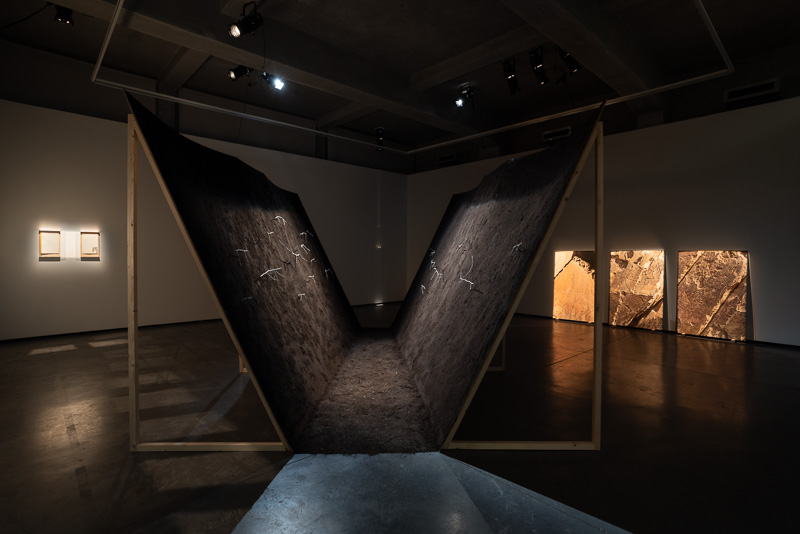
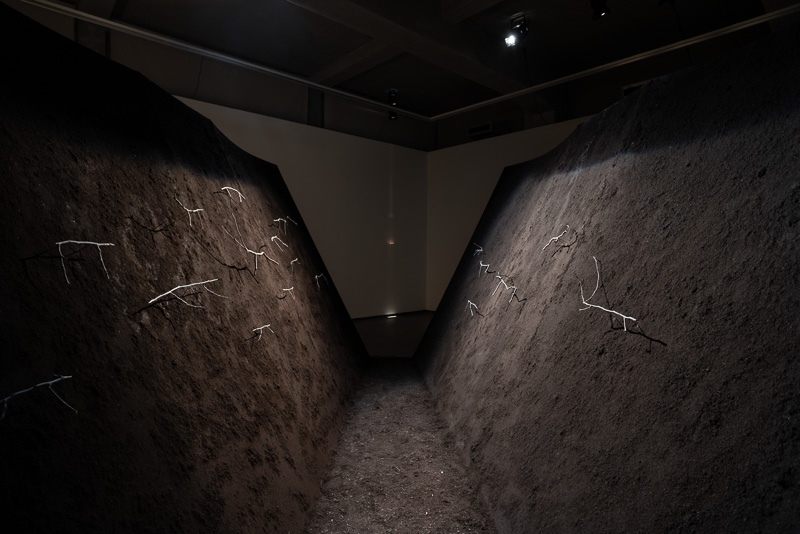
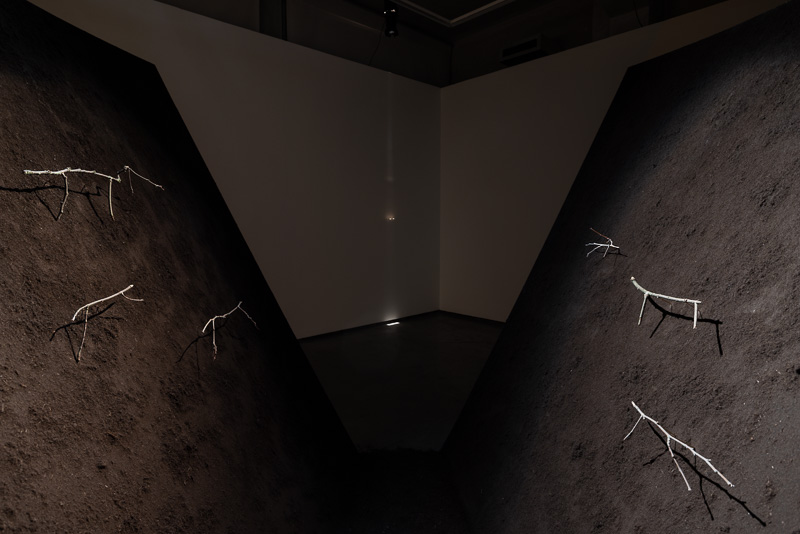
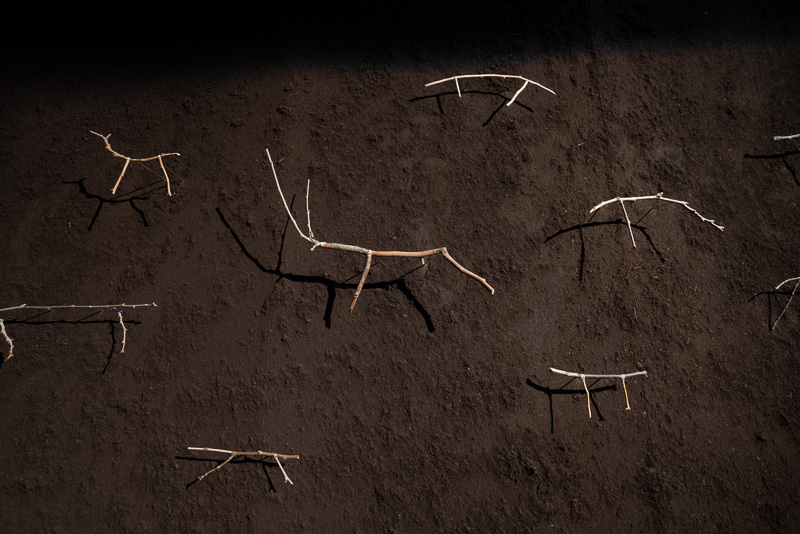
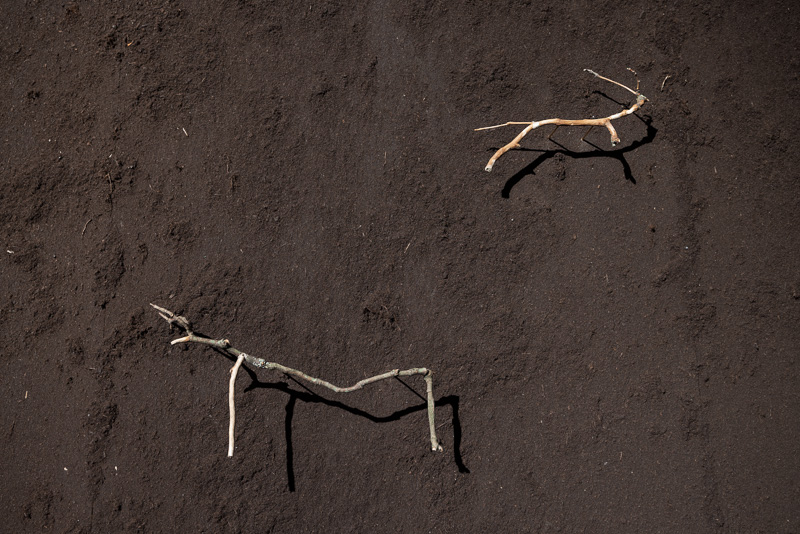
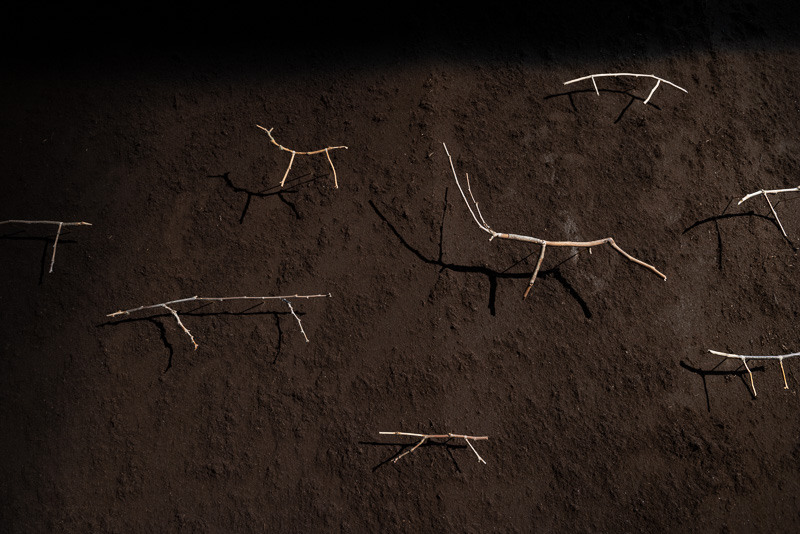
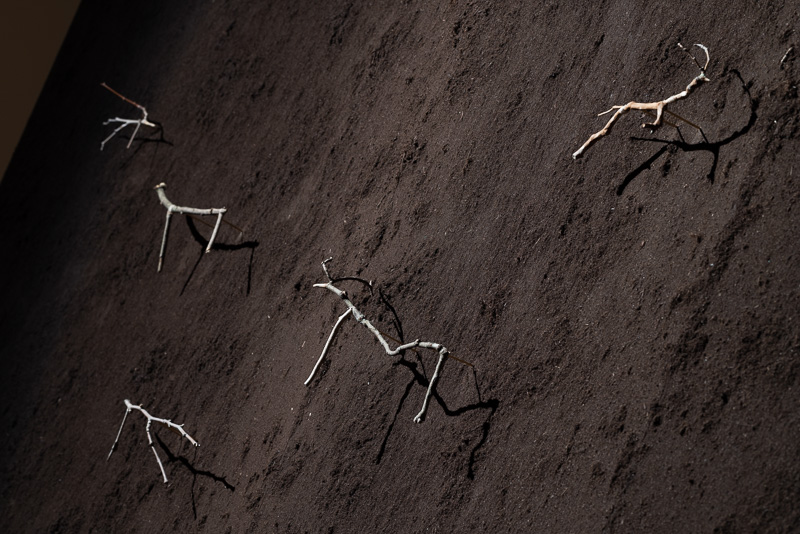
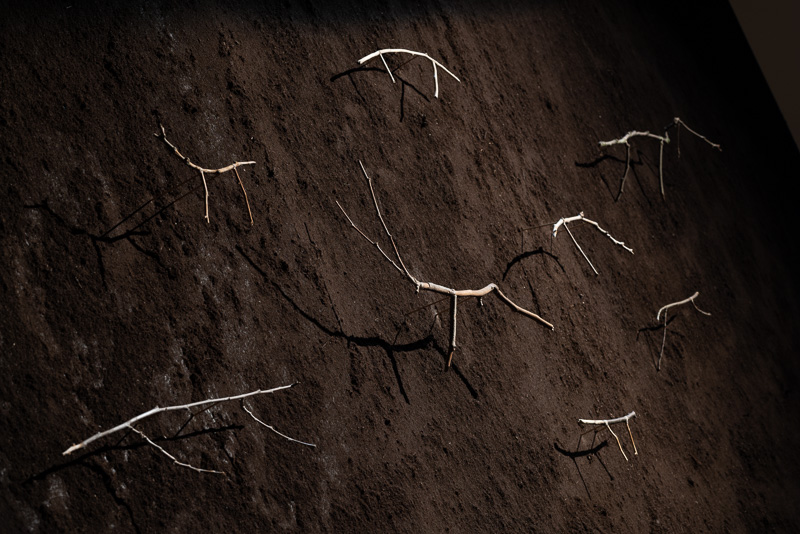
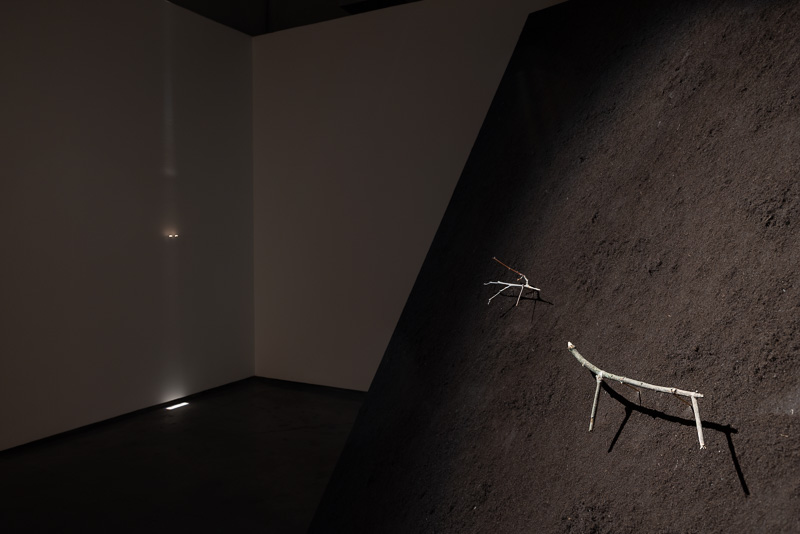
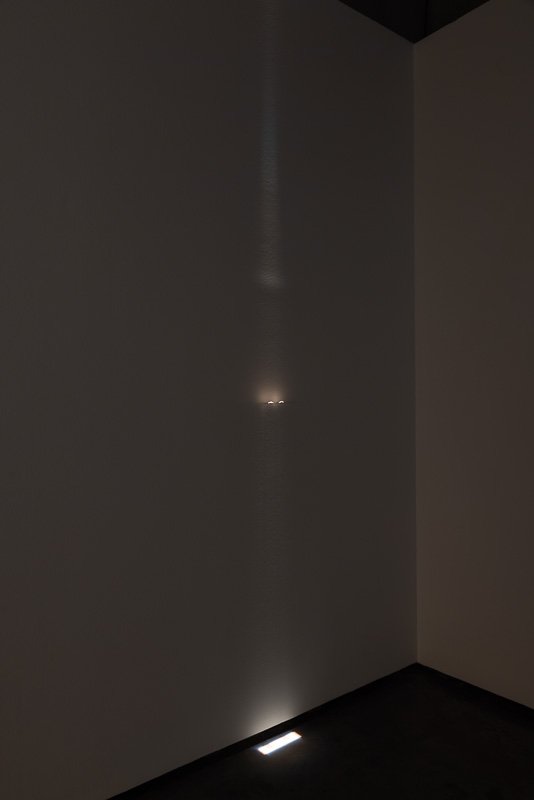
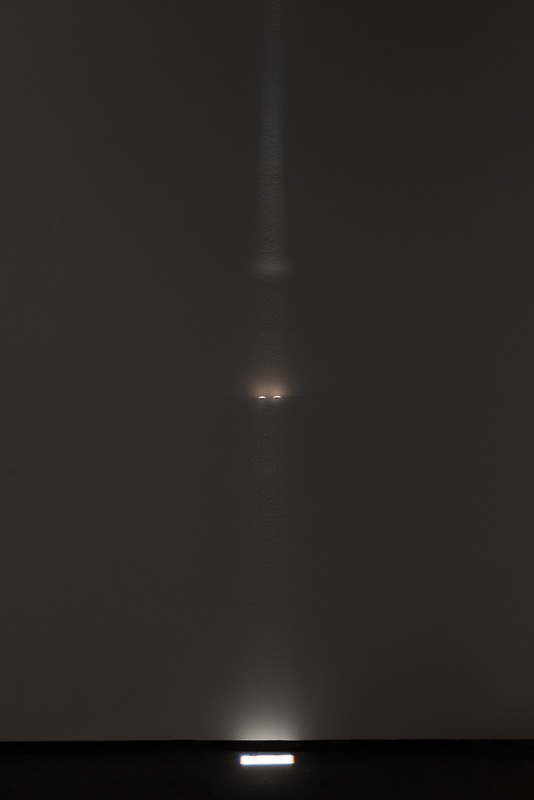
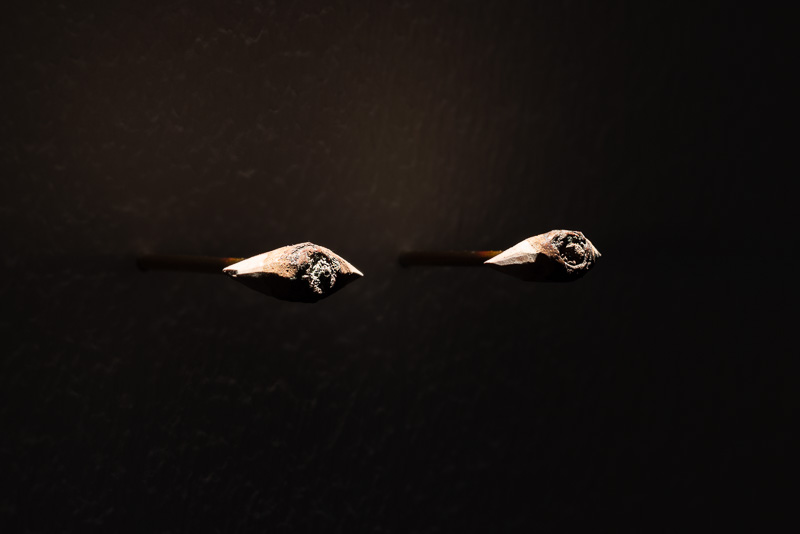
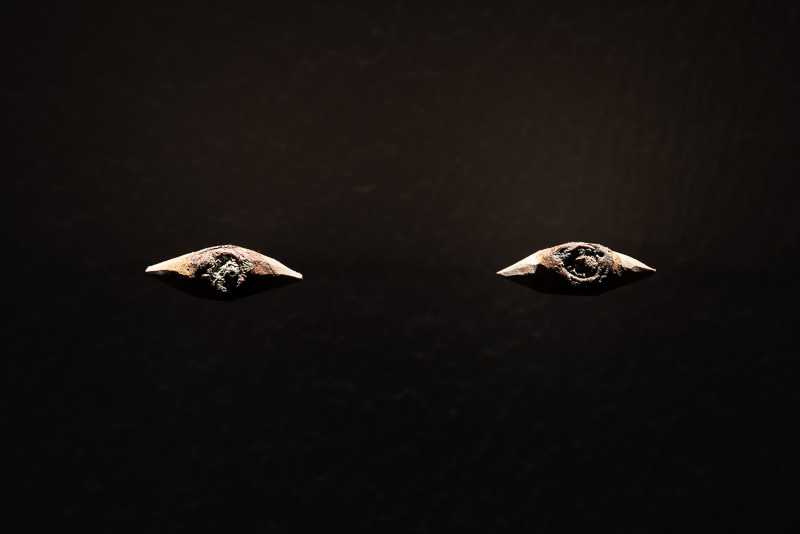
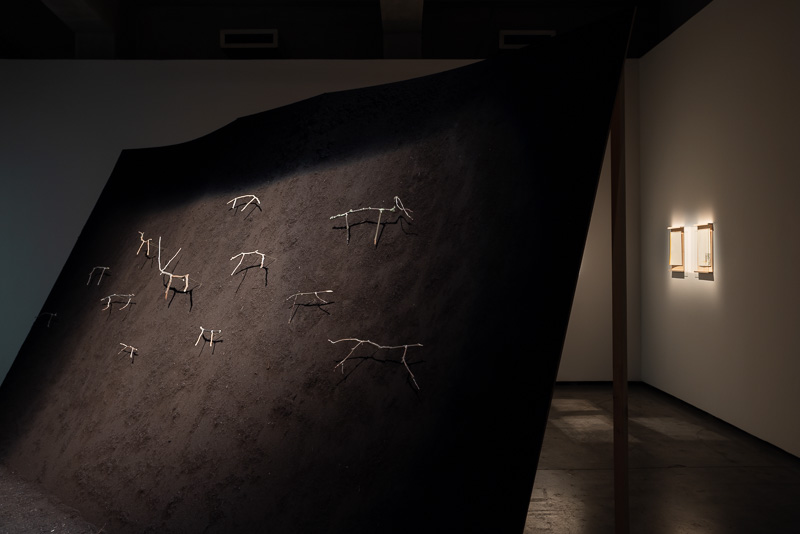
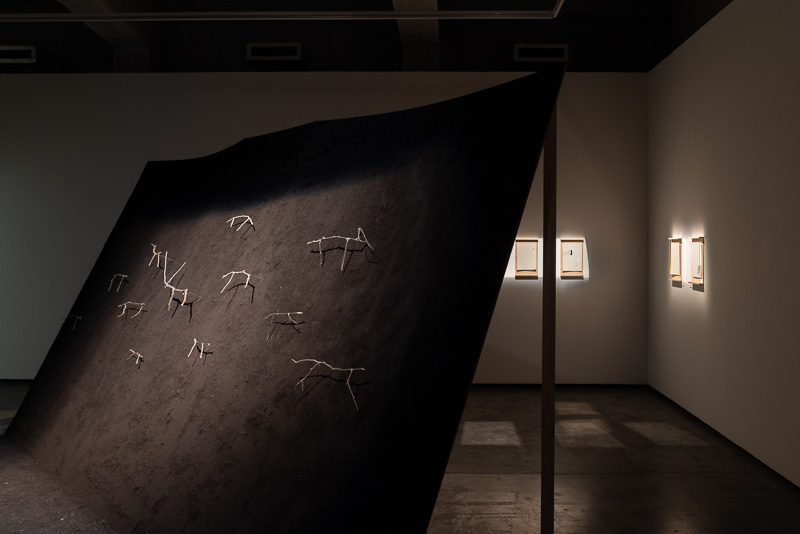
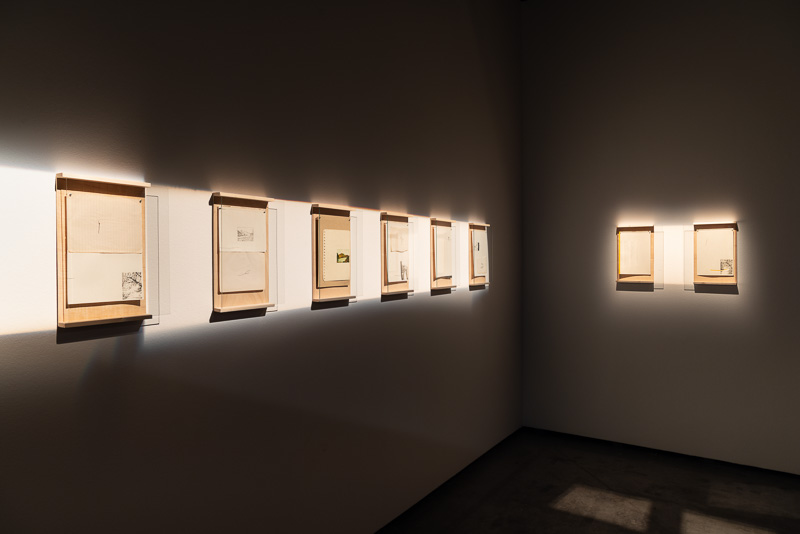
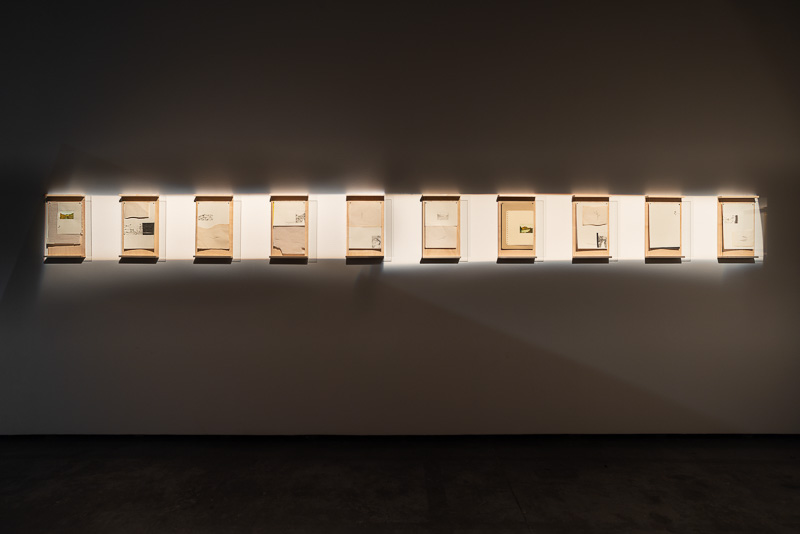
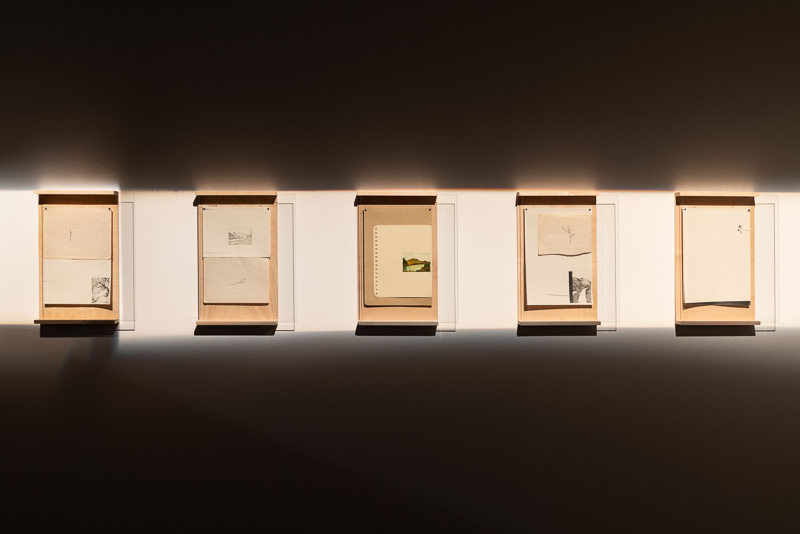
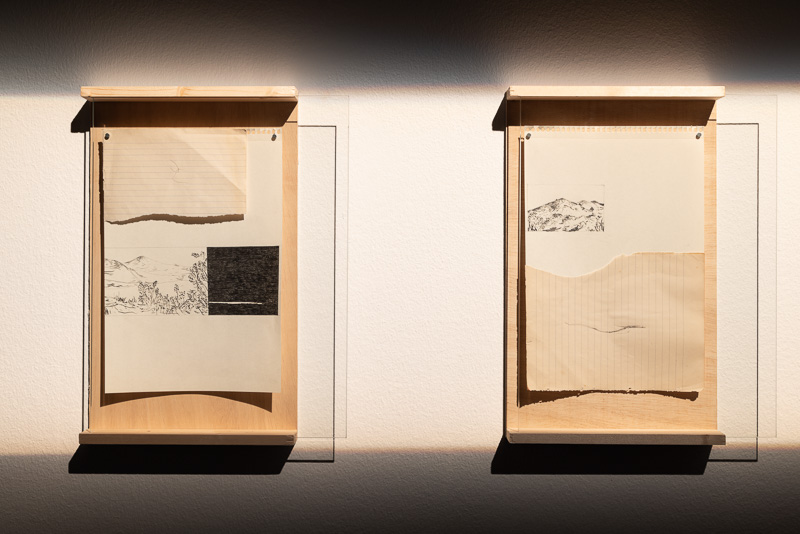
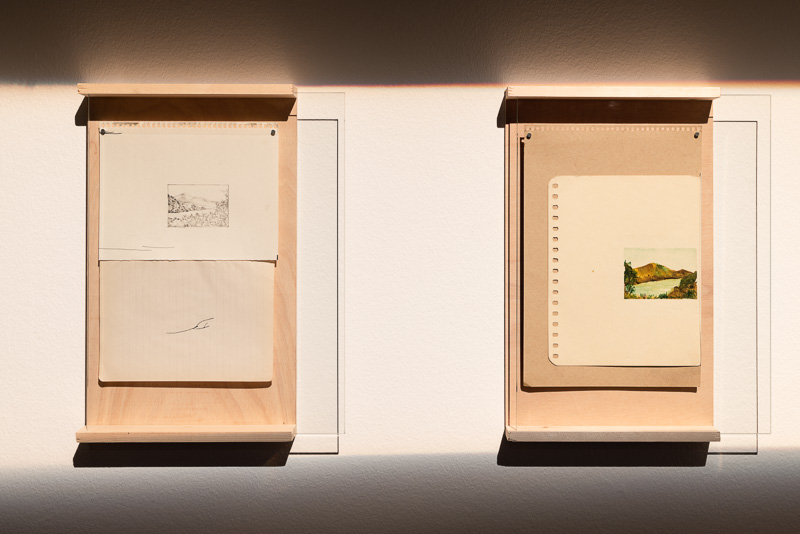
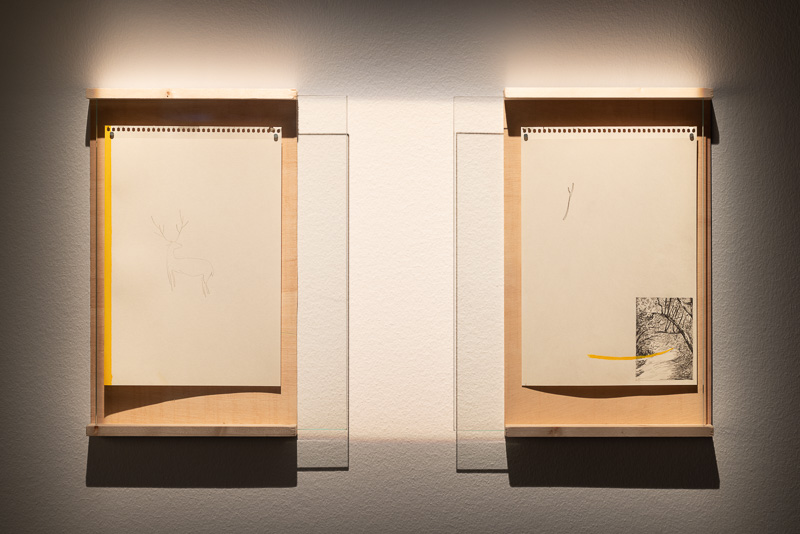
The central piece of Daniel Moreira and Rita Castro Neves expresses, plainly and intensely, this original enchantment (the stony and earthly force of a moulded landscape) and the magical operation, effected in the one who traverses it and let’s himself/herself be stunned by his/her own cognitive disability. The animals, in slender and svelte lines of small branches, run subtly suspended (in a rememoration of mobile Palaeolithic art). Their enormous abstraction underlines a danced movement which the artists, also, found in the Foz Côa engravings (archaeology of a slow image-movement, because the time of eternity is immobile). On the other side of this valley, two eyes gaze at the animals. Or maybe it’s the opposite: the look on the horizon is the millenary animal who stares at us, returning to us our own gaze as animals that we are. Or maybe it’s still that of all living things – the earth, the rocks, the water, the trees, the flowers – which look at us expectantly of our own transformation from contemplating them back. Here is the landscape that surrounds us, where the animal is transformed into echo and the colour into wind and breeze, eternal elements, timeless, present in the first gesture of a silex over the stone in that landscape as today. The drawings and paintings of Daniel Moreira and Rita Castro Neves reveal small notes, singularities of the landscape which perseveres in itself, for it is, only, in it that the secret resides. Pursuing it, insistently, in lines and stains of colour, is a form of scrutinising attentively and sensibly on the mystery of life, like wizards and alchemists. This scrutiny reveals itself, mostly, in the duality between figuration and abstraction, alternating between planes of different kinds of paper, background drapes, which the colour, at times, overrides, and lines which dance freely in the space of imagination, when they jump from the valley and the mountain unto the space of plastic composition. Even the frames reinforce and accent this magical game of capturing the spontaneity of nature in a composition, perfectly, balanced, in-between intertwined planes, distant visions and delicate details, creating, in the work and in space, an intimacy, which despoils in that who listens and watch the blossoming of the aesthetic experience, while, simultaneously, founds himself/herself part of a larger movement, contemplating the immense landscape from a mountain peak. This strong pulsing, which the Daniel Moreira’s and Rita Castro Neves’ exhibition unveils and veils, appears to echo the words of Élie Faure on primitive art: “Here is the sole point of departure for the miracle of abstraction, for formulas wholly purified of all trace of experience, and for the highest ideal. And it is here that we must seek the measure at once of our humility and strength.”
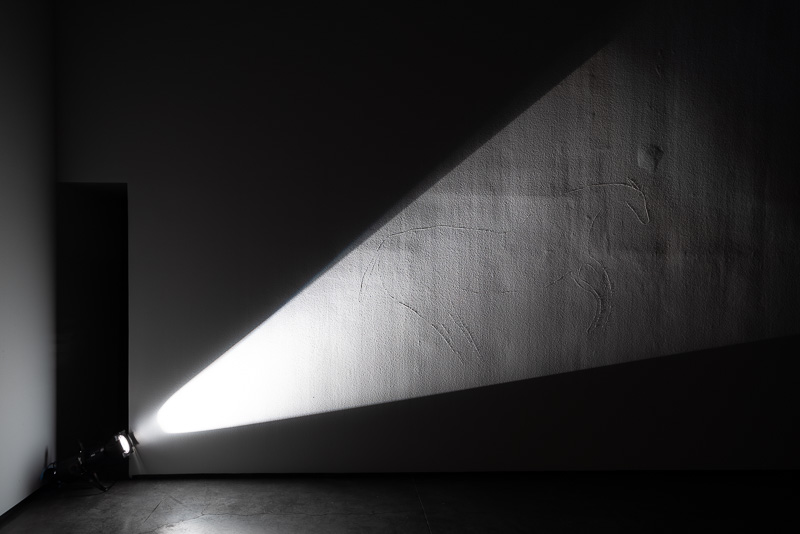
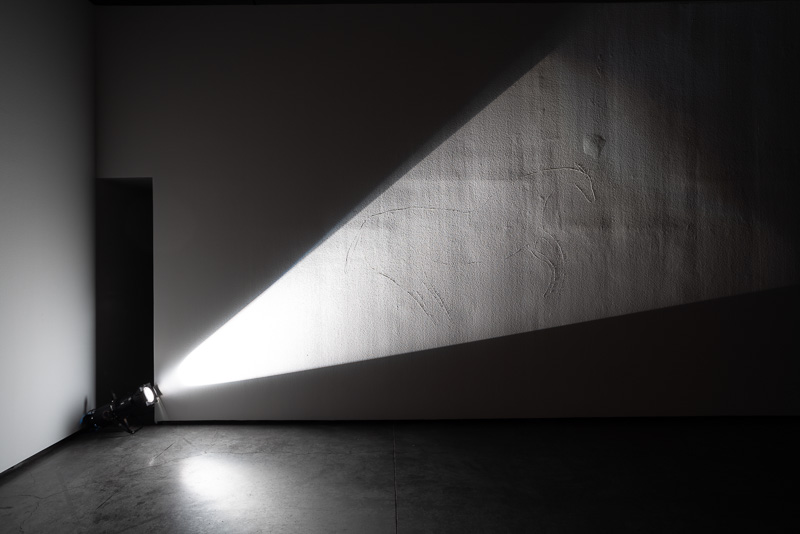
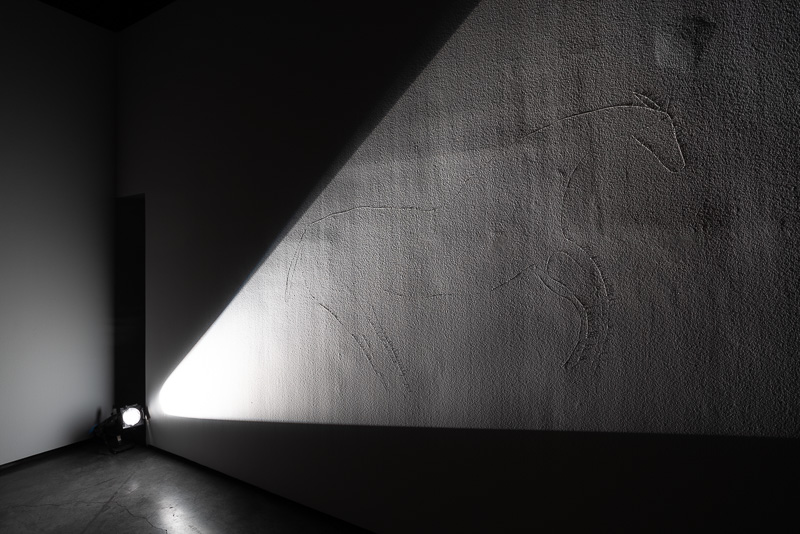
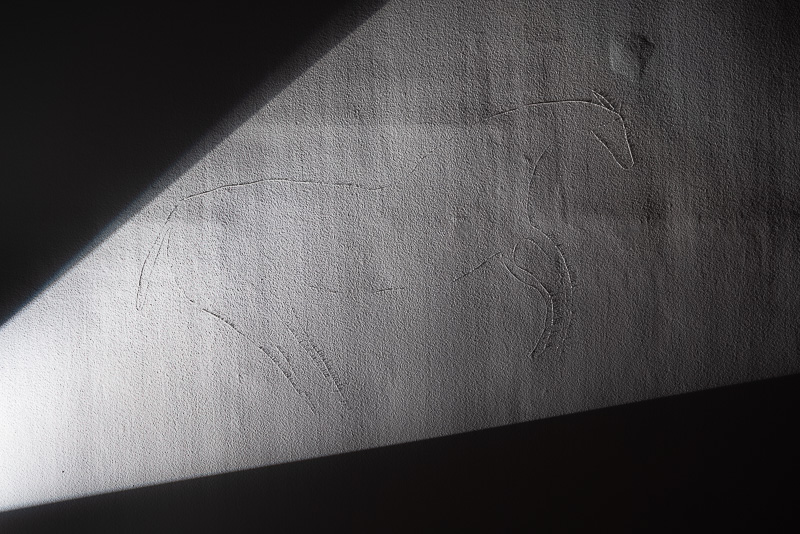
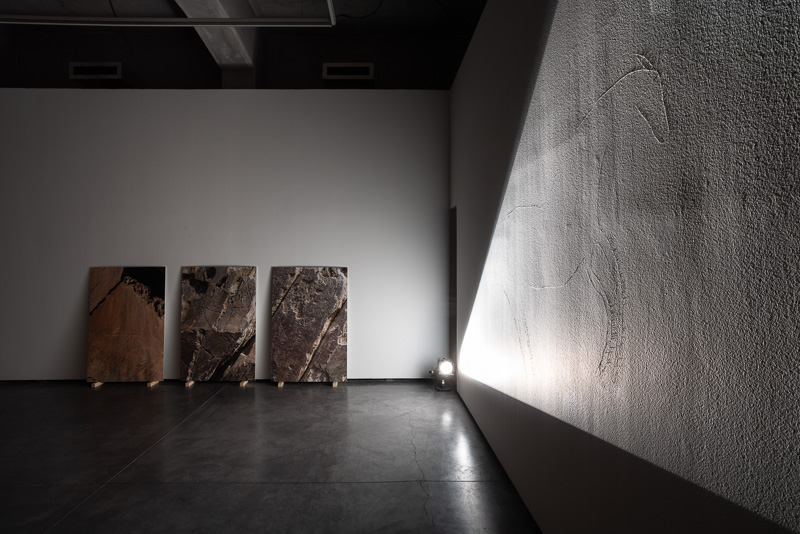
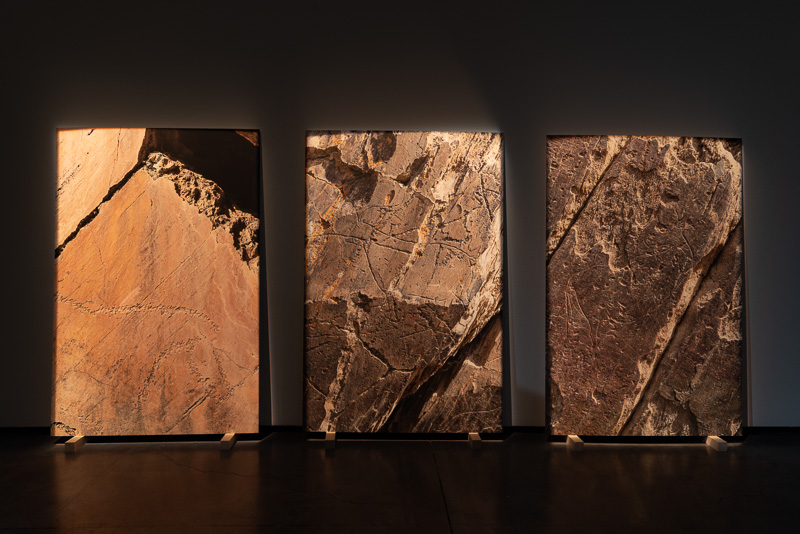
In the approximation of the primitive artist to the stone panels, it’s also understood this sensitive knowledge of matter. The lines wind, many times, changes in the colour of rocks, subtle difference of volumetric planes, something which cannot be explained solely by the resistance to the passing of the silex or any other instrument used to carve. This much is, immediately, intuited on the three photographs, in a rare vertical format on the artist duo works, laid, solemnly, over planks of wood. The grooves, transformed into lines, release themselves from the plane of photography and it is the shadow that vibrates in the coloured surface of the rocks, accentuating those characteristics which entered the composition of the primeval work. The dimension of the photographs, their positioning and their inevitable composition confers them a unique solemnity, appearing, furthermore, to invoke the divine aura of the animal: a spectral animal that contaminates the whole exhibition space. One sees the animals among the brooms, holm oaks and green plains, in the mountains backdrop: horses, aurochs, deers… One recognises them in a temporal paradox. One feels so distant from those beings who drew them and so familiar with the animals, whose beauty, movement, mastery and divinity they dared to capture. And, in a fulgurant moment, as if under the action of lightning, the mechanism of wonderment is unveiled: in the white wall, where nothing seemed to exist, the animal appears crystallised, in a single continuous line, etched in the paint, the horse of our ancestors, the historical horse, or better still, the intemporal horse, who passes through us, like the blowing of the wind which seems to carry it. Its sound is magnificent, doesn’t even seem to have been etched by a knife.
Susana Ventura, November 2022
credits © bruno lopes

HCI / Colecção Maria e Armando Cabral /  /
/  /
/ 