Four restless legs
Standing in opposition to the vertigo of the world, a stool is, in principle, a place to stop. We sit on a stool to catch our breath, to carry out a task (in a kitchen, a workshop), or to meditate on the world. A stool can also be an invitation: we pull it out on the spur of the moment to create another seat at the table, creating space for conviviality. With its economy and simplicity, a stool is never just one thing, which is why, as the archetypal seat, it almost always manages to escape the commonplace.
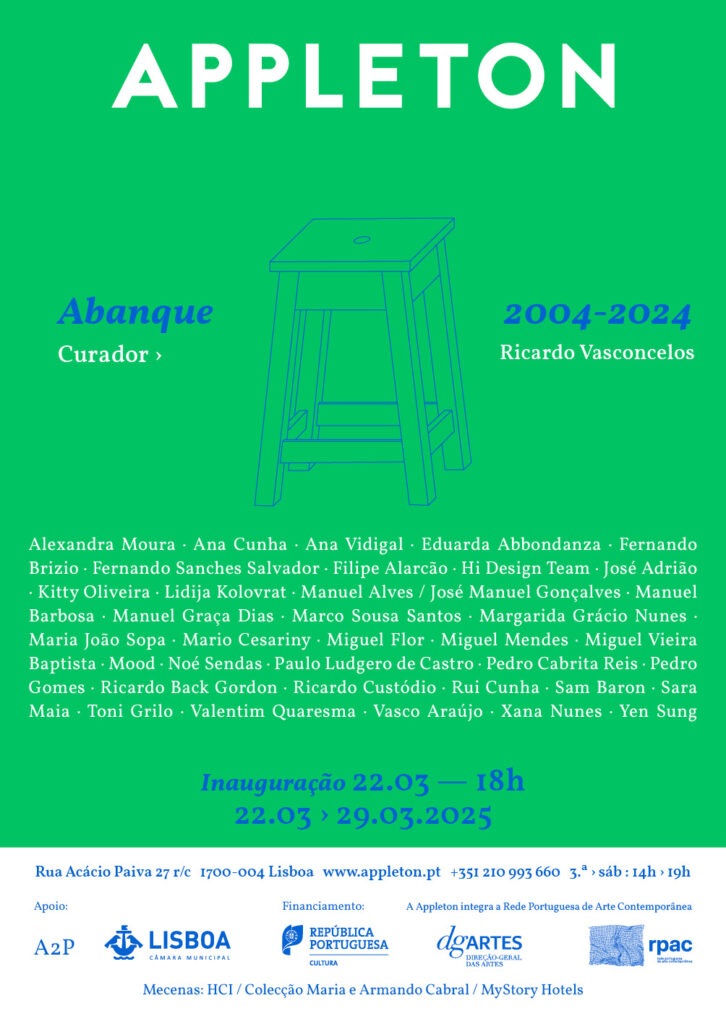
As a word, ‘stool’ is restless. And this restlessness persists in the object: a top, four legs, wood with no nails in sight, a hole in the centre, allowing it to be lifted effortlessly and easily transported. It looks simple, but perhaps it’s not. Even in immobility there is agitation. A stool is a familiar object that crosses time and space, successive contexts, with astonishing ease. It is an unfolded, winged signifier. We find it in the home and in taverns, in the countryside and in the city, as a support for a plant, as a bench for ideas, under a pile of books, or as a stepladder, always at hand.
A stool is a place to stop, which seems to point towards stillness, sedimentation. But a stool is also a place of passage, designed to respond to the context with unusual agility, without ever giving up its stability, without ever staying in one place for too long.
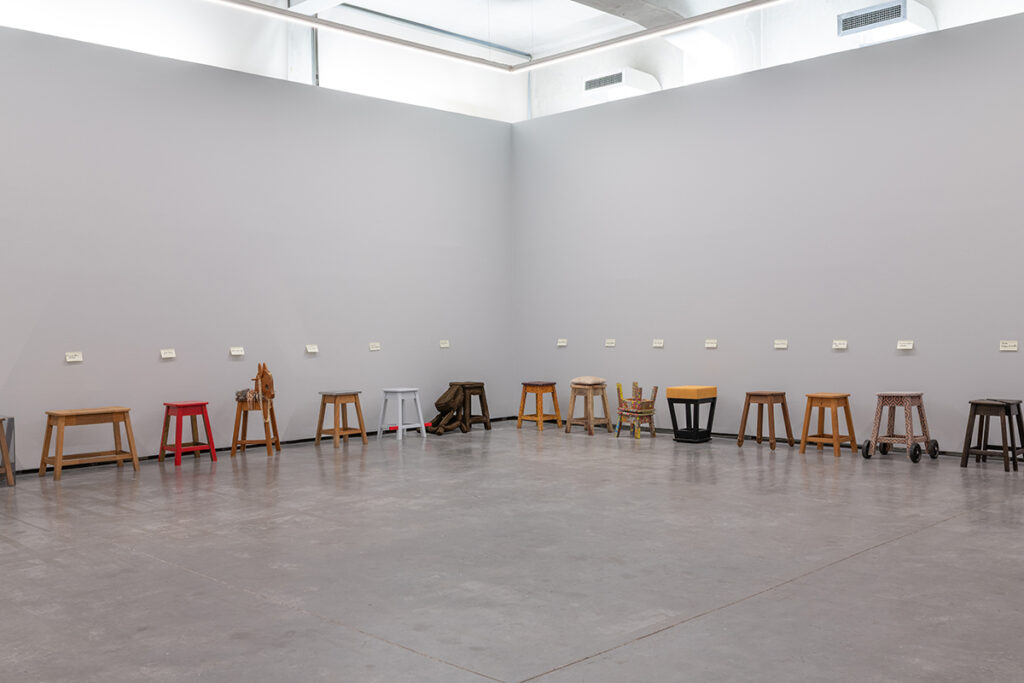
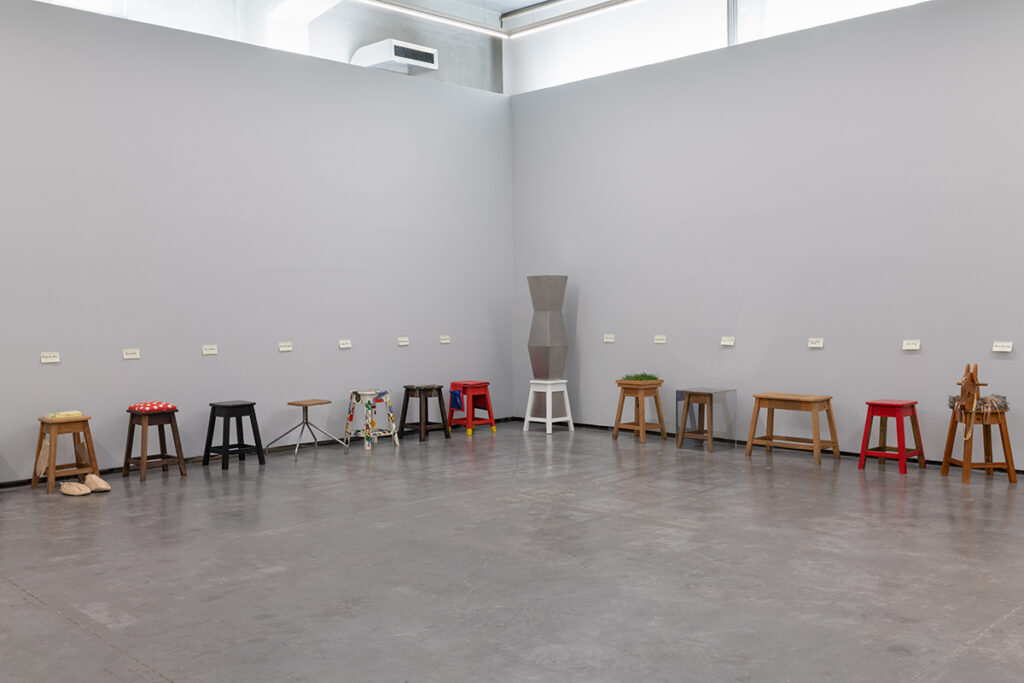
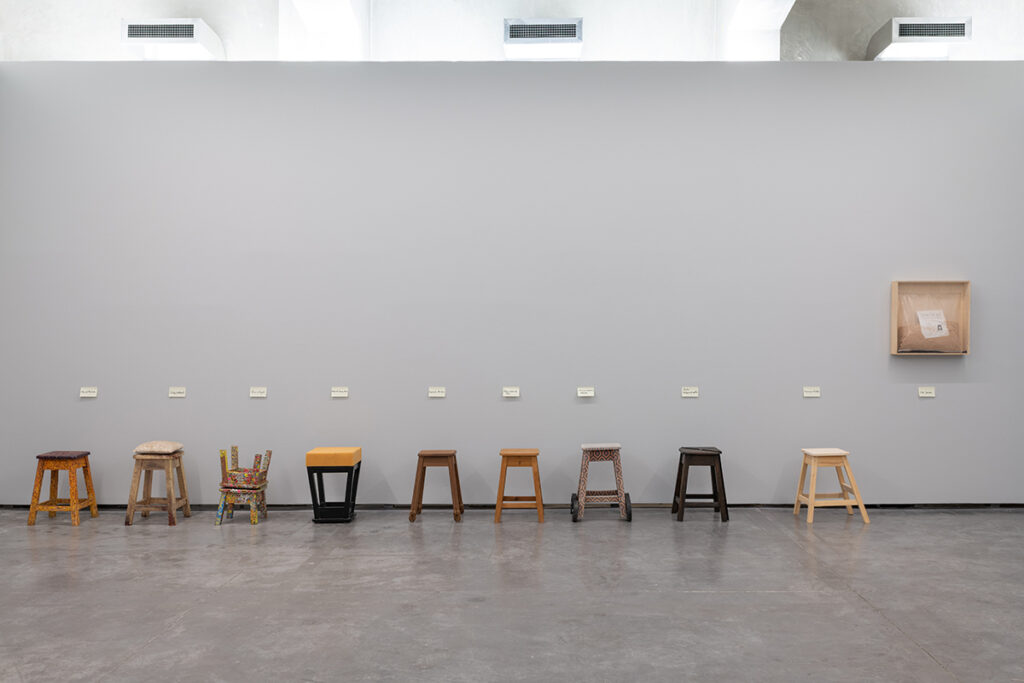
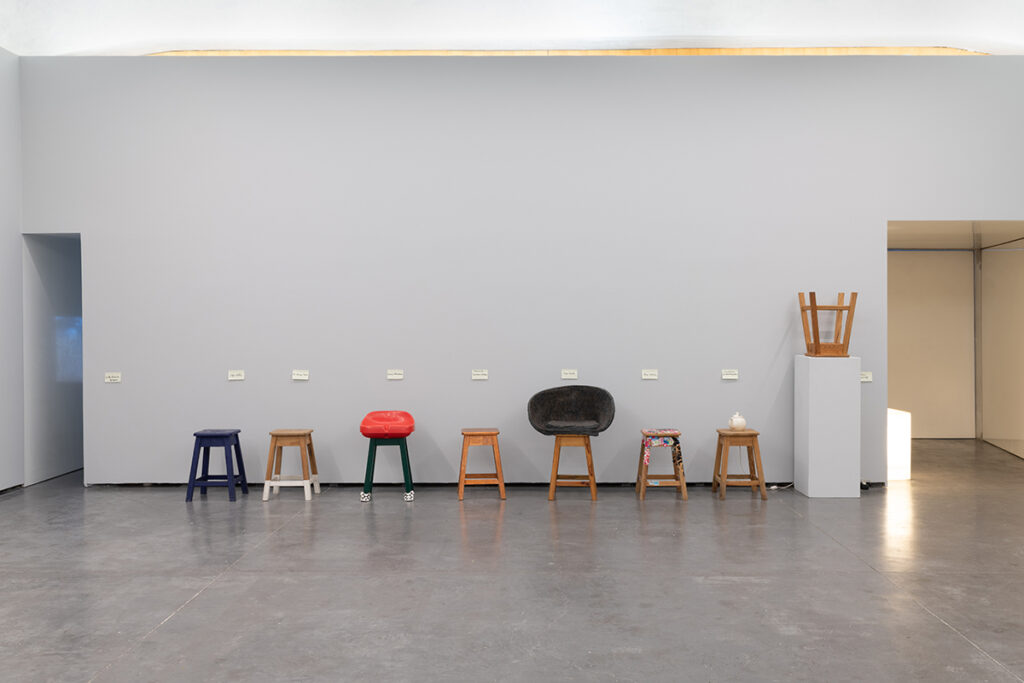
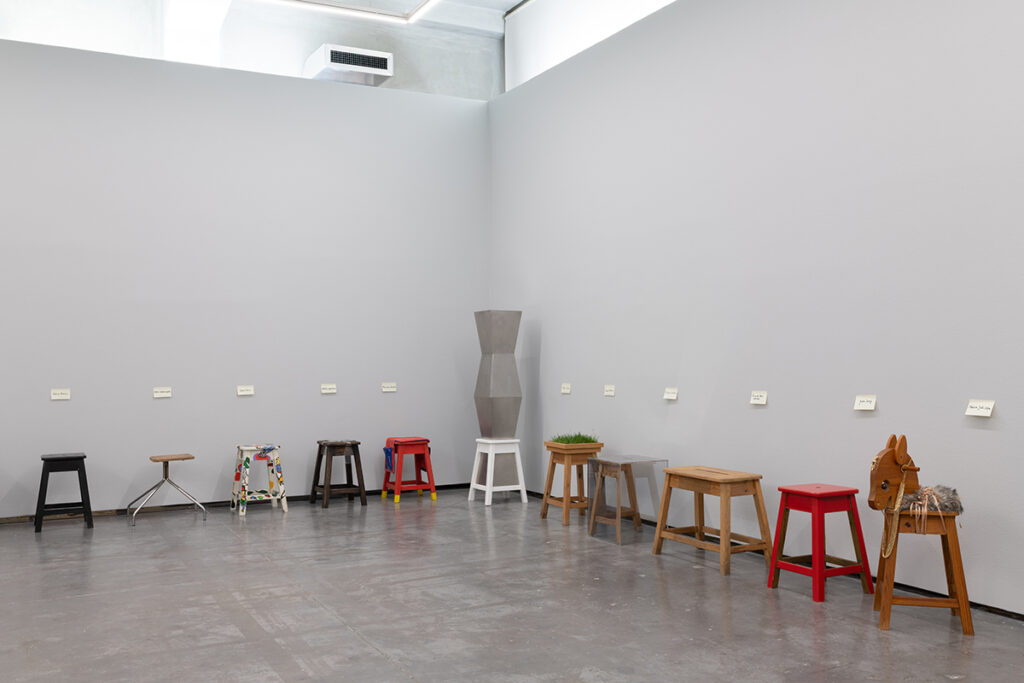
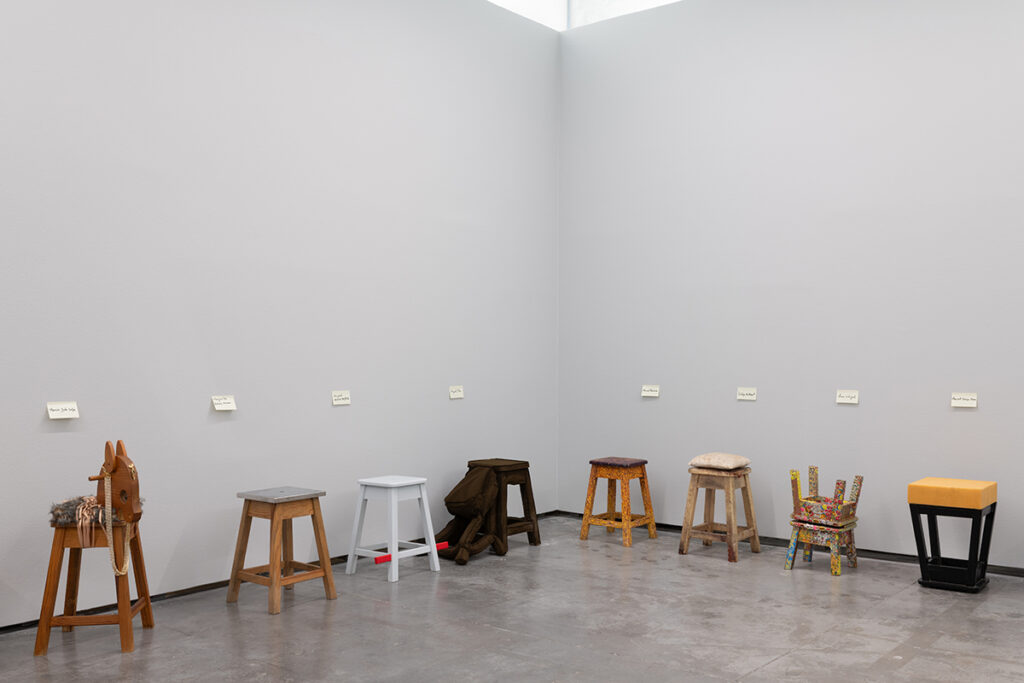
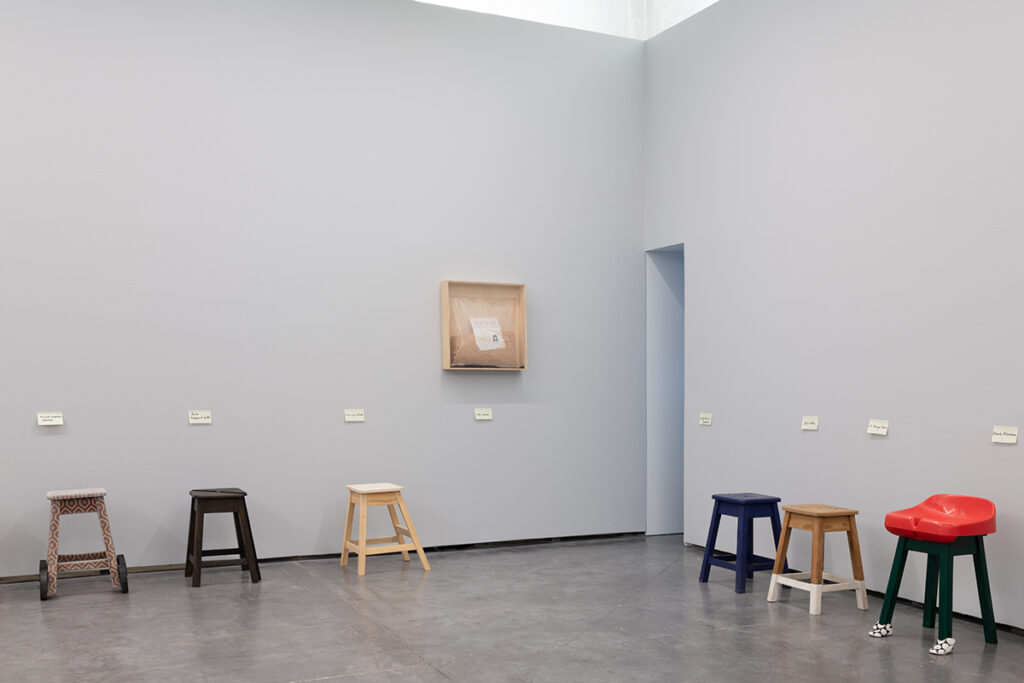
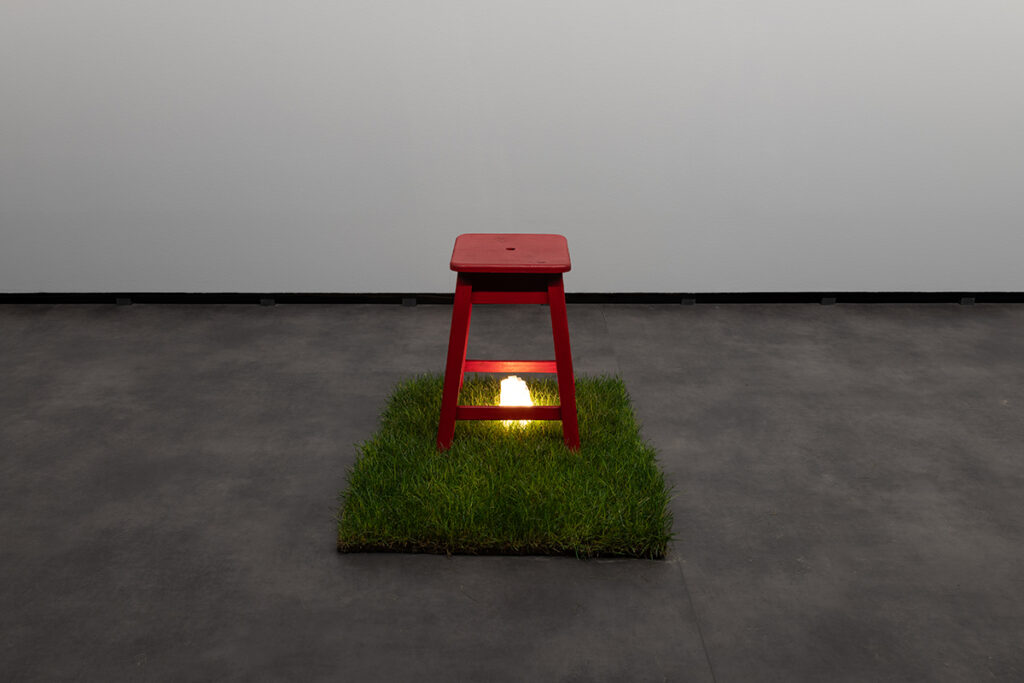
In this sense, it is a perfect object for provocation. Imperturbable in its simple solemnity, it stirs up space. A stool is a gadfly, which is perhaps why curator Ricardo Vasconcelos in 2004 challenged more than 80 artists, architects, designers, musicians and creative minds in general to respond to this object through interventions that drew it from the vernacular universe whence it was born to confer it an ‘authorial stamp.’ While the word vernacular is linked to the domestic universe for the worst of reasons – deriving from verna, an enslaved person born in the ‘master’’s house, therefore bearing a trace of oppression – in the hands of these creators these objects free themselves and become doubly ‘subjects.’ Inhabiting space and animated by the use we give them and the



 /
/  /
/ 