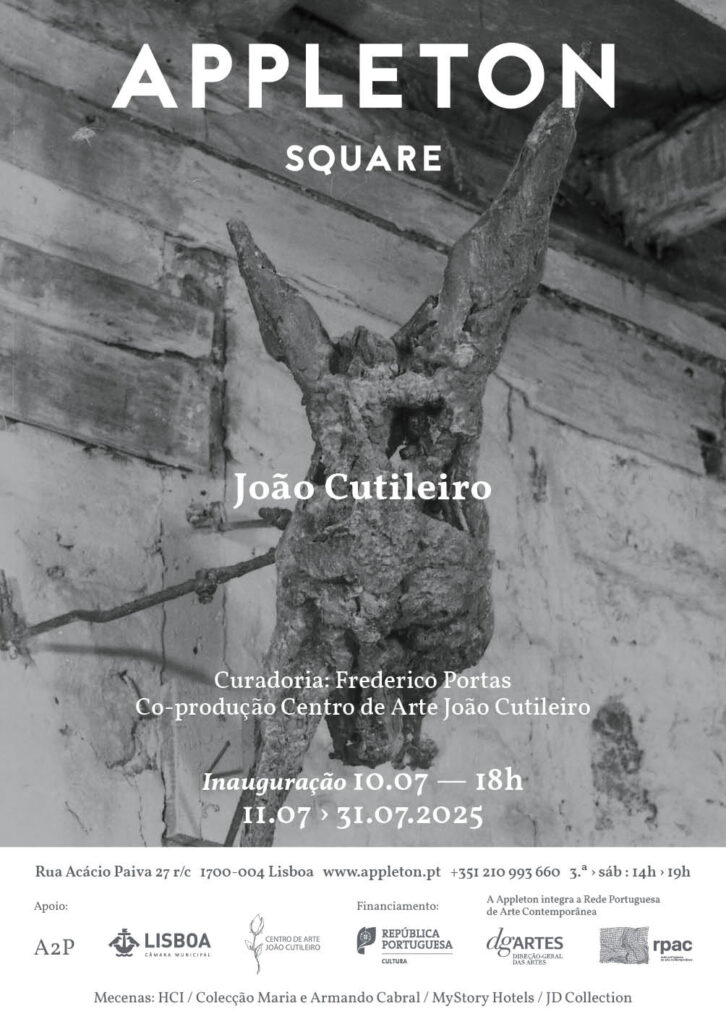
This exhibition of the work of João Cutileiro (1937–2021) brings together a heterogeneous selection of pieces. Multiple materials, processes, periods and preoccupations coexist and interact, but with marked differences.
Perhaps the extraordinary dissemination of João Cutileiro’s work (which will always hold a place in the history of Portuguese sculpture of the second half of the 20th century) has led to a denial of its heterogeneity – or rather, to the promotion and reinforcement of relatively definitive theses and assumptions about the artist’s oeuvre. The persistent or unreflective repetition of such a view may, and indeed often does, result in a kind of blindness (a monocular vision), obscuring other perceptive readings the works may afford. It can prevent moments of wonder, block any possibility of seeing differently, and hinder any endogenous outgrowing of a perspective convinced it has lifted the veil. Novalis reminds us that the one who lifted the veil of the Goddess of Sais saw only himself.
Beyond historical or didactic concerns, this exhibition presents a group of works concerned with the body (as in many of the artist’s previous exhibitions), the funereal, the sepulchral, the mortal. These are open and undecided matters – closer to a multifaceted crystal (kaleidoscopic, labyrinthine, desert-like) than to a Cartesian triangle. Phenomenological realms in which there is a quiet petition for self-examination, a reckoning with one’s being, in silence, in stasis. Perhaps these works, in their potential to ‘notify’ (body and spirit, thought and intuition), speak to that.
[I & II] Both the potential ‘astonishment with the artwork’ and the ‘potential awe of death’ are reflective occurrences: inner dialogues (of self-toward-death, self-in-mourning, self-uncertain), of self with other, of body before bodies. For these and other reasons, this text is merely a compilation of facts (some more factual than others) and (unscathed) comments on the exhibited works, with a few (very few) tentative links between them, among other things. What matters most is left aside: entrusted to the experience of the body – ‘of my flesh’ – before fragments of marble, iron, plaster, bronze, fibreglass.
One final note: each room sheet features an image (one of nine photographs) of a sculpture by João Cutileiro. The sculpture, created and destroyed in London in the 1960s, depicted Icarus. All that remains of it are nine negatives, nine documents, nine perspectives. Nine versions of what is no longer here – of a sculpture destroyed and forgotten, a mythological emblem of the one who, through ambition and yearning, lifted his wax-and-feather wings towards the flames and flew to his ruin, just like the sculpture itself, of which little now remains.
The exhibition…
consists mainly – but not exclusively – of previously unseen works.
consists mainly – but not exclusively – of works produced in London in the 1960s.
consists mainly – but not exclusively – of the procedural absence of machinery. The machines – typical of the quarries – that, from 1966 onwards, came to shape João Cutileiro’s work, and later, the work of many other artists.
consists, in part, of the absence of marble. The marble – cut by machine – of female figures, monarchs, trees, myths, portraits, and beasts. The unfailingly recognisable marble of João Cutileiro’s work.
consists always – and exclusively – of raw matter. Plaster, Bronze, Iron, Fibreglass, Marble. Bare, exposed, unveiled. The matter of João Cutileiro’s work, inexorably raw.
consists, one might say, of three categories (three ‘keyholes’) of works.
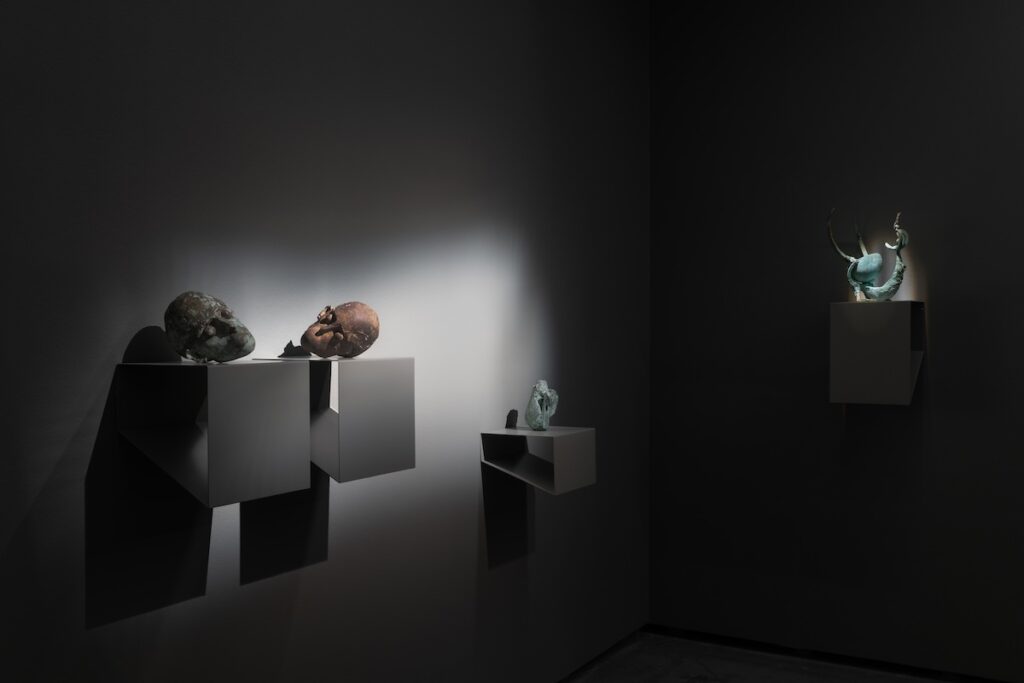
[7.1] On the shelves, on the ‘wall plinths’:
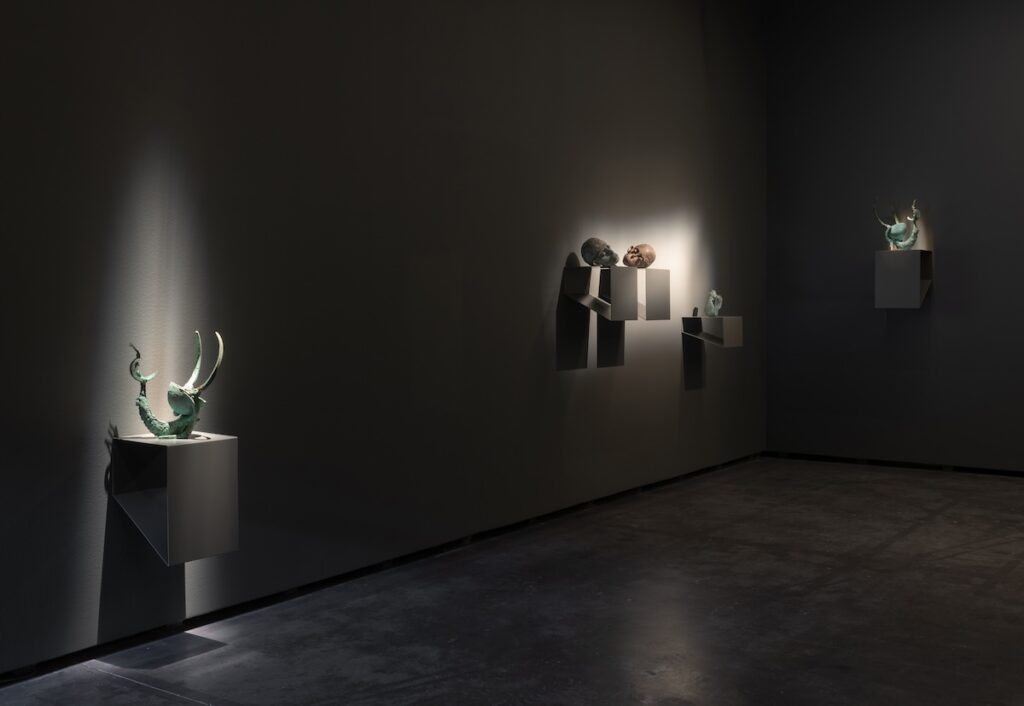
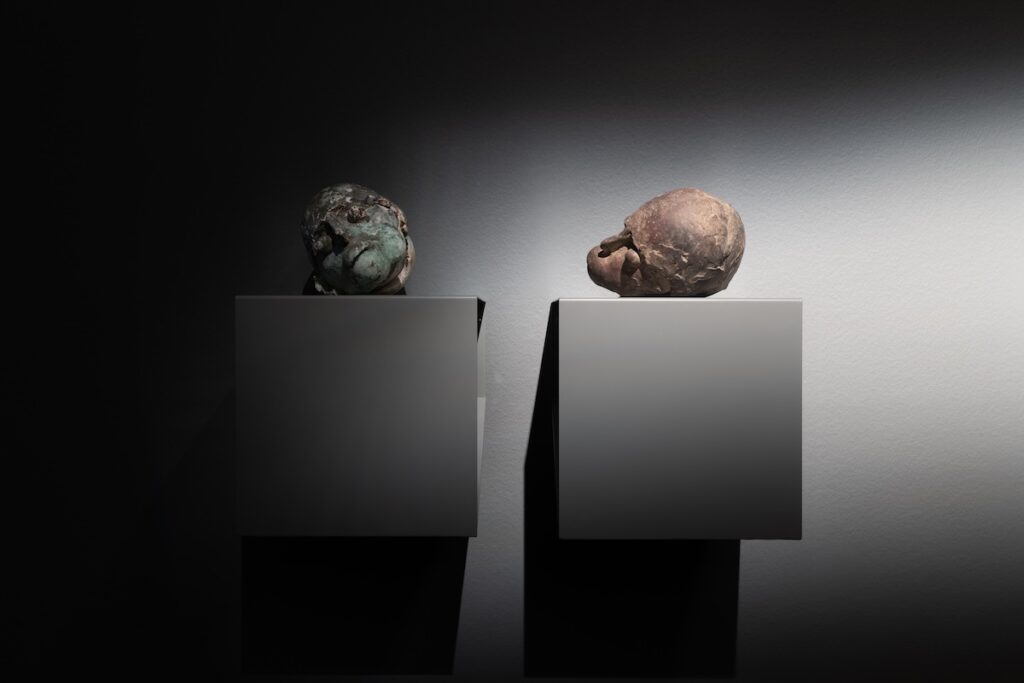
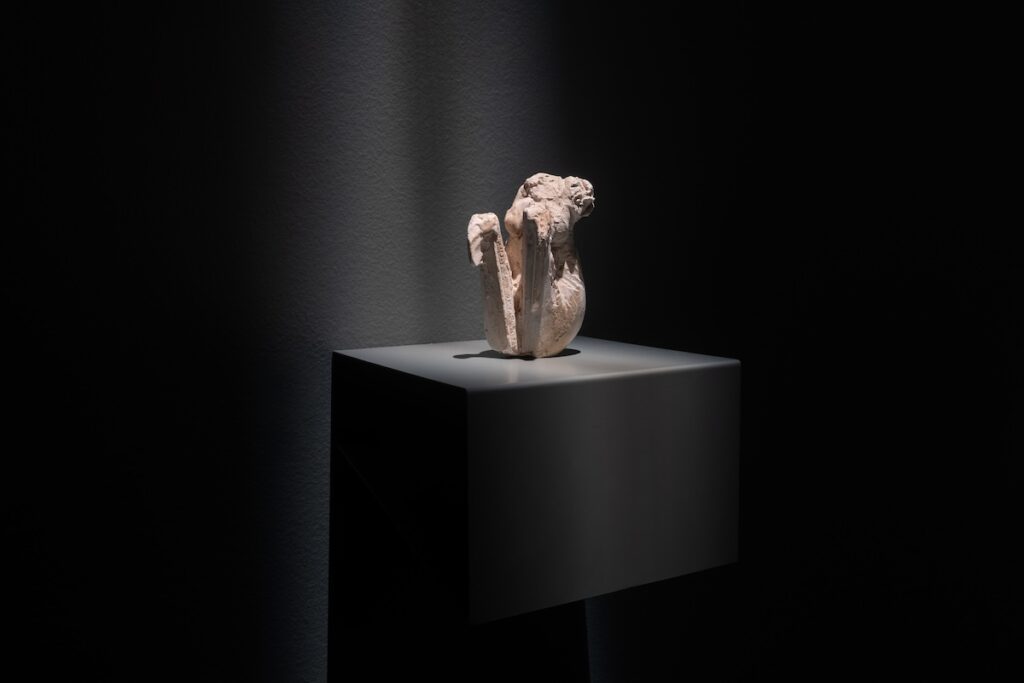
works made in London while the artist was studying at the Slade School of Fine Art, working as Reg Butler’s assistant, under the influence of Henry Moore;
Two works for each: one ‘copy’, one ‘original’ (plaster and bronze, plaster and fibreglass). Identical referents, distinct physicalities. (Same face, same seated figure, same elements; different times: of creation, drying, degradation). Kindred pieces, yes, but not multiples. Each, in their own way, chipped, wounded, and fissured by the hand, by time, by matter. As though in a state of indecision – hesitation, unease – of the ‘same’ becoming ‘other.’
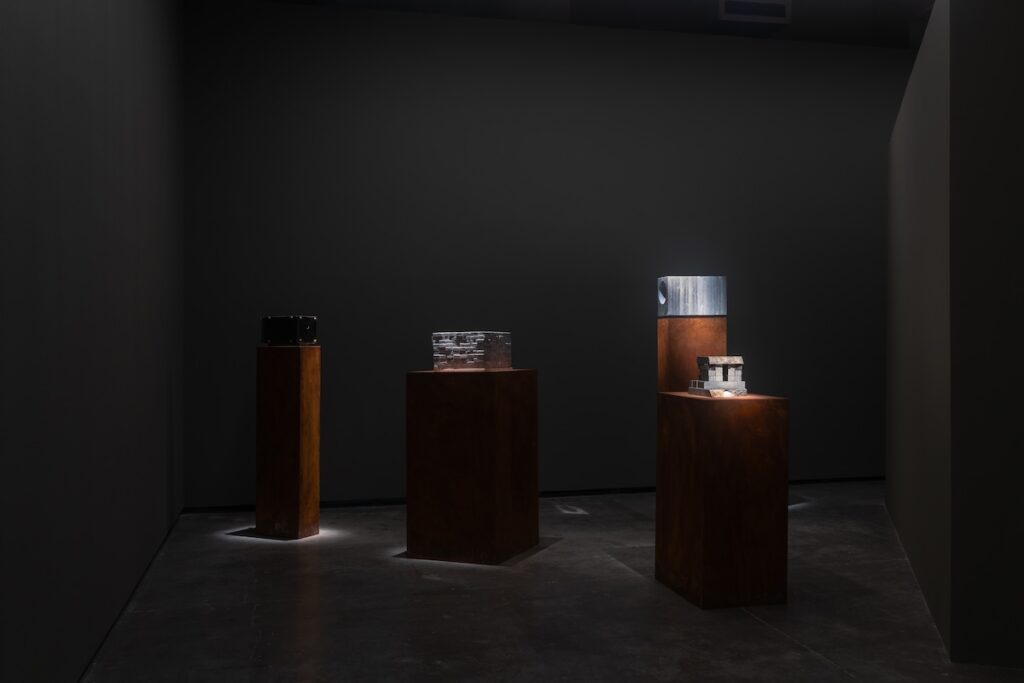
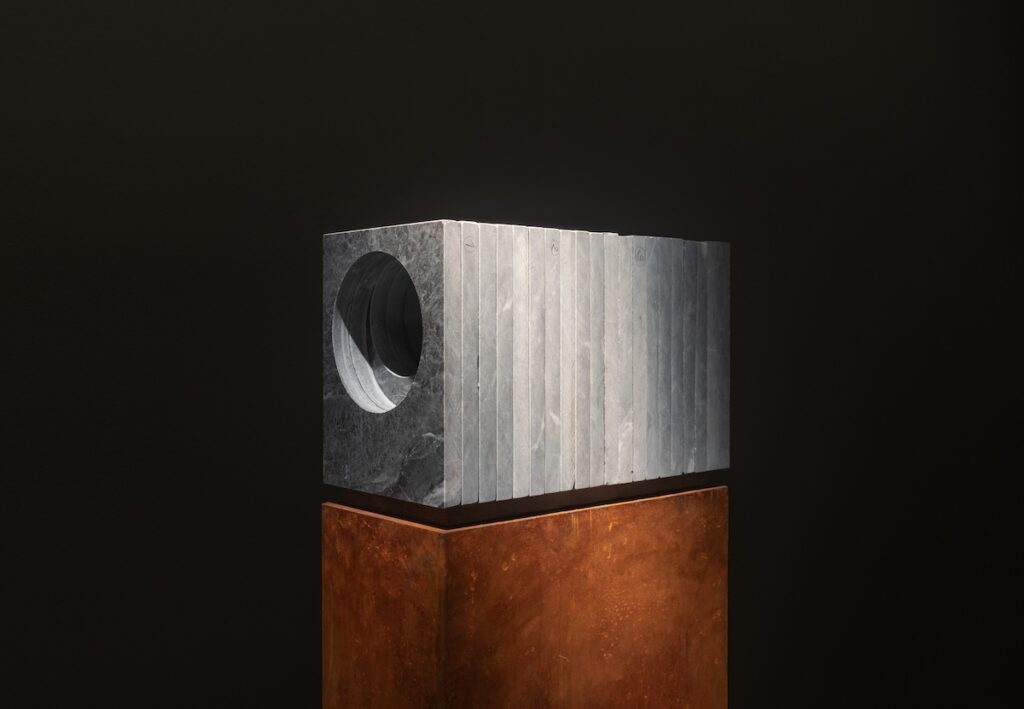
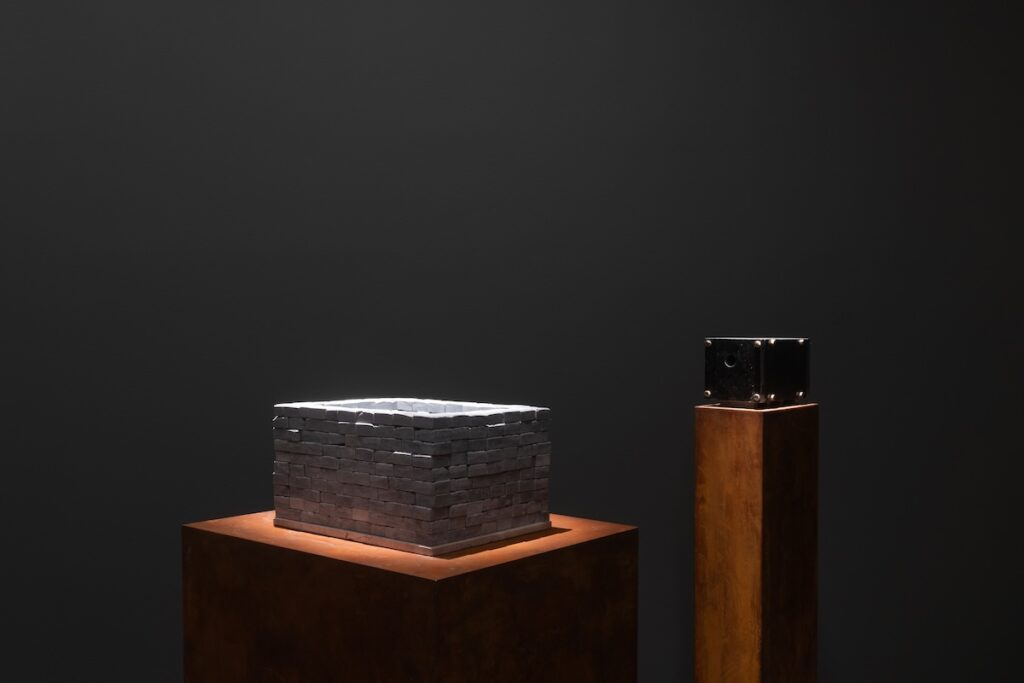
[7.2] On the plinths, in rusted iron: a) works from the 1990s, a time of posthumous homages. Tombs of marble – the machine-cut marble – with (or without) recumbent figures. Reclining in the anonymity of the tombstone, at the edge of the grave.
b) all – without exception – are maquettes. Projects for sculptures that were never realised. Unfulfilled fragments, sketches of what never came to be. And yet, fragments
with meaning: for João Cutileiro’s maquettes are, from their inception, imprecise in scale, varied in process, and in detailed contrast with the ‘buildings’ they propose. These maquettes – like many others by the artist – seem to elude metonymic logic; they do not appear to meet the necessary or sufficient conditions of what a maquette conventionally is. Projective tombs, whispers of what is to come, yes – but sovereign in themselves, never subordinate.
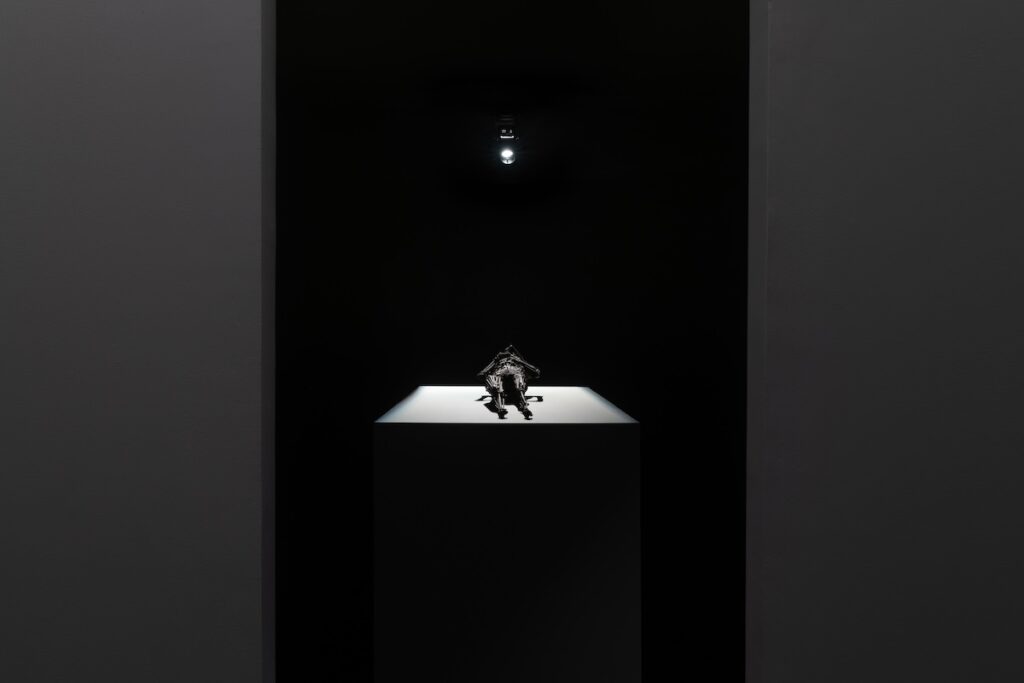
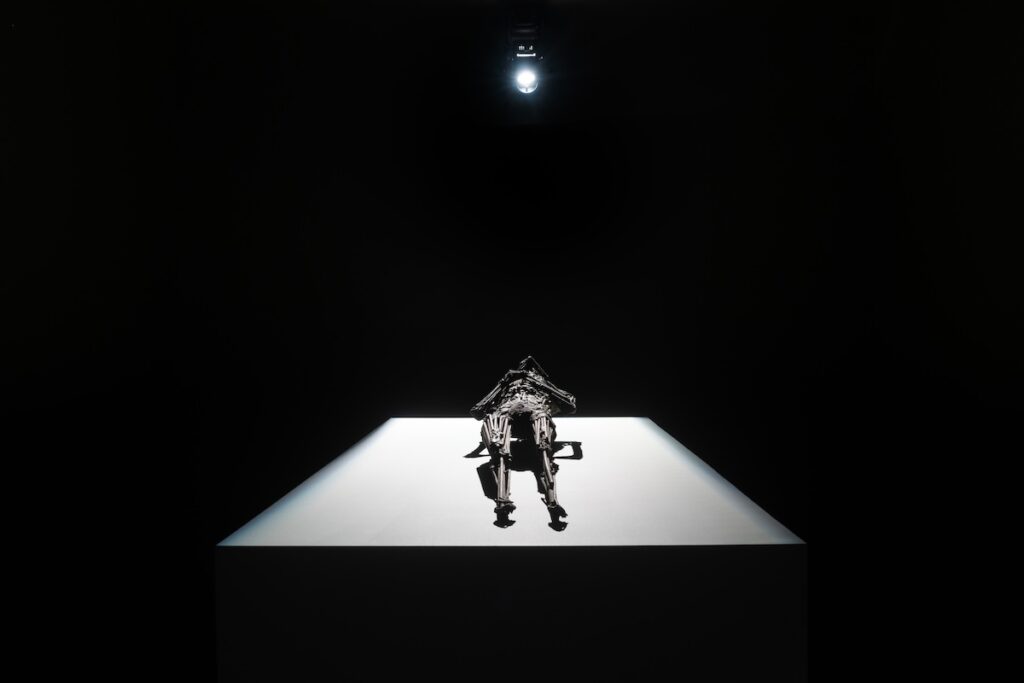
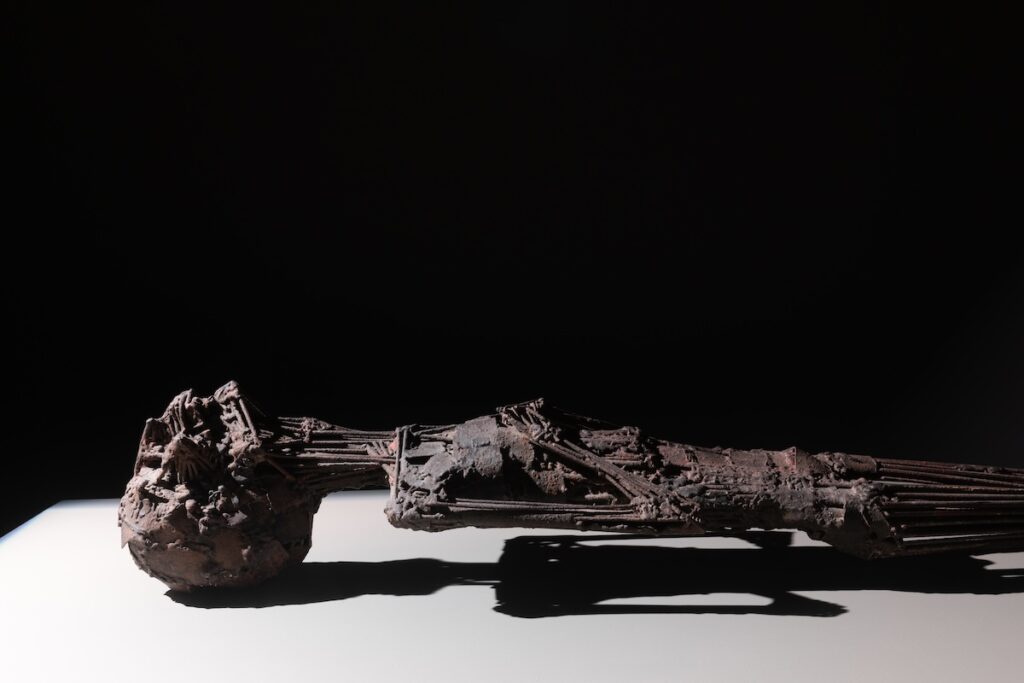
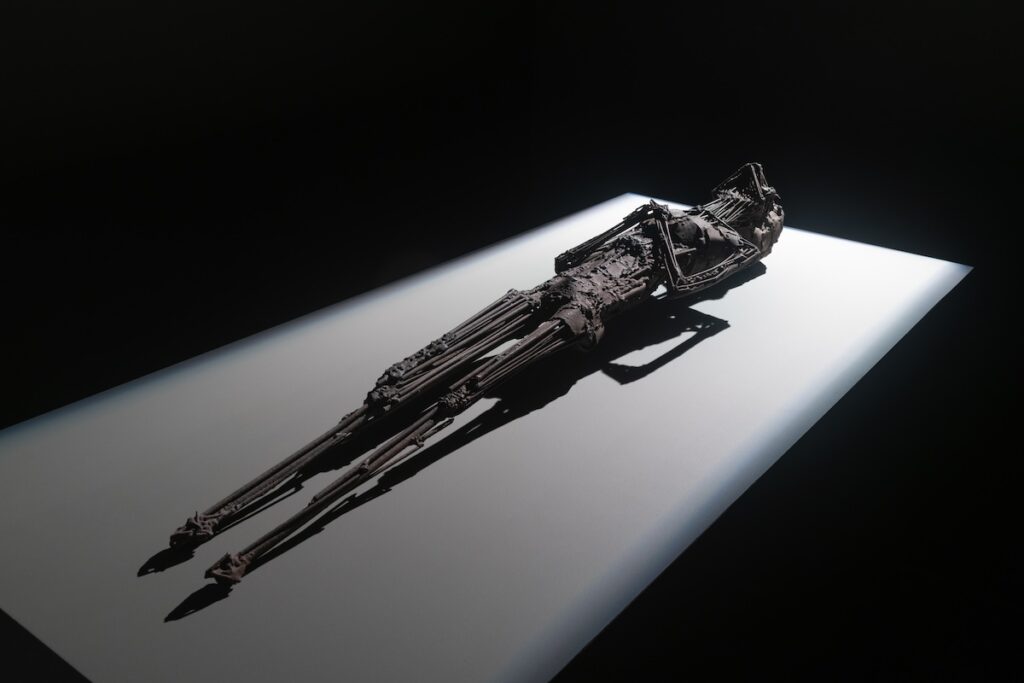
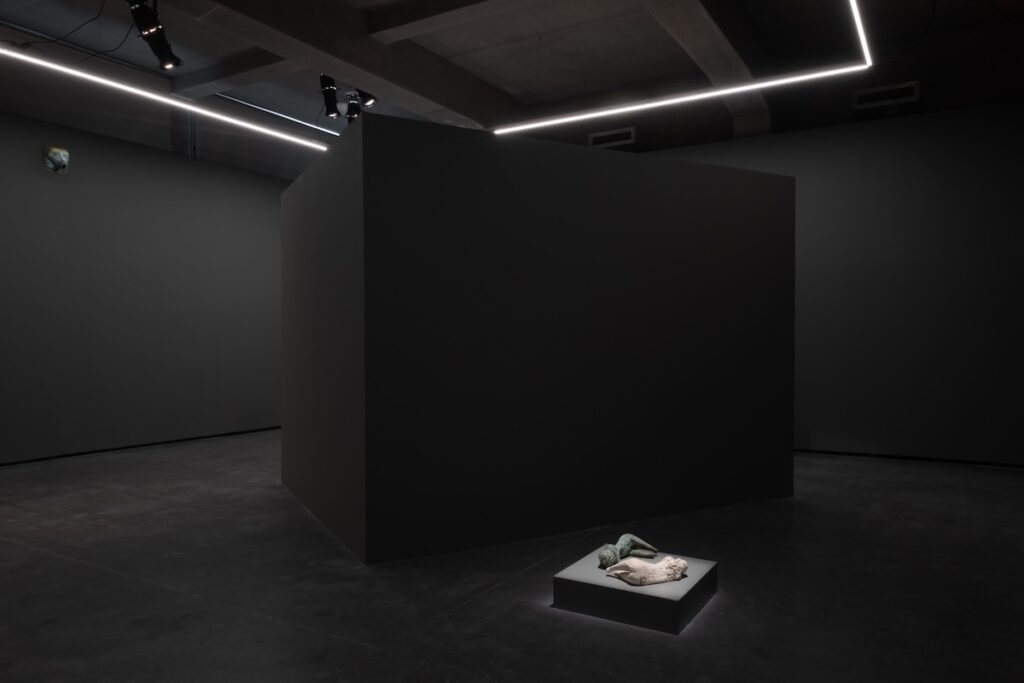
[7.3] inside the box, in the crypt: a single work (‘Recumbent Statue of the Poet – A Pre-Posthumous Homage to Hélder Macedo’) placed within what resembles a tomb. Once again, a sculpture made in the 1960s, in London. With – or without – irony, it is a pre-posthumous homage. A tribute to the not-yet-dead, to the future death of one still lucid. The sculpture stands alone, in its own space – not unlike the immaterial space of the maquettes that never came to be (they too, perhaps, ‘pre-posthumous’).
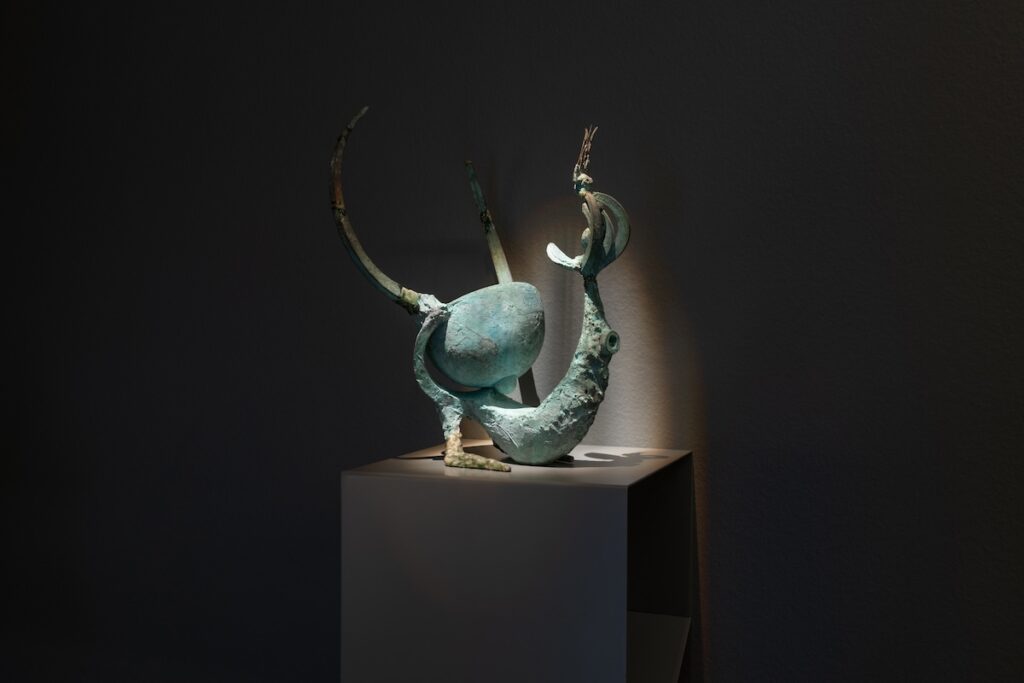
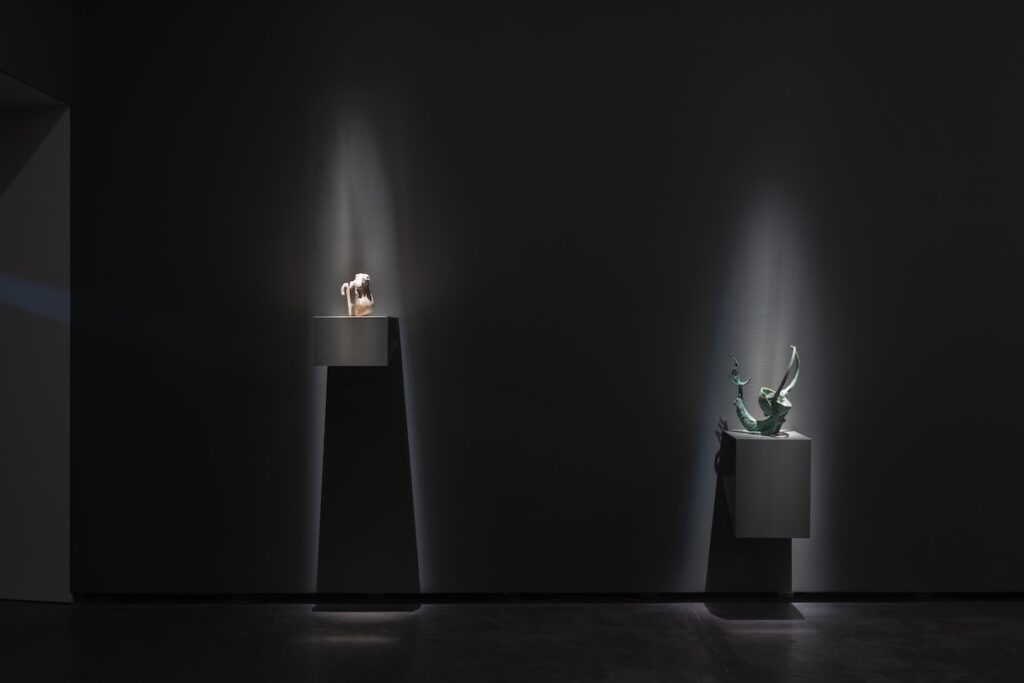
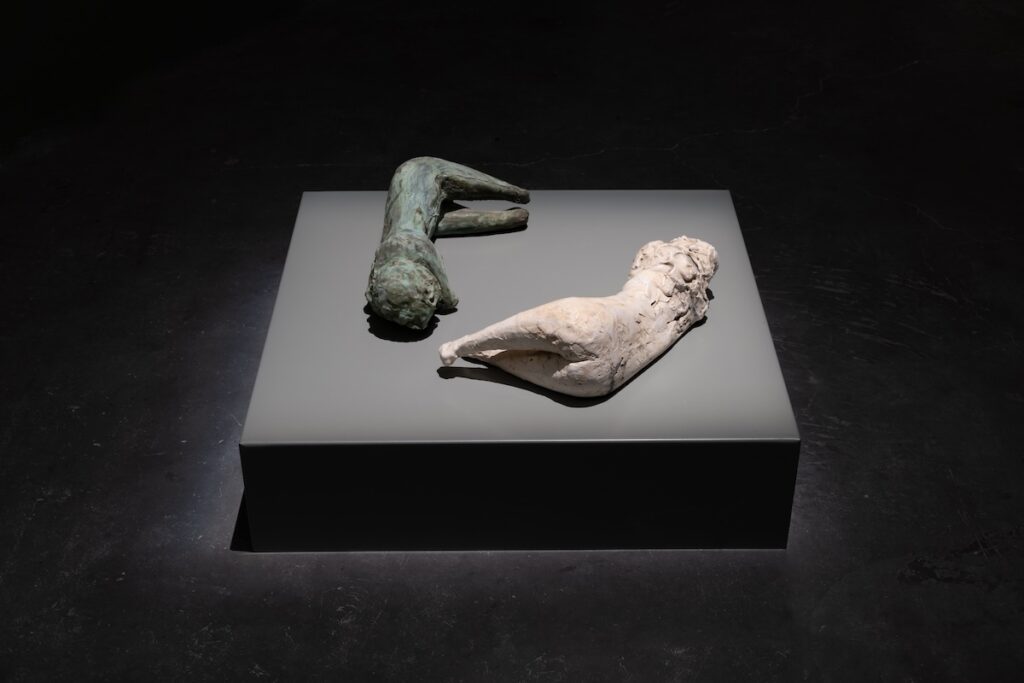
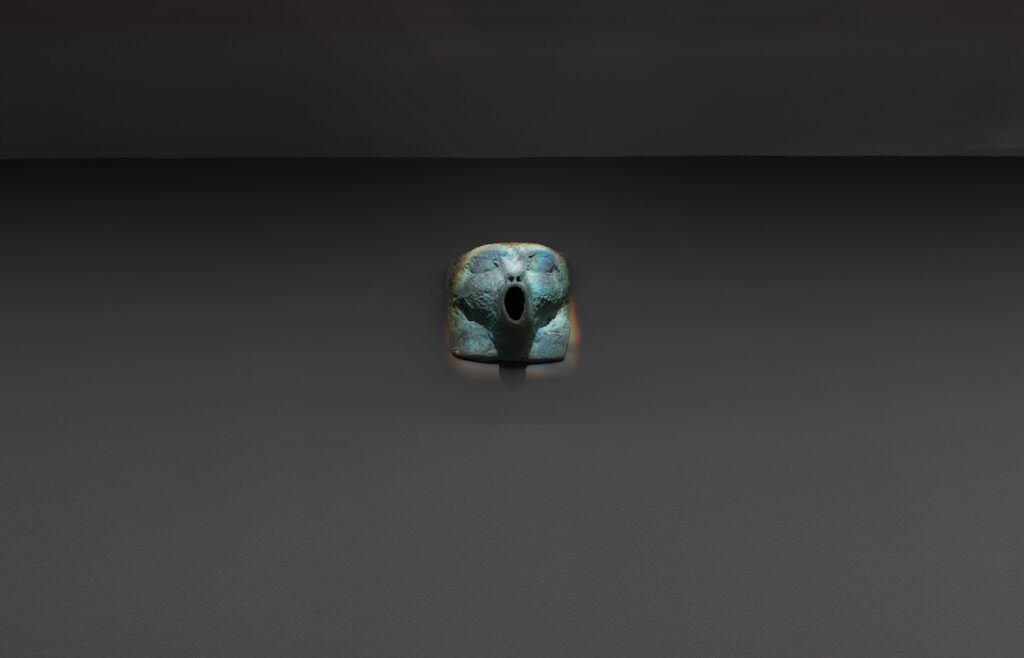
[7.4] elsewhere, a gargoyle (London, 1960s), as an apotropaic figure (a guardian of death), an emblem of mortality (memento mori, ‘remember you must die!’); two untitled female figures (London, 1960s) – dismembered girls, a copy and an original (kindred, not clones); a fractured torso (untitled, 1990s), left deliberately broken; a hand (‘Ballad of Autumn,’ 2019, Évora), João Cutileiro’s final sculpture.
Brief notes. This exhibition…
consists mainly – but not exclusively – of remnants. Remnants of iron, plaster, bronze, fibreglass, stone. Scraps of matter, studio shards, fragments of bodies. The remnants to which he always returned (as the rag-and-bone man does), the remnants from which the thing appears.
consists in defiance of multiplicity. Multiplicity of processes, subjects, materials, motives, chronologies, methods. Echoes, by good fortune, of a body of work that was always many things, and never just one.
consists – perhaps – of versions. Alternative versions of being-towards-death and forgetting; of finitude and access; of wound and rupture; of flesh and body. As though in the absence of absolute angles – a realm of parallax: concurrence, conflict, contrast – between different versions of the same. Perspective-laden unfoldings of the self in relation to itself, caught in-between.
consists of bodies. Faces, torsos, limbs, hands, entrails, skeletons. Bodies seated, lying, reclined, concealed. Bodies wounded, torn, headless, dismembered. Bodies of iron, marble, bronze, plaster, fibreglass. Bodies present and absent, large and small, gouged and polished, imagined and sculpted, deferred and in contest, solitary and in proximity. Bodies here, bodies there. Bodies that appear here, ‘in-me,’ that ‘appear-to-me,’ in commerce with ‘my-body.’ Presences that occur, ultimately, before the flesh – the pulp and the lucidity – that we ourselves are always forced to endure.


 /
/  /
/ 