In the story Altruizine, by Stanislaw Lem, a robot with almost omnipotent powers decides to carry out an ambitious project: to make possible universal happiness for all living beings. The method was clear in its simplicity: with a water-soluble substance called Altruizine, the inhabitants of the planet Terrania would be the guinea pigs exposed to the effects of ultimate empathy. They would instantly become capable of physically feeling the happiness or pain of any living being situated within a one-mile radius. Thus, individual pain would come to be shared collectively and, by defect, the inhabitants of the planet would be forced to work together in order to achieve global happiness. The motto of the project could have been that old saying so often repeated in self-help books: treat others as you want to be treated. The plan fails spectacularly. It immediately becomes clear that it is the aversion to pain, and not happiness, that functions as the most urgent and motivating stimulus. Chaos takes over. A group of farmers become unable to move when they endure the birth pains of a nearby cow, a widow in mourning is expelled from the city when nobody is willing to share her pain, and a crowd forms outside the hotel room of a couple on their honeymoon to appropriate their pleasure. Although the feelings of others had become tangible, they were still received in a selfish way: happiness is an appropriation and pain is an even greater factor of alienation. Inevitably, the plans of the robot, who is immune to the effects of Altruizine, are discovered, and the planet’s inhabitants arrest him, torture him and shoot him from a canon to another planet.
The story raises the question: is happiness just the ability to ignore what causes us pain? Perhaps true empathy is not the ability to share the pain of others, but the autonomous and disinterested desire to do so.
When we think about empathy, altruism or emotional balance, we think of qualities that are fundamental to an existence adapted to both the individual and the community. We feel that, although they are familiar, they are also profoundly abstract. Trying to imagine an existence beyond our own is a paradox that clashes with our own individuality. After all, we are all programmed to see the world only from our point of view, to be the centre of our own universe, to feel our emotions in an immediate, vivid and real way, in contrast to the emotions of others, which we always receive second-hand. Going against our predefined egocentrism implies a choice that in itself is very uncomfortable. It implies an effort to try and understand experiences that are not our own and to interpret them so that they become tangible in our comprehension: it is receiving, by choice, a pain that does not belong to us in an attempt to alleviate this pain in the other.
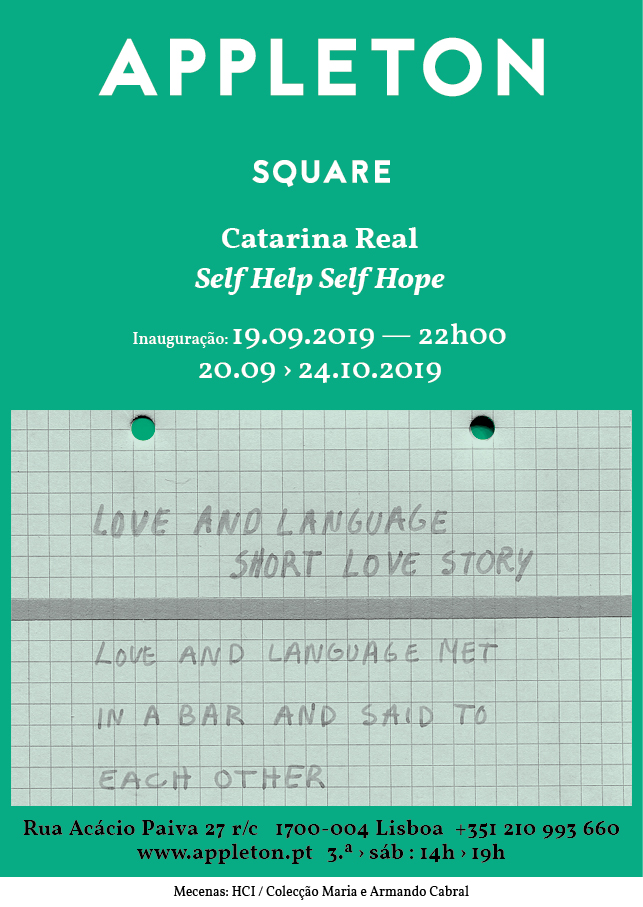
Self-help literature has for a long time developed these themes and it is these that in a more or less subversive way form the core of this exhibition.
The self-help industry is considerably broad in its focus and ramifications, but frequently presents a common assortment of characteristics: sets of instructions for a balanced existence in a group, mottoes, slogans, tools and strategies for emotional well-being, steps (as if it were a dance) for a life with meaning and personal examples as a means of legitimising the presented solutions. At their best, self-help books can offer a point of departure for self-reflection. At their worst, they are unable to offer a truly profound and significant point of arrival.
Naturally, it is easy to approach these books with cynicism, because they are also (or above all) products, because they target a vulnerable public and because they attempt to provide answers to questions we do not know anything about or for which we have no answer.
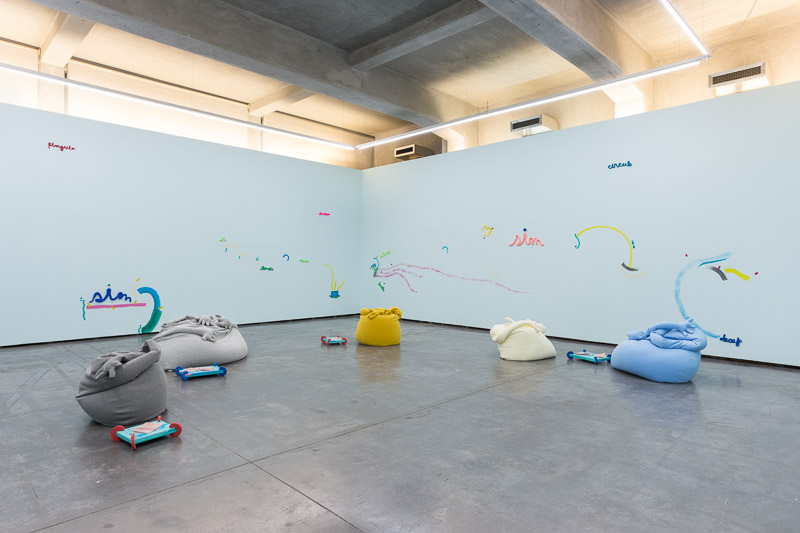
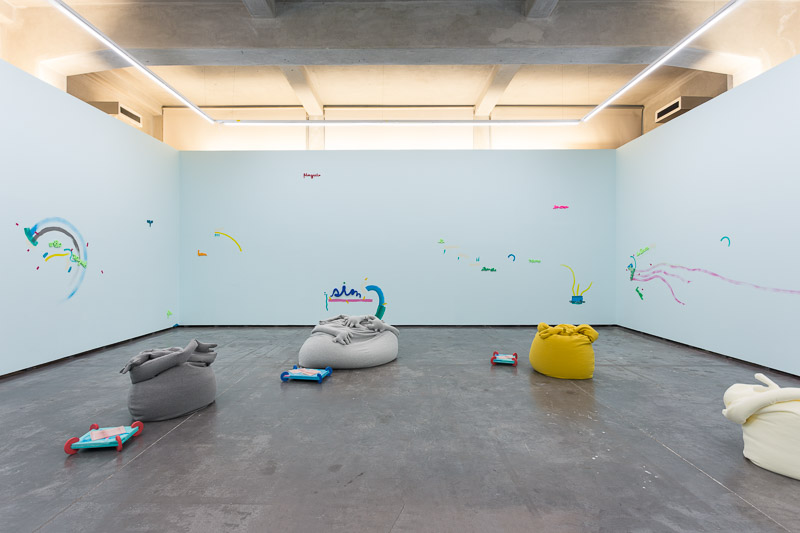
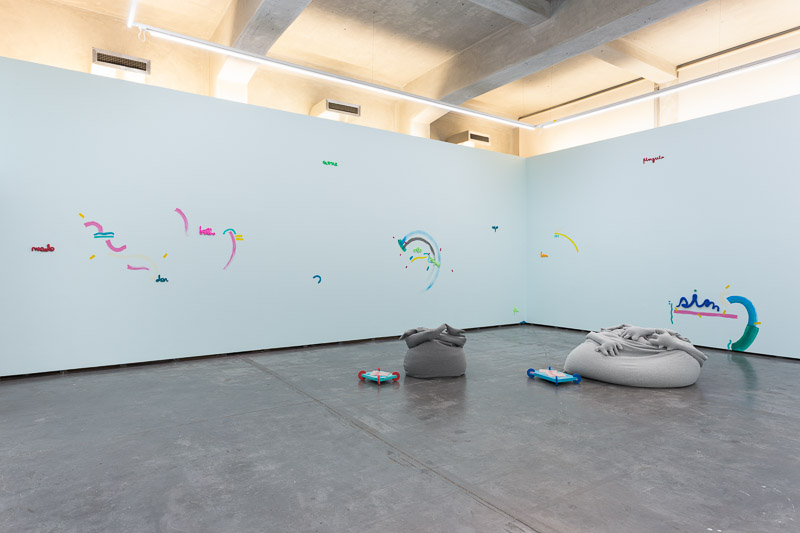
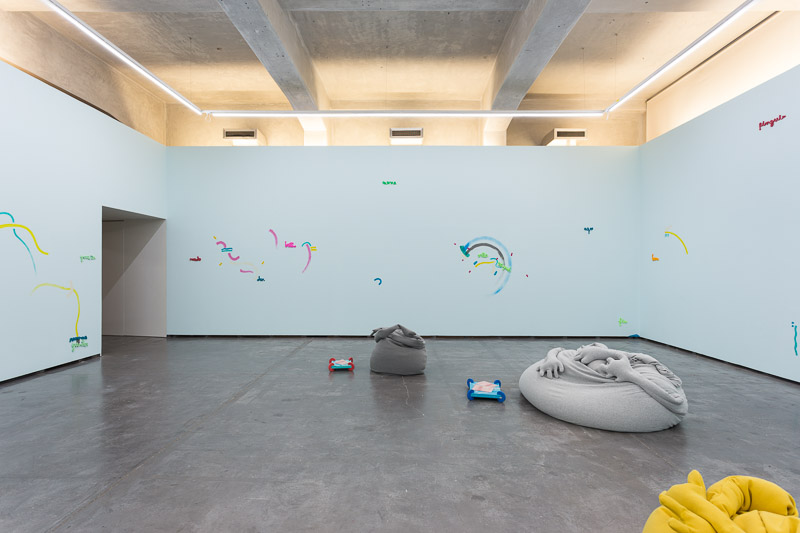
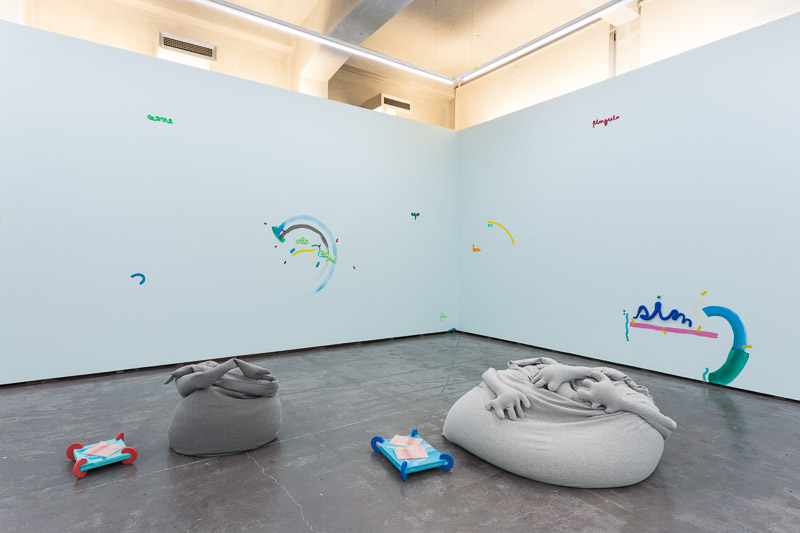
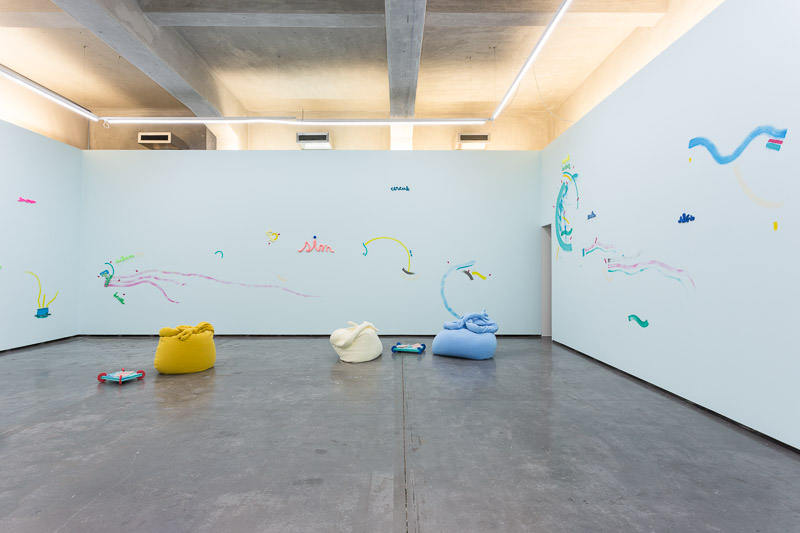
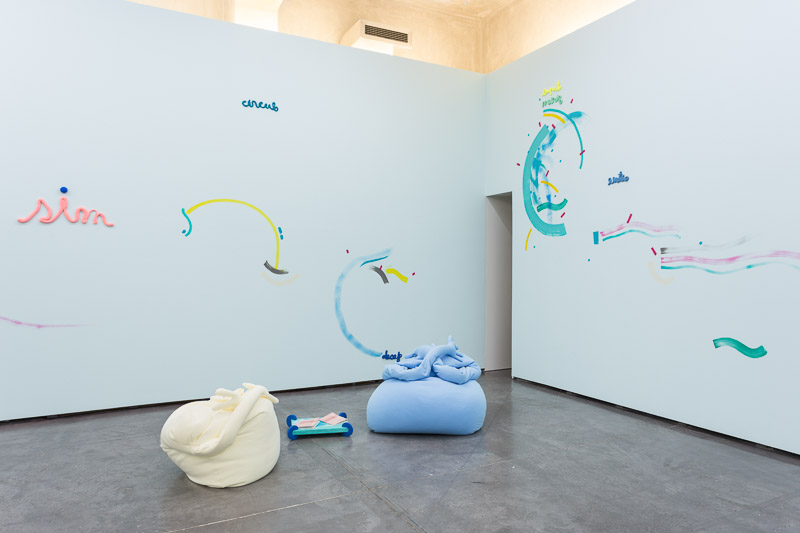
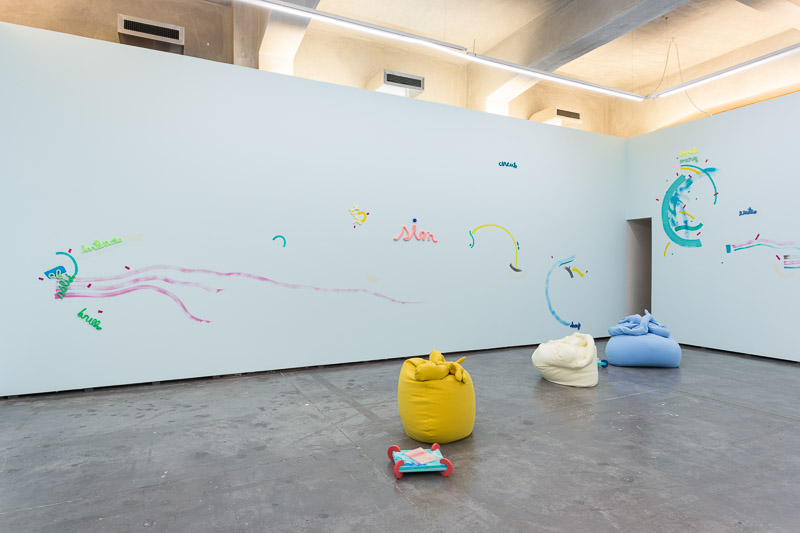
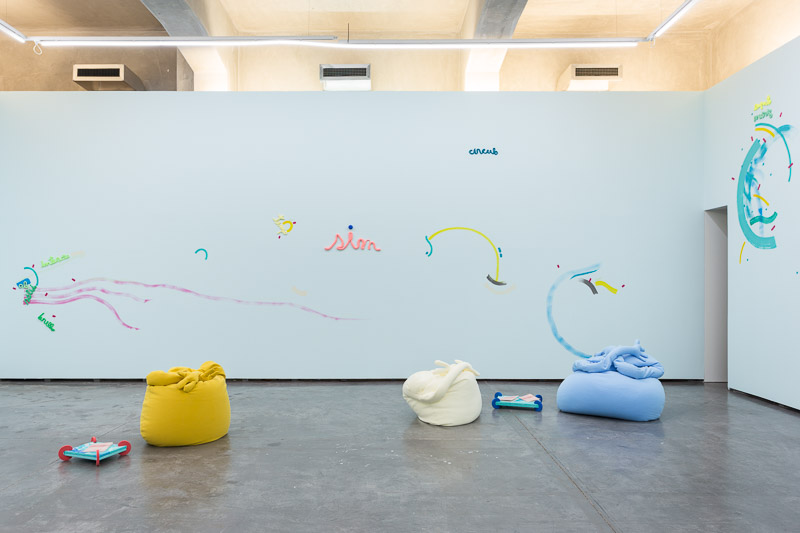
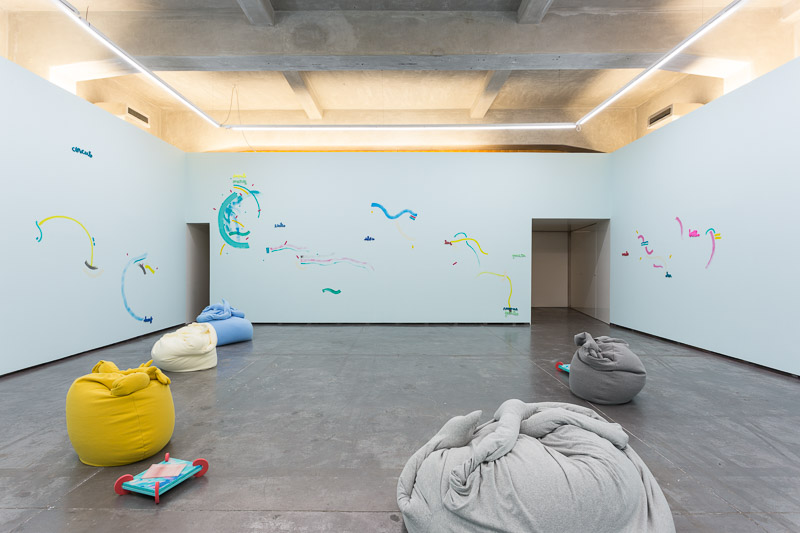
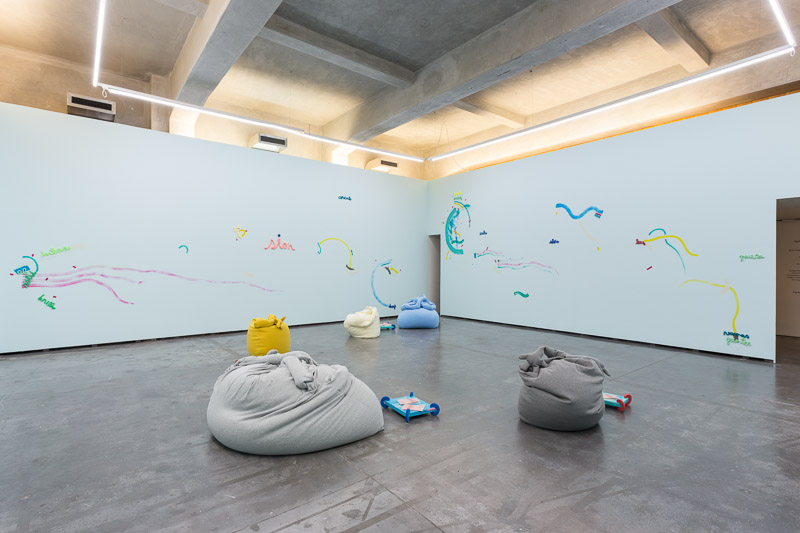
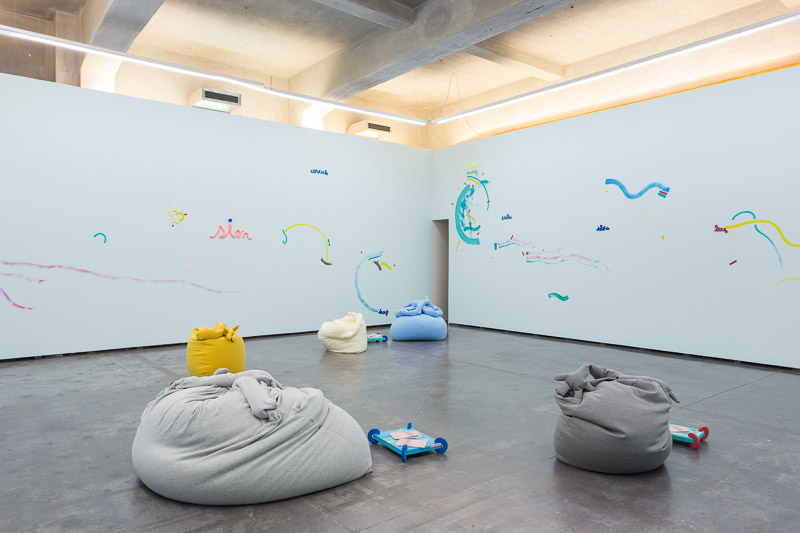
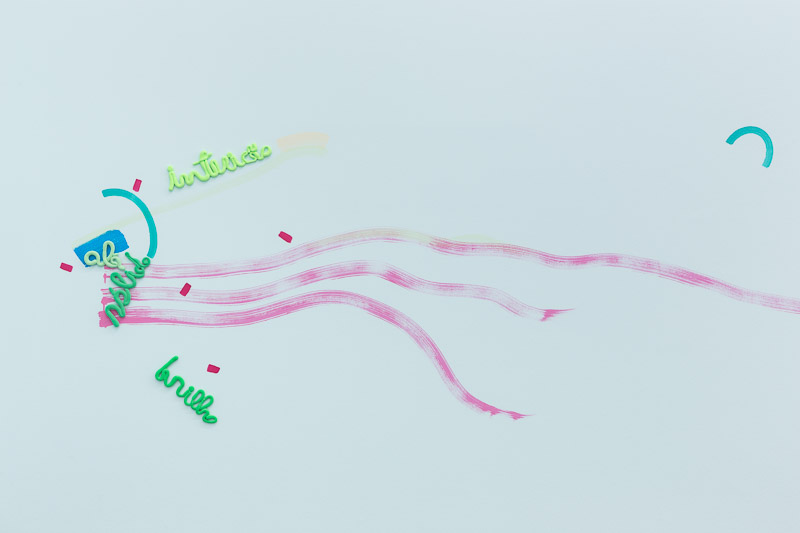
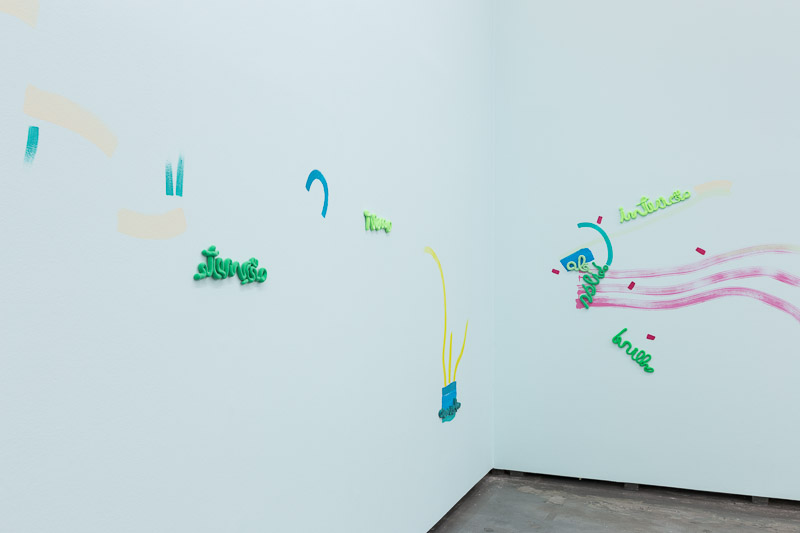
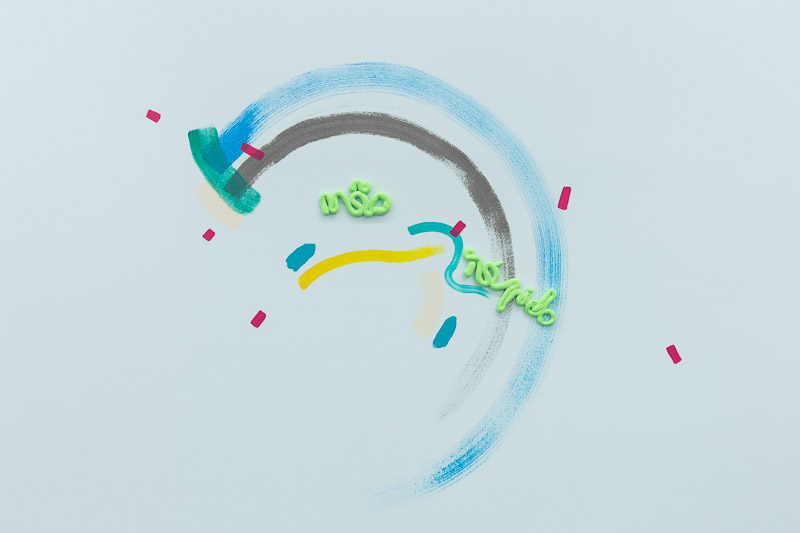
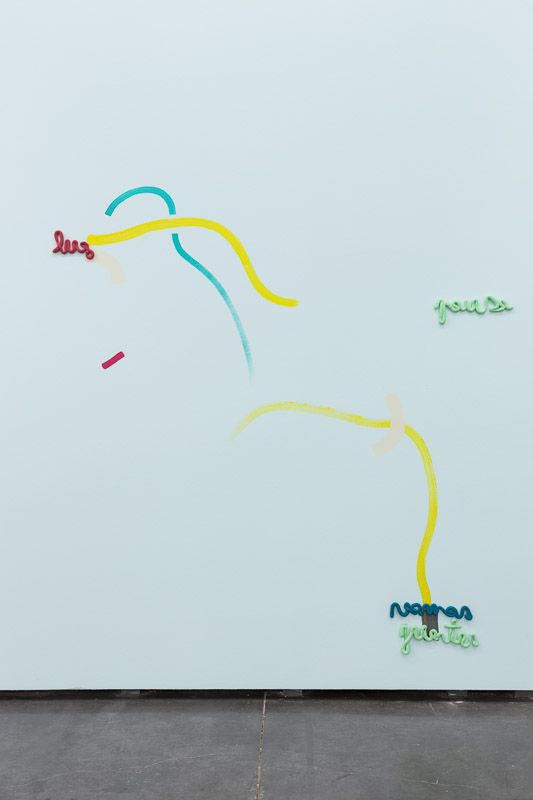
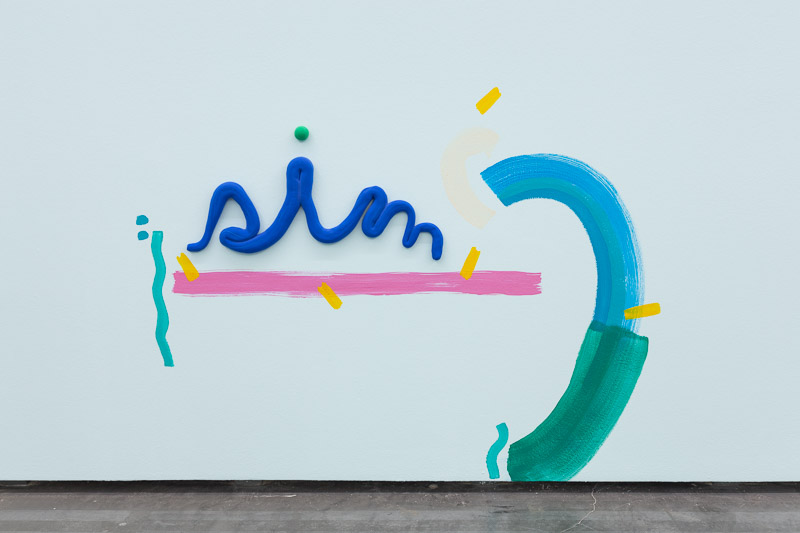
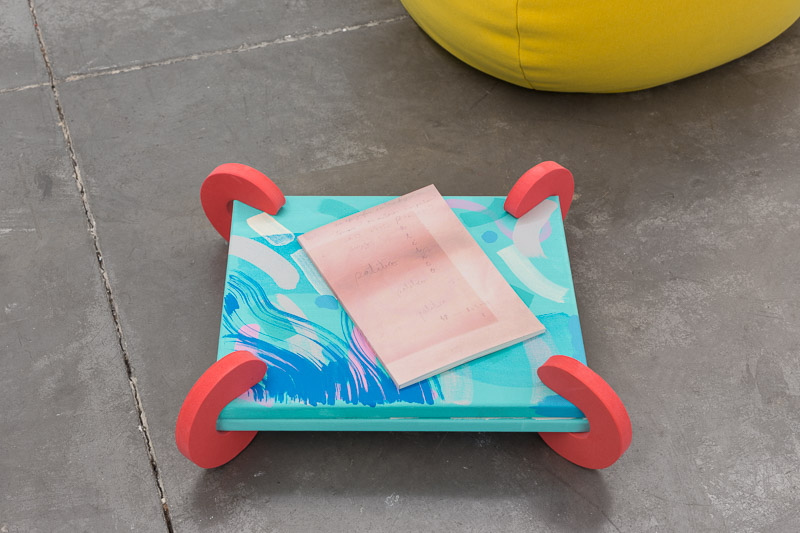
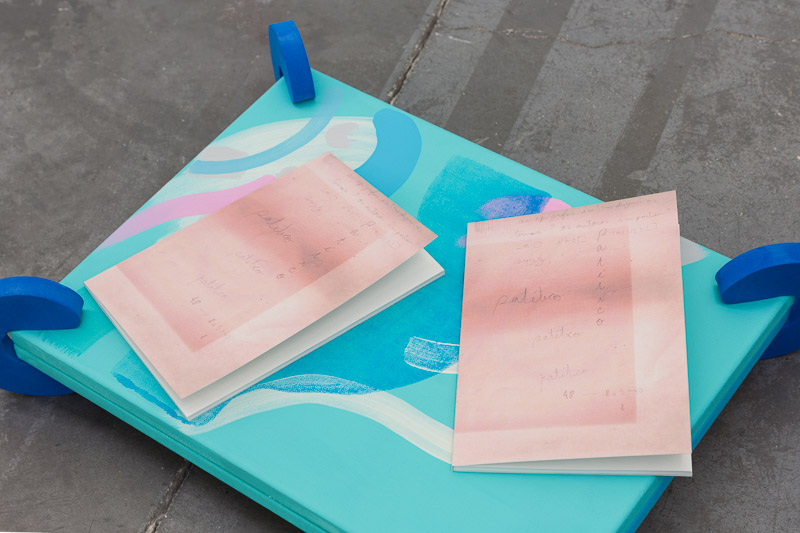
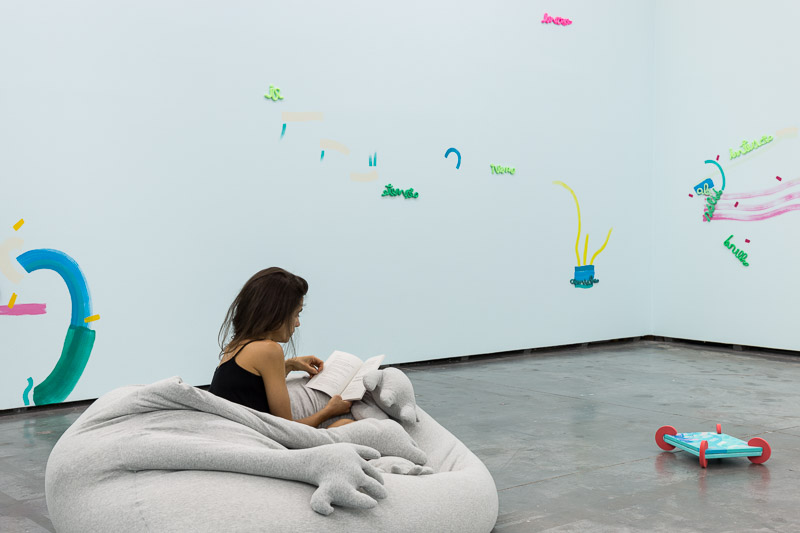
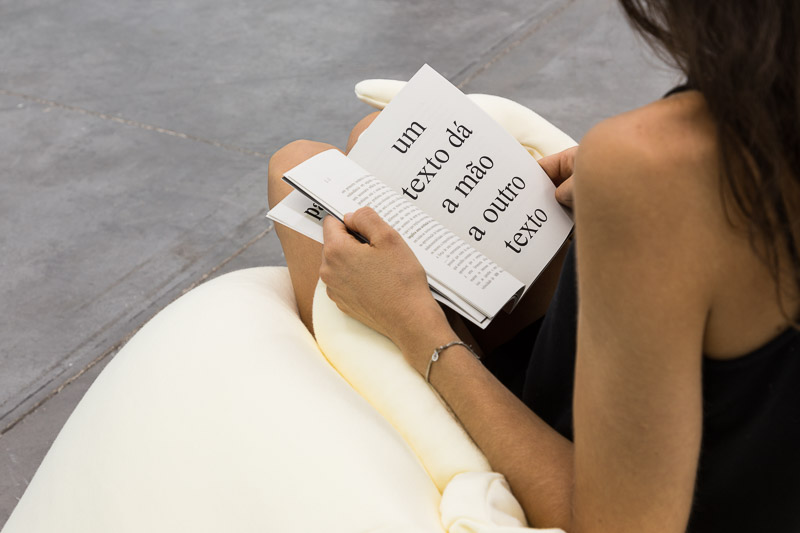
What Catarina does in this exhibition is appropriate several of the characteristics of self-help literature presented above and use them as conceptual and structural ready-mades, thus defining a field of action for its language. Answers are replaced with doubts and vulnerabilities, the twelve steps are replaced with eights steps of dancing text, lists are no longer rules to comply with, instead becoming diaristic attention rituals, and the abstract distance of the self-help author disappears in their literal desire to embrace the reader.
The work Catarina has created is a constant desire to connect things and look for meaning, a meaning that can be found both in language and in encounters between people. The idea of self-help that she develops is the happy mediation between language, affection and people. Self Help Self Hope is therefore a concerned self-help exhibition that reflects on itself and subverts the dishonest aspects of the genre from within.
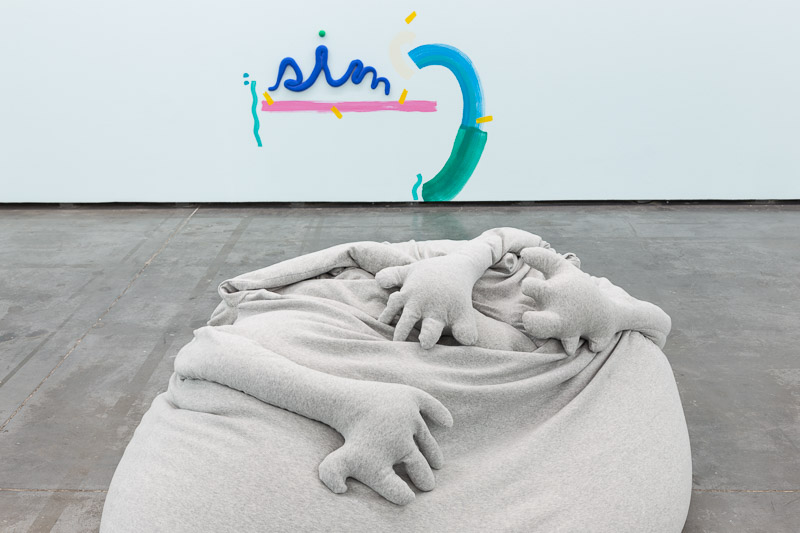
If we define empathy as a desire to share, we can speak of the embrace as its realisation: the embrace as a sign of affection, trust and vulnerability. There are various possibilities in this embrace – from its physical materialisation in friends to the exhibition’s own desire to embrace visitors by creating a welcoming space, a space to see and think, but also to be. The friends are the invitations to stay and pay attention to the works and the people, just as the emotions and memories of the exhibition accompany us when we leave.
José Costa



 /
/  /
/ 