


SQUARE
—
António Júlio Duarte — Rumble Fish
ANTÓNIO JÚLIO DUARTE’S FISH TANK
In memory of Margarida Medeiros, a colleague and friend, who didn’t live to see the last exhibition she curated, of the work of AJD.
António Júlio Duarte (AJD) is one of the most renowned Portuguese photographers of our time. However, few people are aware of the artist’s special relationship with cinema. Of this minority, most will know his work as an actor (although possibly only his memorable appearance in Mariphasa, by Sandro Aguilar), but not many will be aware that he also made films. Those who have actually seen his films could be counted on a few hands only.
Nevertheless, Rumble Fish is AJD’s seventh film to be exhibited, after Honey Bee (2005), Corisco (2005), Do Chinese Dream of Android Seals? (2010), Place Your Bets and Pray for Blood (2010), Lagoa Azul (2012) and Zeeland (2016).
Taken as a whole, these films convey a singular, personal poetics, as demonstrated by: 1) a preference for long shots (the most emblematic being the long take lasting around forty minutes, around which Honey Bee is structured); 2) the low resolution of the images, which extend the films beyond the world we are allowed to see, opening them up to an (in)visible technology that is also the stuff of hallucinations or dreams; 3) a fascination with different matters and materialities, and a subtle way of dealing visually with the elements (the ghostly mist in Lagoa Azul; the traces of a fire in Corisco; the sound of the wind, the wet earth and the reflections of sunlight in Zeeland); 4) the inscription of the artist’s body – not visible but turned into filmic matter through the confluence between body and camera – in the flow of the world (Corisco and Zeeland, both filmed using point-of-view shots); 5) a movement around the globe, between India, the Netherlands, Macau and Portugal, exceptionally different territories but ones that show similarities in their ‘dynamic, multiform and metamorphosis-like’ nature (to quote Nuno Crespo) that AJD seems able to discover in any part of the world; and 6) the strange but captivating shadow of the worlds of terror, thrillers and science fiction (the uncanny ambience and the ‘De Palma-esque’ split screen of Do Chinese Dream of Android Seals?; the Gothic terror of Lagoa Azul; the almost gore violence of Place Your Bets and Pray for Blood; the journey to Hades in Corisco).
Rumble Fish is the most recent piece to see the light of day. And it is a piece that contributes both to completing the puzzle of AJD’s work, reiterating ideas developed in earlier films, and to destabilising it, by adding new layers that make a comprehensive reading difficult to achieve (and for this we should be grateful, as nothing is more unforgivable than an artist presenting us with a comfortable conciliation with their work and with ourselves).
At the heart of António Júlio Duarte’s artistic practice lies a productive tension between a mode of creation that is purely observational and an appeal for the imagination. While the artist characterises himself, ‘for lack of a better term’ (I quote from memory, but it’s true), as a ‘documentary photographer,’ he also mentions, in a 2011 interview, that ‘photography [read ‘cinema’ too, because the source of cinema is, as we know, photographic] is in essence ghostly, a record of what is no longer there. A rupture in the space-time flow.’ He also adds: ‘But what is truly ghostly is the real.’
This is, therefore, a photographer who defines his work as ‘documentary’ but who describes the real – that which, by definition, feeds all documentary practice – as something that is phantasmagorical in nature. According to AJD, then, the true documentary style is arguably one that views reality as the phantasmagoria it truly is. We might say, continuing this hypothesis, that a photographer or documentary filmmaker is a kind of ‘ghostbuster.’
Perhaps we can view Rumble Fish in this way, as a film that materialises in the fold point between real and imaginary, between visible and hidden. It is clear that the title – taken from the film of the same name by Francis Ford Coppola – is a direct reference to the history of cinema. But this loan seems to derive little more than an ironic reference. Indeed, AJD seems to associate more intimately (‘spiritually,’ one might say), albeit unconsciously, to an earlier generation, that which spawned the generation of ‘movie brats’ to which Coppola and the previously-mentioned De Palma belong: enfants terribles like Nicholas Ray (from whom AJD may have stolen the title of his series ‘We Can’t Go Home Again’), Anthony Mann, Jacques Tourneur, Robert Aldrich, Budd Boetticher (let’s take a moment to imagine AJD making a western in Technicolor…).
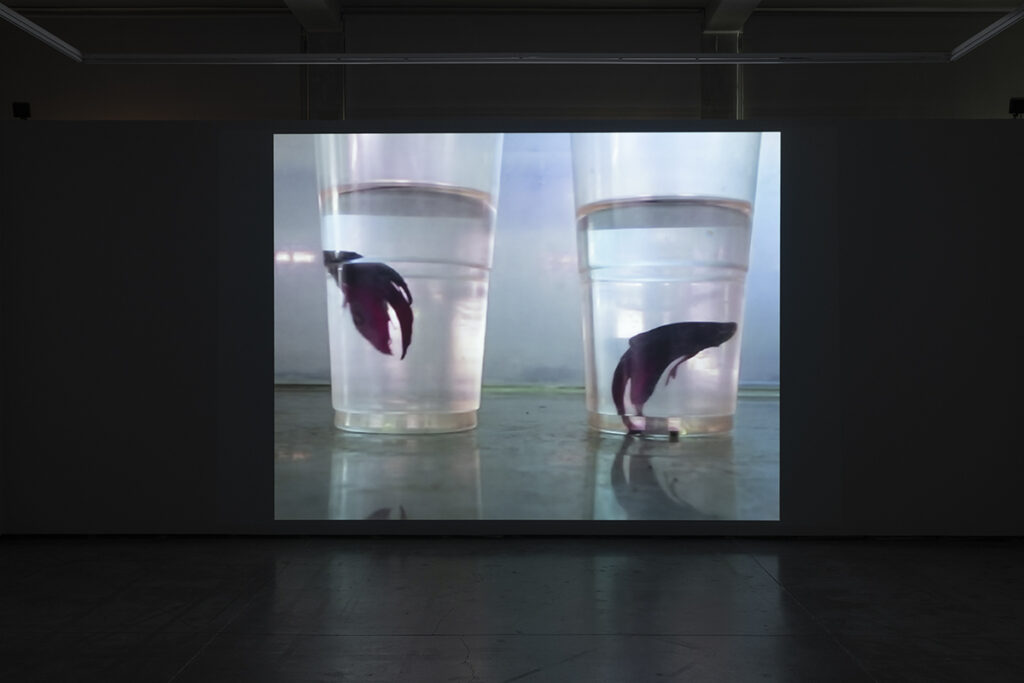
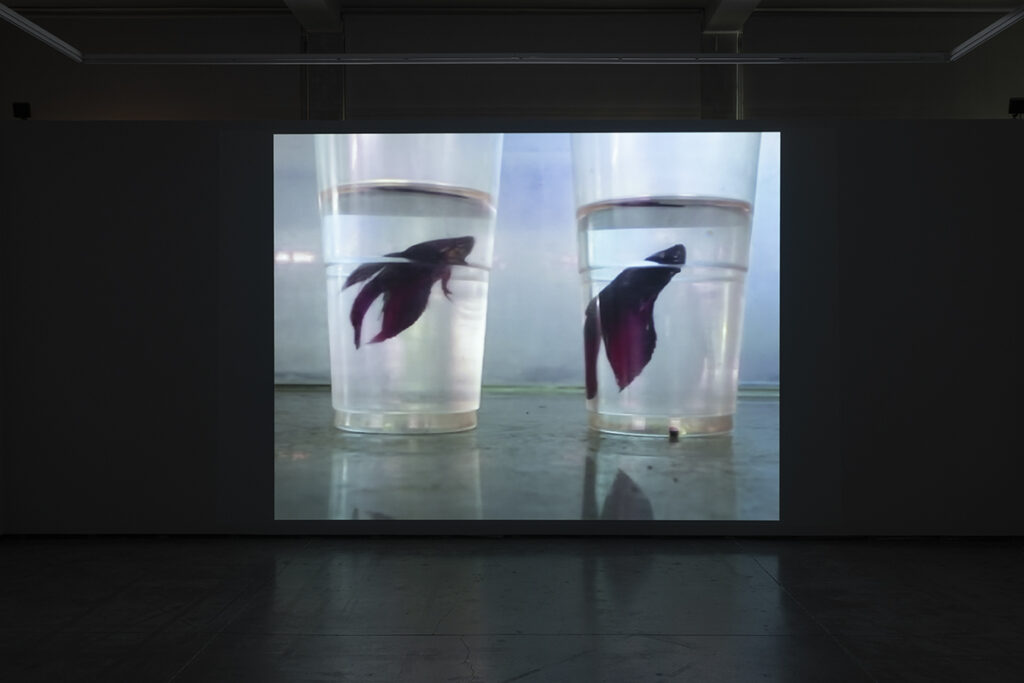
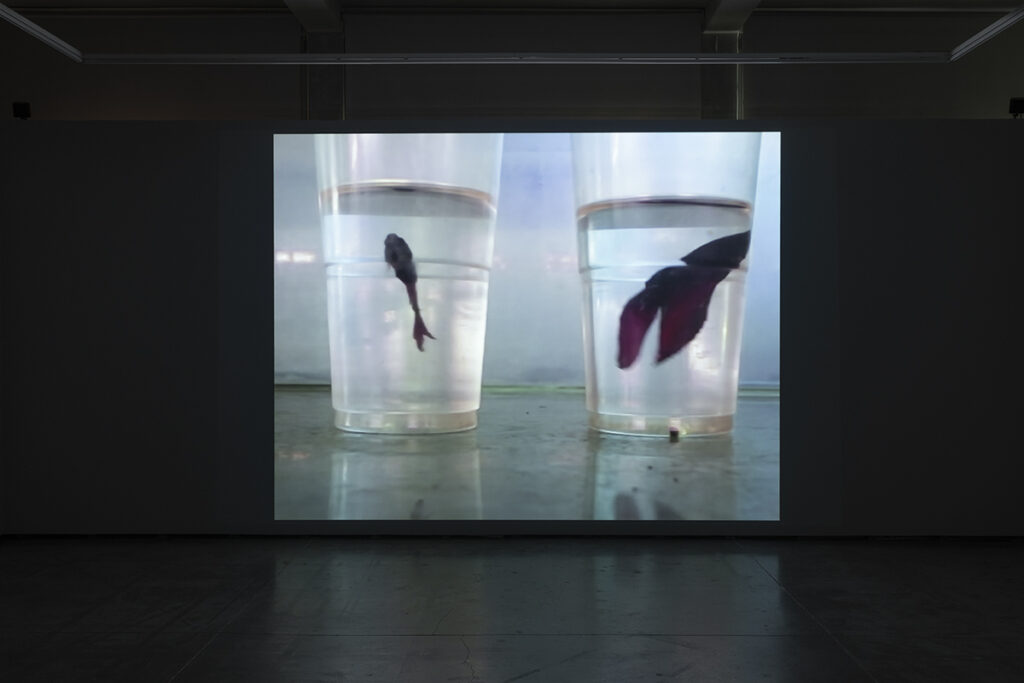
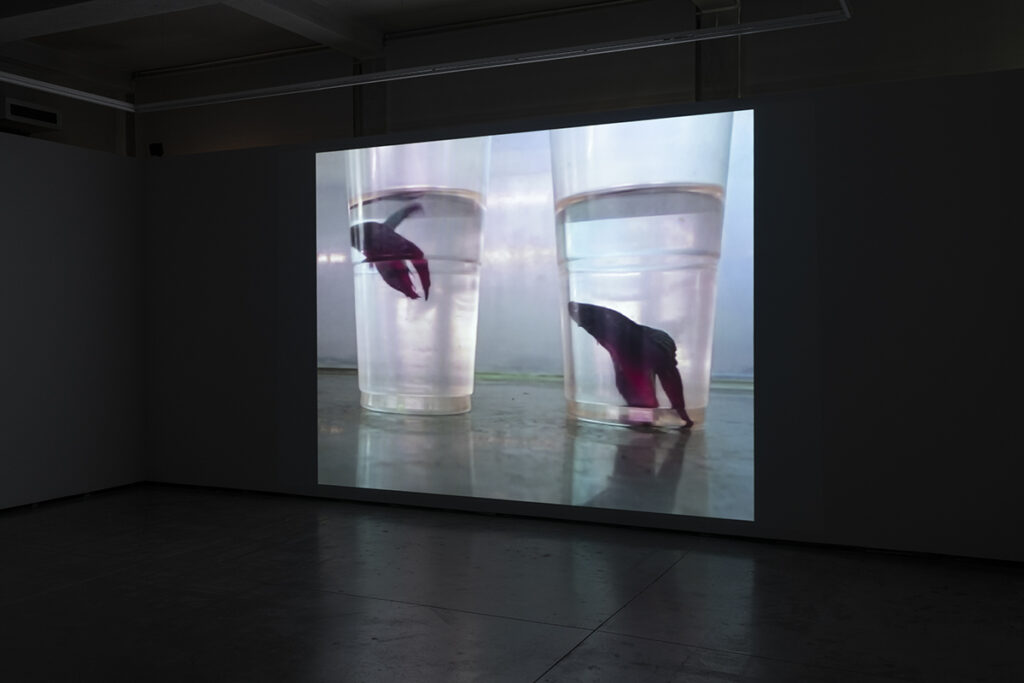
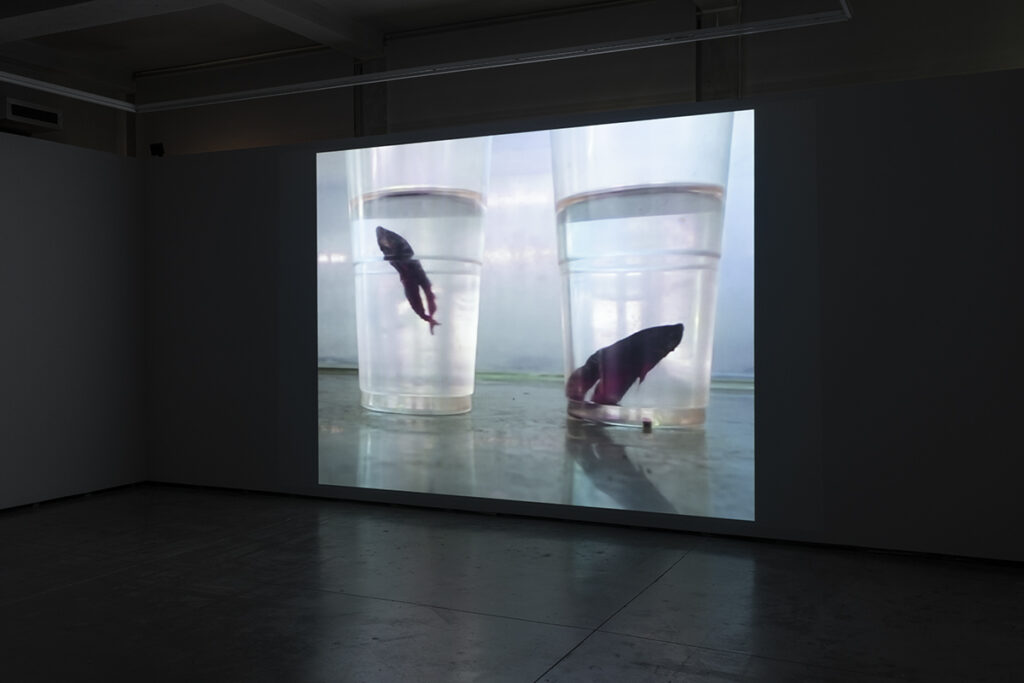
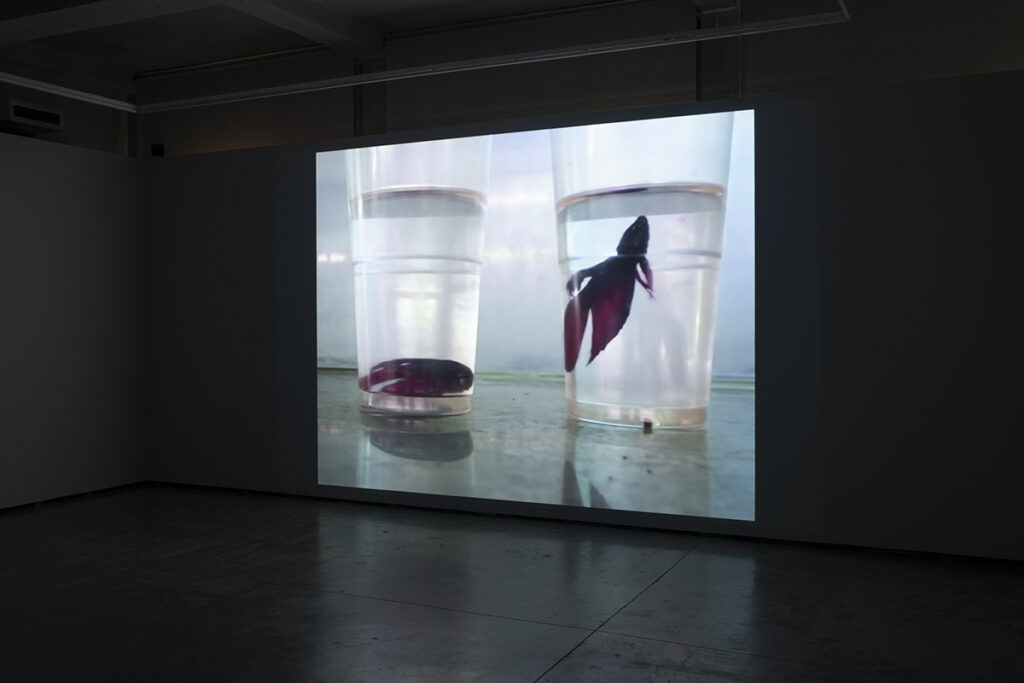
Despite these possible affiliations, there is also the shadow of documentary cinema here. More precisely, of a documentary tradition that is more observational than rhetorical. Indeed, Rumble Fish brings to mind the Lumière brothers, whom we might call the first ‘ghostbusters’ in the history of cinema. More than 1983’s Rumble Fish, perhaps AJD’s short film reminds us of Bocal aux poissons rouges, from 1895. And there is a world of difference between the use of fish in tanks in Coppola and in the Lumières. With the former, they play a narrative, codified role (in short, the fish – exuberant, violent, imprisoned – are symbolic doubles of the characters); with the latter, they play no role other than to merely exist. And yet it is for that same reason, for the fact that they exist beyond (or before?) their specifically filmic function, that they gain a more emphatic reflexive potential. The fish are real, existing indomitably, without any subservience to the human. And they are, above all, a symbol of the unfathomable mystery that only cinema can fathom, by transforming them into image, immortalising them and displaying them through repeated projection. In the virtual coalescence between the glass of the tank (or drinking glasses, in AJD’s version) and the glass of the lens, the fish tank becomes an allegory of cinema itself.
And all this happens without the ‘creative’ interference of the filmmaker. Because the real, as Pasolini wrote, is in itself already cinematographic. And this is perhaps one of the lessons of observational cinema: that the crystalline clarity of the real is in no way transparent.
The notion that the ‘fish tank has become a motif of the self-reflective nature of cinema’ was mentioned by Fernando Guerreiro in the book Imagens Roubadas, citing the examples of The Lady from Shanghai and O Estranho Caso de Angélica. As is the case in the fish tank scenes in those films, in Rumble Fish (AJD’s version, that is), the dance of the fish, framed by the glass and the water, produces a kaleidoscope of lights, shadows, reflections, refractions and deformations that elevate the movement and time of the image. But in AJD’s work, the idea of self-reflective cinema is intensified and even made more prominent due to another two elements, also deeply phantasmagoric: the soundscape and the offscren space.
António Júlio Duarte was invited to accompany the shooting of Sinais de Serenidade Por Coisas Sem Sentido (2012), by Sandro Aguilar, and then became the set photographer. The long take that Rumble Fish shows was recorded on this set, at the same time as Aguilar’s film was being shot. AJD’s short film is, therefore, in its origin, a kind of efflorescence of another film, a derivative version of a ‘making of’, somewhat hallucinated but not at all parasitical. But the fact that Rumble Fish was shot on the set of another film is truly important. It is the sound that draws our attention to the spatio-temporal coincidence between one film and the other, bringing the offscreen reality to the shot with the fish: the start of AJD’s film actually coincides with the moment someone says: ‘Attention, shooting is about to start. Silence, please!’
The sound – which in AJD’s photographic works is denied by the materiality of the work (muteness, that misfortune of photography!), but still evoked in different ways, either by the titles (White Noise) or by the subjects of the photograph (the musicians in Against the Day) – appears in Rumble Fish as the paradoxical indicator both of the real, i.e. that which happens outside the image, and of the imaginary, given that that ‘real’ is the shooting of a fictional film.
As almost always happens in the work of António Júlio Duarte, we are confronted with strangeness, ambiguity, the practice of a gaze that unveils the extraordinary in the banal, and, finally, the tensions between the legibility of images and the opacity of experience: because this too, after all, is a film about a man who devotes ten minutes of his life to observing two fish, immersed, simultaneously inside and outside the world. Like the fish he is watching. To each artist, their own fish tank.
José Bértolo, March 2024
credits © pedro tropa


HCI / Colecção Maria e Armando Cabral /  /
/  /
/ 