Although their work is substantially different, this is the third time that Ana Manso and André Romão have exhibited together. Ana Manso creates abstract paintings, at times with the merest of figurative suggestions, while André Romão makes sculptures and assemblages based on notions of body and mutation. However, subtle similarities do emerge in the gap between their two practices, these sensitive points of contact sharing a vitalist perspective on art, where painting and sculpture function as agents of movement, flux and vibration.
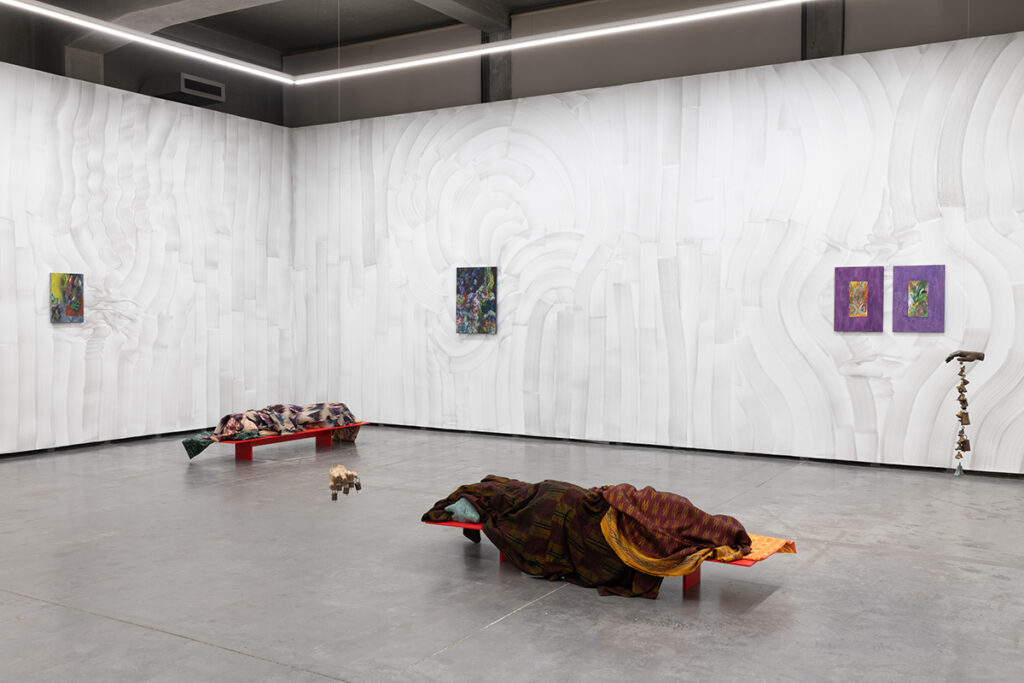
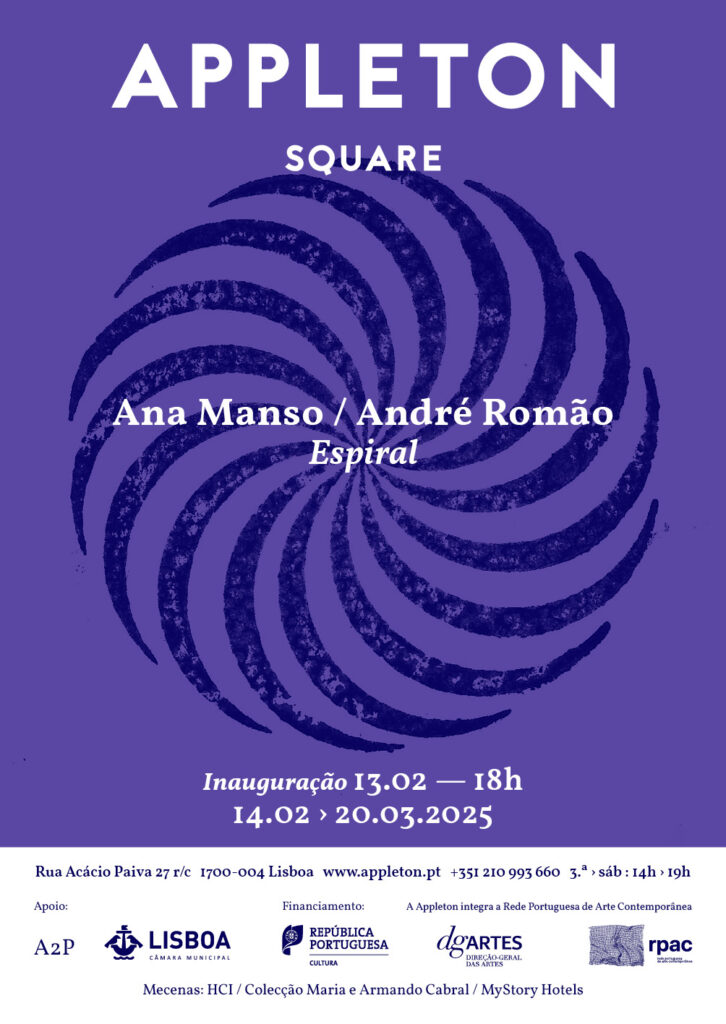
In this new exhibition, Ana and André’s works are brought together by means of a spiral. Just like this geometric figure, in perpetual expansion and contraction, the exhibited paintings and sculptures concentrate opposing forces and initiate exchanges between disparities. They emphasise constant transformation, just as they acknowledge the coexistence of heterogeneous states that affect each other reciprocally. Nothing is inert, therefore, despite the fact that none of the works contemplate physical movement.
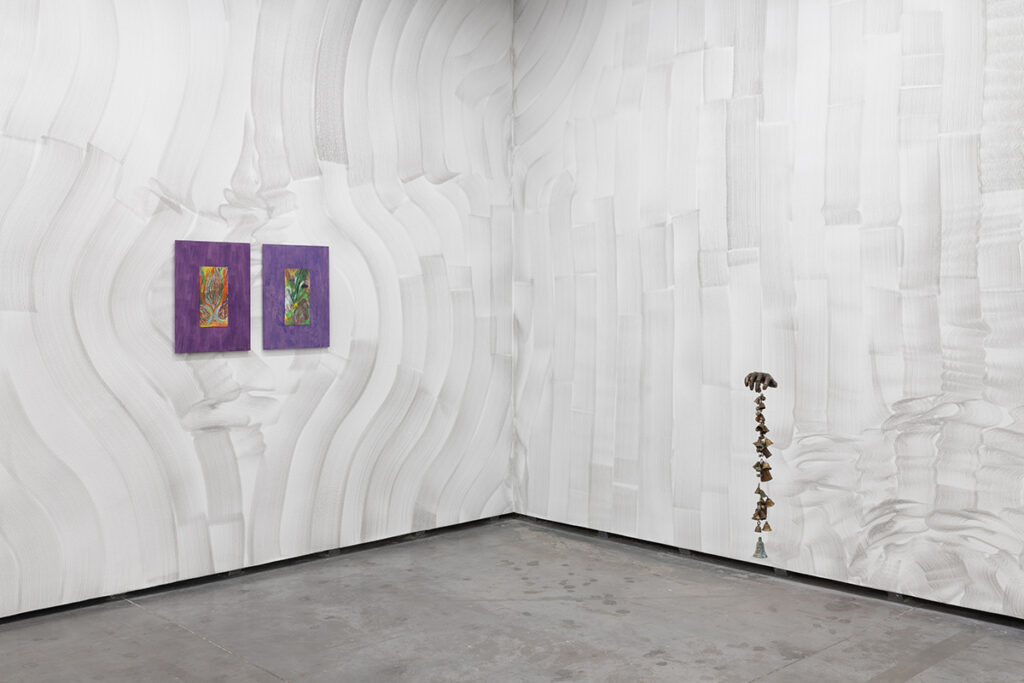
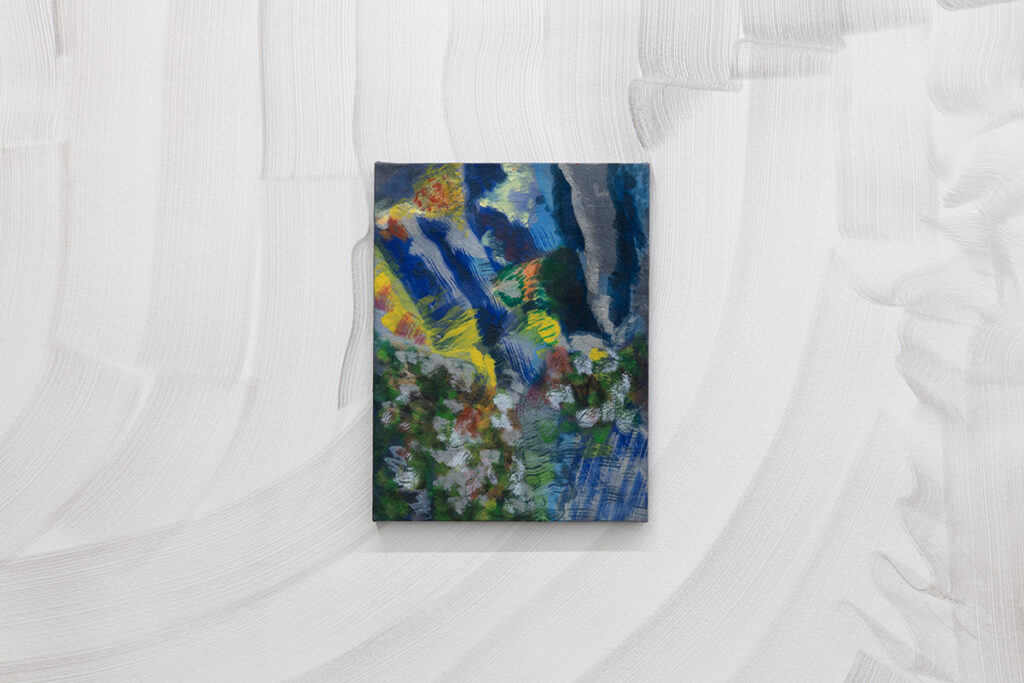
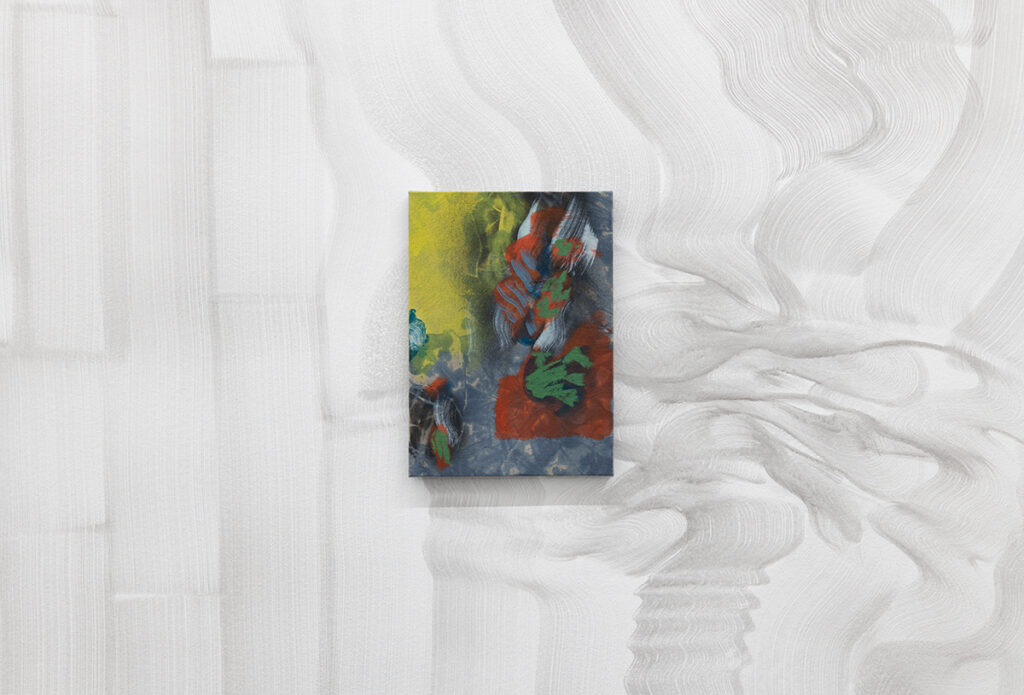
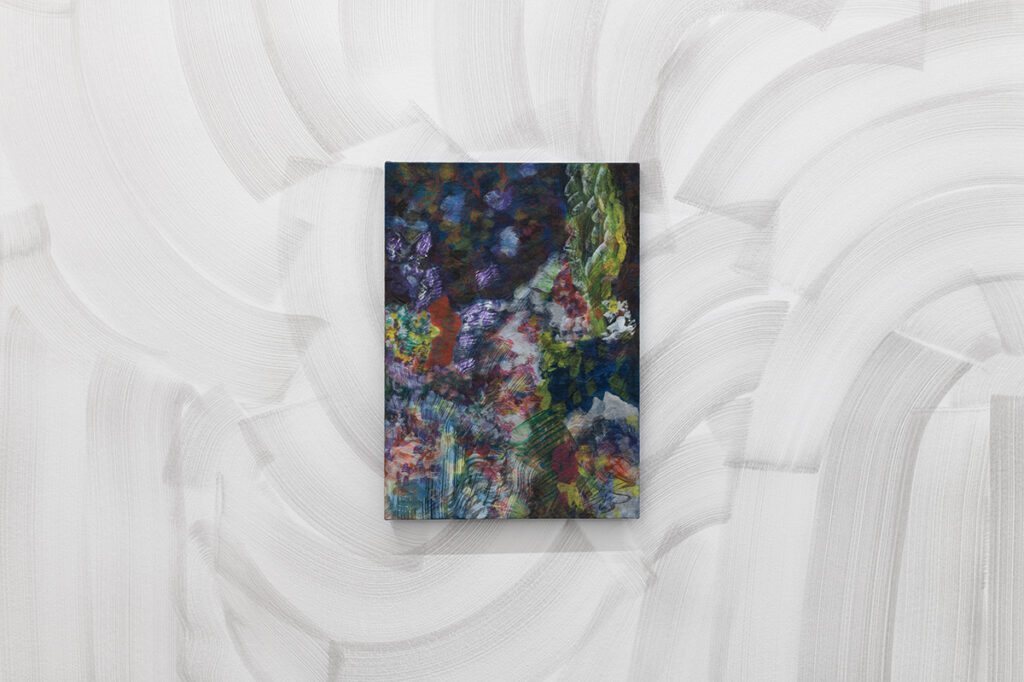
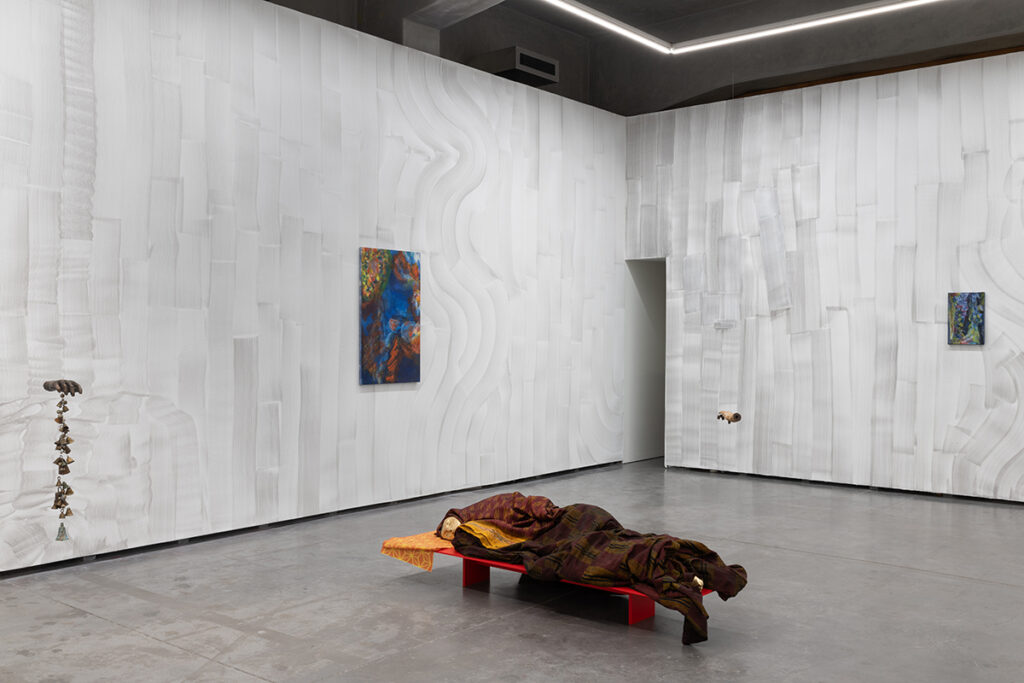
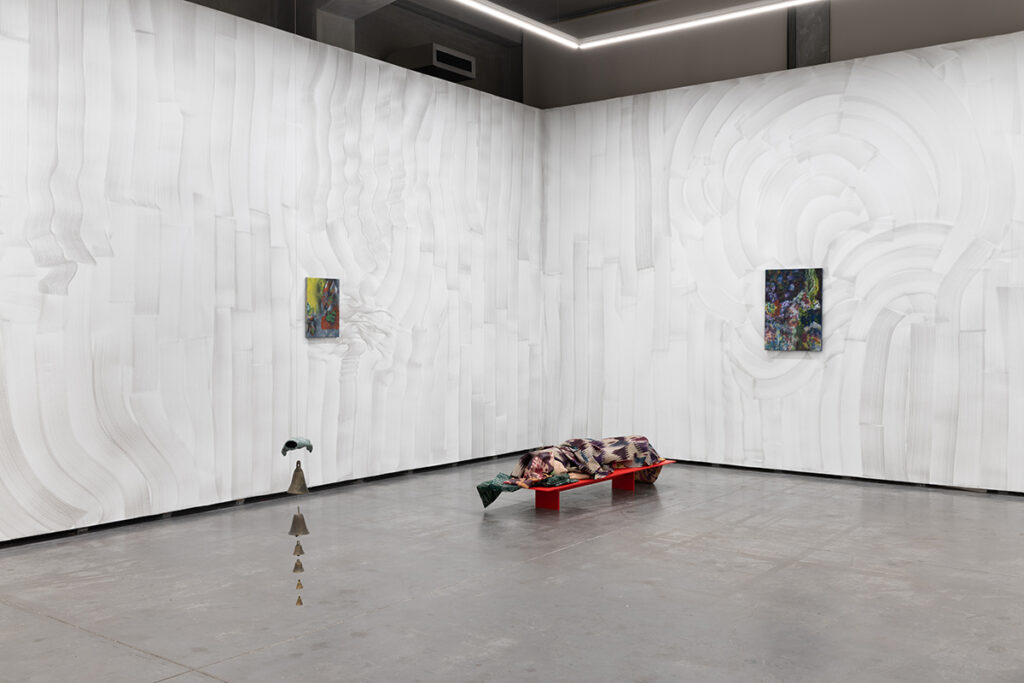
In Ana Manso, the pictorial plane is more than just a surface, having the character of a complex, pulsating skin. This skin can have a more porous or softer quality. Upon viewing it, the eye encounters a wide range of colours. With no specific focal point, the gaze is greeted by rose-reds, yellow-greens, grass-greens, dark and sky blues, acid oranges or rocky greys, rendered with floating brushstrokes, sponging, tie-dye, spray and stencils. Its rhythm resides in a relationship between fast and slow, opaque and transparent, with colour passages and borders, drags, and watery, dense, luminous and dark areas. In this way, quasi-organic motifs are discovered, alongside the multiple layers and sub-layers that form the paintings’ skin. The eye moves backwards and forwards at the same time, until it becomes enveloped in the works’ fibrous, mineral and floral ambiences. It almost seems to touch them, but much like with mental images, the sensation of concreteness is countered by one of immateriality, producing a vision as haptic and corporeal as it is virtual.
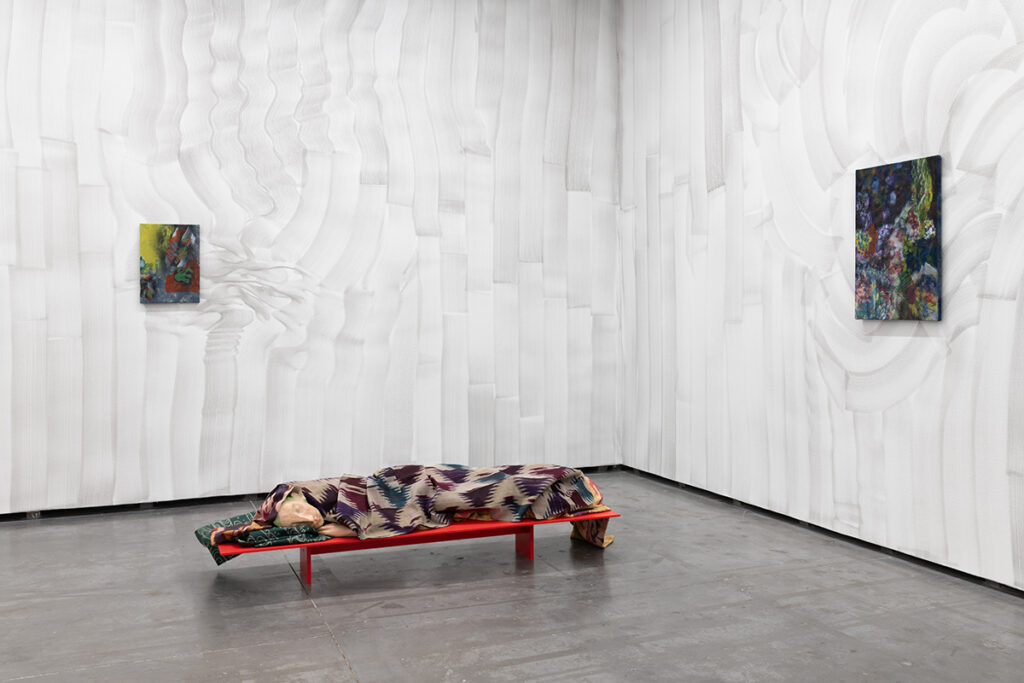
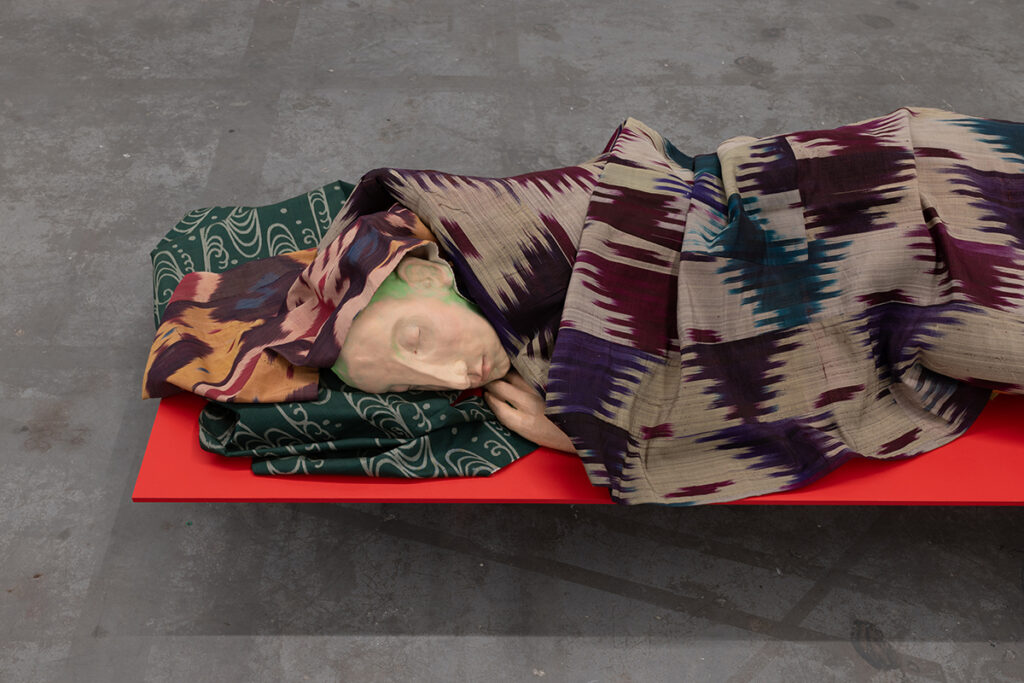
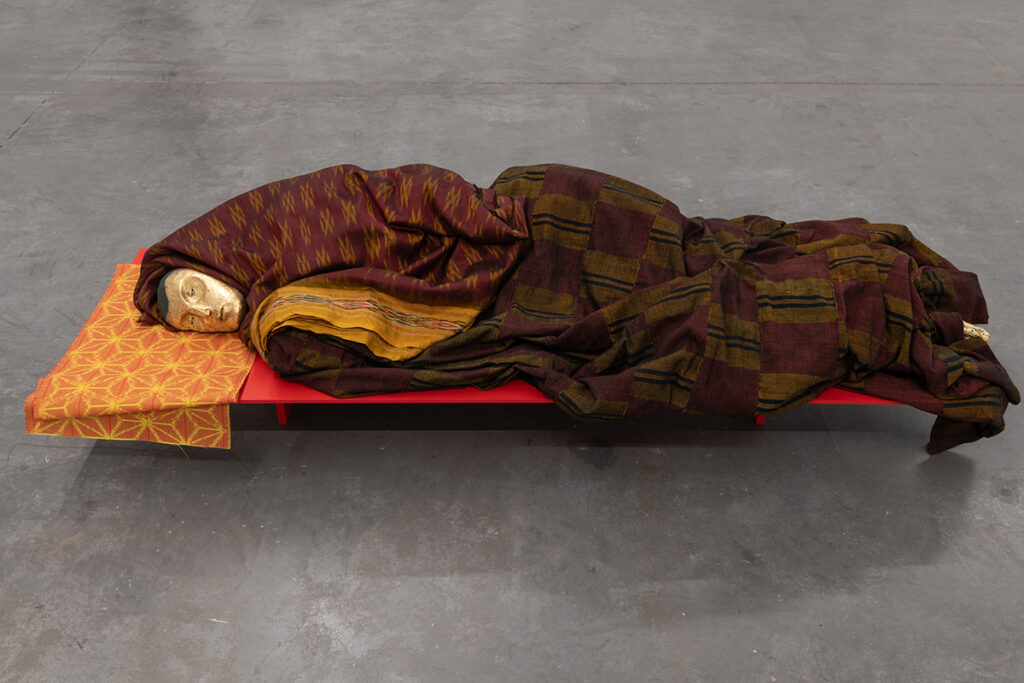
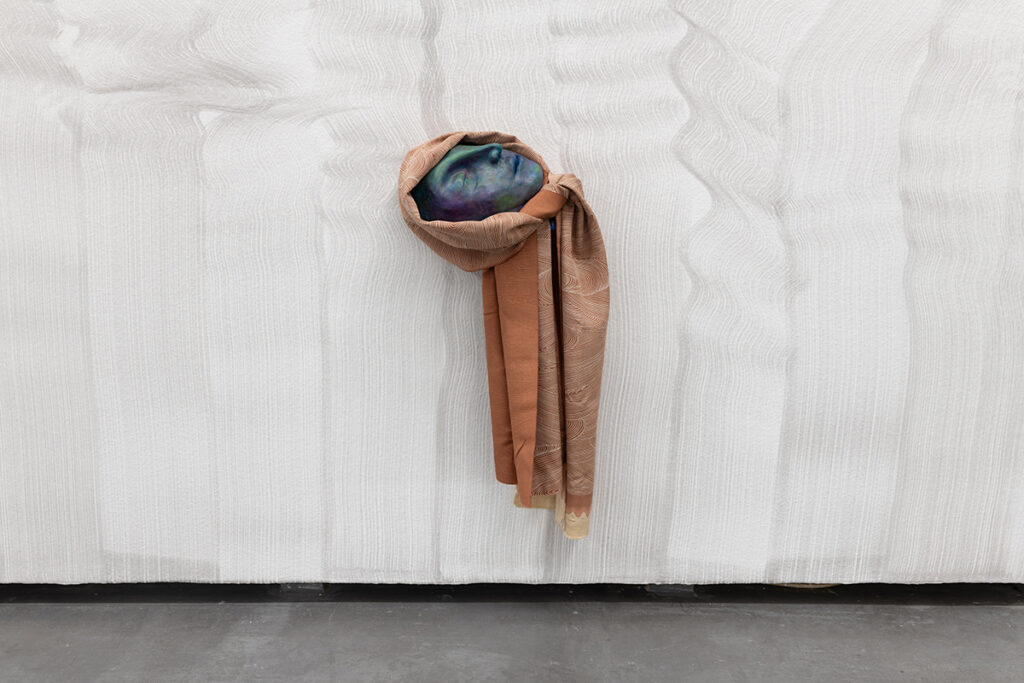
In a different but nonetheless analogous sense, the figures created by André Romão are animated by an abstract background that is barred from view. On the gallery floor, two bodies lie in hibernation on platforms, covered in silks, cottons and wools. While the strident red platforms make the figures float in space, the textiles from Uzbekistan, India and Japan display abstract, hypnotic patterns that create an atmosphere conducive to a long journey into deep sleep. Faced with the hostility of today’s world, the fictionalised and dreamlike astral space does not reveal itself, instead seemingly fostering the emergence of alterities. With half-human, half-owl, half- alien faces, these hybrid bodies are dreaming, one of them protected by a fox at its feet. They know no borders and have entered a process of free, unhindered mutation. A third figure has lost its body altogether and gravitates like a phantasmal avatar, propelled by the iridescent force of its face.
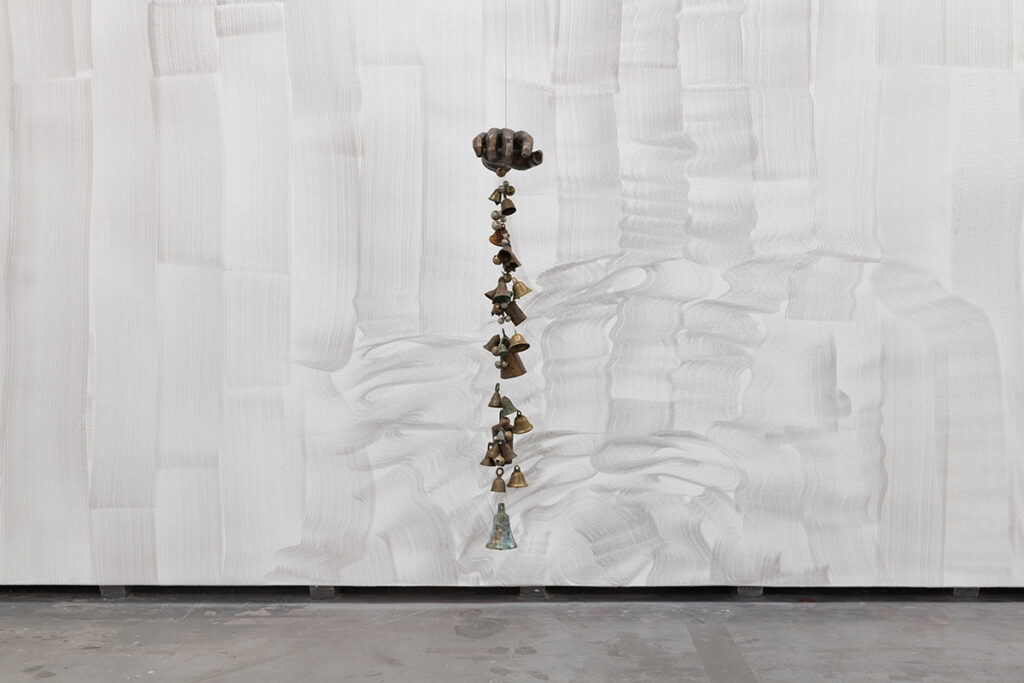
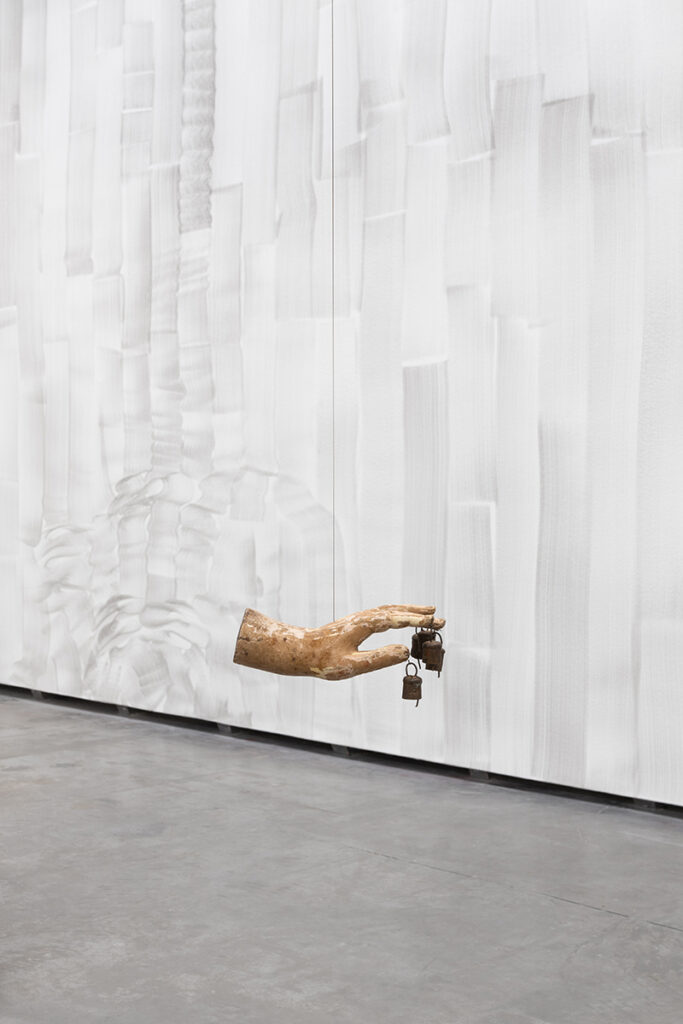
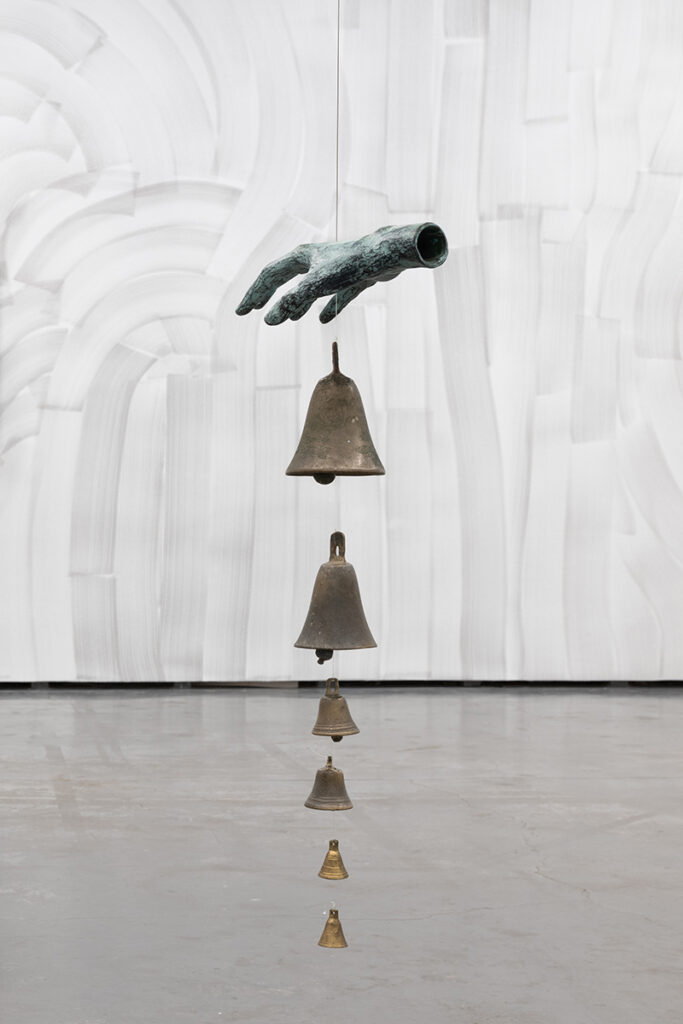
The bronze bells suspended from the ceiling, which could wake them, suggest the waves of vibration that these bodies and paintings propagate in space. Not even the gallery wall, transformed into a mural by the artists, seems to escape this effect. It too reacts and moves, between zigzagging, straight, curved and undulating lines, embodying and intensifying the vitalism of the exhibition itself.



 /
/  /
/ 