We could say that Nuno Sousa Vieira’s practice falls within an agile and agitated territory, between construction and erosion, between what is fixed and what is dispersed: it is the gesture that carries the trace of a previous action and, at the same time, the possibility of a new state. His works seek to reject the inert existence of an equally static instant and affirm the possibility of recording a continuous journey, of successive displacements that accumulate layers of meaning, wear and patina, through the action of time, the body, space, the contingent and even random events that cohabit their initial sphere. It is precisely at this intersection of memory and matter that an incessant journey is formed, always in laborious transit, and sculptural existences are affected, intentionally in the process of mutation, open to transfiguration, poetic, physical, necessarily versatile.
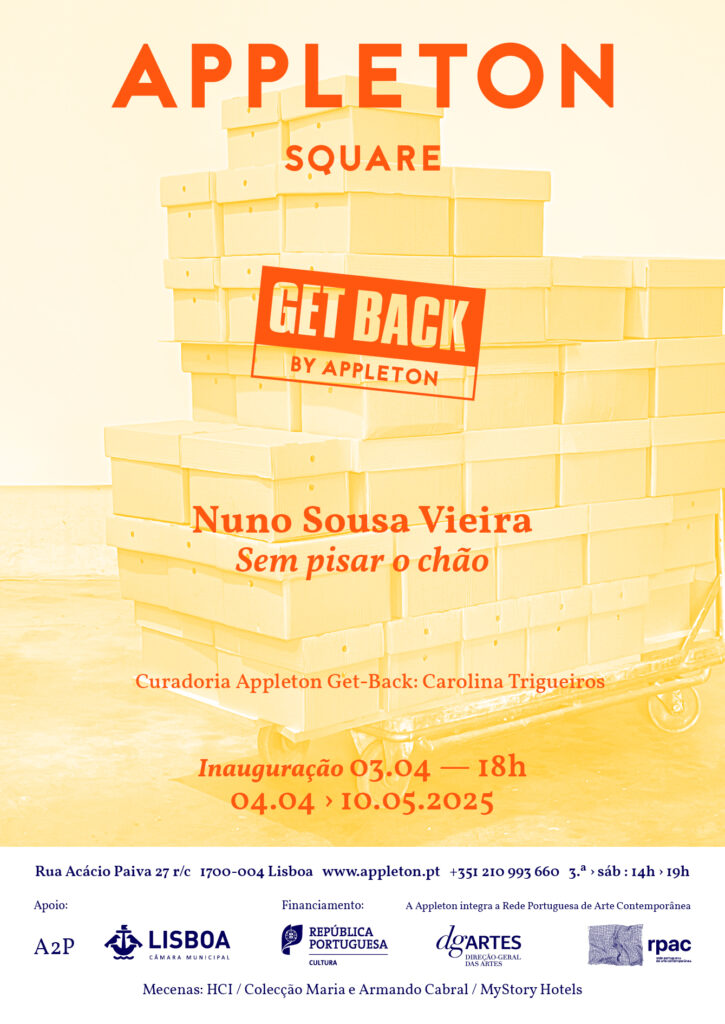
Sem pisar o chão / Without stepping on the ground, the artist’s second solo exhibition at Appleton, is another stop in this fluid chain of a series of causes and effects, and assumes the conceptual revisiting of themes but also the rediscovery of a place of familiar architectural configurations, insofar as his first exhibition held at Appleton in 2012, Wall Stop for This, also had marked concerns for the exhibition space. At that time, by integrating the space directly into the logic of sculptural practice, by duplicating entrances, or by erecting new walls, the artist conceived of a spatial occupation as a work. A decade later, we find in the same lexicon the evident relationship with being and inhabiting a place as a catalyst, combined with an unshakeable need for inventories, archives; to classify, perhaps, the possible vertigo
that is the experience of an artistic universe. In this exhibition, the journey through time is the raw material and the scale, which is why its enumeration is all the more intimate.
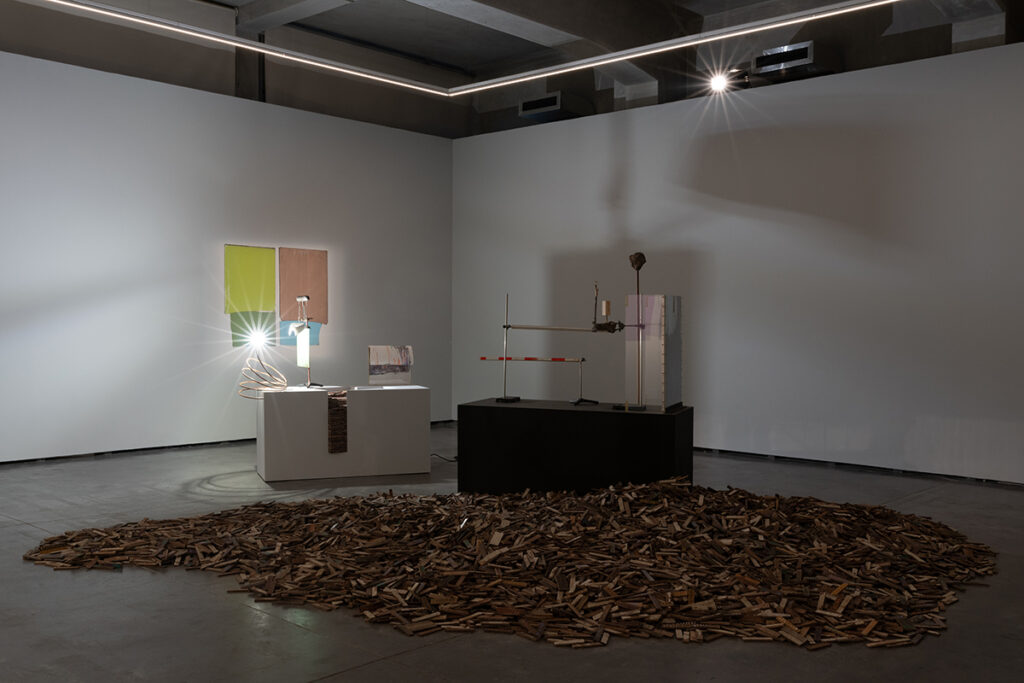
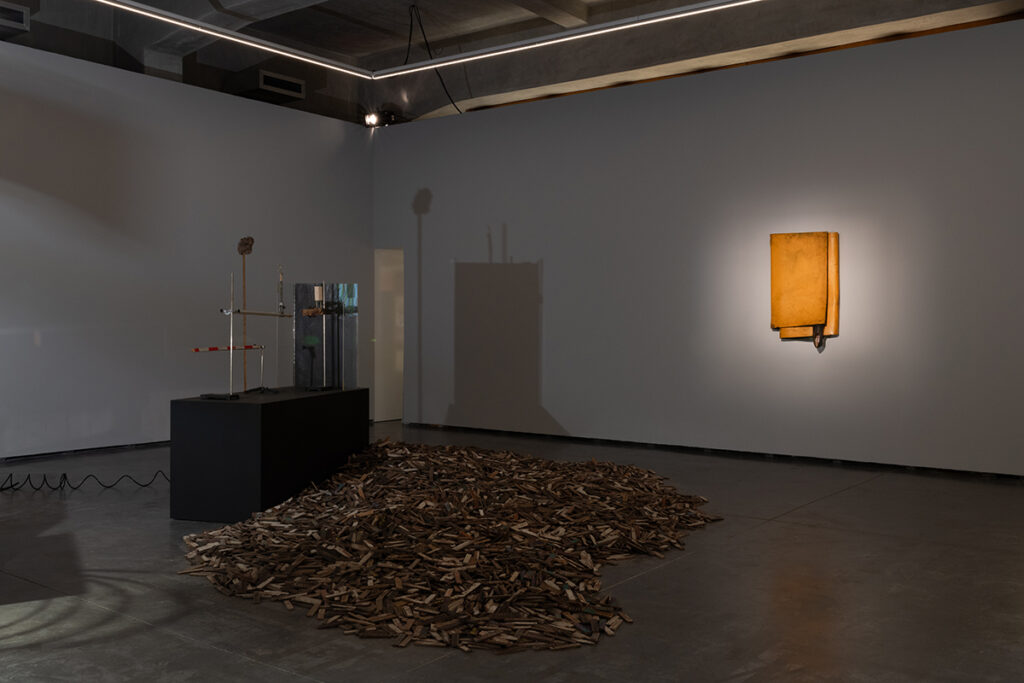
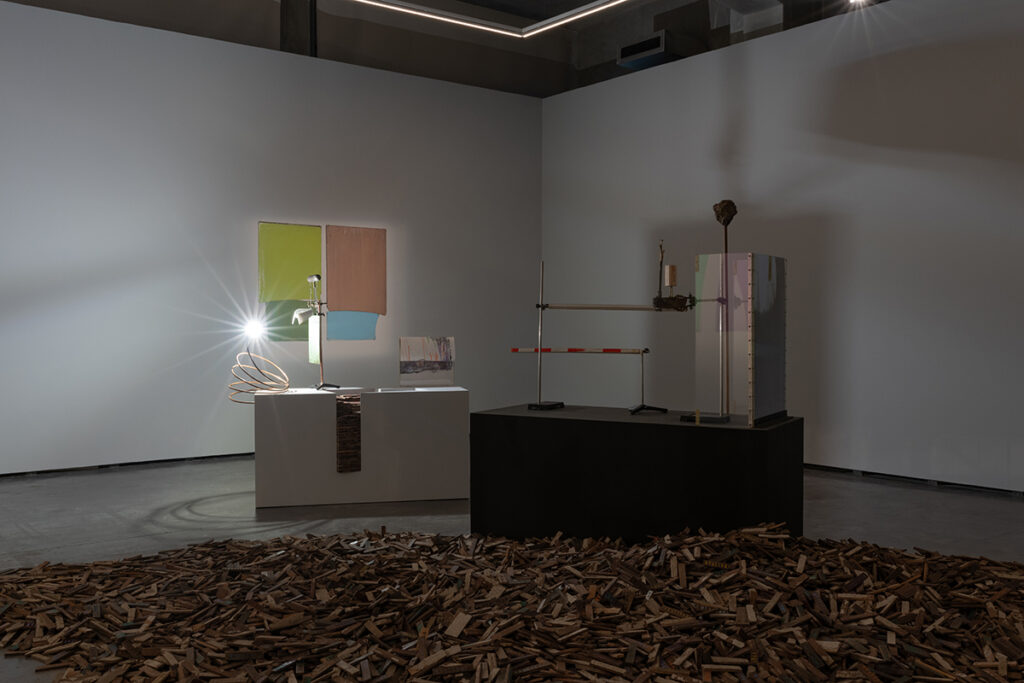
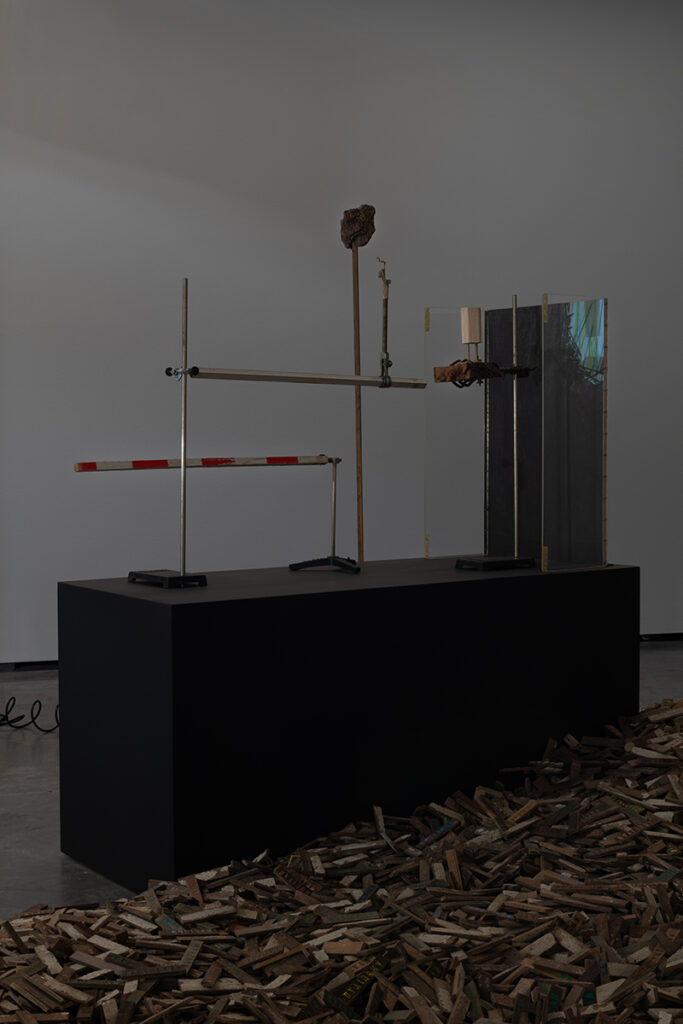
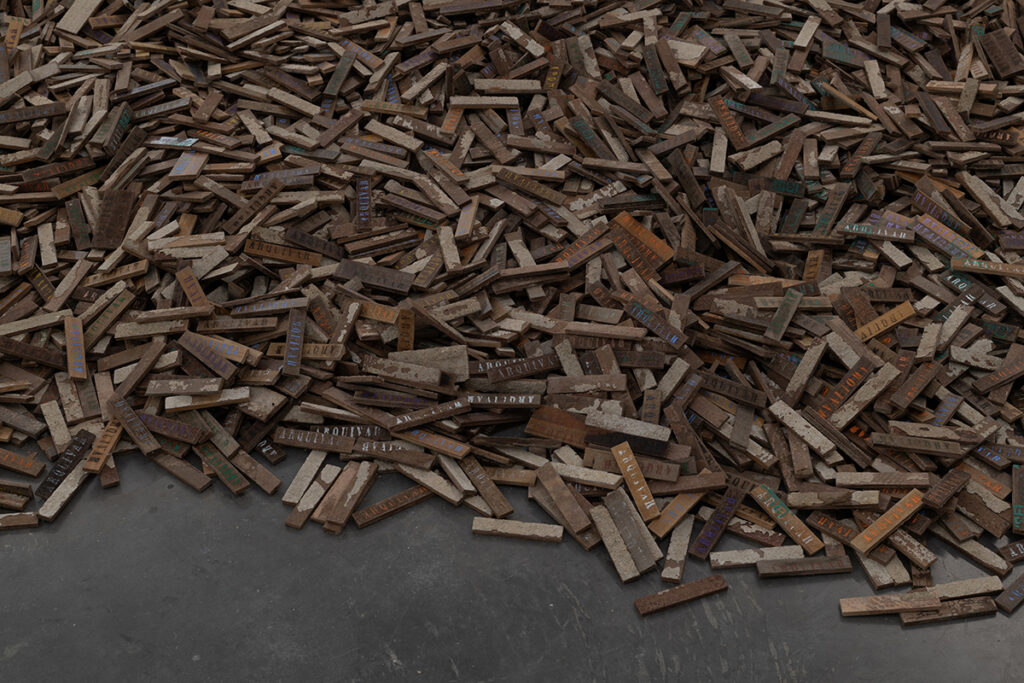
In this way, in Nuno Sousa Vieira’s work, archiving and de-archiving are inseparable actions: memory is not a unilateral record, but a binding one, mouldable. The elements that inhabit the space, fragments of floor, windows or grooves, displaced structures, are not presented as traces locked away in a bygone era, but as reactivatable signs, subject to new inscriptions. (Re)archiving, (de)archiving, as a consequence, is not a neutral gesture; it implies interfering. Perhaps folding time back on itself in a synchronised choreography of industrial waste and affective glimpses. It is in this articulation that the work ‘Desviar-se do ‘bom caminho’ (Deviating from the ‘good path’) presents itself as a meticulous record of lived time, transformed into numbered boards that accumulate the count of the artist’s days and weeks, between his birth and the present of the exhibition. With each new exhibition, the piece is replaced, updated, in a kind of continuous inscription of the passage of time on the floor itself. More than a personal mapping of time or a network of cadences, the act repeated here to exhaustion is also a process of organisation and preservation; a mechanism of continuous rewriting. The floor is the palimpsest, the place of transition between permanence and loss.
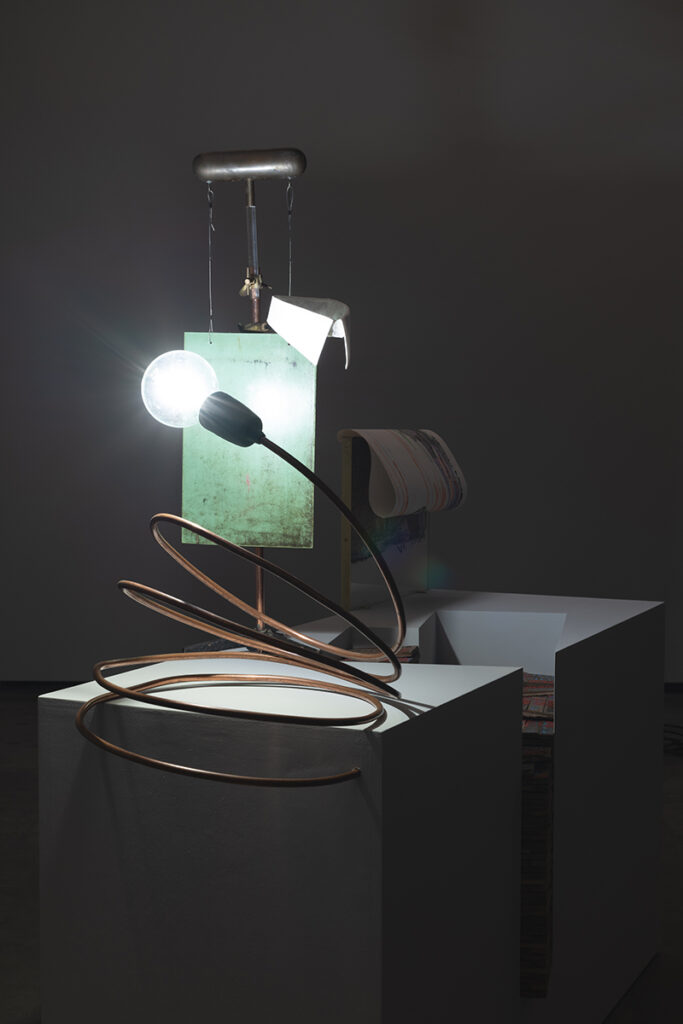
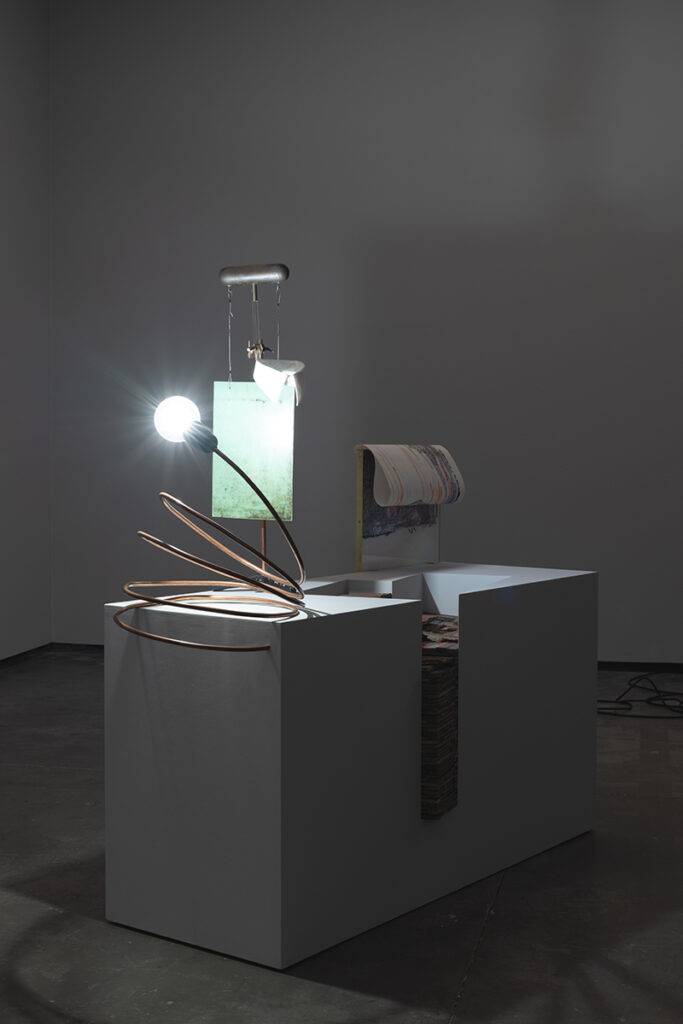
In turn, the installation ‘Ilha vaga’ (Vacant island) extends this territory of uncertainty, incorporating heterogeneous materials, wood, glass, bronze, and laboratory supports, in a composition that emphasises the fragility of suspension, the hesitation between form and matter. There is an echo here of the gesture of naming as fixation, but also as displacement: the island, by definition, suggests a geographical limit, an isolated territory, or it could become an open platform, a space of mutation, of floating possibilities. The smoke machine integrated into the installation reinforces this idea, thickening the atmosphere with layers of visibility and concealment, of presence and disappearance.
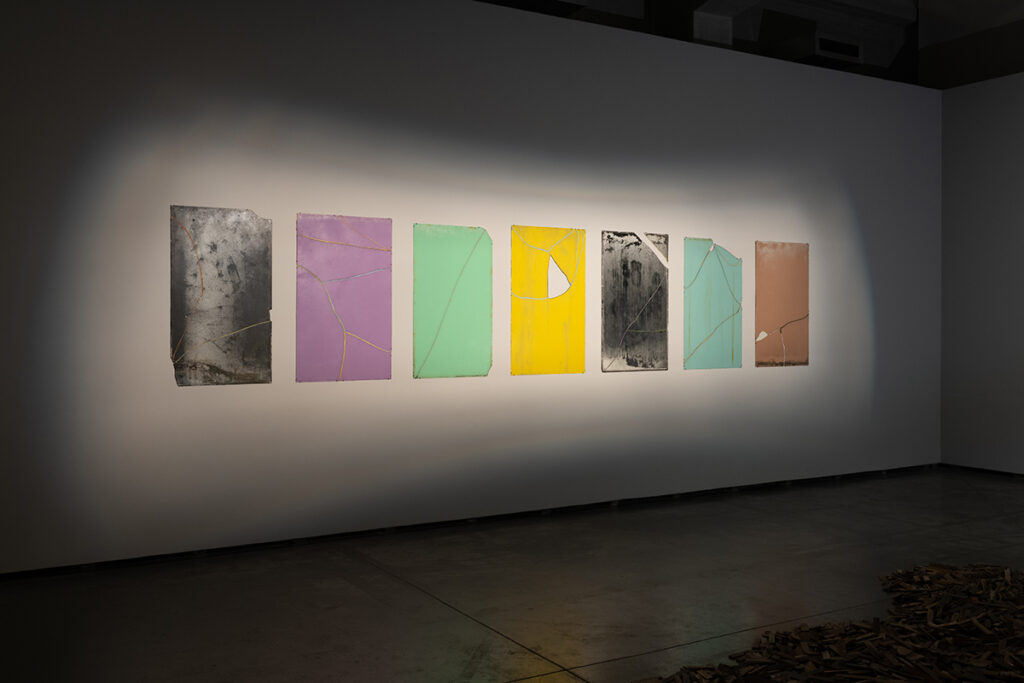
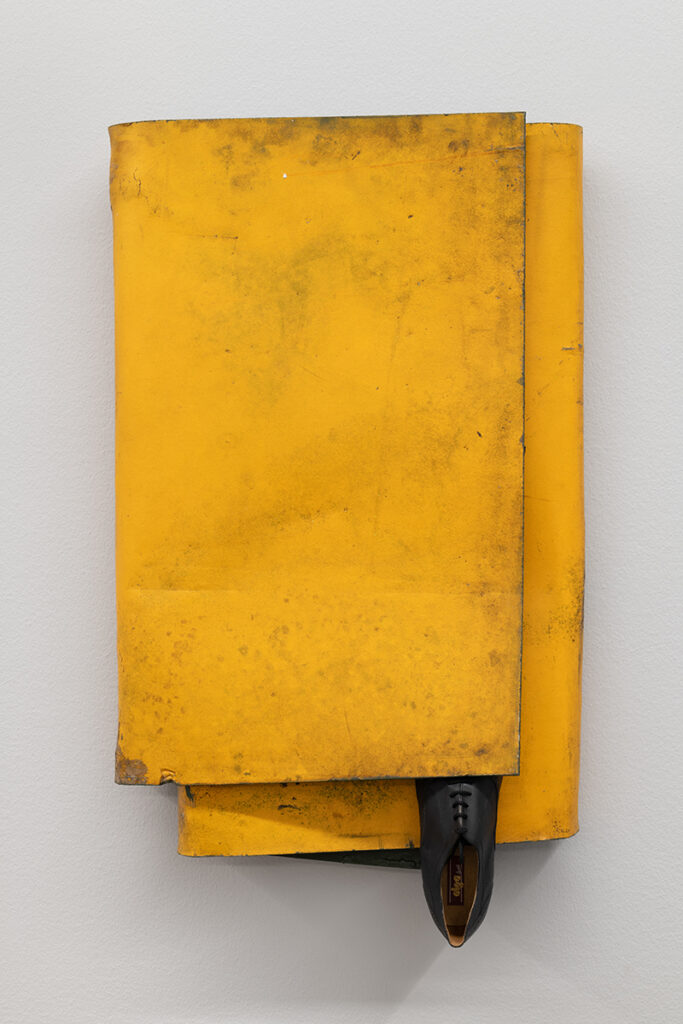
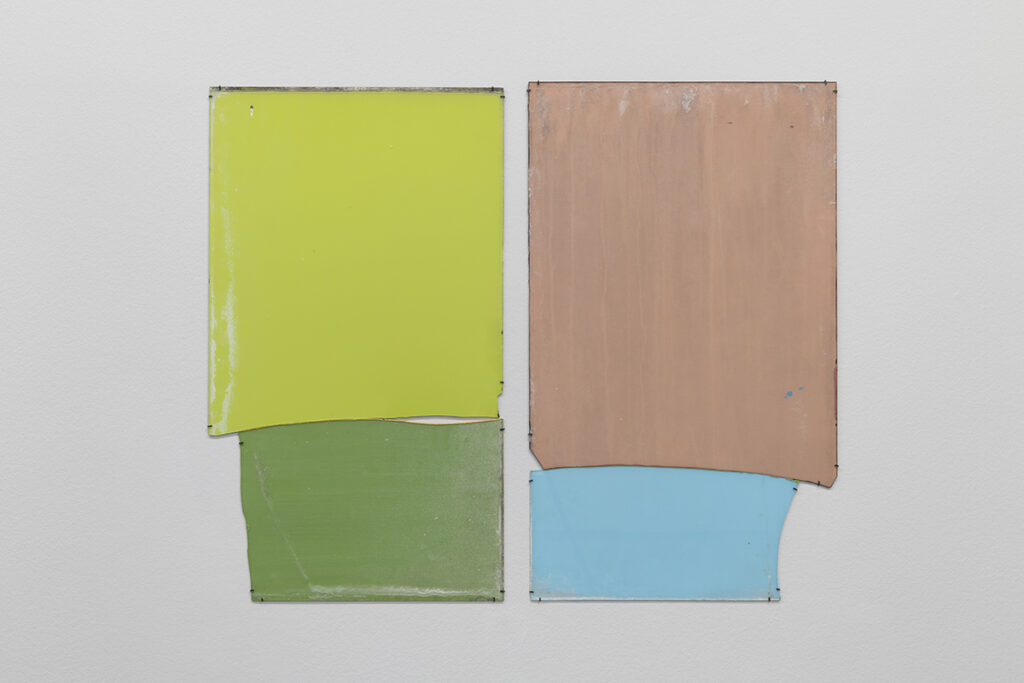
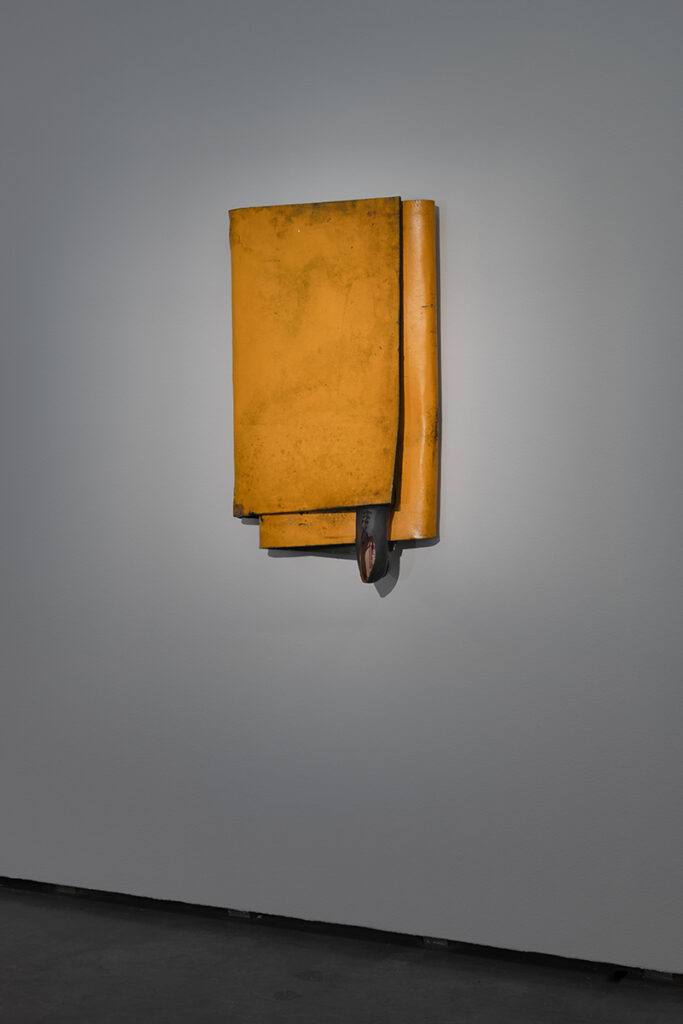
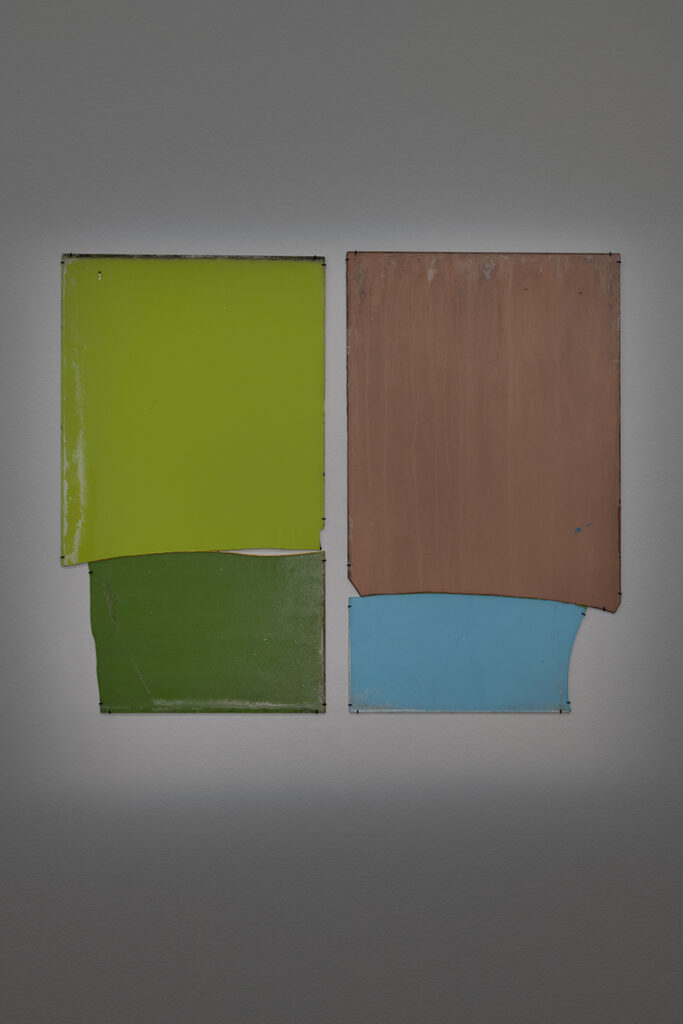
‘Visão embaçada’ (Blurred vision) is also one of these paradigmatic series; in the exhibition Wall Stop for This, Nuno Sousa Vieira presented the first version of these pieces, which reconfigure shards of broken glass from the studio in an alternation of transparencies and opacities. An intimate archaeology that accumulates gestures, traces and reverberations, with the studio as the space of origin, which informs colours, shapes, but also the need to continue this same investigation; the same forms the foundation of thought. The relationship between matter and memory, central to the artist’s work, is also extended in the sculpture ‘Sem pisar o chão’ (Without stepping on the ground), which gives the exhibition its title. A (left) shoe refers to an absent body, perhaps a trail suspended between balance and fall.
The polarities of what is visible and its opposite, the stable and the transitory, the ethereal, run throughout the exhibition. As in the 2012 exhibition, in Sem pisar o chão / Without stepping on the ground there is an implicit choreography, an invitation to drift and recognise that each fragment contains multiple latent experiences. The artist creates a place of action and doubt. It is necessary to go to this core to remember what is most vulnerable. How many days are left? How many studios are there left to inhabit? How much memory can be kept through the labour-intensive repetition of gesture? In the geometry of the compositions, in the volumes of floor and wall, or in the words that occupy visual and spatial density, there is a path that the title seems to want to challenge. Perhaps it is precisely in this fictional attempt to avoid the ground that is trodden, the wear and tear of this weight, the fatality of this gesture, its echo as astonishment. And to look for another being so light that it can defy the laws of gravity. At least, perhaps, if we stepped on the ground ‘less harshly’ – or might we say Earth – many things could be left unchanged*. We could try.
Carolina Trigueiros, March 2025



 /
/  /
/ 