Over decades of a deeply multidisciplinary practice, Ana Pérez-Quiroga has developed a body of work attentive to the relationships between object, memory, the everyday and identity. Moving between installation, photography, performance, video and text (and, more recently, an incursion into cinema), the artist constructs a lexicon in which elements are never found in isolation. They contaminate one another, extend into one another, and return in cadences characteristic of a lineage anchored in research. There is an insistence on the idea of the living archive, on the possibility that objects accumulate layers of time, affect and displacement. Memory emerges as a mutable, malleable material, at times contradictory. A dynamic field in which what is remembered coexists with what has been silenced, omitted or transformed by the passage of time.
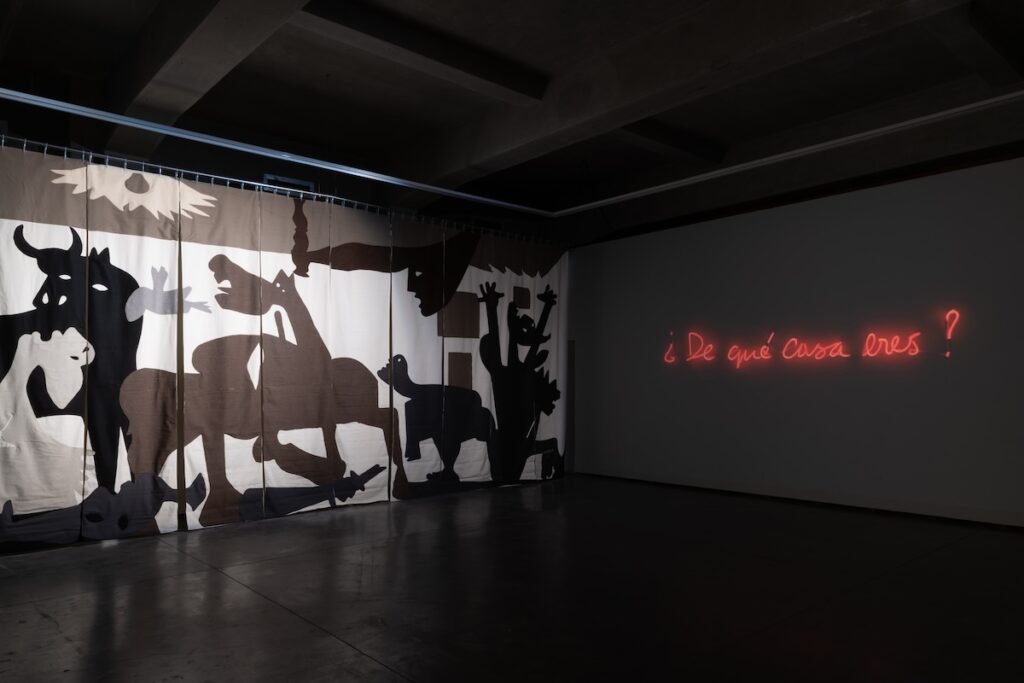
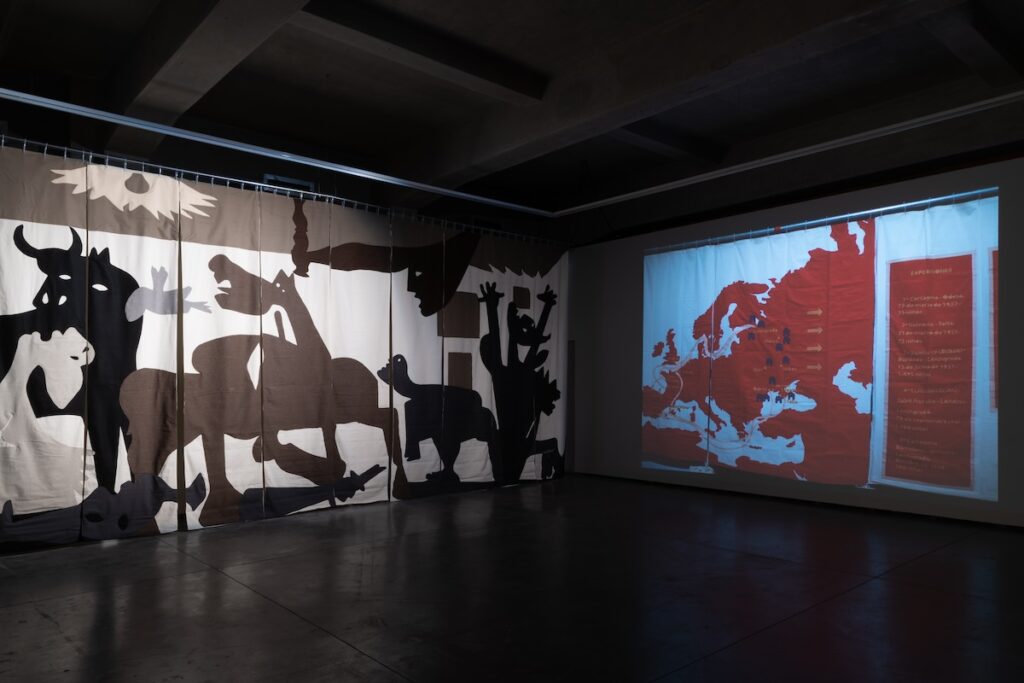
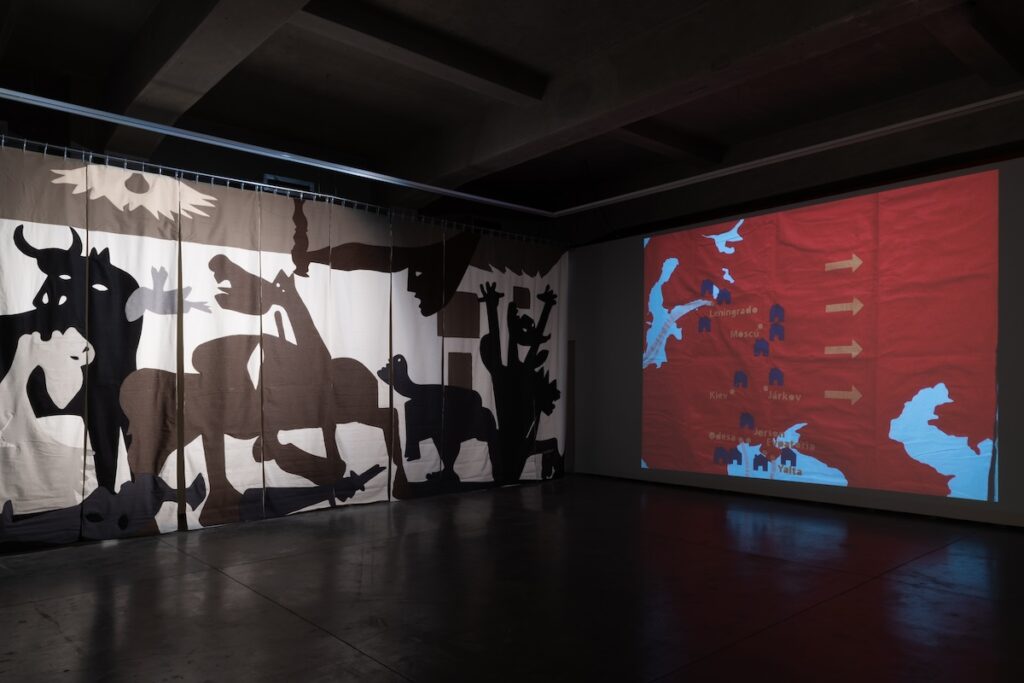
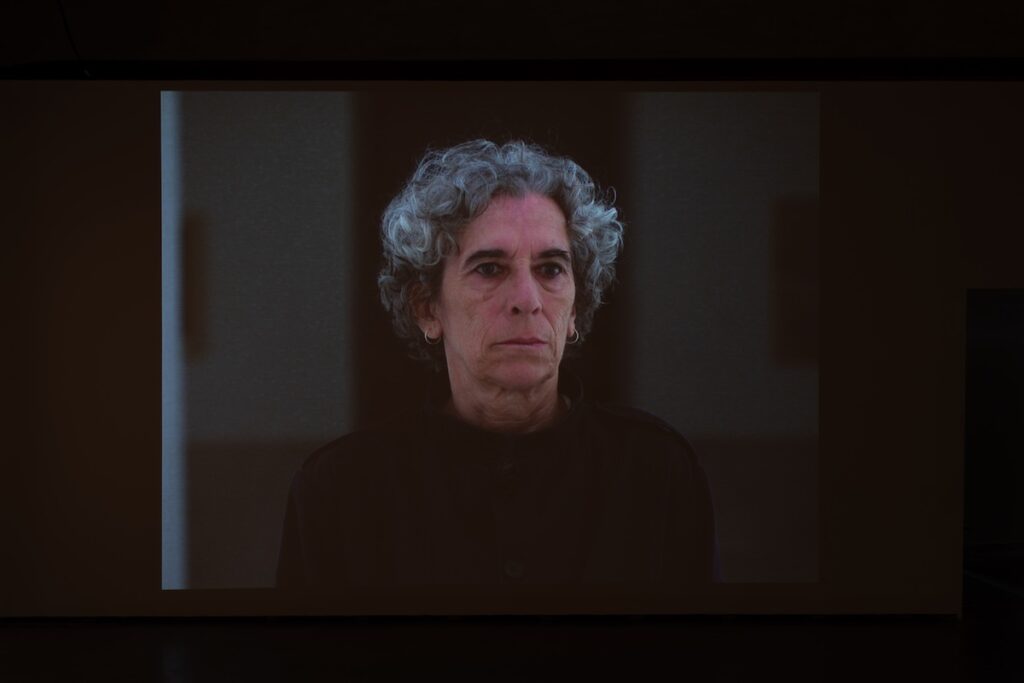
It is precisely within this territory that ‘¿De qué casa eres?’ is situated, a project that begins with the story of the artist’s mother, Ângela Petra, one of the many Spanish children sent to the Soviet Union during the Spanish Civil War. At just four years old, she leaves the Basque Country and embarks on a path of exile that passes through Russian boarding schools, successive displacements during the Second World War, and cities that today belong to Ukraine, Russia and Kazakhstan, extending as far as Siberia, before eventually returning to Spain as an adult. Later, she settles in Portugal. The question that gives the project its title became, among these children, a form of mutual recognition – a way of identifying one another amid a condition of permanent displacement. One of those formulations that, by virtue of its weight, crosses generations, lingers in suspension, shifts in form, and even finds new bodies in which to continue resonating.
In Ana Pérez‑Quiroga’s work, the question ‘¿De qué casa eres?’ (From which house are you?) rapidly exceeds its identitarian frame, expanding into an affective, political, historical and intimate territory. The house is at once origin and displacement, shelter and loss, belonging and uprooting. It is a physical place, but also an emotional construction and a geography in constant transformation. It is the artist’s body, the gesture that progressively draws closer and lays claim to this history. The body of a daughter approaching her mother. The umbilical body is also a political body. Affective transmission is never separate from the historical structures that shape it.
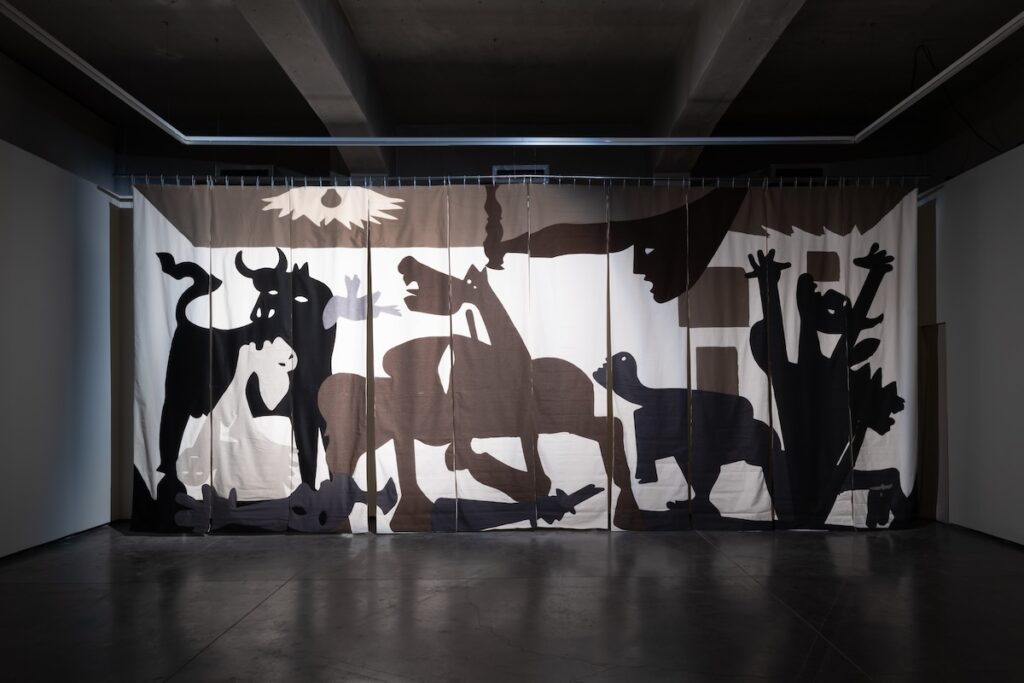
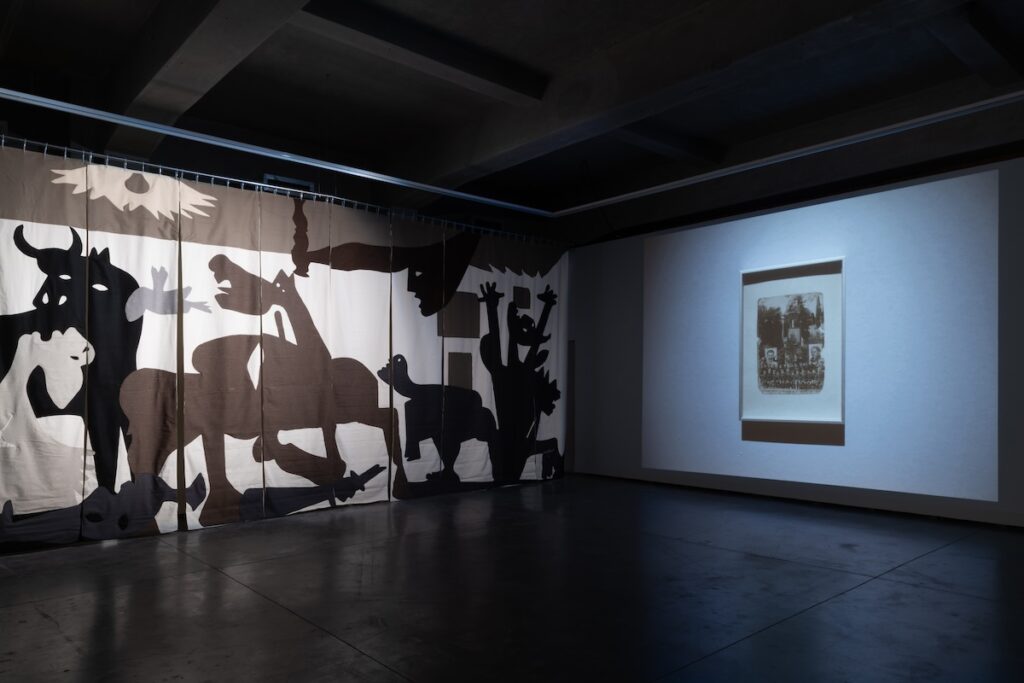
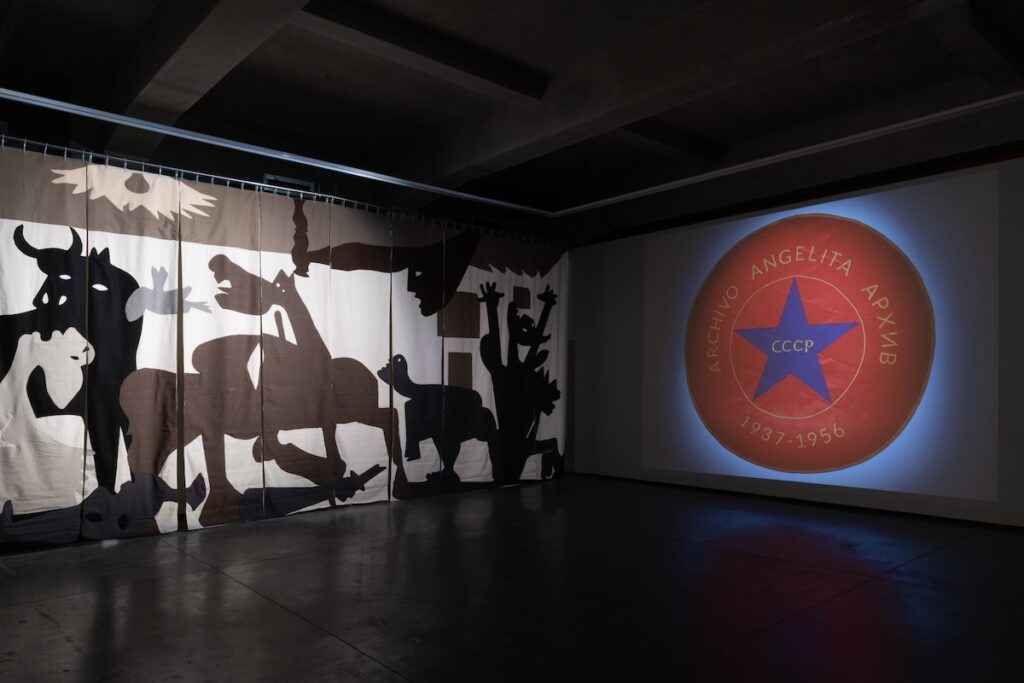
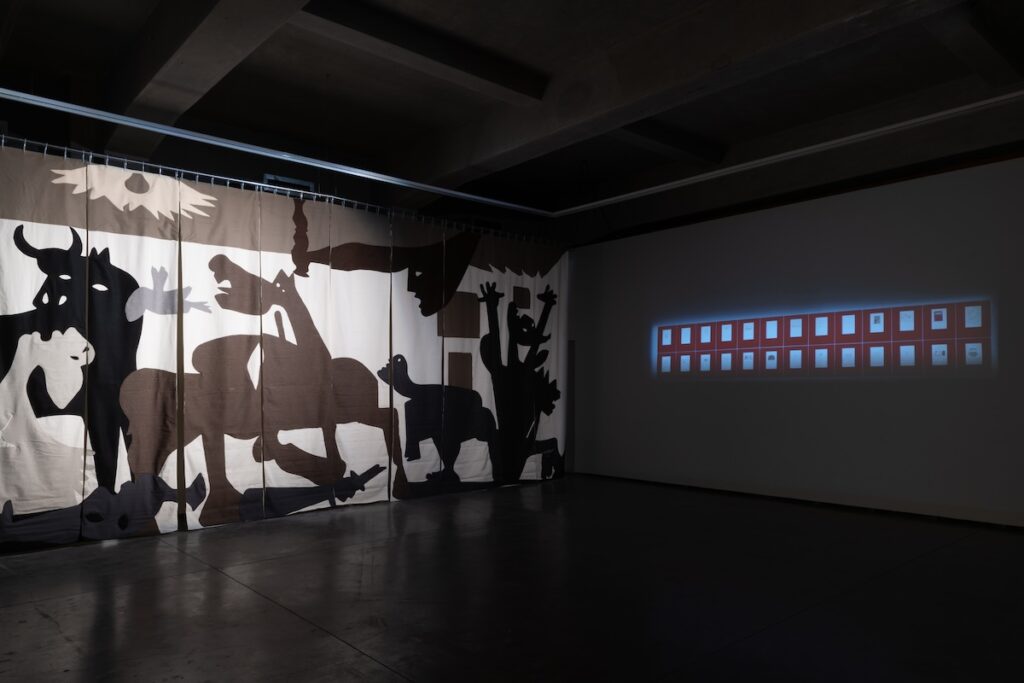
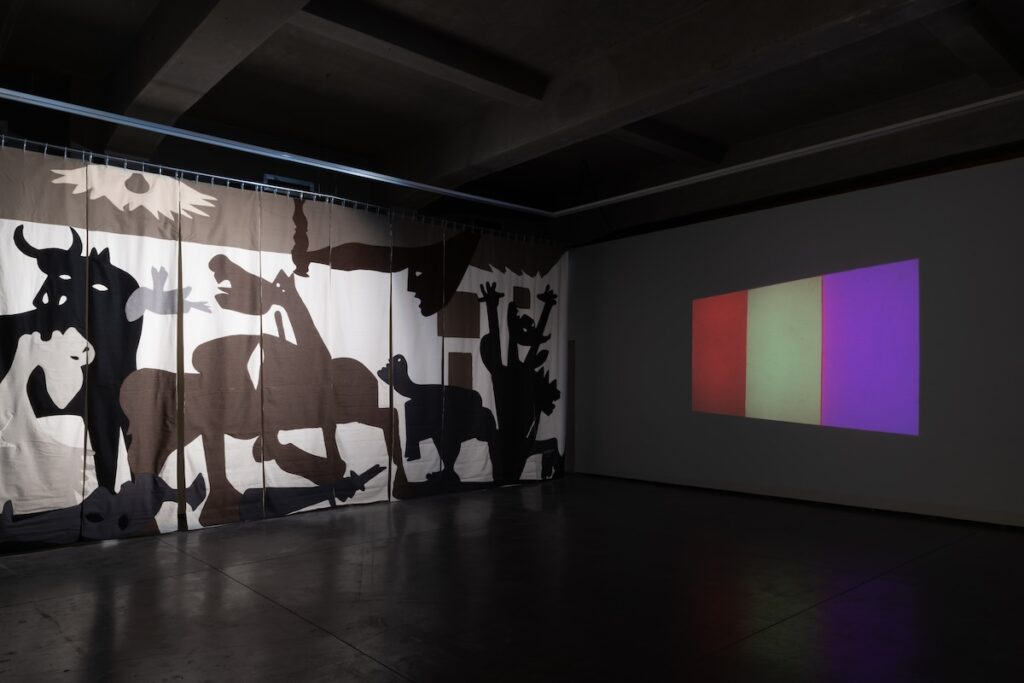
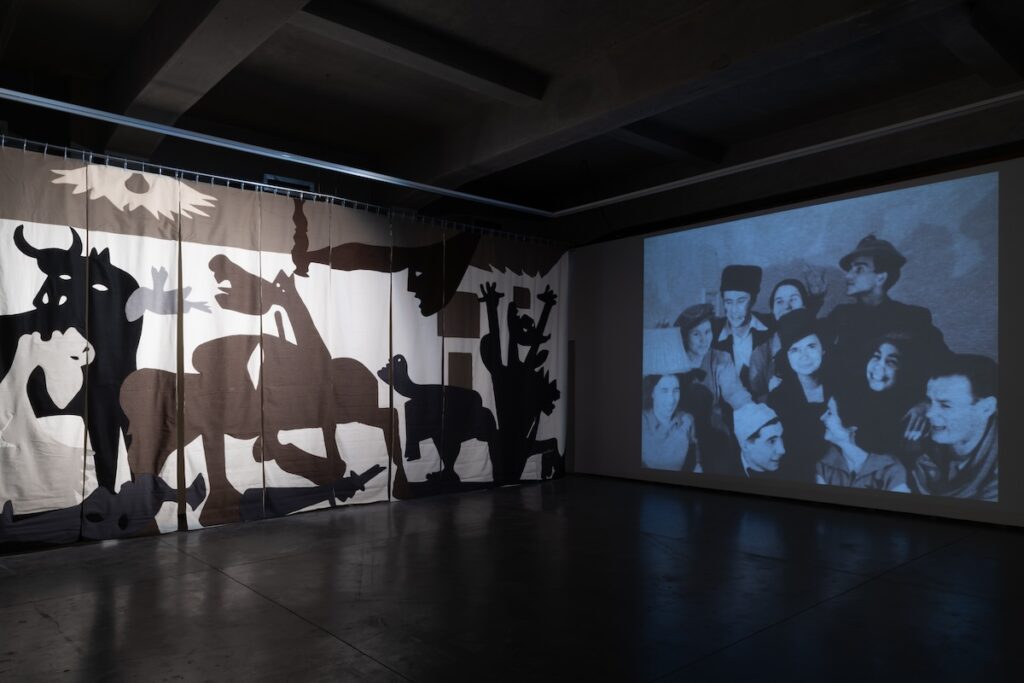
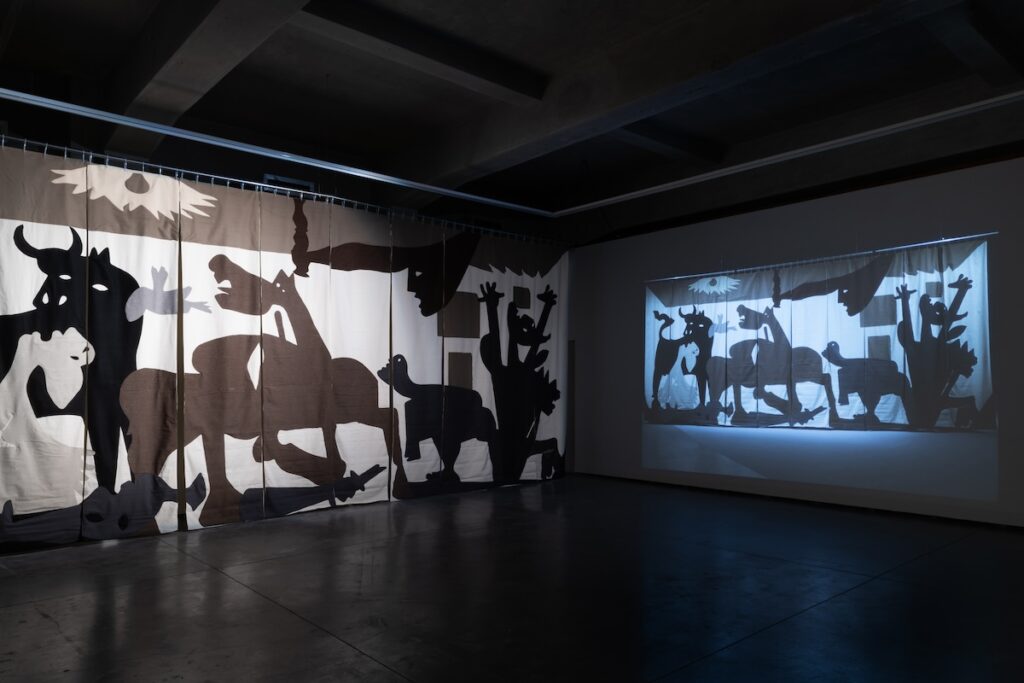
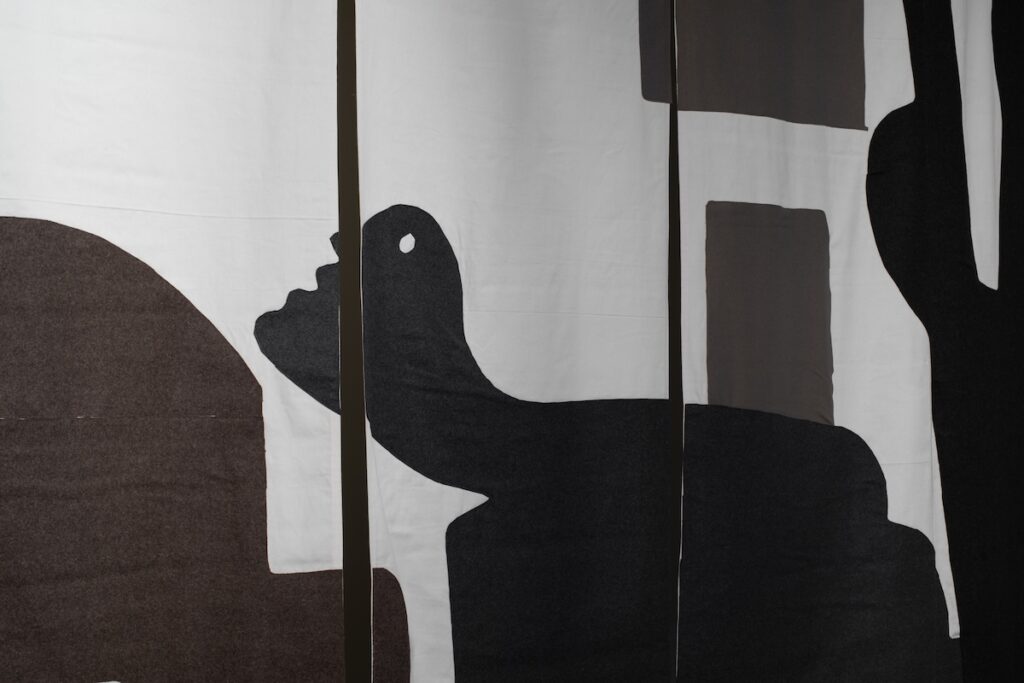
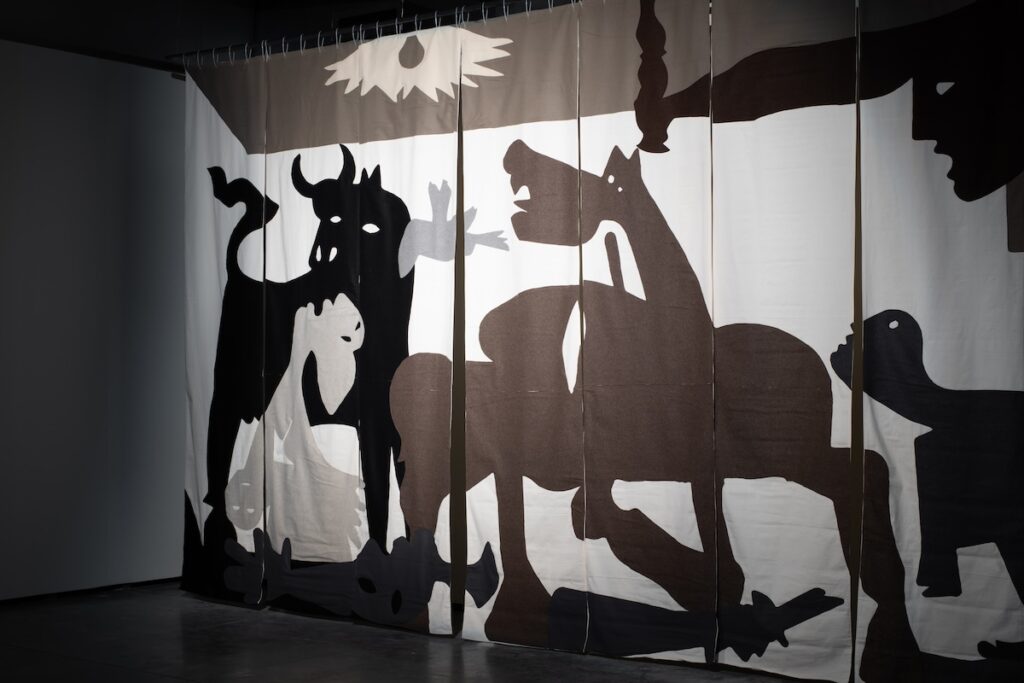
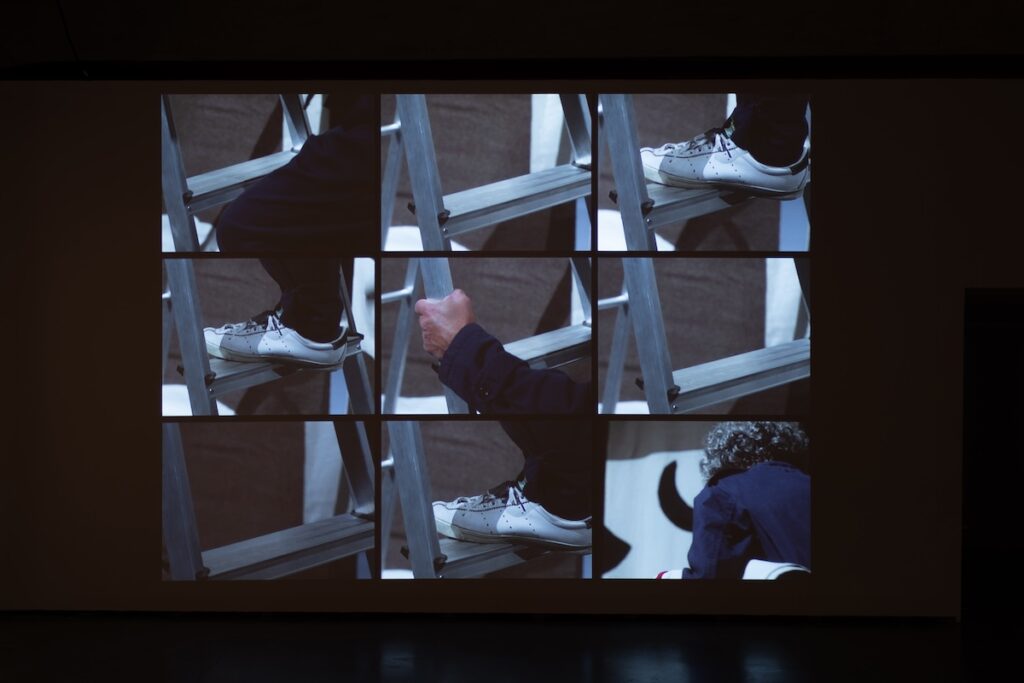
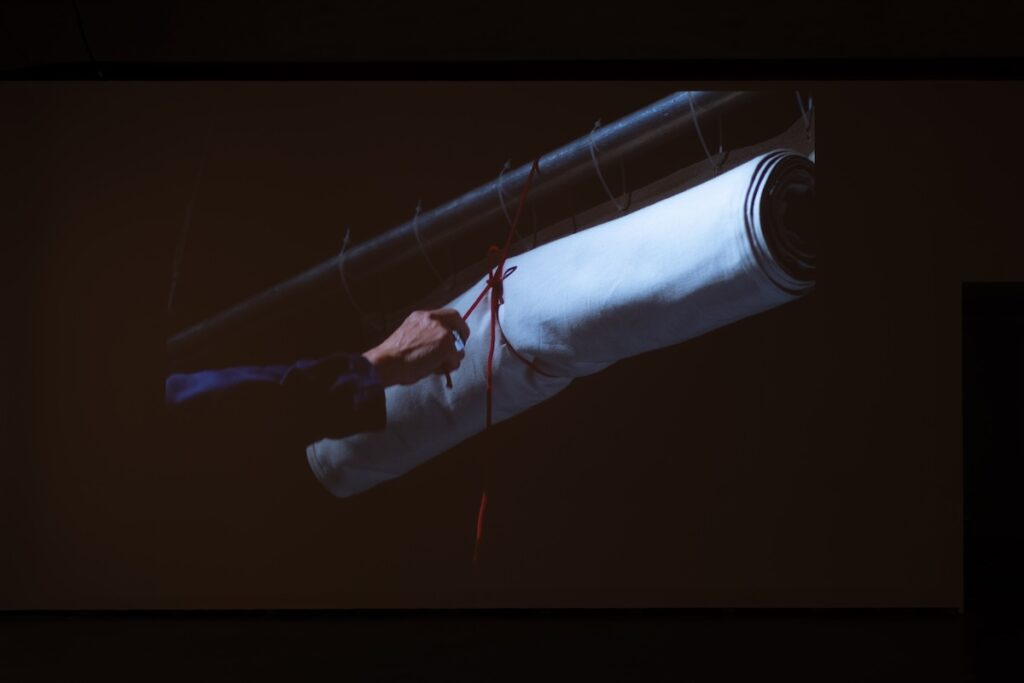
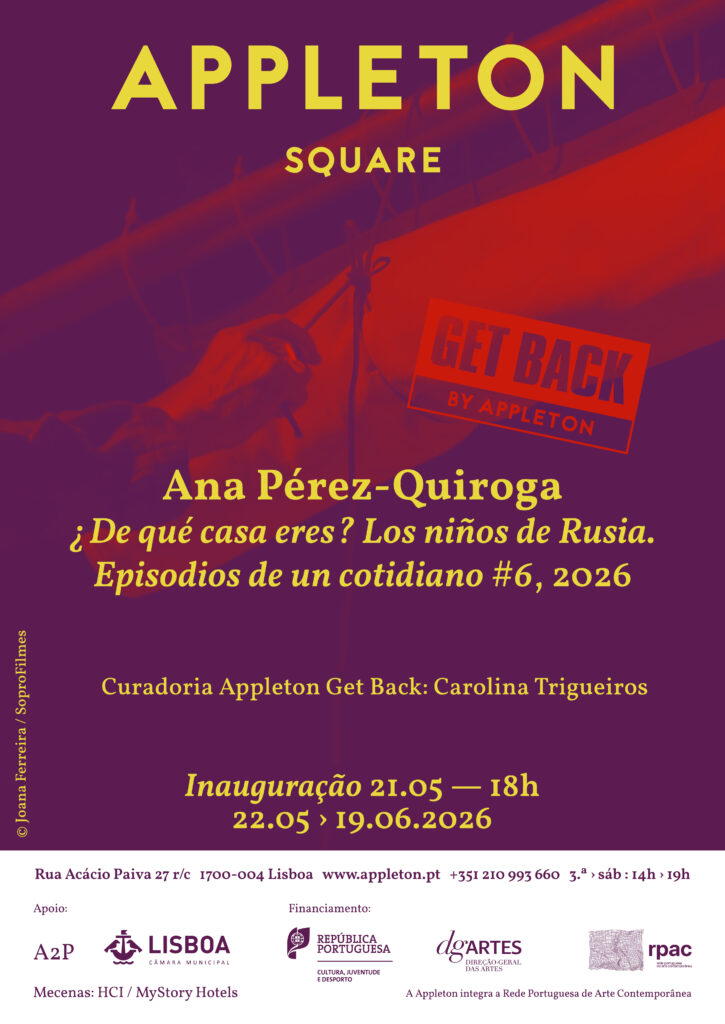
In ‘¿De qué casa eres? Los niños de Rusia. Episodios de un cotidiano #6’, developed for Appleton, ‘Gernika-Lumo’ (2022) stands out – a piece originally created for the film ‘¿De qué casa eres?’ and now presented for the first time in an exhibition context. Reproducing the exact scale of Picasso’s ‘Guernica’, the work transforms the symbolic weight of this inescapable icon of art history into a manual, tactile and profoundly corporeal territory. ‘Guernica’ is the icon; ‘Gernika-Lumo’ marks a place – the houses, the families. Conceived in burel – a compact fabric made of pure wool associated with the traditional Portuguese samarra and with a vernacular memory linked to the artist’s childhood – the piece activates its most sensorial and affective dimension: touch carries memory. The hand weaves, drawing closer to the symbols and the violence of the unimaginable. Here, cinema informs the installation and restores a physical density to the filmed image. In this gesture of appropriation, tapestry – traditionally associated with the domestic sphere – becomes a device for working through collective memory and for reactivating the very status of the icon. The various panels that make up the work enlarge fragments of the original painting, amplifying its implicit horror and violence.
We might say that the artist is interested in exploring how trauma infiltrates everyday life, family constellations, preserved objects, songs, silences, and the very hesitations of memory itself. Post‑memory emerges as an intergenerational inheritance, an invisible continuity that persists beyond lived experience. In Ana Pérez‑Quiroga’s practice, there is a vital insistence on the possibilities of affect, encounter and transmission. Between trauma and care, between archive and body, between collective memory and familial intimacy, the artist constructs a body of work in which fragility and resistance remain inseparable.
In this ‘Get Back’ cycle, fifteen years after ‘Uma (outra) rota da seda’, which the artist presented at Appleton in 2011, it becomes inevitable to recognise both continuities and displacements. In that earlier 2011 exhibition, one could already discern a careful interest in the relationships between object, circulation, participation and systems of value; the textile likewise emerged as a central element, as did the activation of the viewer within the very dispositif of the work. One could feel a notable concern with bringing art closer to everyday life, placing emphasis on the mechanisms of production, circulation and legitimation.
In ‘¿De qué casa eres? Los niños de Rusia. Episodios de un cotidiano #6’, this attentiveness to materiality as a bearer of memory persists, as does the reflection on authorship and its reconstructed appropriation. Yet, whereas in 2011 the participation of the public played a more direct role in the construction of the work, here the visitor is summoned above all as an implicated agent. The gaze becomes complicit, or an act of responsibility – an active exercise in vigilance, understanding and resistance.
The gesture is disarming precisely because it is direct. Because it insists on drawing closer to that which can never be fully grasped. It recognises that some wounds are not healed through forgetting, but through the continuous capacity to remember, revisit and transmit.
Carolina Trigueiros


 /
 /
