The transience of the material that constitutes the trace of the lived, sensory and subjective experience of everything that surrounds us is one of the fundamental points of departure in the work of Shirley Paes Leme (Cachoeira Dourada, Goiás, Brazil).
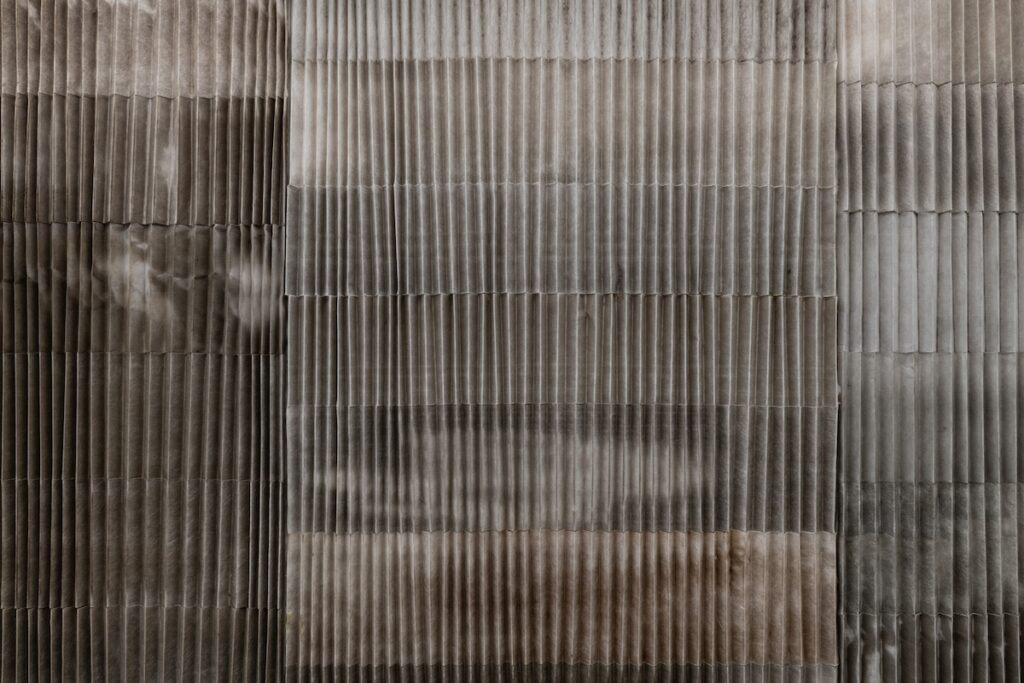
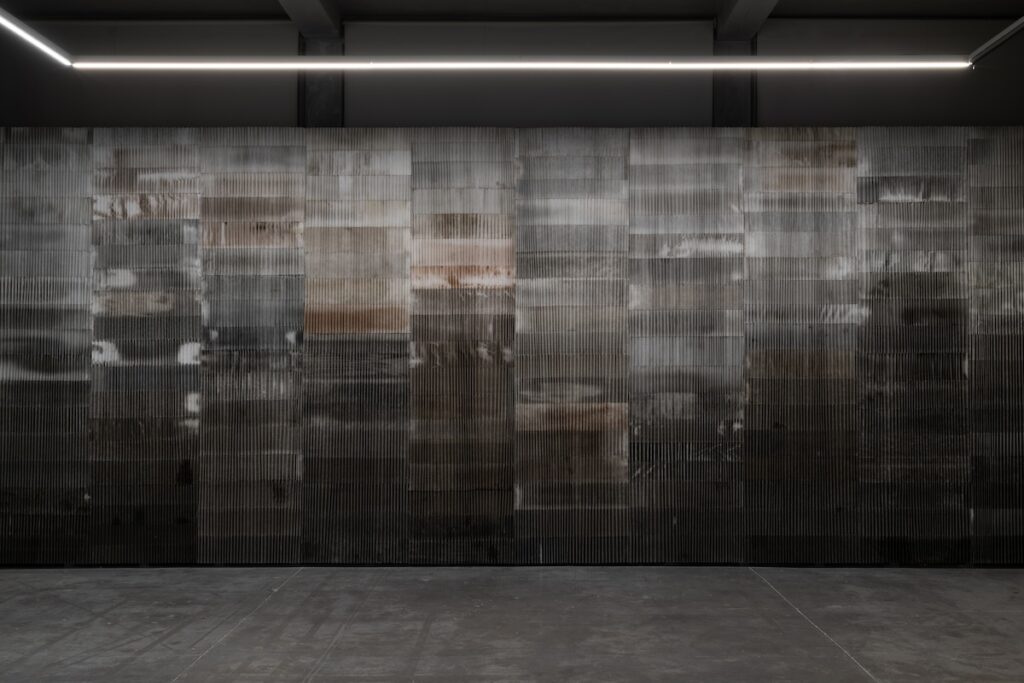
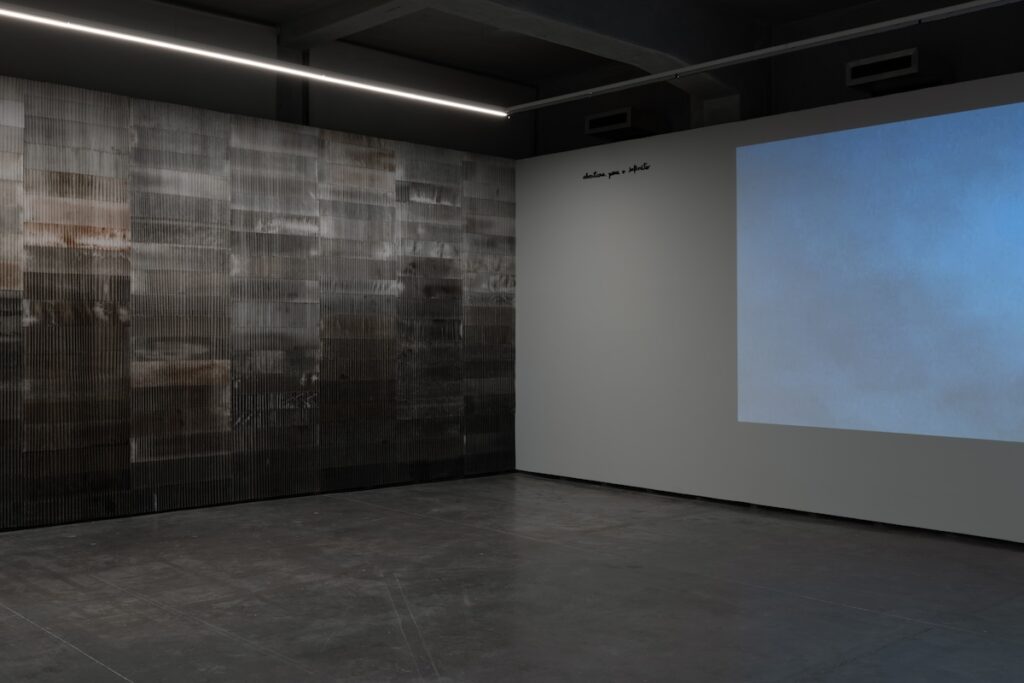
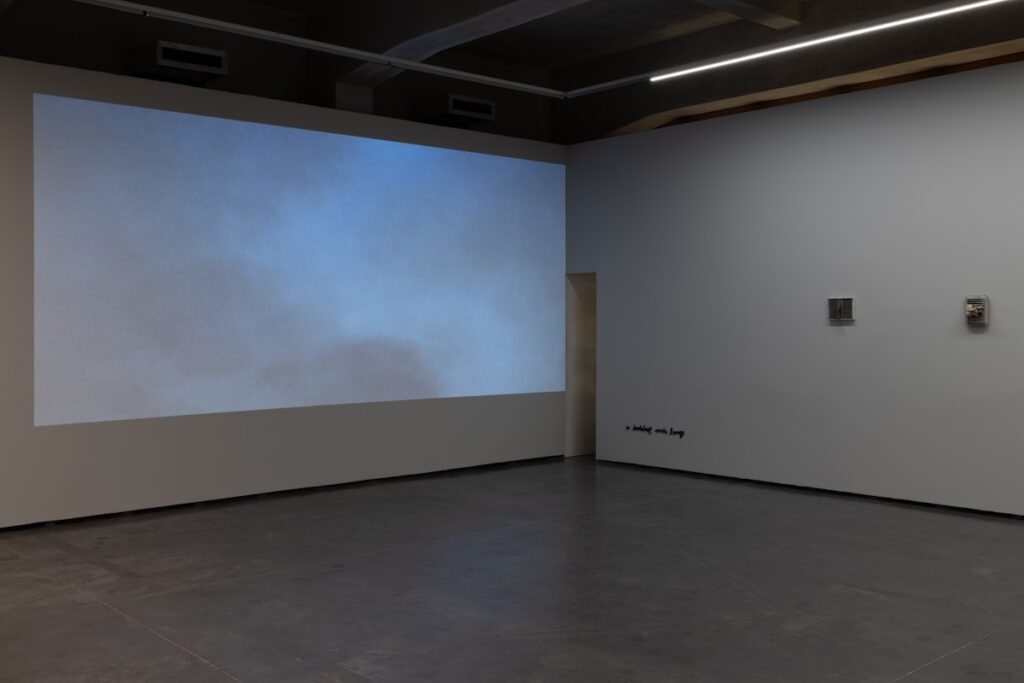
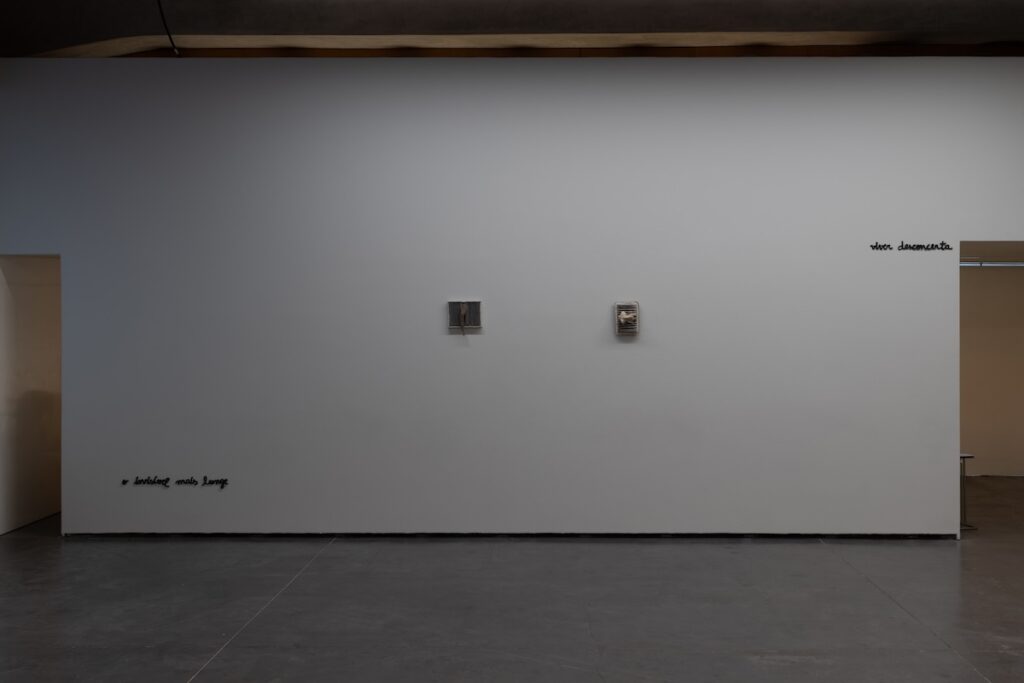
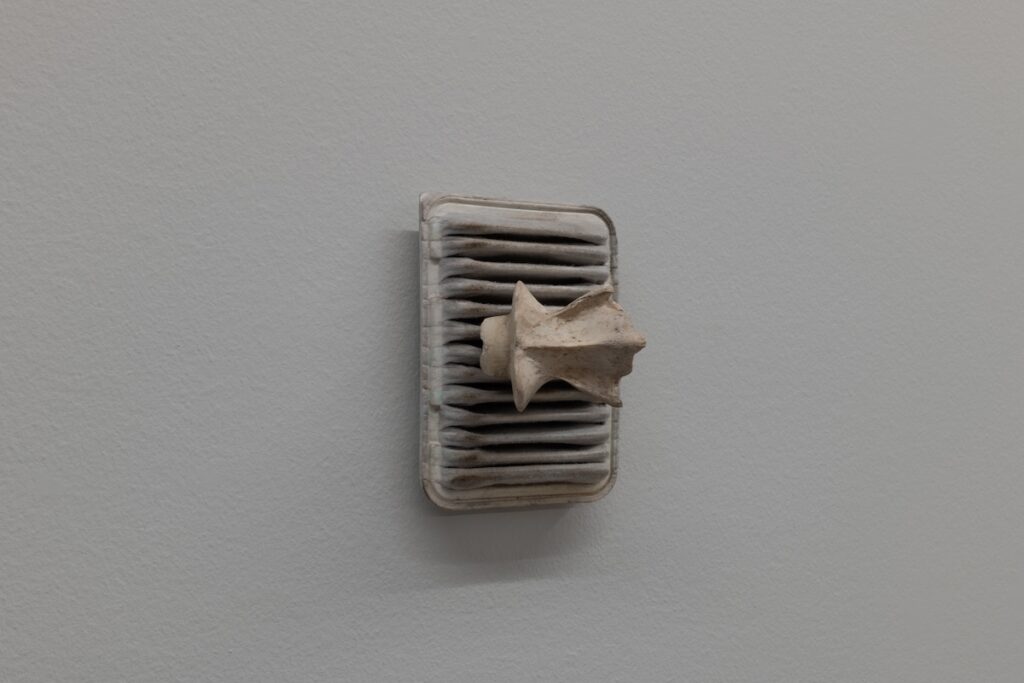
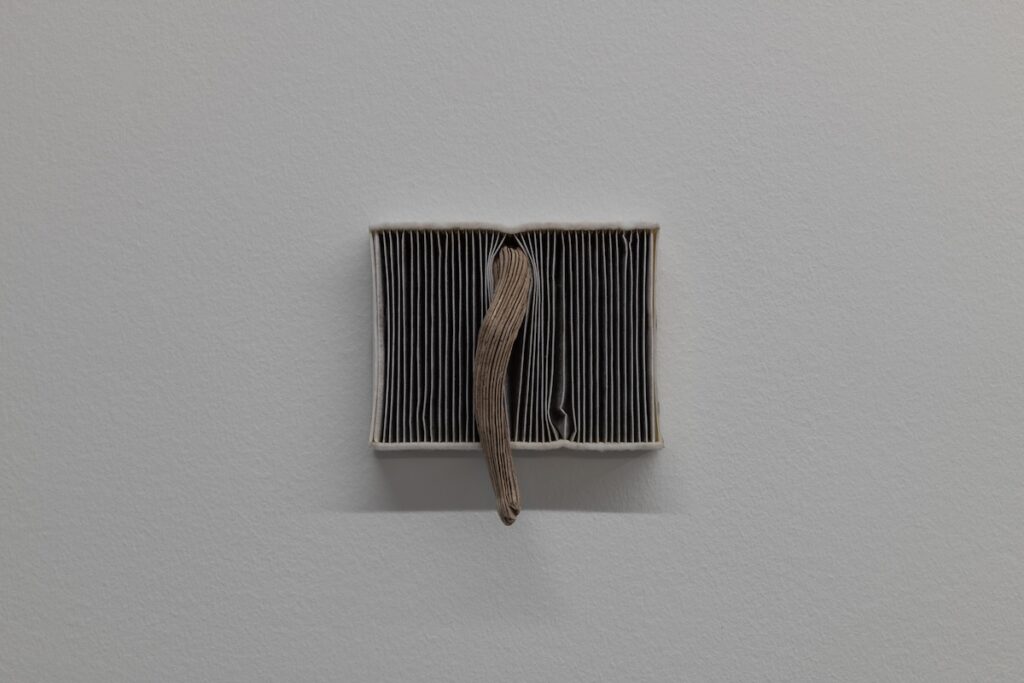
In a gesture based on the observation of those material traces, recording that which normally goes unnoticed, the artist questions how they affect us and what it truly means to live in an environment whose composition we don’t know, but which directly determines the conditions of our existence. In O Ar Não Tem Lugar (No Place For Air), Paes Leme presents a series of reflections on which she has been working since the 1980s. O Pó Habita, and installation comprising air filters collected in different urban contexts, presents itself as a surface of inscription where the invisible is revealed. When moved into the exhibition space, these filters cease to fulfil their original function and start to operate as atmospheric archives. Each contains a fragment of the environment from which it was taken, but also an accumulation of different times. They are not just records of a moment, but of a duration and, in that sense, their surface is not neutral but rather the result of a continual interaction between flow and retention, circulation and sedimentation. Through these objects, air is understood as an active means of diffusion and contamination, a dense field of relationships, crossovers and interdependences. What once floated imperceptibly becomes a legible, material presence, a wandering landscape. Over time, all these devices accumulate particles, suspended in the atmosphere, like fuel residues, industrial emissions or natural dust, and these progressively transform into dense, darkened, almost opaque objects. In this context, the works don’t just show the lack of fixity in the air, but also suggest the impossibility of containing or delimiting it. Air is always in transit and that movement reveals the fragility of the borders that structure our perception of the world as a living system that connects what we tend to separate: nature and culture, body and environment, local and global, visible and invisible.
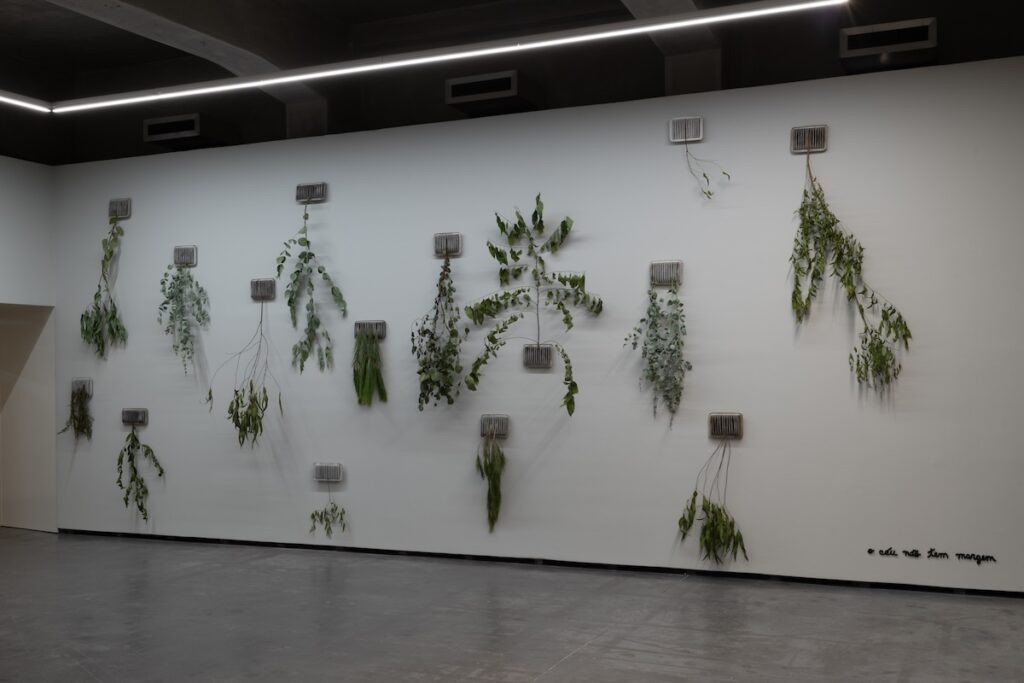
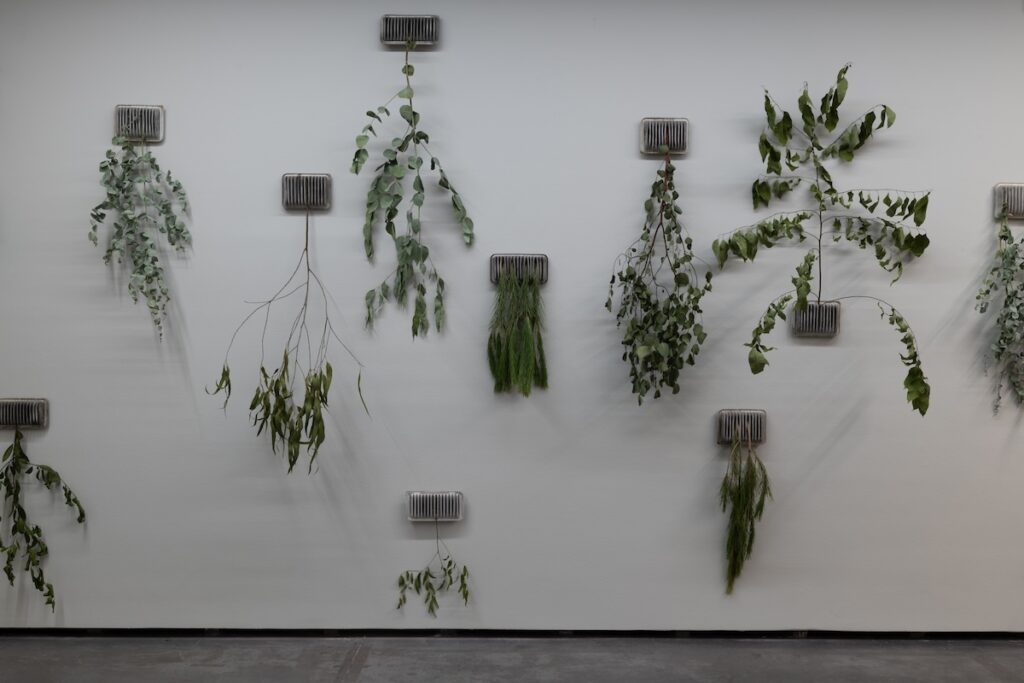
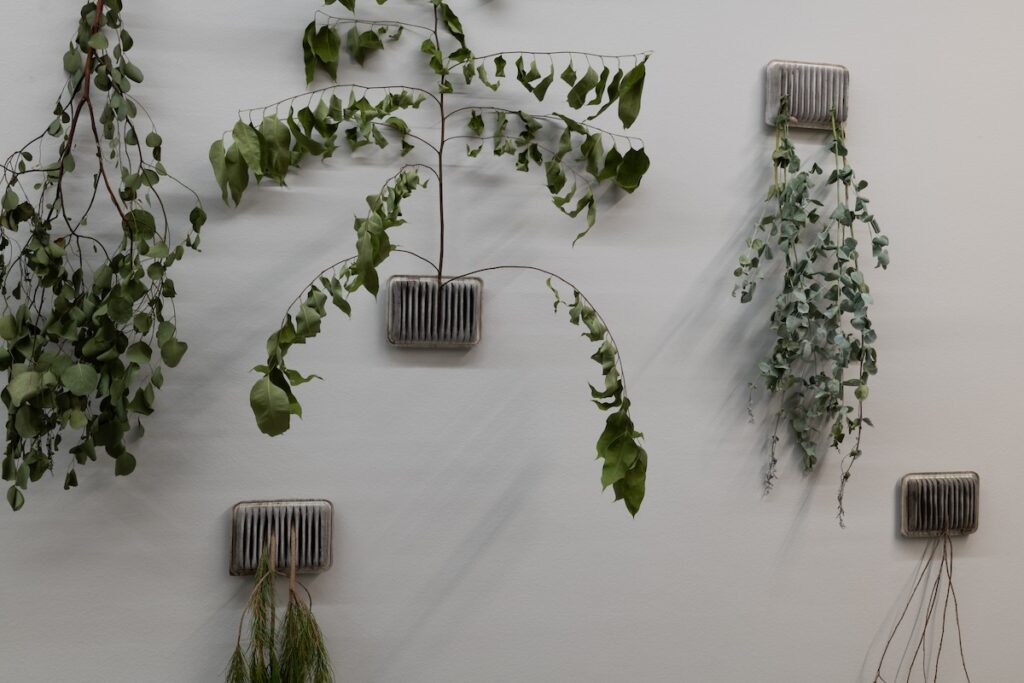
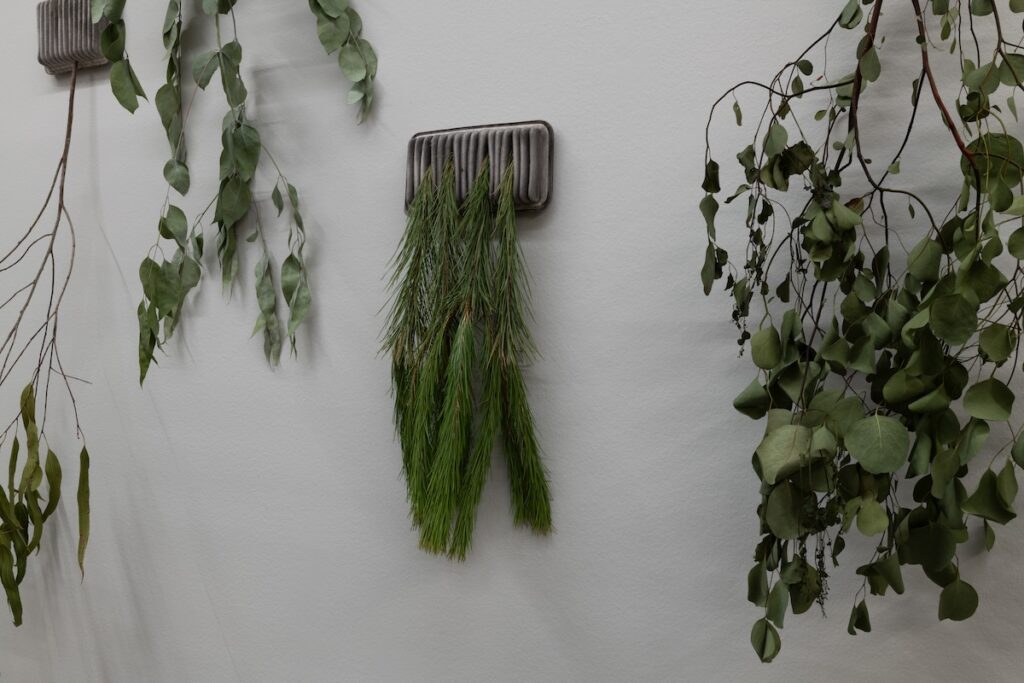
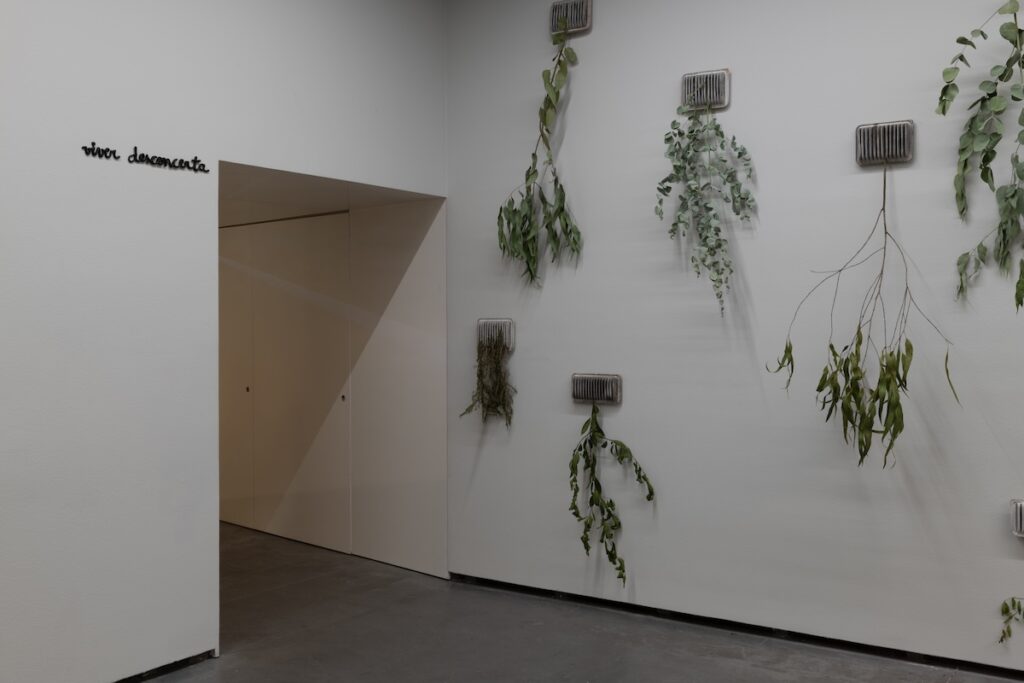
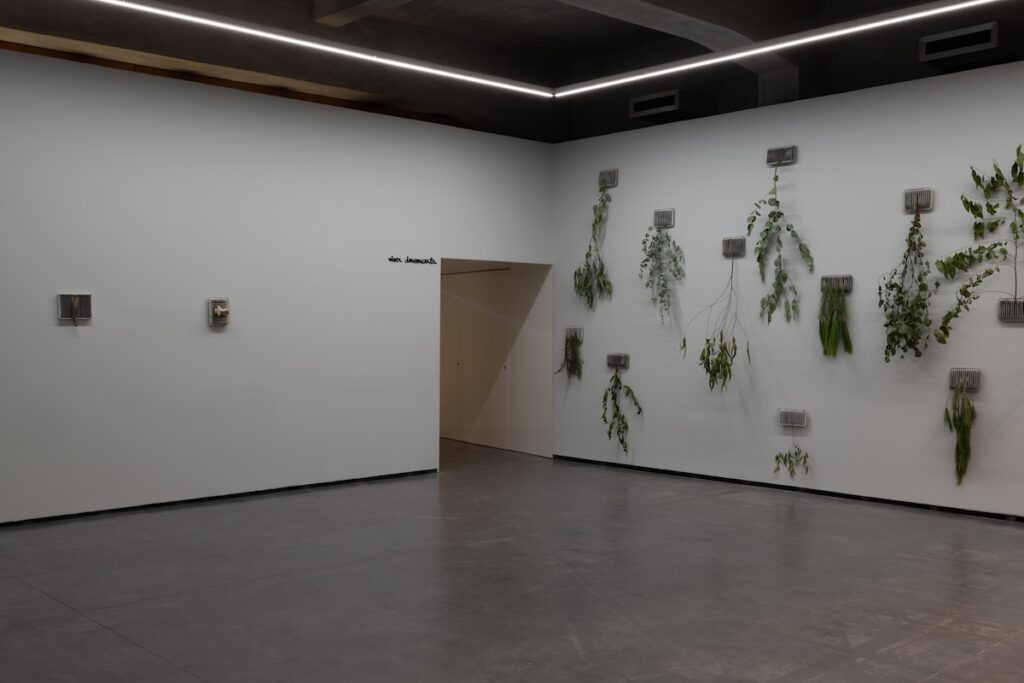
In addition to the filters collected in Lisbon and São Paulo, elements from diverse contexts are also included to create an extended cartography of places. In O Instante é a Respiração, the artist explores the tension between the natural and the artificial, causing plant elements, twigs and foliage, to sprout from within these industrial objects. This juxtaposition suggests nature’s prevalence over human action, whilst highlighting its remarkable capacity for regeneration and resilience.
In parallel, Paes Leme develops a critical reflection on that which usually remains outside the field of direct perception in the contemporary world, that is to say, pollution as a structural condition of the urban life of our time. The air we breathe in cities is shared, but also profoundly unequal. The distribution of pollutants echoes social, economic and infrastructural dynamics, revealing forms of environmental violence that are not


 /
 /
