1.
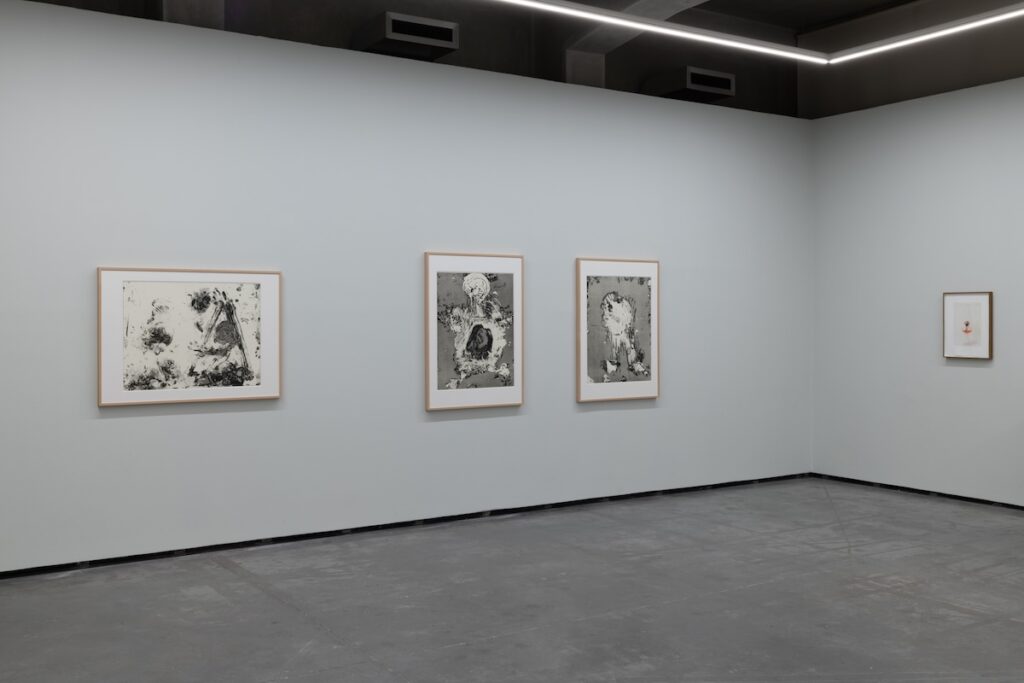
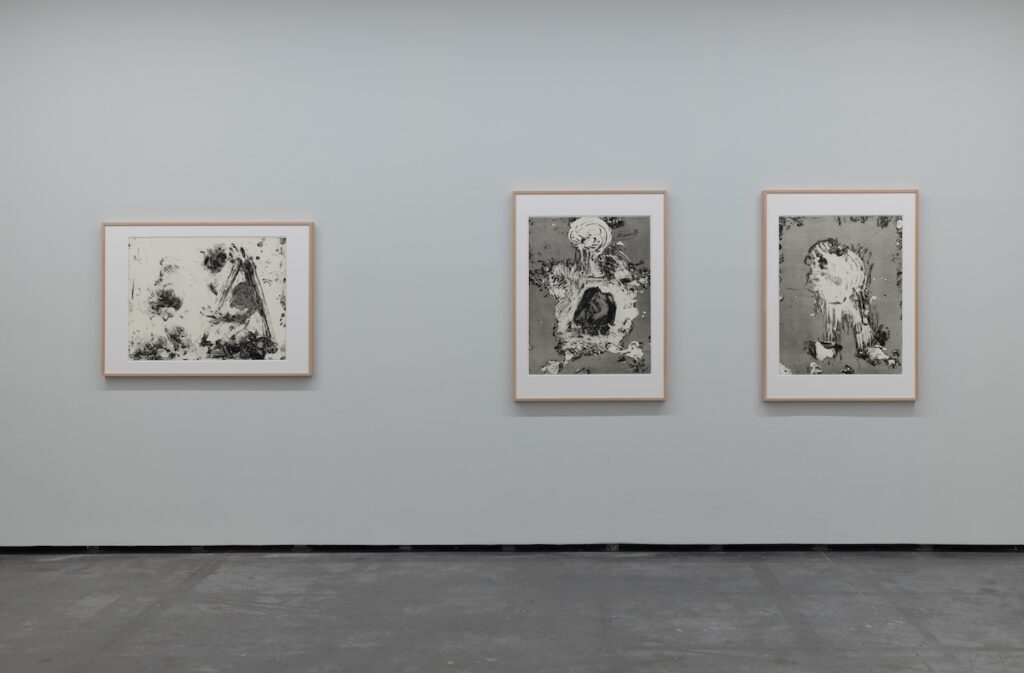
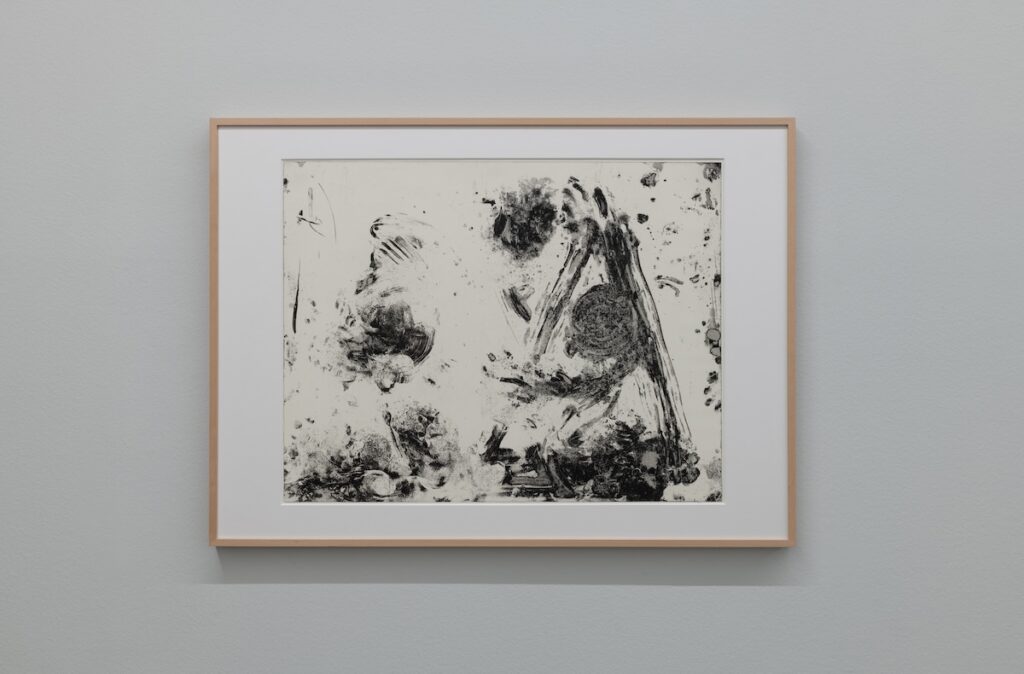
Returning to the beginning of the long-standing collaboration between Francisco Tropa and the Meel Press studio, the set of prints Tenda, Adão and Eva marks the first artist’s edition produced by printmaker Hugo Amorim. Using hands and feet as instruments to leave marks that construct the image according to an etching process, the three images refer to the presence of a headless figure in the emergence of two canonical entities of the Judeo-Christian tradition: Adam and Eve. Belonging to the set of works that determine Assembleia de Euclides [The Assembly of Euclid], a project divided into three exhibitions, the image in Tenda [Tent] refers to the sculpture of the same name from 2005, where a rudimentary tent structure houses three containers with chemicals intended for the process of developing the photographs taken in the context of the performance O transe do ciclista [The Cyclist’s Trance].
2.
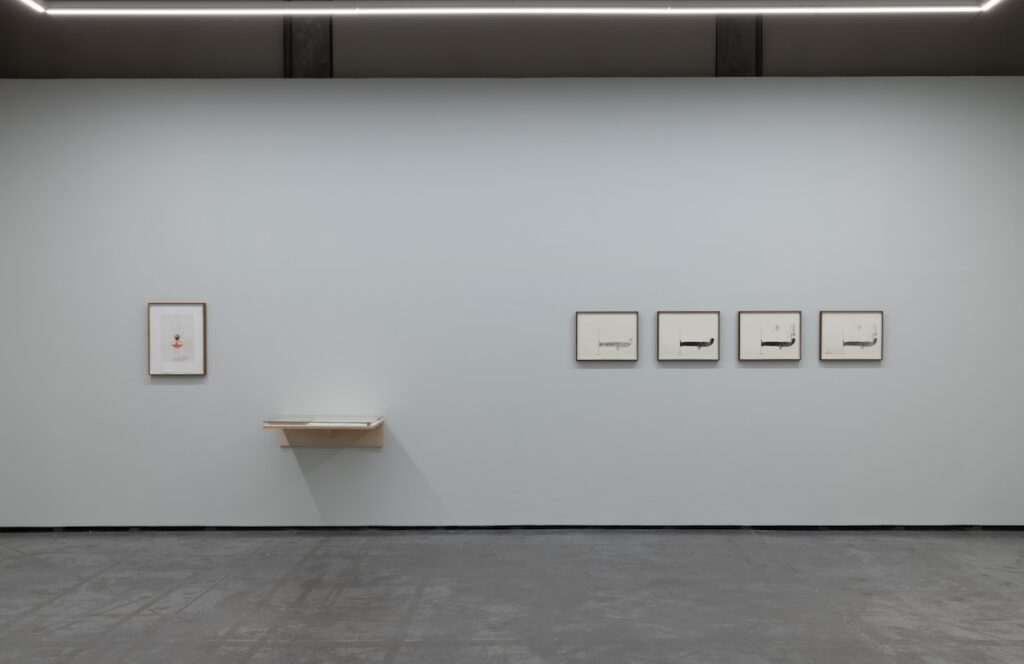
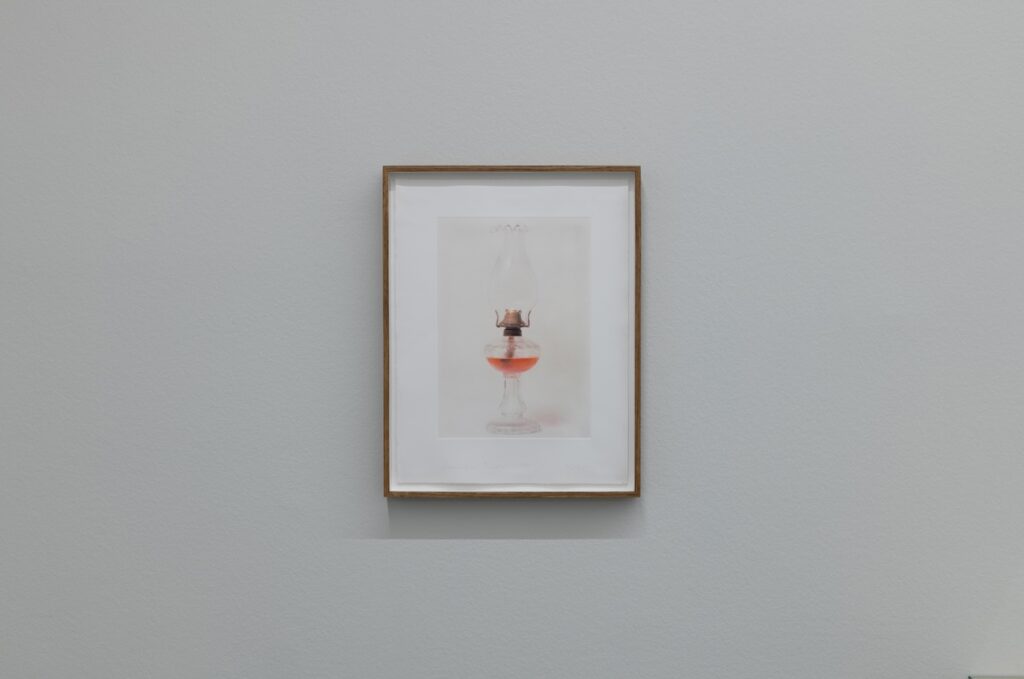
Miss America is a photogravure edition produced this year (2025). Composed of three distinct plates that make up the image of an oil lamp (i.e., a first plate printed in yellow, a second in magenta, the final one in black), they materialise a body whose sinuosity resembles the figure of a female model. The similarity of these lines to the first Coca-Cola bottle also highlights the clear relationship between its design and the contours of Mae West’s body (an iconic figure in American visual culture since the 1930s and the alleged inspiration for the brand), establishing lines of tension between a kind of erotic suggestion in the latency of American consumerism.
3.
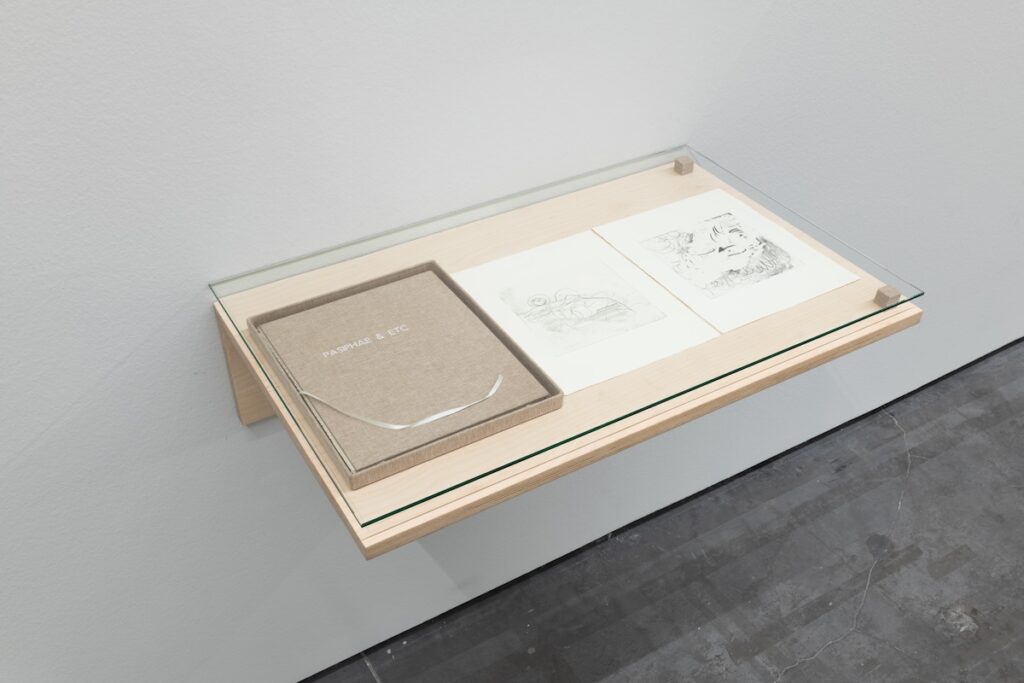
The portfolio from 2021 PASIPHAE & ETC. brings together eleven prints using the soft varnish technique, in which images develop (according to a concept of dilution and displacement) from the reclining figure of Pasiphae (a mythological figure often referred to as the mother of the Minotaur). A symbol appropriated by surrealists and expressionists for its primordial quality, pertaining to the subconscious and relating to the union between animal and human nature, Pasiphae is the generative matrix from where a set of allusions arise that are quickly rejected and transformed into abstract matters. Following the printing of the non-crystallisation of the drawing lost with each conclusion, they enclose in the process of their search the determination of a sequence of images that never mutually suppress each other.
4.
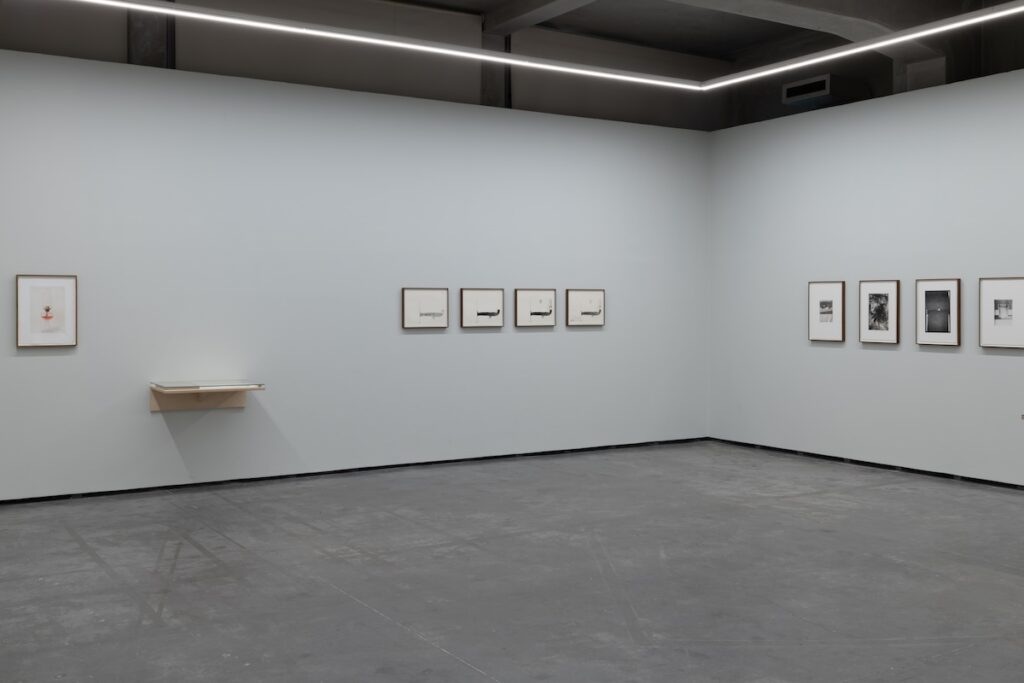
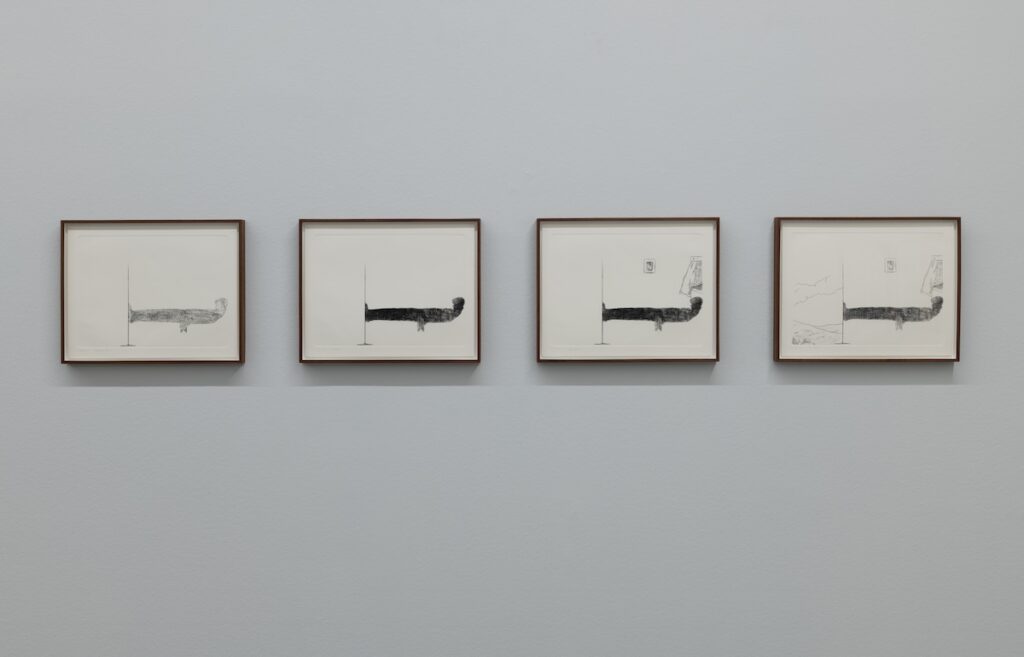
In 2016, Ana Jotta and Meel Press studio (then exclusively represented by printmaker Hugo Amorim) began a collaborative process that resulted in a set of five series of works, four of which are represented in this exhibition (4, 6, 7 and 8). Sem título (‘perguntei-lhe’, entretanto’, ‘logo depois’, ‘vi, então’) [Untitled (‘I asked’, meanwhile’, ‘soon after’, ‘then I saw’)] comprises a group of four drypoint technique prints produced sequentially from the same plate, altered and intensified at each moment of printing. As this is not an edition, each image presupposes the construction of the next according to the consent and cancellation of the previous one. A man sleeps and works, as does the artist.
5.
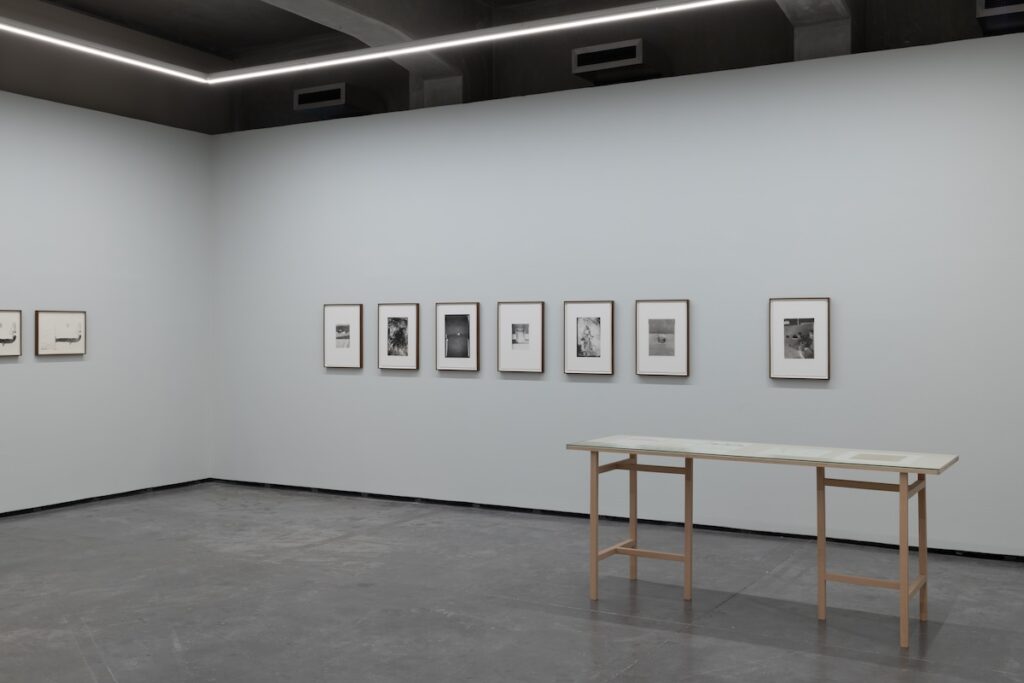
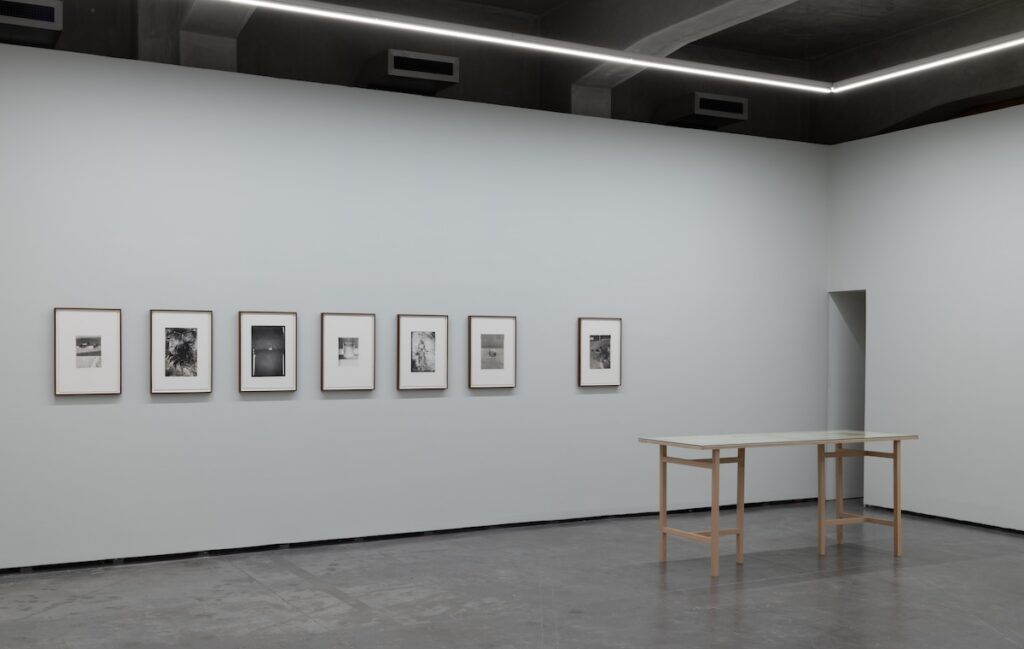
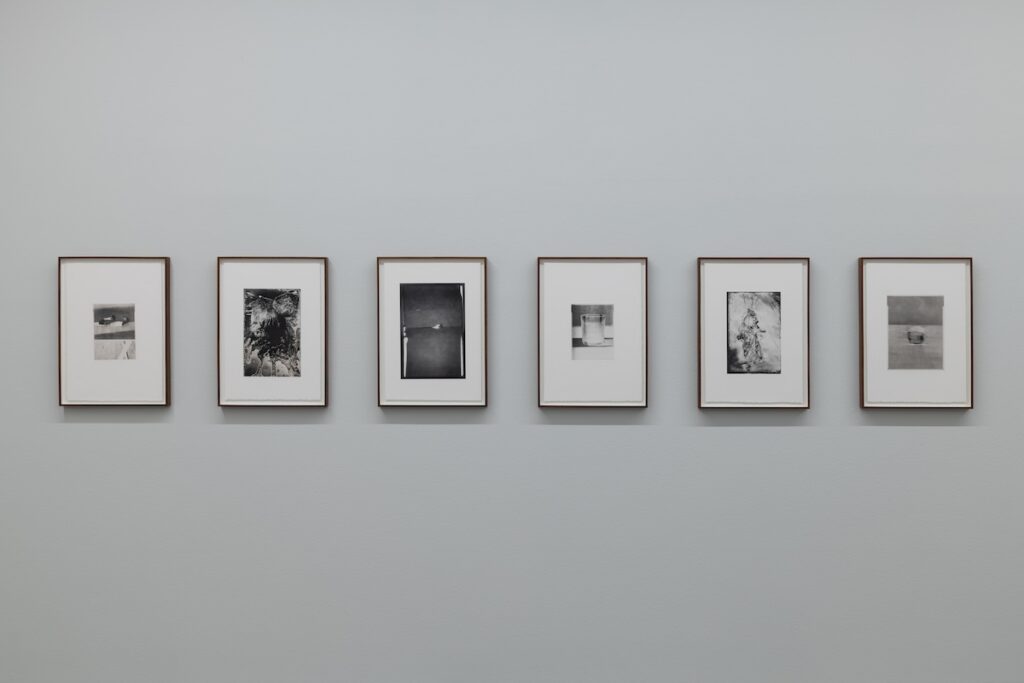
Transversal to the six photogravures that make up this 2023 series is the idea of Fin de Siècle (also the title of the collection of works), a kind of strange historical and artistic setback where the exaltation of apparent positivism is challenged by an imminent feeling of decadence in the face of the final two decades of the 19th century.
Through experimentation beyond the stages of strangeness, Tropa restores to the announced objects their mysterious ancestral quality, evoking a pure fascination with the signs and phenomena that inspire the cult of the image. Mirages from Holbein to Ensor, from Shakespeare to Duchamp, are subverted in the face of the memory of Von Hoffmansthal and Freud, or by the revival of the danse macabre and the surrealist obsession with the figure of Gradiva, appearing to dilute the veil of their bodies between the liquidity of abstraction and the weight of construction.
6.
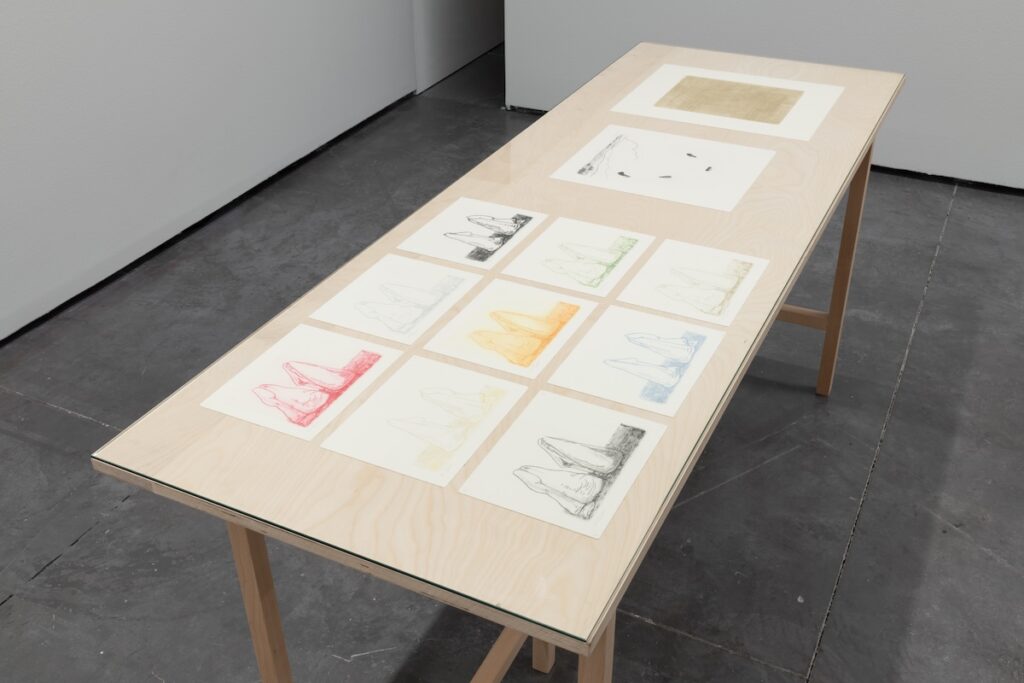
It’s like an accordion playing (A.J.) – with tones, variations, and rhythms – the images in Rififi das Toucas represent a selection of nine out of seventeen drypoint prints produced during 2017. Their internal movement is characterised by the simultaneous alternation between two variants of drawing, as well as by their irregular chromatic evidence. Referencing a genre of French cinema characteristic of the 1950s, the expression ‘rififi’ is widely recognised as meaning conflict or dialogue between two parties. In this case, the two alternating figures can be identified as the bodies of two toucas (caps), which phonetically presuppose the double meaning of the word as a clothing accessory (touca, cap) or place of refuge (toca, den).
7.
E agora? [What now?] (2017) is a unique print of a drypoint plate. Marking the beginning of a process that culminates in the work quando cheguei [when I arrived] (a drypoint and aquatint engraving not present in the exhibition), E agora? precedes Love, which, when reused as a background, acts as a junction between the two works without, however, referencing the conclusion of its result (quando cheguei).
8.
Produced with the drypoint technique in 2017, Love determines a plot enclosed by the accumulation, annulment and excess of a set of existing drawings, subsequently, to the almost uniform stain that appears in the final print. Like the recognition of love itself, in the end, its excess hides everything that happened. That’s life, that’s love (A.J.).
9.
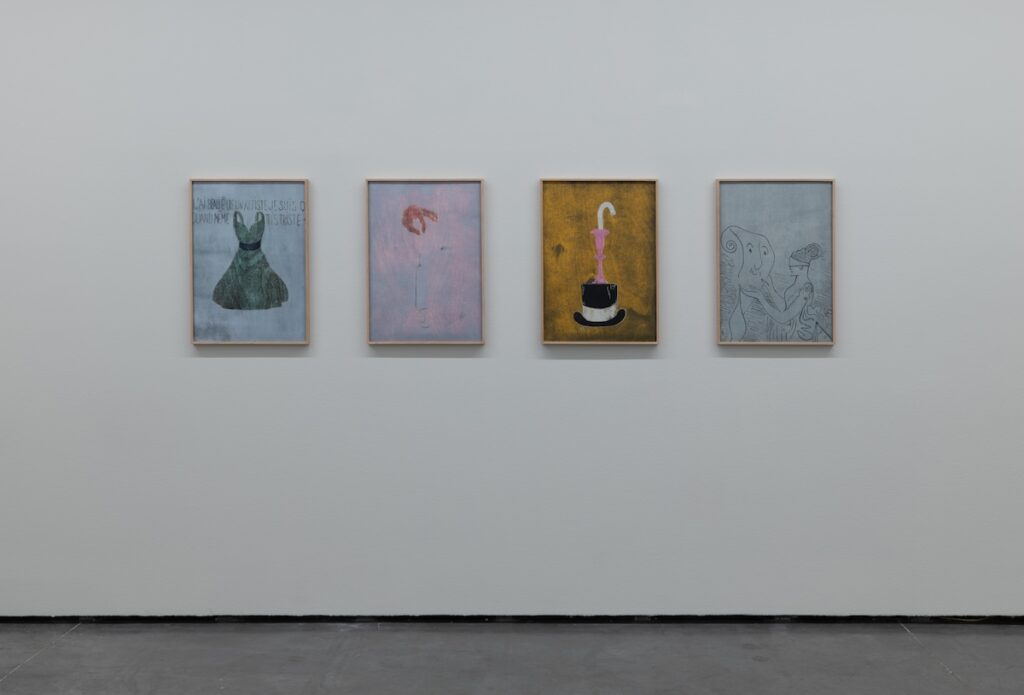
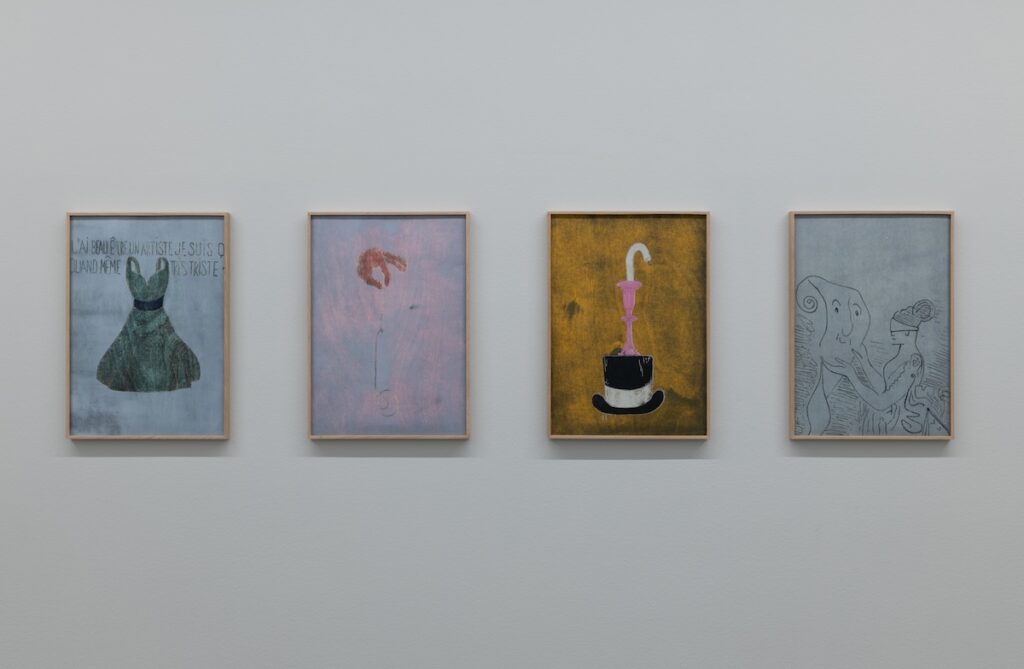
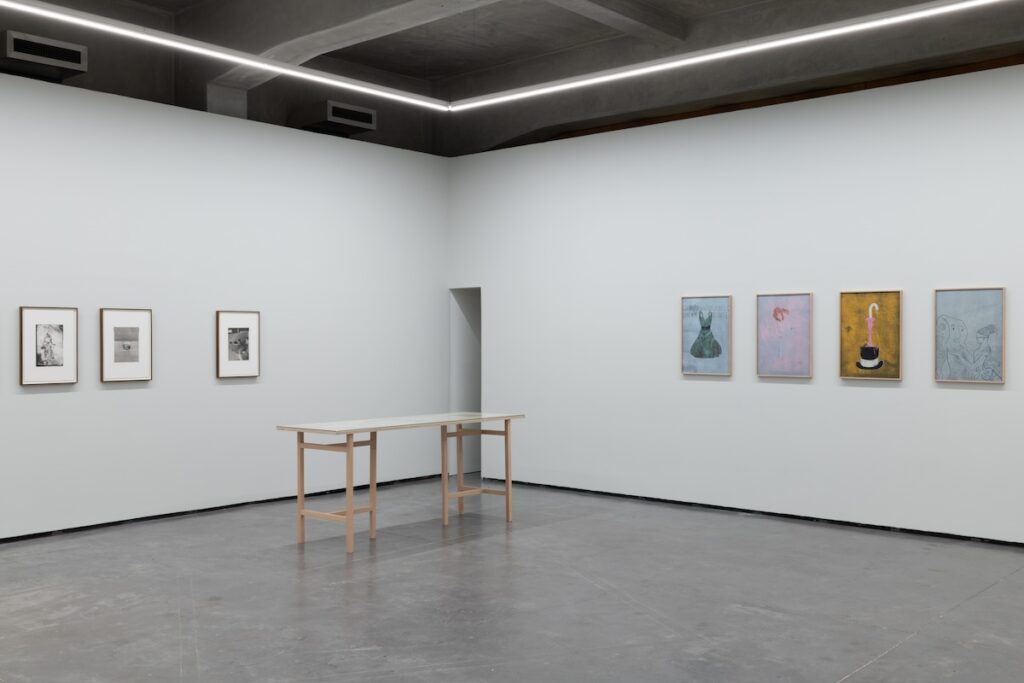
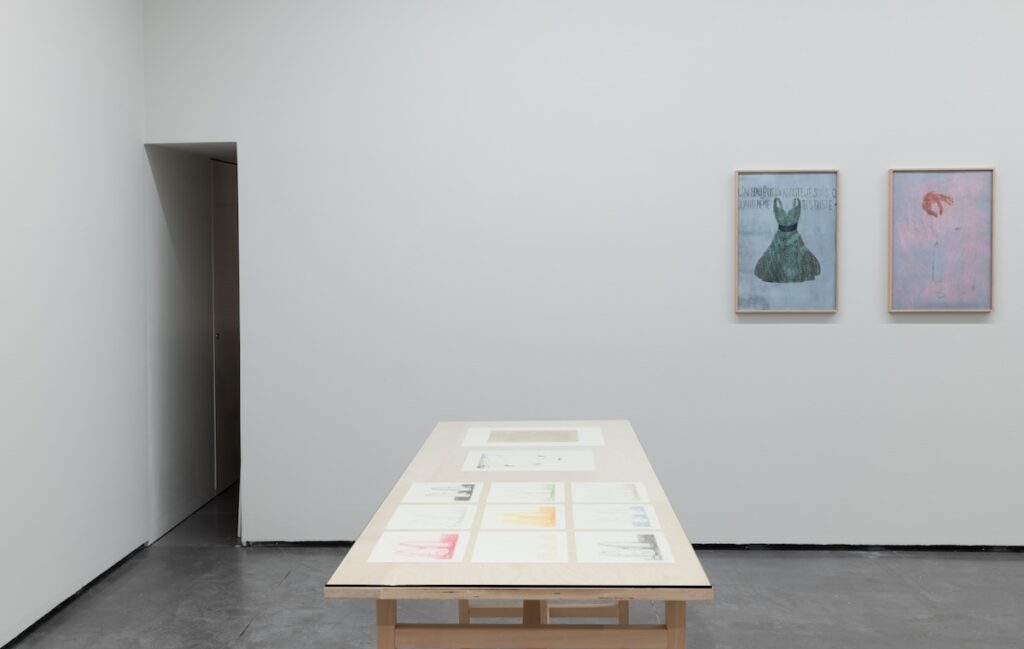
In Tarô [Tarot] (a set of four woodcuts produced this year), the strangeness of the referenced images (i.e. appropriated, rescued) coexists with the charm of an encrypted language, but without enigma. In each of the four engravings, two drawings are superimposed, invariably proposing a process of hierarchisation. After all, both the contours of the wood and the inscriptions made by the artist on its surface find their place in the final image. It would be imprudent to accept the randomness of a set of images that make up a work with this title, especially considering the dissimilarity in their origin (the presence of unique natural material in each plate versus the introduction of a set of inexhaustible ideograms on it). It is, however, only in the acceptance of this disorder that it is possible to outline meanings in the face of evidence of a commitment to chance.


 /
 /
