I am a candle burnt out at the feast
Gather my wax up at dawn,
And this page will tell you the secret
Of how to weep and where to be proud
Arseniy Tarkovsky
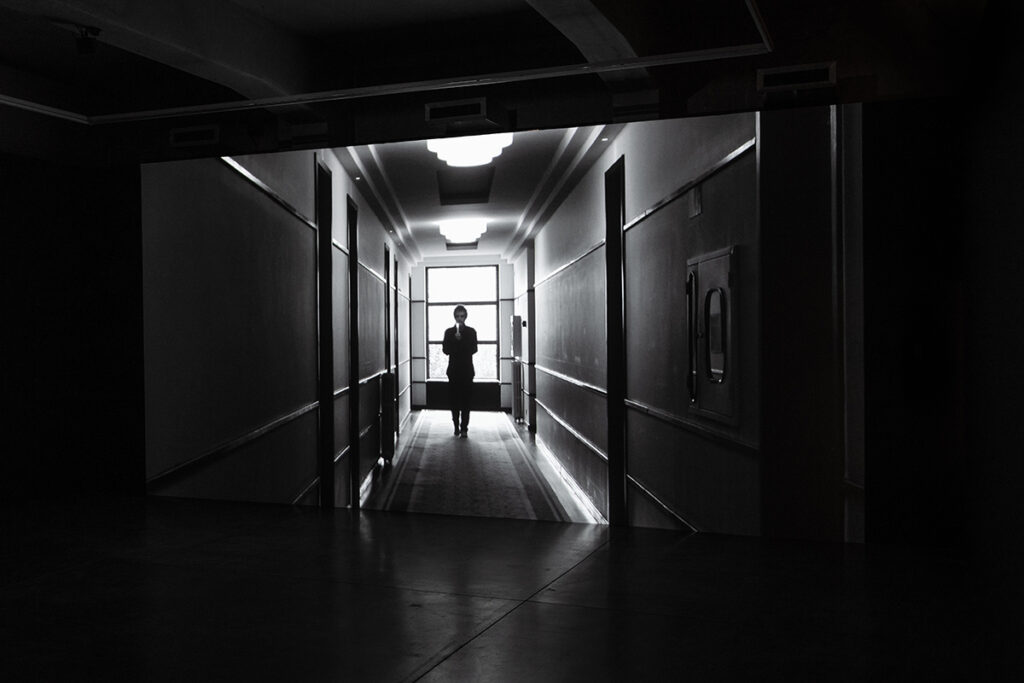
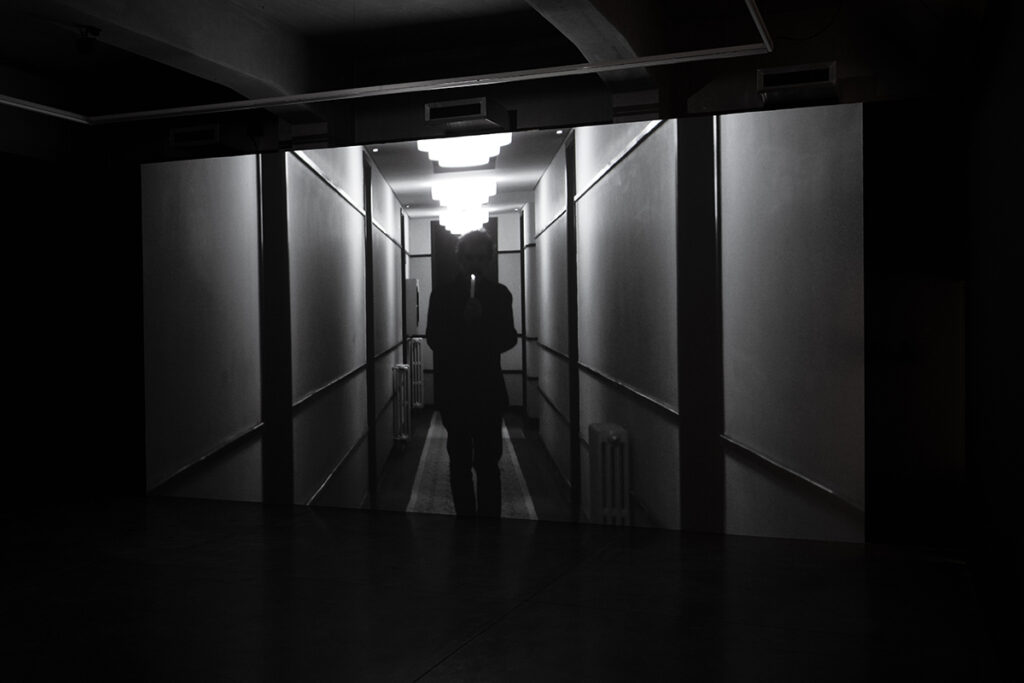
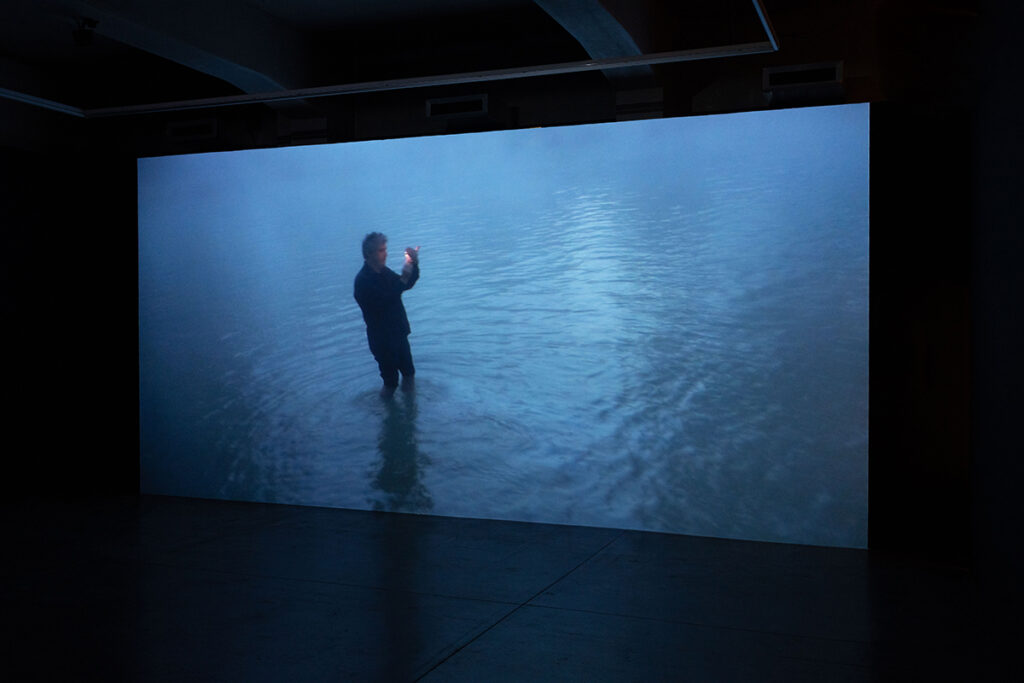
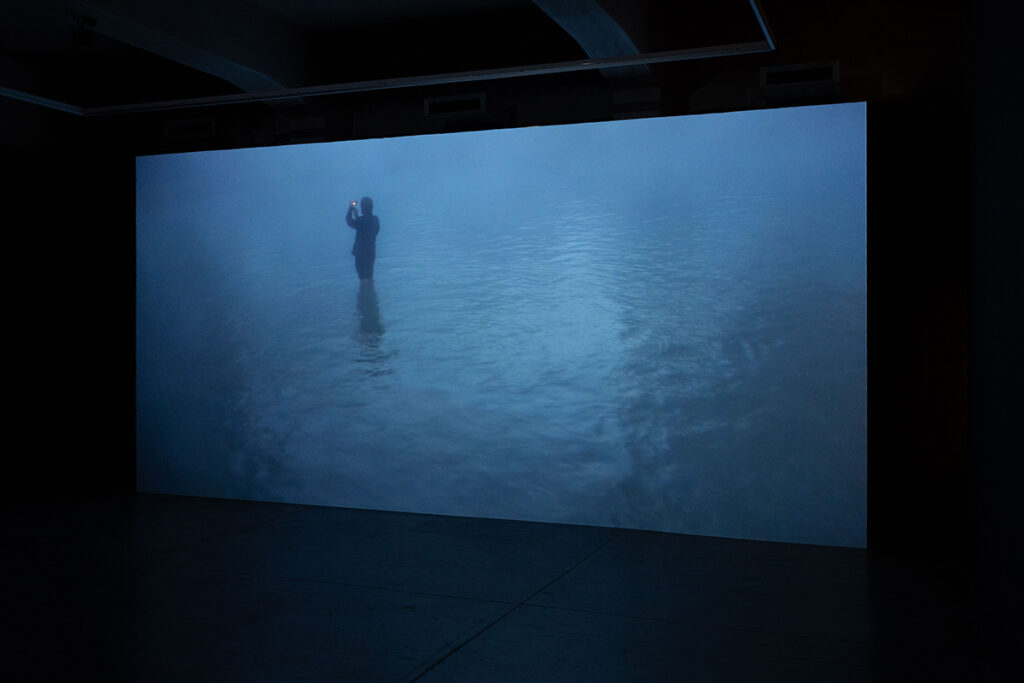
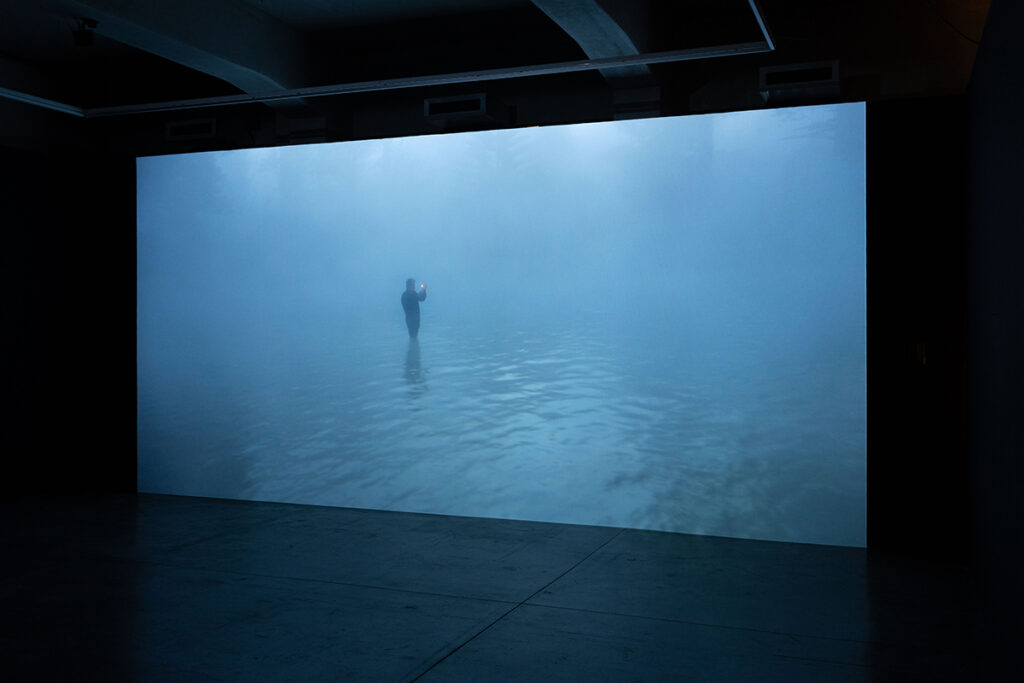
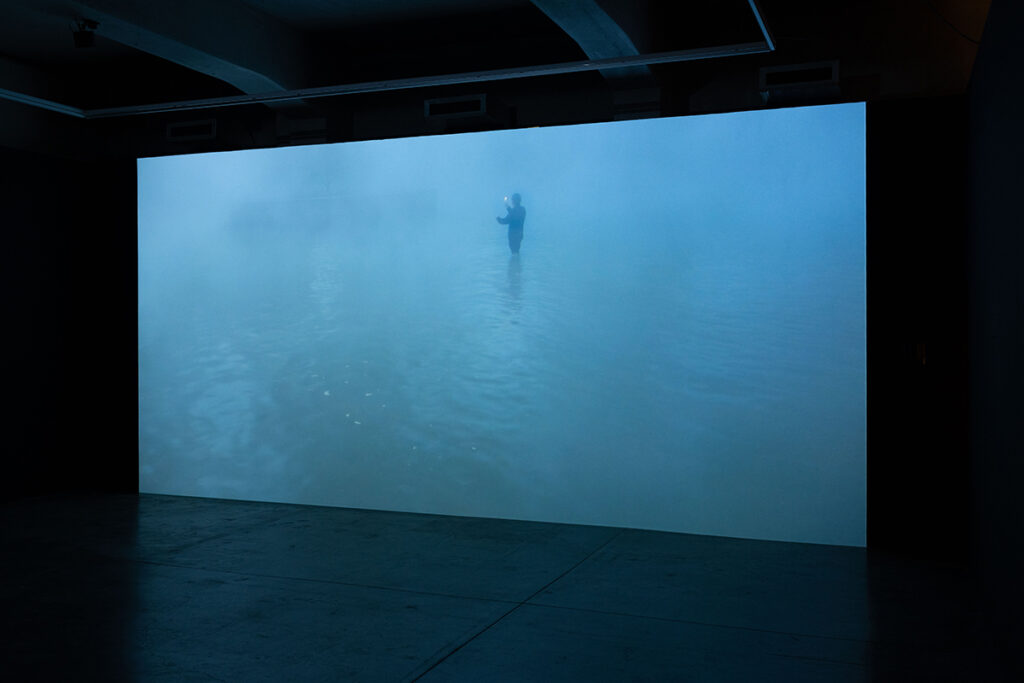
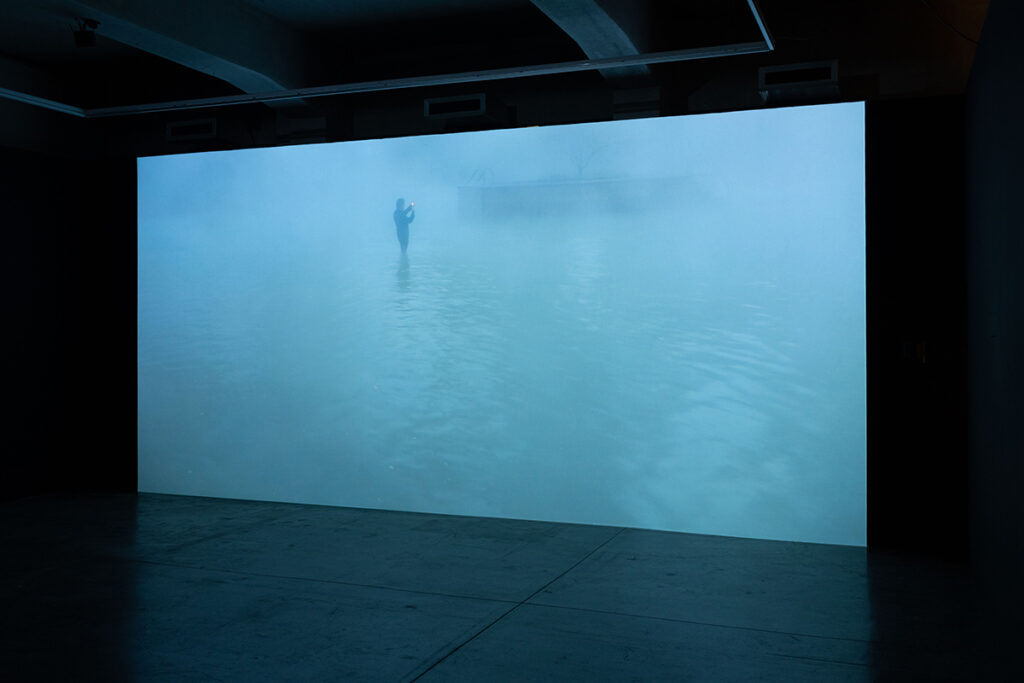
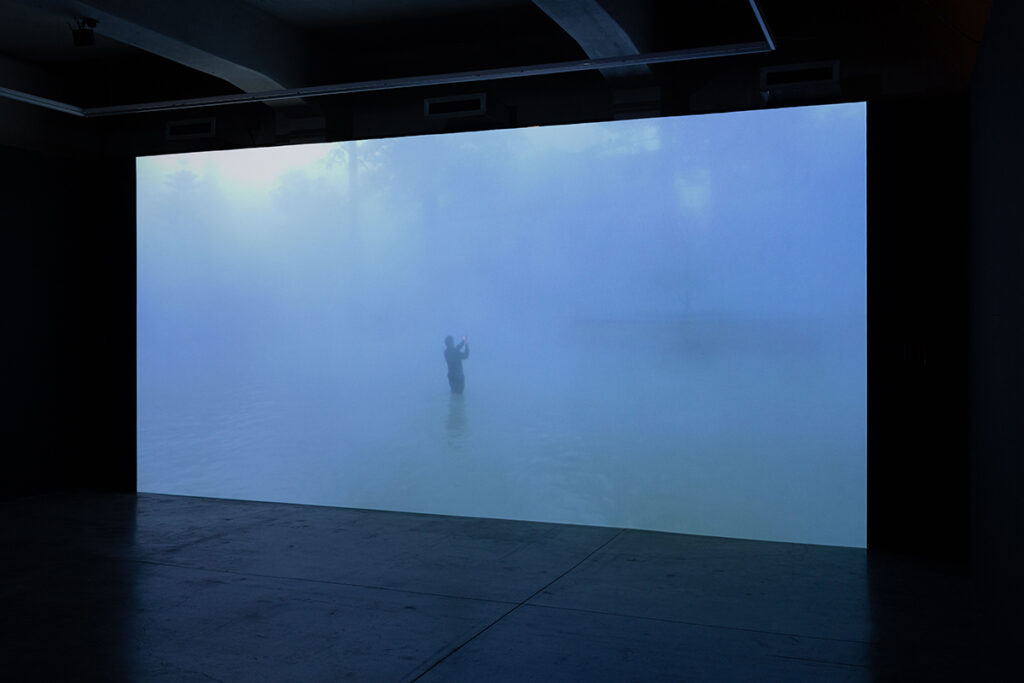
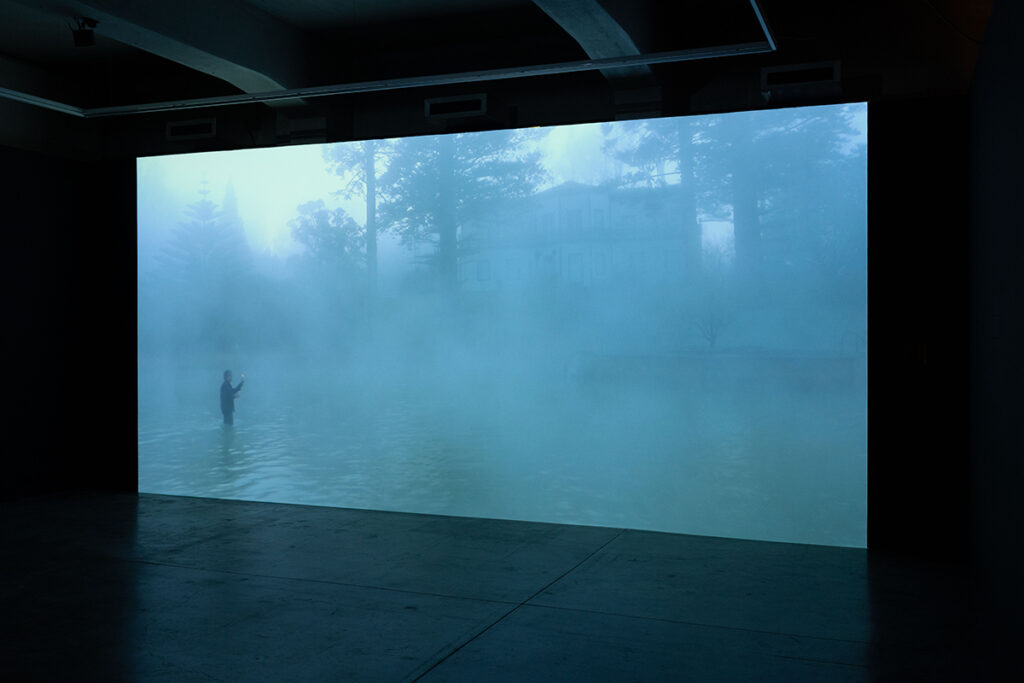
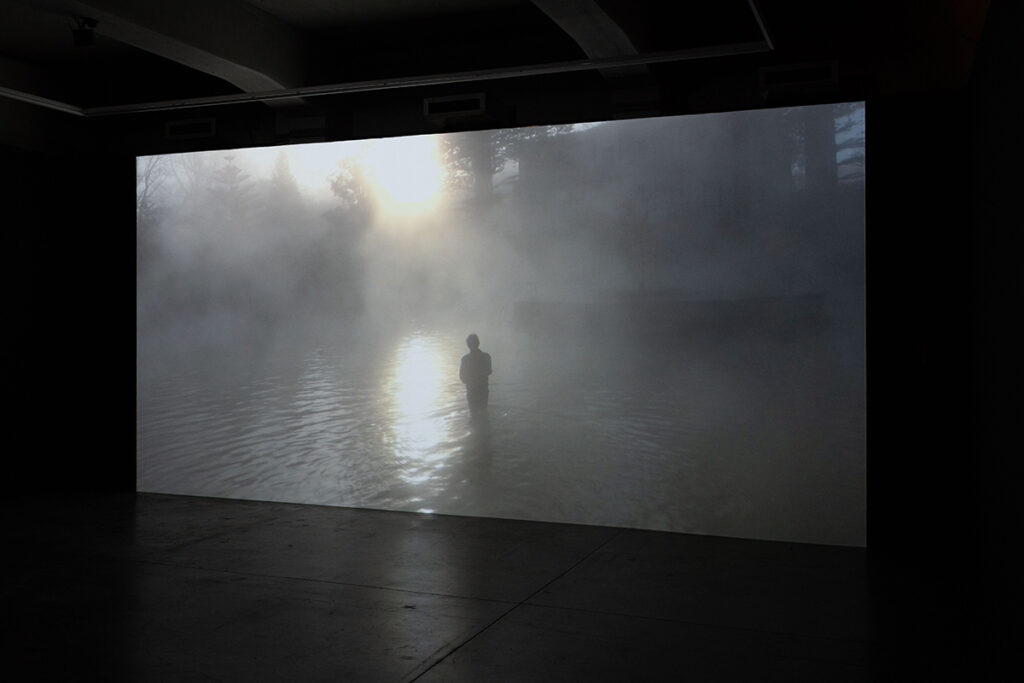
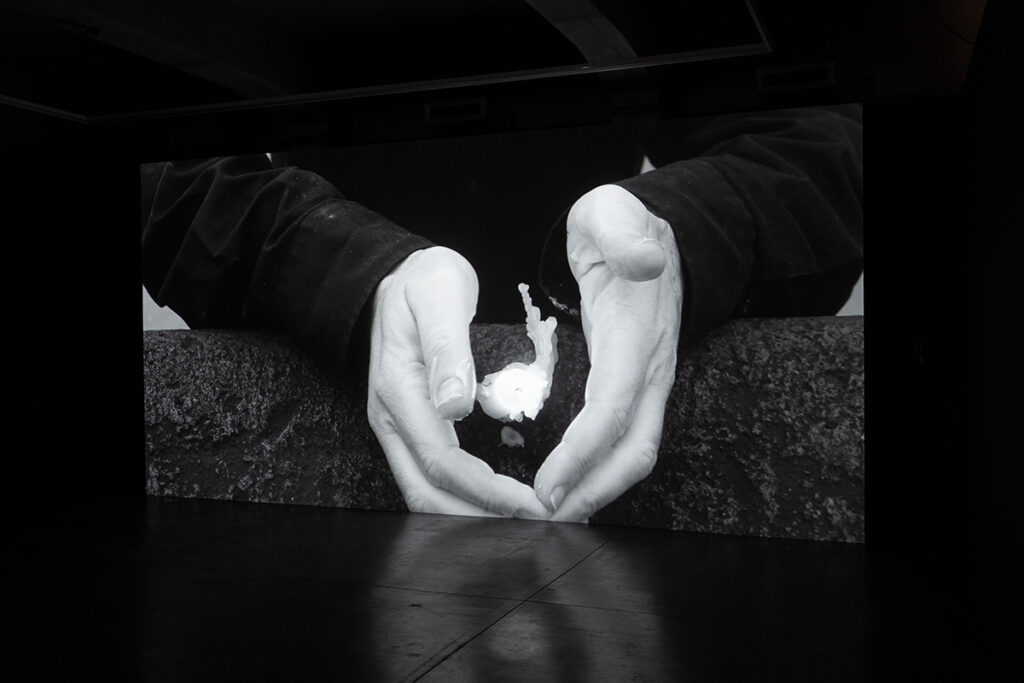
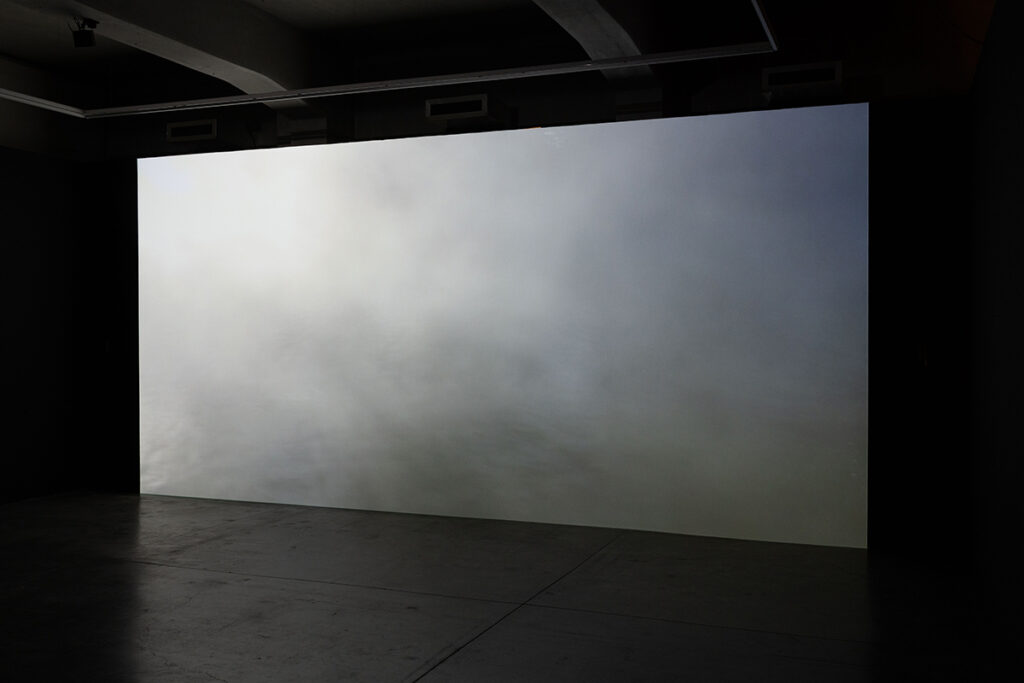
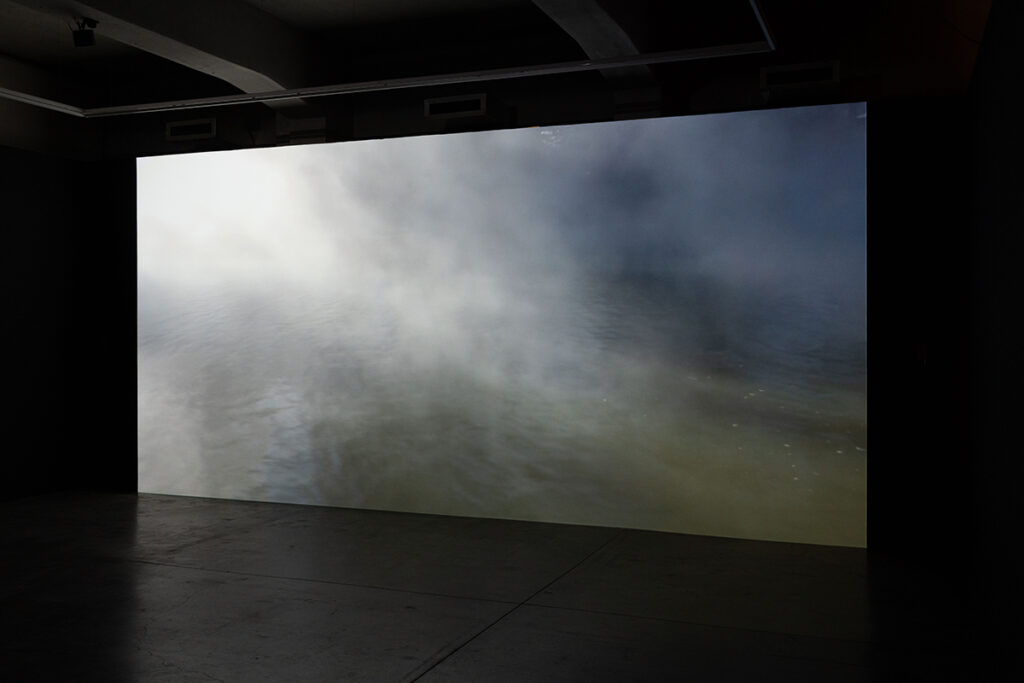
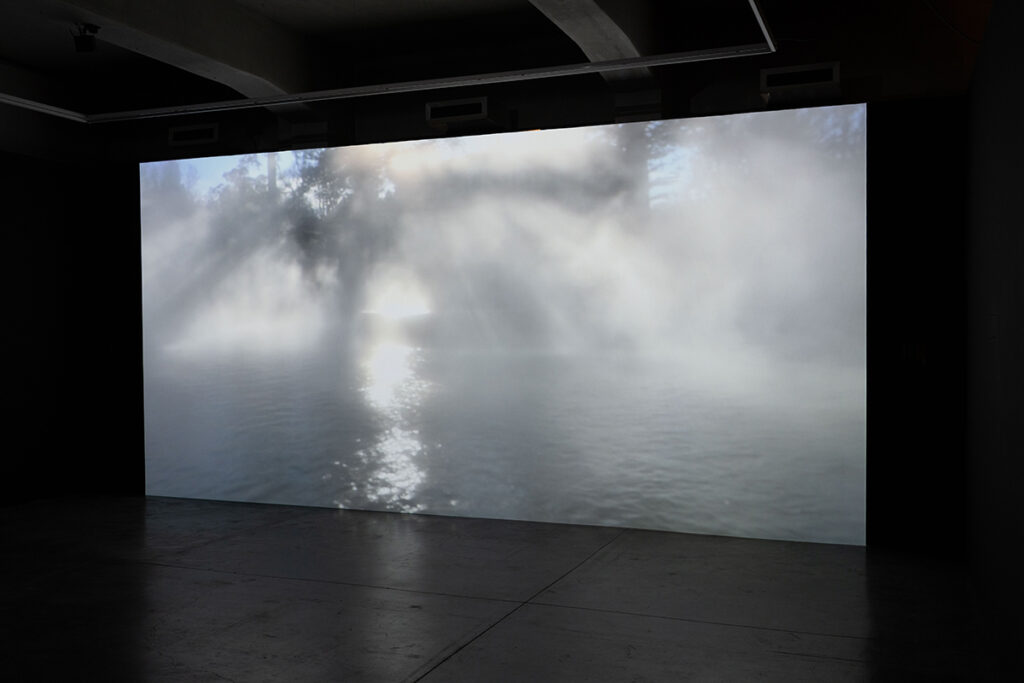
He shields the flame, fragile as a relic. He walks down a corridor of a structure that could be a ship or a hotel, it matters not. Then, as if the dream were over (and because of that the world would return to its colours), he crosses a lake, always with the candle protected with his hand. Or rather, he drifts through the water, as if wandering were a condition of the crossing and the crossing a salvation. Daniel Blaufuks repeats or replicates the penultimate shot of Nostalgia (Andrey Tarkovsky, 1983), in which Gorchakov succeeds in crossing a stretch of water with a lit candle. He does so amidst voices saying (repeating) lines from a poem by Arseniy Tarkovsky, Andrey’s father, And this I dreamt, and this I dream. He then adds steam and mist, delays and cuts: the directions converge and the crossing becomes several or an invisible labyrinth.
‘Ultimately I wanted Nostalgia to [portray] someone in a state of profound alienation from the world and himself, unable to find balance between reality and the harmony for which he longs […],’ wrote Andrey Tarkovsky. By crossing a body of water with a candle, in a game of movement to keep it lit all the way to the other side, Blaufuks’ gesture is a nod to Tarkovsky’s gesture — in both there is a disconsolation conveying an irresolvable lack as a precondition for existence — and, as in Nostalgia, it also represents the practice of a ritual, a gesture that is repeated with a desire for consequence: some say that if you can cross a watercourse with a candle and reach the other side without the flame going out, you might just be able to save the world. Save it from what? Again the discouragement, but also the legend of the pilgrim who never stopped walking in the hope that his journey might change something in the order of the world, without him knowing what it was: we are ever telling the same story.
Vilém Flusser wrote: ‘Gestures are movements of the body that express an intention. (…) A gesture is one because it represents something, because it is concerned with a meaning.’ Blaufuks walks through the water and depicts himself as Gorchakov, who in Nostalgia seems to mirror Tarkovsky himself. And All Will Be Repeated thus becomes part of a flow of stories that repeat themselves, in circles that intertwine wave after wave: two mirrors facing one other and reflecting infinity.
Between gesture and consequence — in this case, between reaching the shore with the candlelight and saving the world — there is an interval of causalities that we will never be able to decipher. That interval is the mystery, the rose without why, the metempsychosis of all histories or the roughly 25800 years of the Earth’s axial precession that give rise to the Platonic year, at the end of which Heraclitus is wrong and right again and the same water returns to the same bridge: you will dream everything I have seen and dream. And we will be ready to enter the water and light the candle, walk to the other side, repeat the ritual.
Eduardo Brito




 /
/  /
/ 