


BOX
—
Gabriel Abrantes — Cicle “Art Collections”
Out of the António Cachola Collection
A few months ago, after making a series of paintings in my son’s room, I wrote a text about mourning and about how I visited Italy after his funeral to seek solace while looking at art. In that text I tried to tackle, among other things, the question ‘can art heal?’ Should art’s mission be homeopathic, as so much of today’s ‘discourse’ tries to cajole us into thinking. Dozens of biennials tell us that ‘art can decolonize, call for reparations, protest, organize, cure, fix, help, aid’ – art can and should, first and foremost, be a community ‘safe space’ for likeminded activists to perform and talk about healing together. This trend is symptomatic of broader societal shifts, bolstered by largely online (and defanged) extremism, at once hypocritical for being exclusive while calling for inclusion, for claiming community as a value while trying to eviscerate, fragment and divide existing communities, as well as for being a blunt spear tip: blunt because it is dulled, but also because it is non-functional; it is for show, for optics, for likes, for shares, for riding the algorithm. And not all of it is like this. Some biennials and artists are creating incredible work within this discourse or adjacent to it. Some riding the wave while sticking to their own, sometimes intersecting, interests. But most homeopathic art, in the economically and politically corrupt context of ‘white cubes,’ of institutions and galleries, seems happy to obliviously set up shop, construct careers and amass enormous wealth in the oppressor’s playground. We have seen the likes of this countless times: a performance playacting the political activation of participants’ awareness of migrant struggles, oblivious or willfully ignoring the fact that it is taking place inside a room in a museum named after an arms manufacturer that actively profits from the sale of weapons used in the active oppression of the very people the performance was about. This wasn’t why I had turned to art, to ask it to heal me, to fix me. But in a way, there I was, in front of Artemesia’s Judith and Holofernes, Pontormo’s Deposition from the cross, and Michelangelo’s David, asking them to fix me.
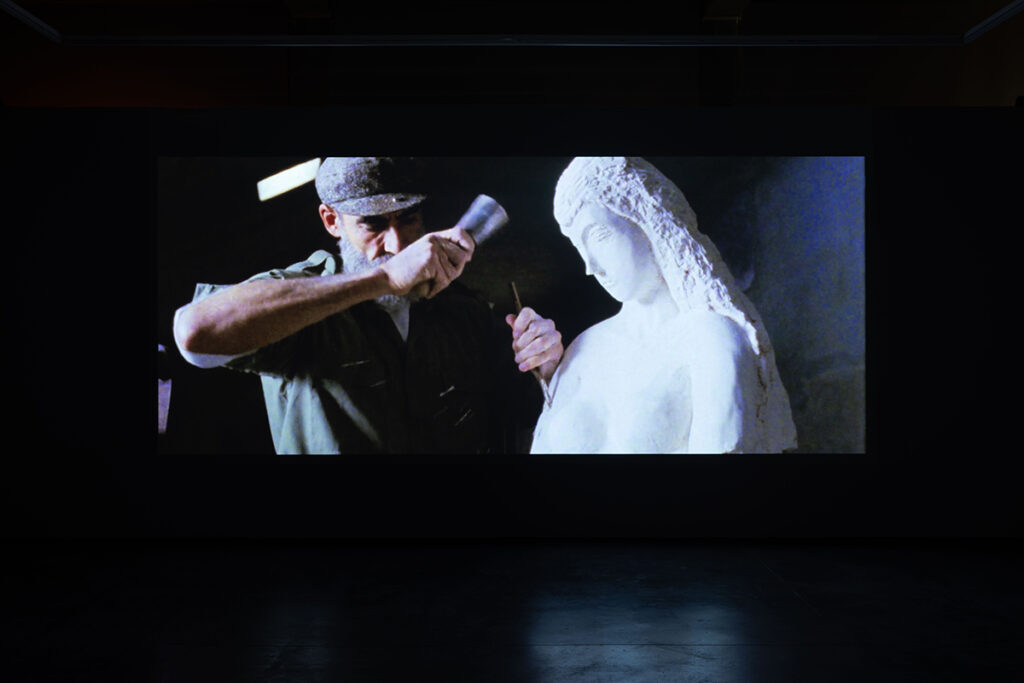
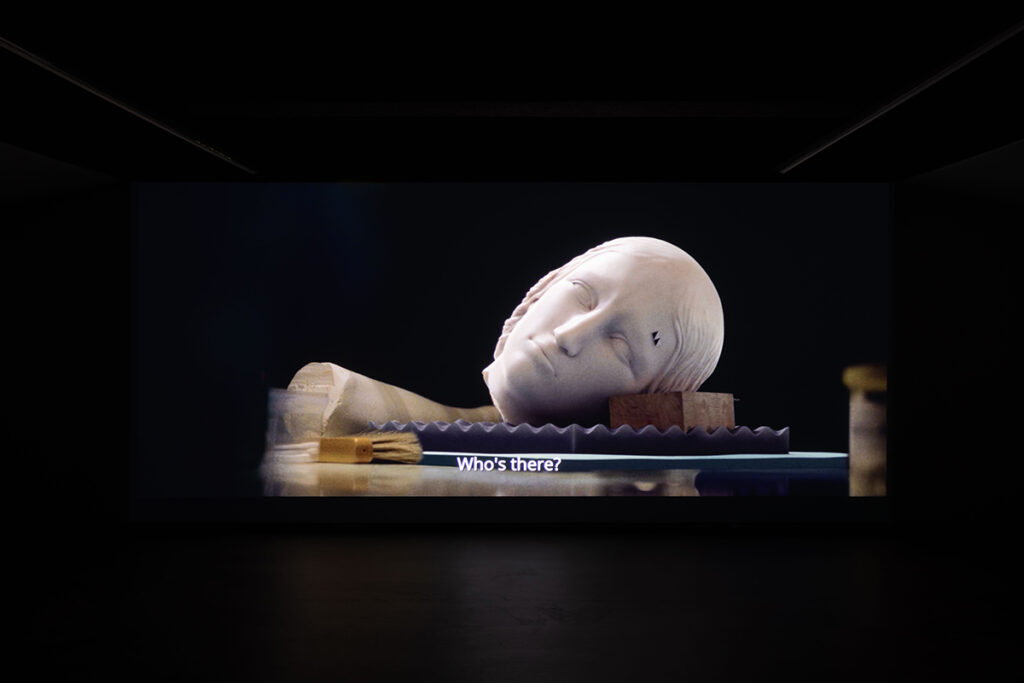
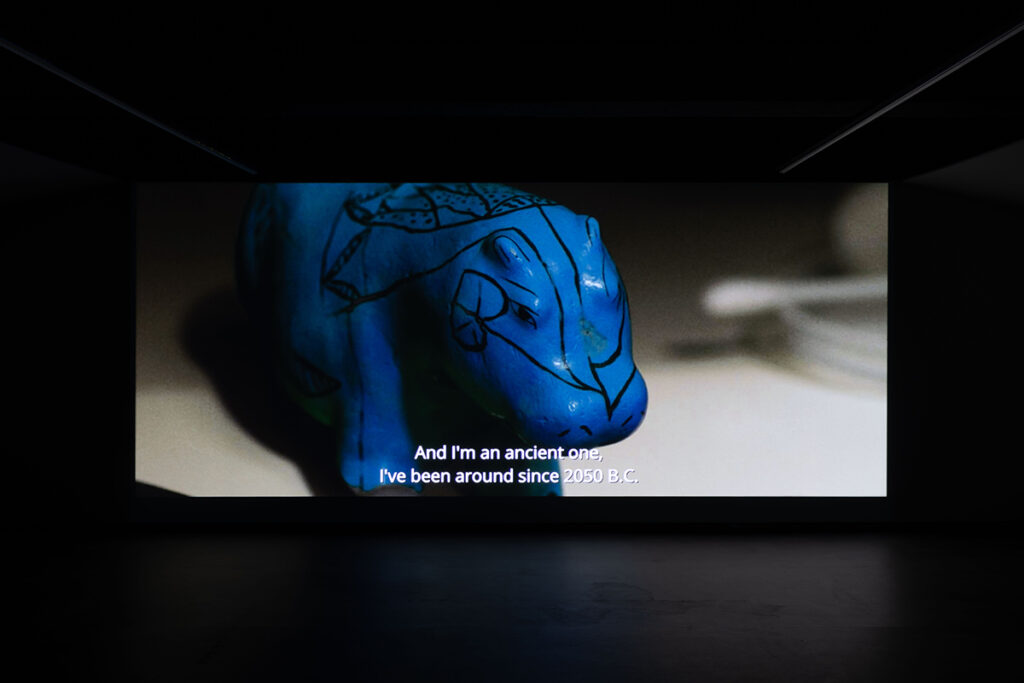
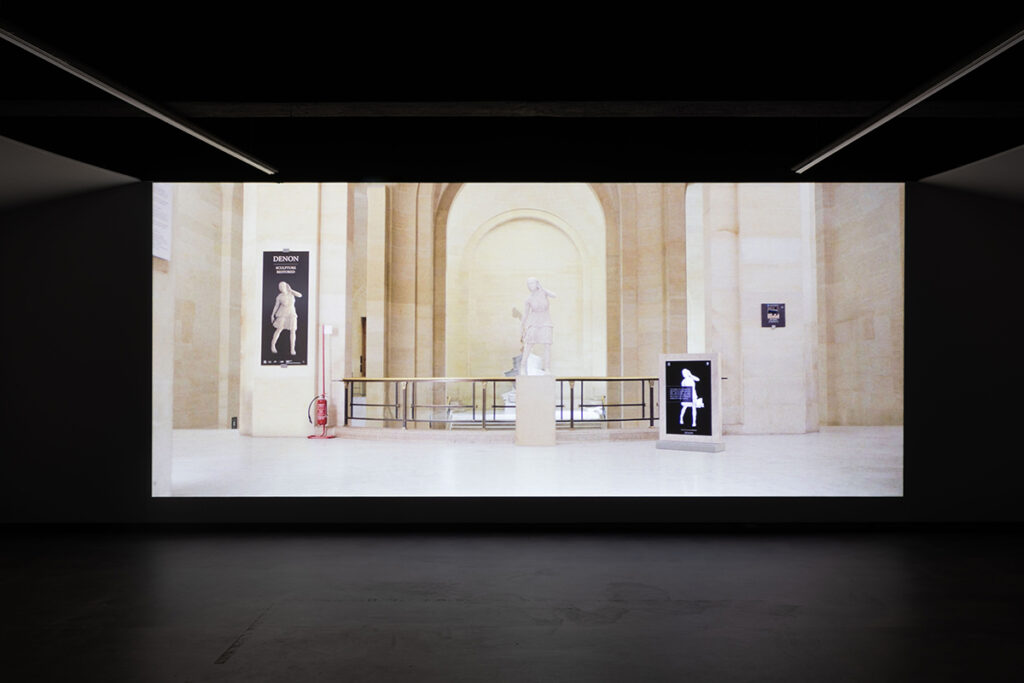
Cachola asked me, when we were deciding to program A Brief History of Princess X and Les Extraordinaires Mesaventures de la Jeune Fille de Pierre at Appleton Square: ‘Why do you make work about art?’ I have always loved art. It has been the most important thing for me since childhood, simultaneously operating as a refuge, a shield and sword that I could hide in, protect myself with, or wield, emotionally, sexually, politically, comically in a world that I felt was highly caustic, aggressive and oppressive. I saw art as potentially political, philosophical and transcendental, but I also called bullshit, and asked myself ‘Can art really be political? Should it want to be so?’ That question is what led me to make Les Extraordinaires Mesaventures de la Jeune Fille de Pierre, a meta-naif video about a sculpture that runs away from the Louvre because it is sick of being art: meaningless, decorative, and politically inactive. The sculpture wants to go out into the ‘real’ world and to involve itself in protests, it wants to stand up to oppressors, it wants to fight and scream and curse inequality. But it ends up getting beaten and crushed and its marble leg split from its body. The film seems to posit that maybe art is too fragile for this – for politics – maybe she forfeited exactly what was special about her to engage politically, failed at engaging politically, and was left with nothing.
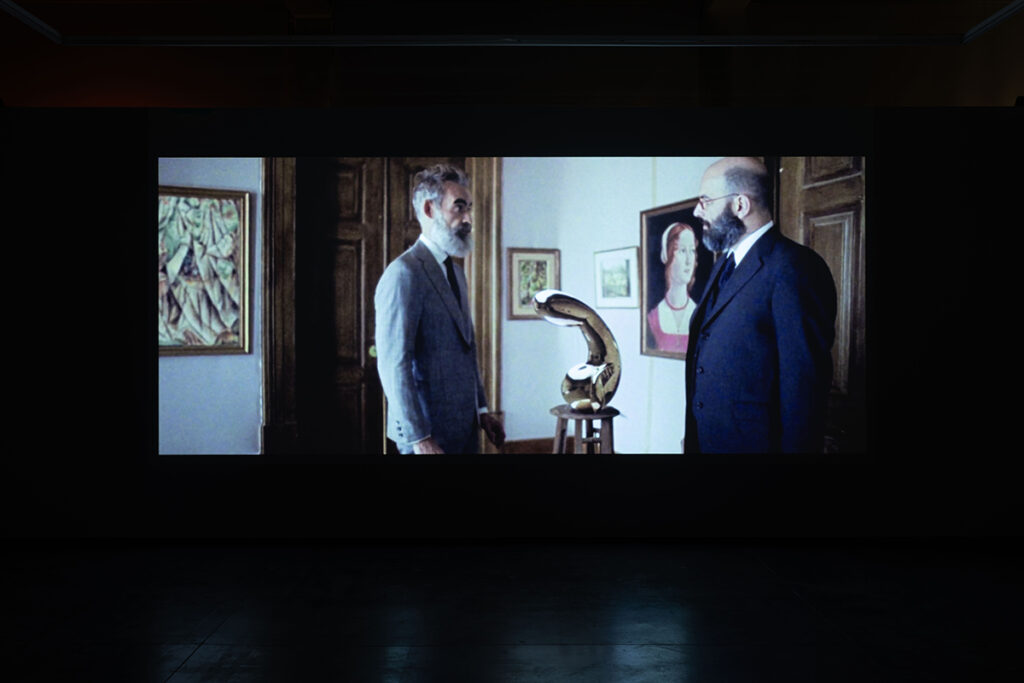
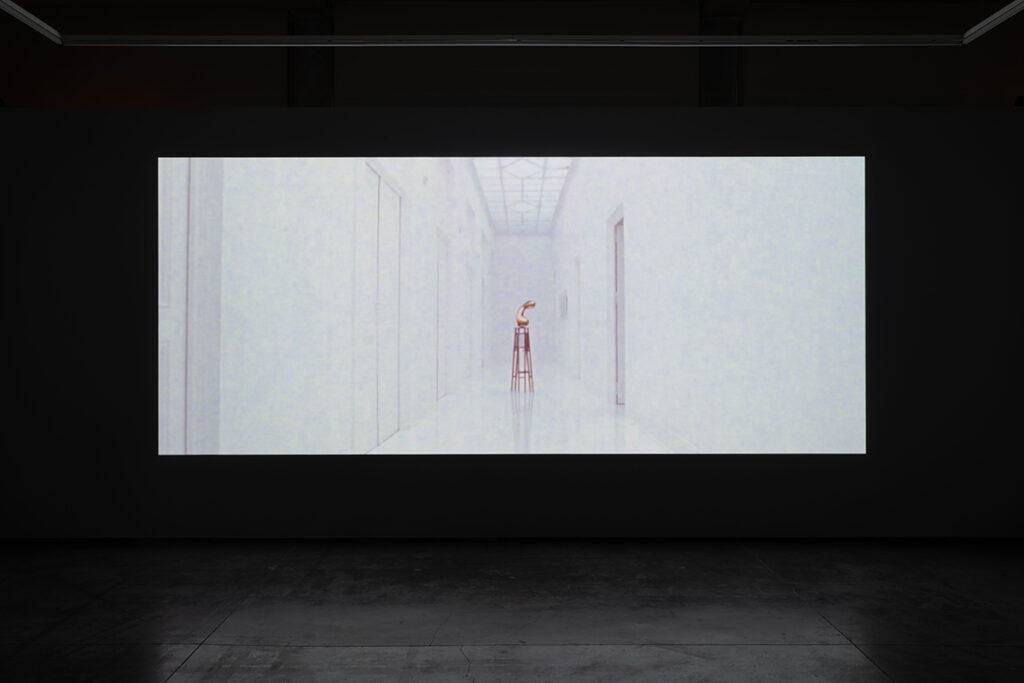
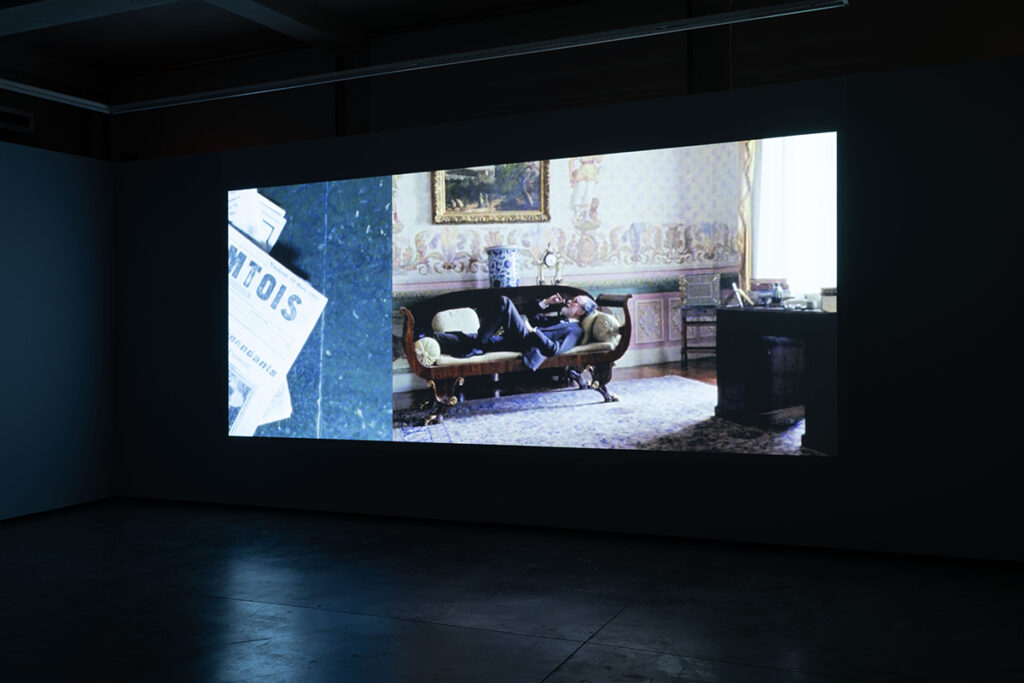
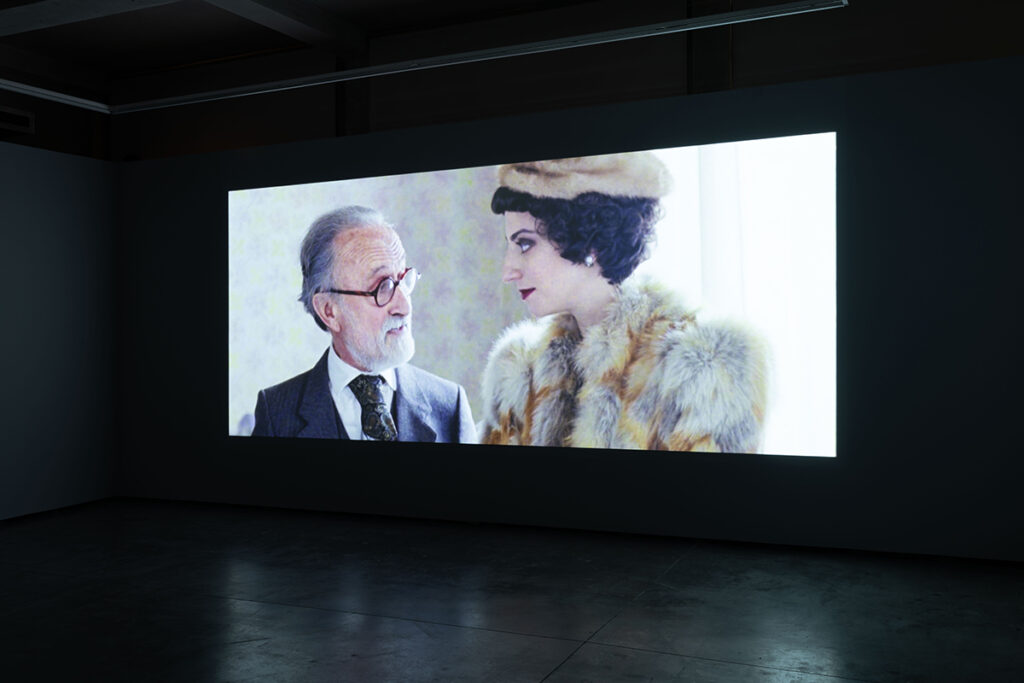
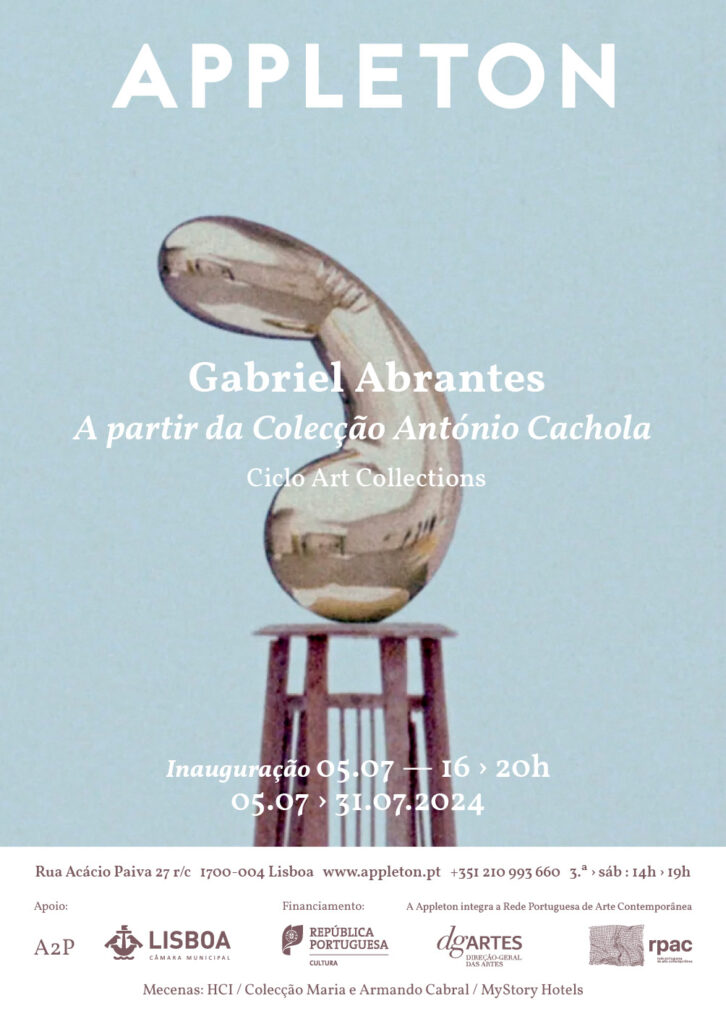
Which is why, in the case of A Brief History of Princess X, I focused on the artwork. Brancusi is, to my mind, in this short film, an antagonist – a misogynistic self-mythologizing narcissist who, despite his intentions, ended up being a vehicle for creating his work, and this work, as Rosalyn Krauss would say, is independent and free from that creator. Like a microaggression, art belongs to the receiver and interpreter. Brancusi is quoted as saying of his hyper polished bronze ‘This is woman,’ which contradicts its apparently phallic shape. But we can take Brancusi literally, and see that the ‘head’ of the piece could be representative of a woman’s head, the ‘testicles’ could be the woman’s breasts, the shaft, the woman’s long neck. We know it is so because this sculpture started life as a bust of a woman. But was Brancusi being disingenuous when he said it was woman? We can interpret his quip, and his sculpting of the work, as patronizing misogyny, transforming the portrait of a woman he didn’t like into the shape of a dick, like bathroom graffiti or a lewd caricature. Was this what Brancusi did? Was he mocking Marie Bonaparte by transforming her portrait into a penis, simply because, as he is quoted as saying, he ‘found her to be a detestable, narcissistic woman’? Or is the grotesque caricature his protest at the class divide between his demanding aristocratic patron and himself, a struggling ‘starving’ artist? Is Brancusi’s sculpture inspired by genderqueer Romanian folklore? Is he quoting Aristophanes in Plato’s Symposium, declaring that primordial beings were of both genders, therefore making ‘Princess X’ a proto queer work about being genderless, about how everyone is of both genders? Is he elaborating on Freud’s (also misogynistic) theories about ‘penis envy’? Was he suggesting dysfunction in female sexuality, in relation to female ‘phallic’ impulses? Maybe Brancusi, Jung obsessed and Freud-manic, saw Bonaparte’s clitoral surgeries as symptomatic of what Freud (who Bonaparte studied under, and whose escape from the nazis she financed) misogynistically branded as ‘hysteria’ resulting from ‘repressed penis envy’? Or is he mocking psychoanalysis, and therefore mocking Bonaparte, charicaturing Freudian concepts in his sculpture? Was Brancusi being disingenuous when he told the minister of culture that the work was an honest depiction of pure womanhood? Did he mean it to be funny? There is no way of knowing. We have no idea whether Brancusi was being poetic, or simply being ‘a dick.’ But the work lives on. The work, according to Krauss, has a life of its own. As Krauss said of Brancusi’s contemporary Picasso, the man was a misogynistic idiot, but his art, at least in the hands of a good critic, was genius. I think she meant this literally – that Picasso, like Foster Wallace’s prodigious hyperrealist sculpture-pooping prodigy in The Suffering Channel” – is unwittingly creating masterpieces, he can’t help it. Even artists seem to agree sometimes, and both Bob Dylan and Ottessa Moshfegh have reported that they feel like mere vehicles for a celestial spiritual voice from the beyond, beyond their control, that overpowers their interior monologue, causing an uncontrollable outpouring of verse, prose (or in Picasso’s case, brush strokes). But that might be the whole point of A Brief History of Princess X: to center the work. It is not Brancusi’s story (which might be boring or predictable in the way it conforms to misogynist stereotypes of the era); it is not Bonaparte’s story (which is profound and preternatural in its predating of a gender-equality-glossed sex-positive attitude towards surgical body modification); it is about this artwork, not the people.
And this brings us to a third theme, which is animism and animation. Les Extraordinaires Mesaventures de la Jeune fille de Pierre is an animation about a sculpture made of stone that comes to life (through the magic of VFX) and is given an ’anima.’ I had made another short film, The Artificial Humors, about a young robot living in the middle of an ‘animist’ (or, in more current parlance, even though the term was also coined by a white anthropologist, ‘perspectivalist’) Yawalapiti village in the Xingu Park in Mato Grosso. I had taken an interest in non-anthropocentric ontologies, animism, and animation, and crafted a live action animation about an indigenous community that would take into its fold a non-human entity, in this case a robot, as part of the village, able to do so because of their integration of non-anthropocentric ontologies. As Viveiros de Castro describes, the Yawalapiti see the universe as a multitude of perspectives: the perspective of the Yawalapiti, the perspective of the onça (jaguar), the perspective of the river, the tree, the rock. As with Hans Christian Andersen, every fir tree, spoon, clock, apple, matchstick, shoe, grasshopper, crow, metal pig has a world unto themselves, as well as a particular world view, morals, rules, desires, hungers, perversions. It is not by chance that after making The Artificial Humors in the Yawalapiti village, I made Jeune Fille, an adaptation of Hans Christian Andersen’s Fir Tree, a short story about a beautiful, young, naif fir tree that lives in the forest and becomes jealous and confused at seeing other, less handsome firs being cut down to be sold as Christmas trees. The titular tree is overcome with the irrepressible desire to become a Christmas tree, but when her dream finally comes true she finds out that it is far worse than being a tree in the forest, and all she wants is to go back. Alas, she realizes she should have never wanted to go into the ‘real world.’ She is broken under the stomping feet of the violent children, who just a few pages earlier were collecting presents under her branches, snapping them under their greedy shoes. Finally, she is turned to ash and flame in a bonfire that has no purpose but to consume her.
Gabriel Abrantes, June 2024

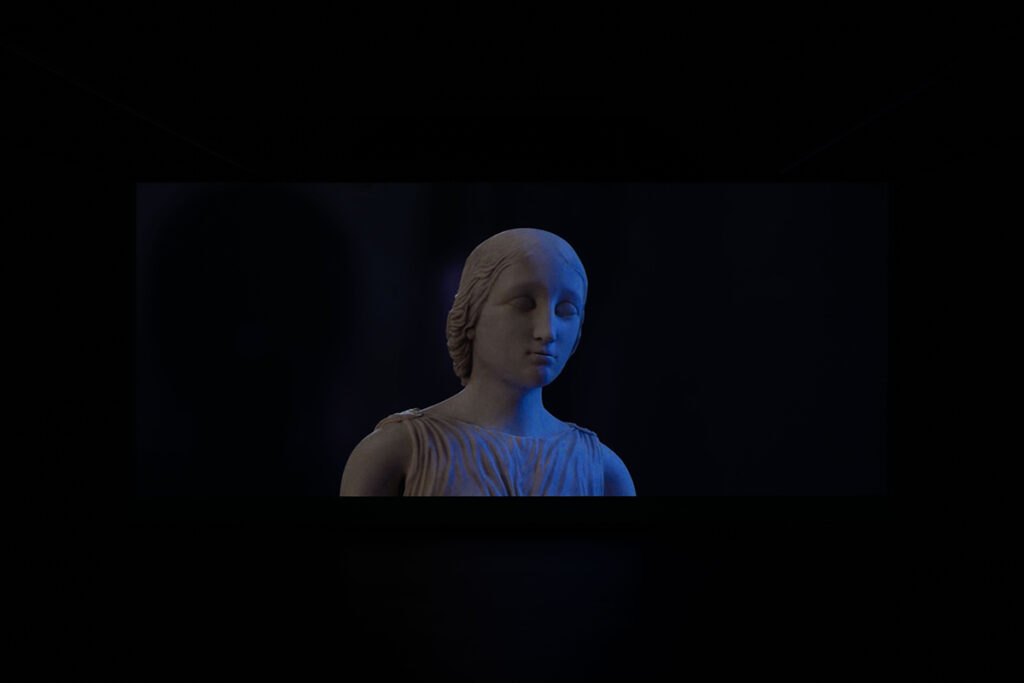
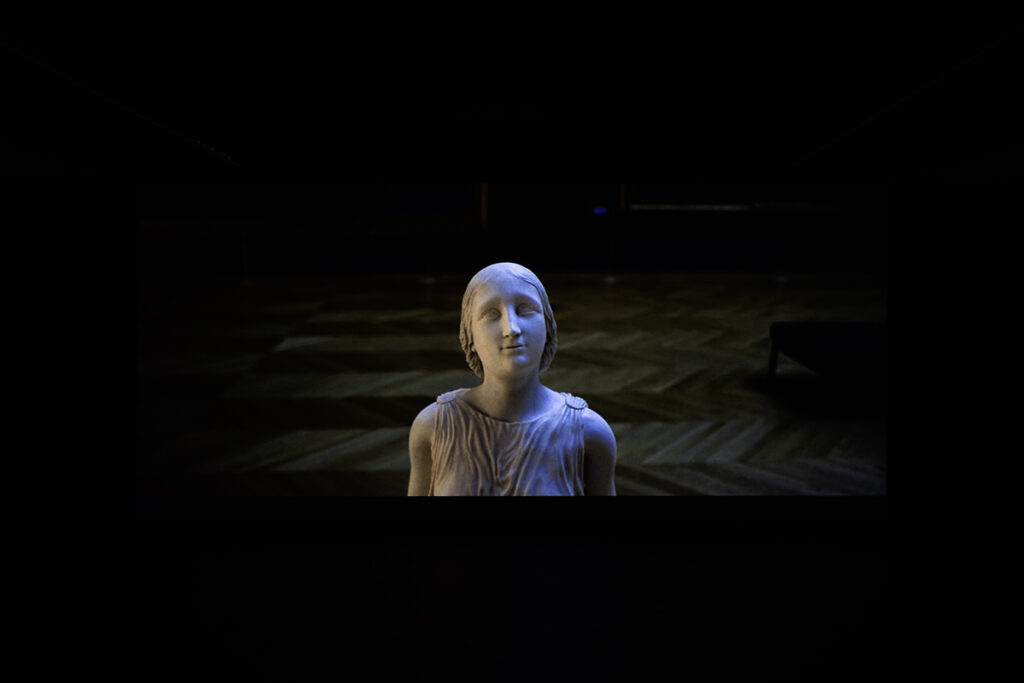
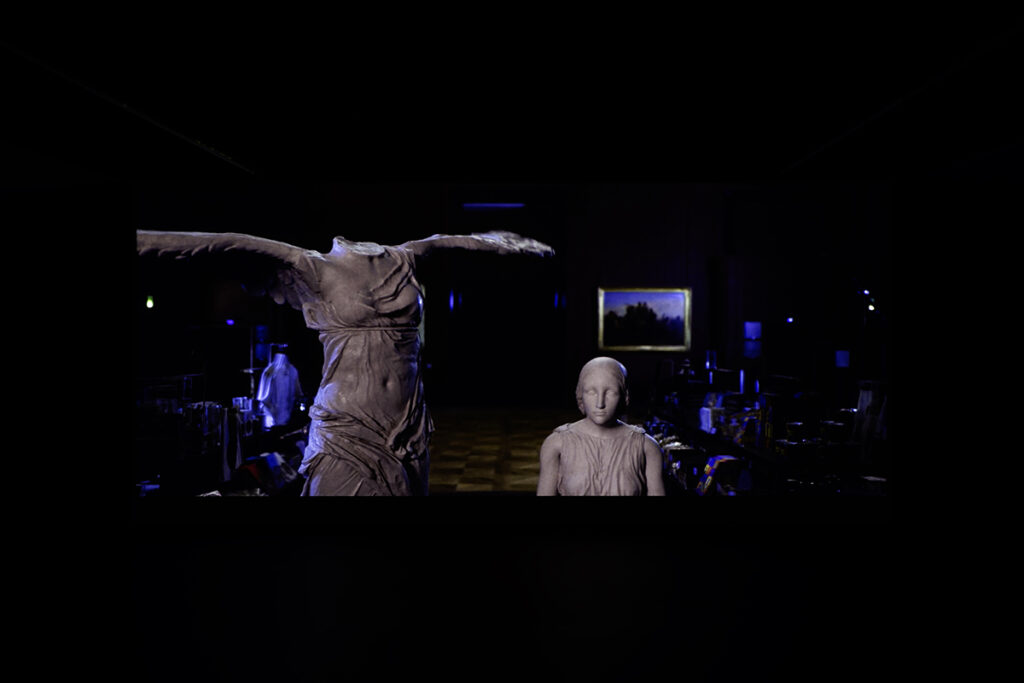
credits © pedro tropa

HCI / Colecção Maria e Armando Cabral /  /
/  /
/ 