‘Certain frequencies shatter glass’[1]
With its very title, ‘Do It shiny’ heralds an ironic tension between appearance and construction, which subtly permeates the first solo exhibition of João Henriques Pires, at Appleton [BOX], in Lisbon.
In this exhibition, the artist’s works inhabit a territory of displacement and reinvention where small movements are able to change the way we see objects, images or materials that form part of our everyday lives.
João Henriques Pires doesn’t do this timidly, but approaches matter with an affirmative presence. His works reveal processes of transformation, transference and adaptation that expose the capacity for materials to take on new meanings without their history being entirely erased.
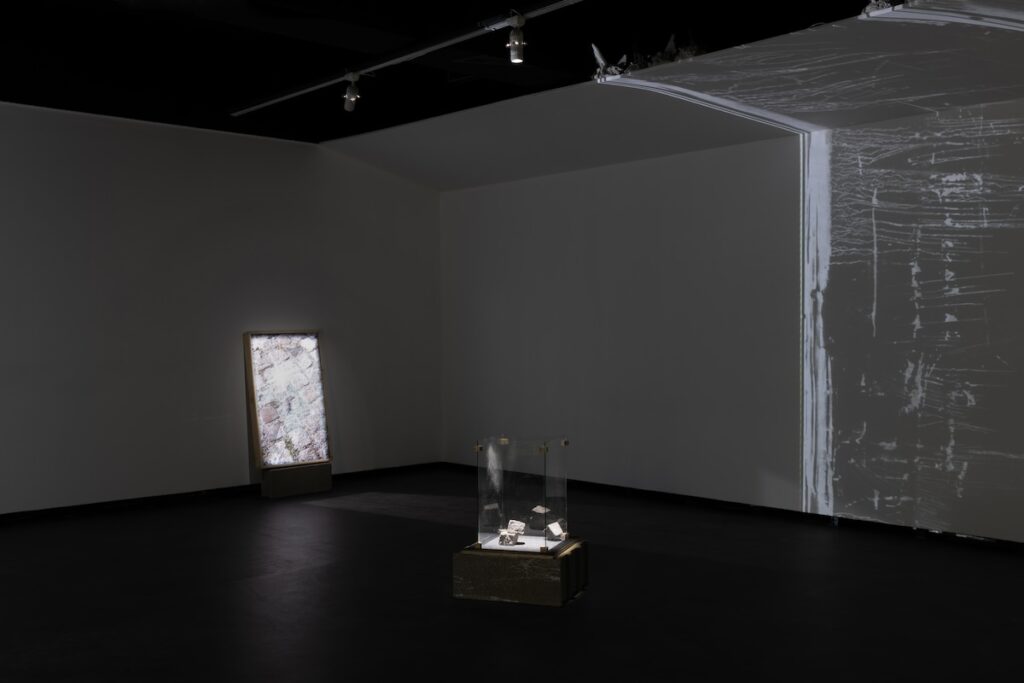
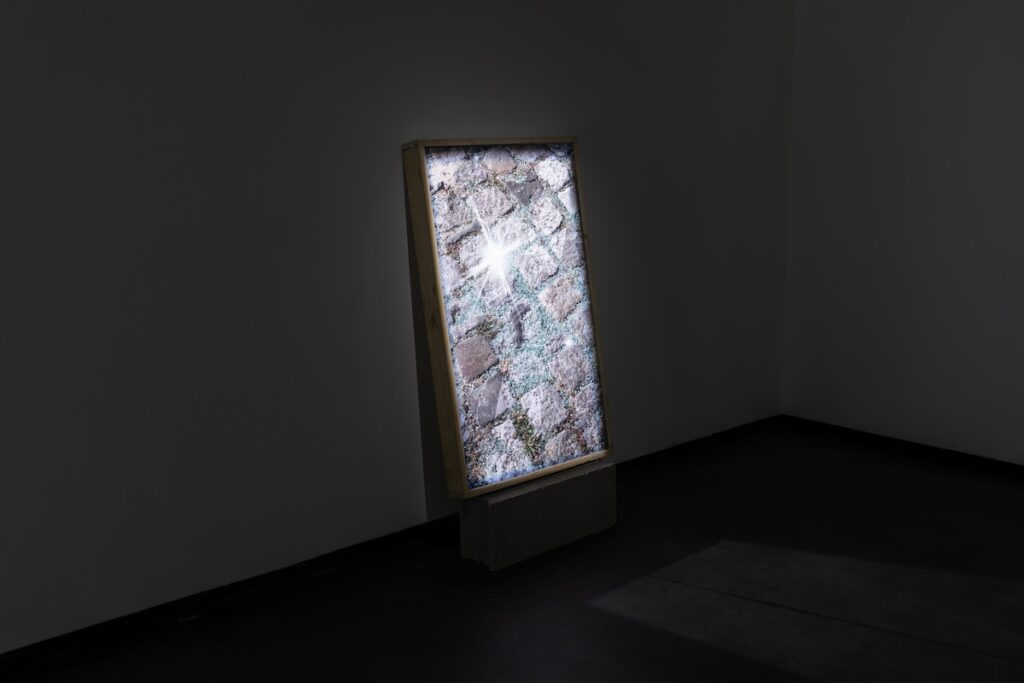
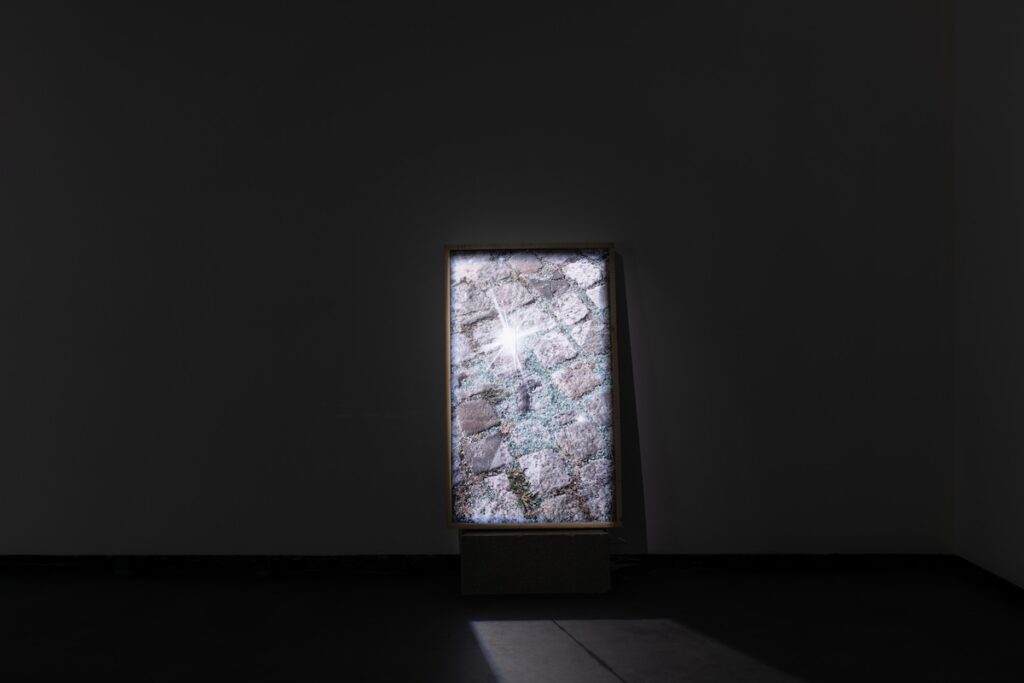
In Do It shiny, the piece that gives the exhibition its title, the artist presents a manipulated ‘digital drawing’, in which he shows us a photograph of shards of glass with reflections that might or might not be artificial, but presents them as a sculpture composed of wood, glass, LED strips and printed paper. And while there is no doubt that João Henriques Pires’ artistic field is sculpture, this exhibition makes it clear that his research also branches into sound, moving image and writing.
Each of these fields returns to questions that appear throughout his practice: appropriation, transformation, error, the movement of vestiges and the possibility of attributing new meanings to previously existing materials, objects or languages.
This sensitivity finds particular echo in the artist’s path at ESAD (Art and Design School) in Caldas da Rainha, a hybrid territory where the proximity between urban, rural and industrial contexts favours forms of observation and production that eschew the more centralised logics of culture. While many of these materials evoke vernacular forms of adaptation and survival, their reorganisation simultaneously takes them closer to speculative objects and technological devices, creating a constant tension between memory and projection.
Perhaps for that reason, one of the most striking characteristics of João Henriques Pires’ work is the way he incorporates the flaw, the imperfection and the accident: broken glass, incomplete structures, reused objects or signs of wear become fundamental elements in the language of the works, integral to their construction and meaning.
By valuing the error, the artist’s practice moves towards a long tradition of DIY cultures and different forms of counter-cultural production, where the scarcity of resources becomes a driving force for invention. The ability to create new possibilities from limited conditions supersedes technical perfection. In that sense, counter-culture doesn’t appear as an iconographic theme of the exhibition. It is instead shown as an attitude towards materiality, objects and production processes.
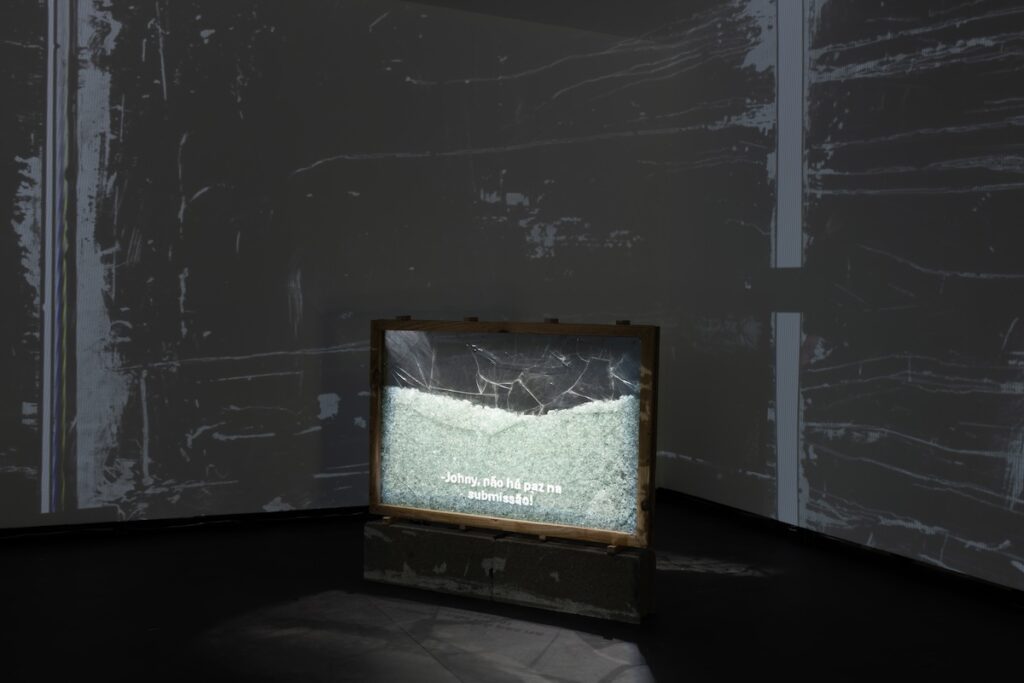
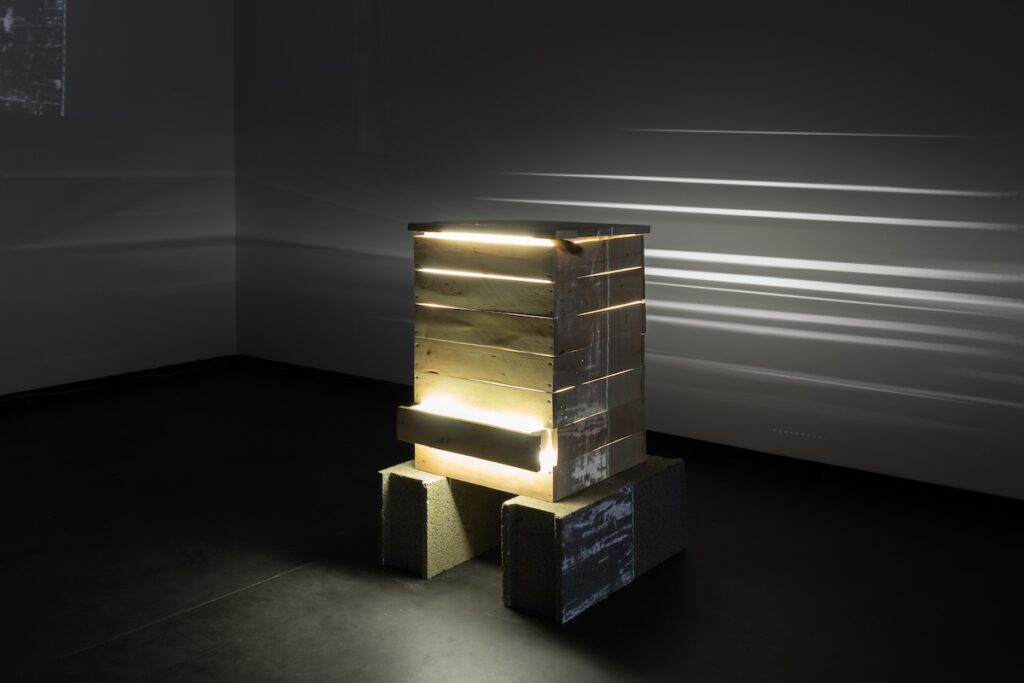
Within this logic, matter appears as something that is available, recoverable, with which a negotiation is established: throughout the exhibition, glass and concrete, key materials in urban modernity, undergo a kind of inversion of roles, where the glass is fragile but aggressive and the concrete is heavy but acts as an exhibition support. Wood, on the other hand, an essentially natural material, functions almost as a mediating element: it introduces a sensory dimension that the glass and concrete don’t possess; it has scent, texture, warmth, signs of use – it is matter that ages visibly and despite being transformed by human action, it preserves the memory of time.
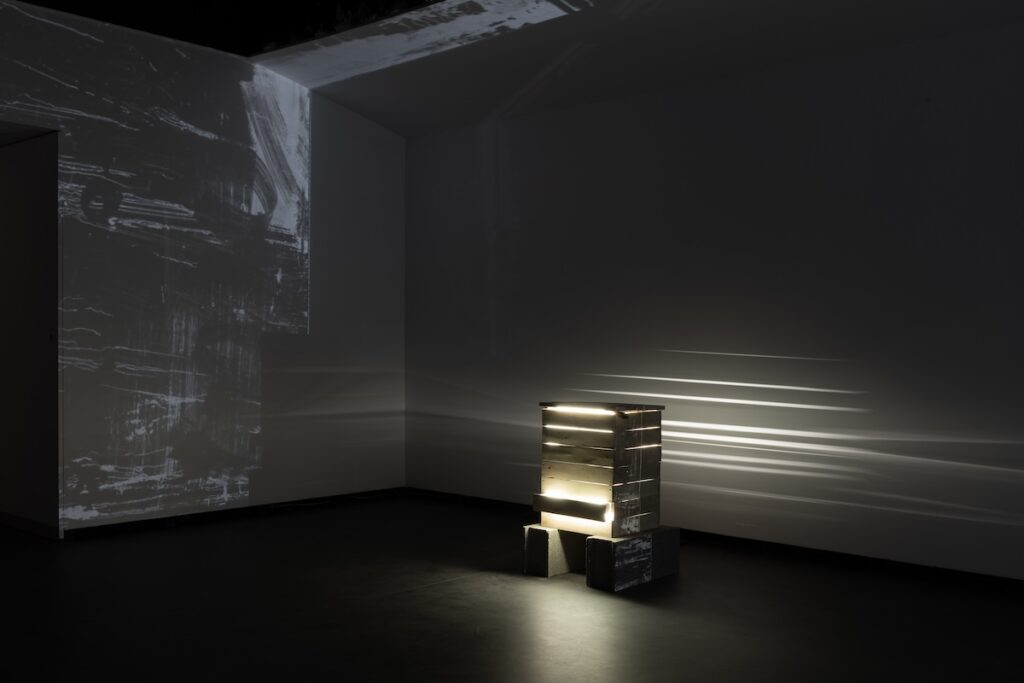
It is precisely due to these apparent limitations that many of the works in ‘Do It shiny’ seem simultaneously rudimentary and technological. They are constructed from found materials, artisanal solutions and manual processes, but they evoke technological devices whose function remains uncertain. This is not a celebration of technological innovation nor a nostalgia for handicrafts. The works inhabit an intermediate territory where functionality and speculation coexist. It is in this ambiguous zone that we are able to see the objects’ capacity to move beyond the function for which they were originally devised.
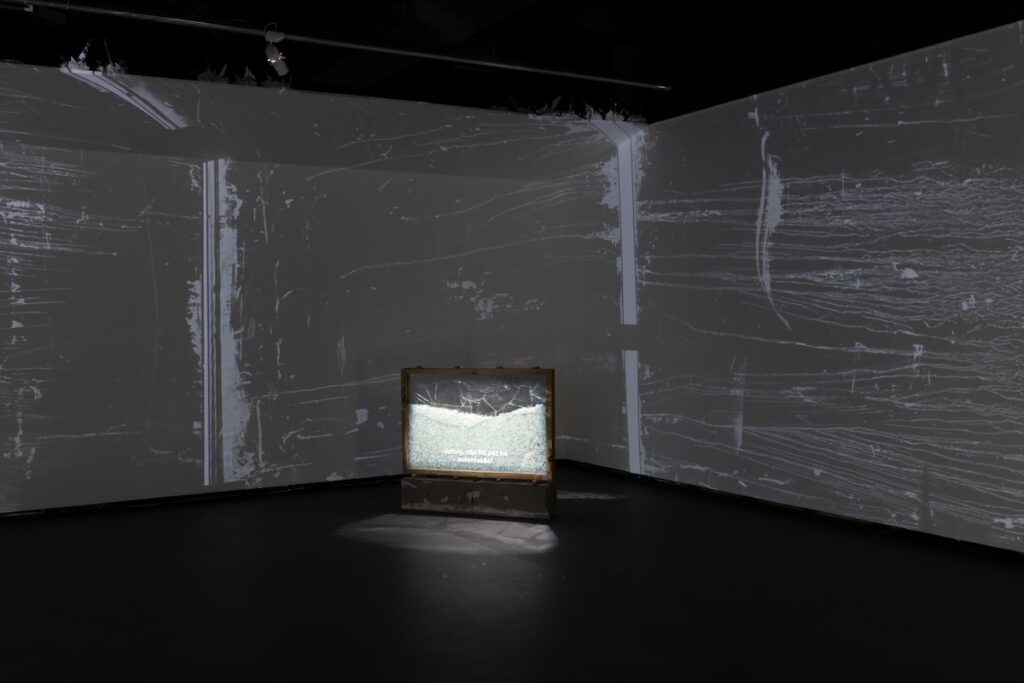
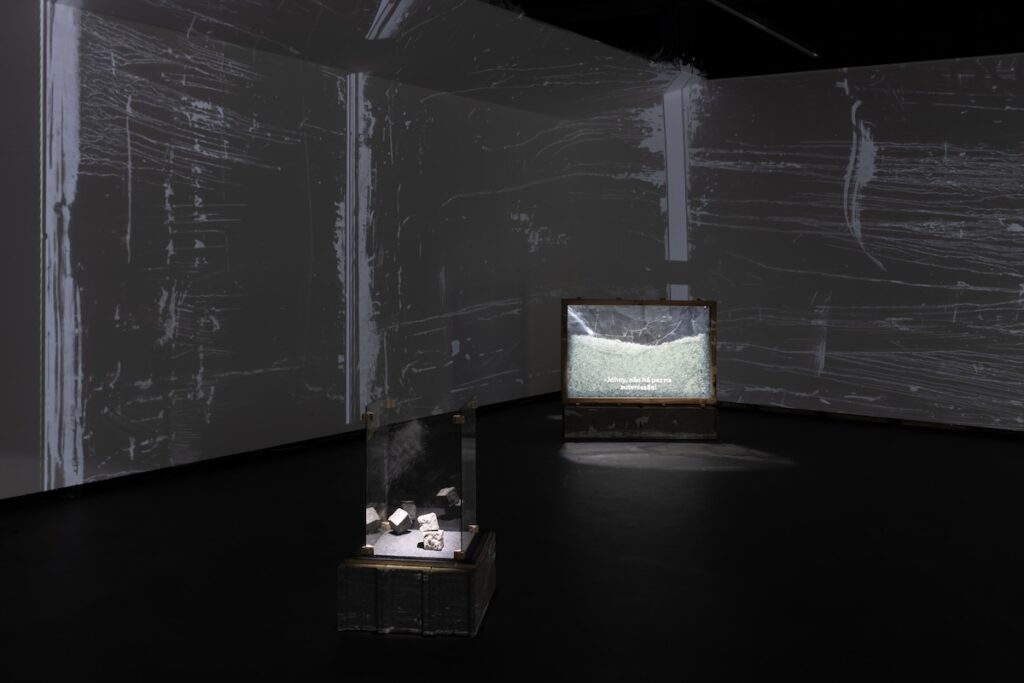
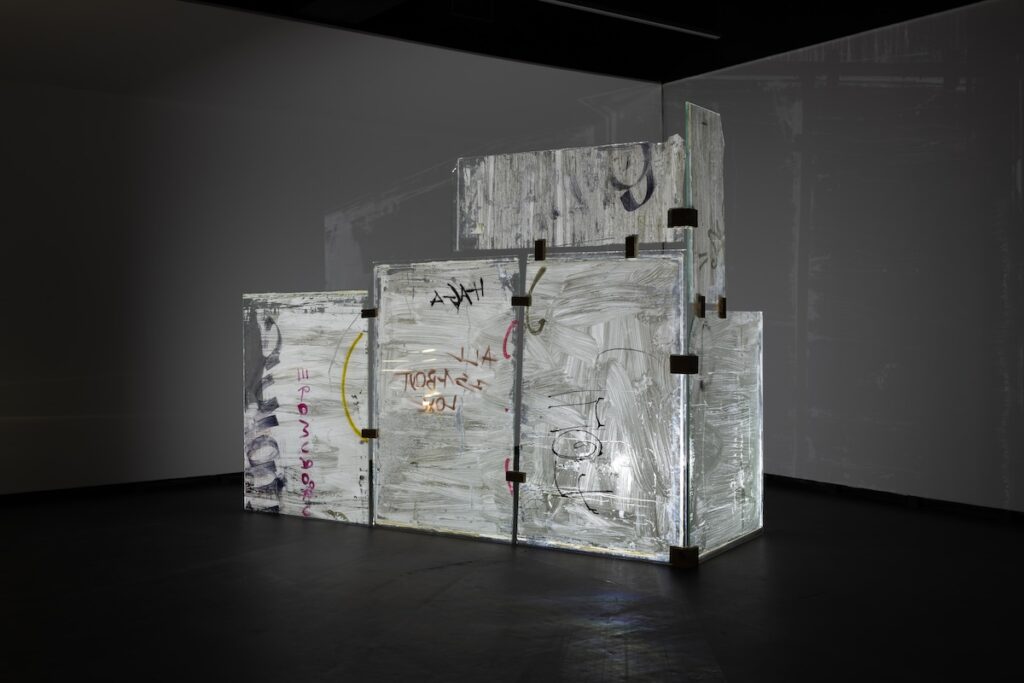
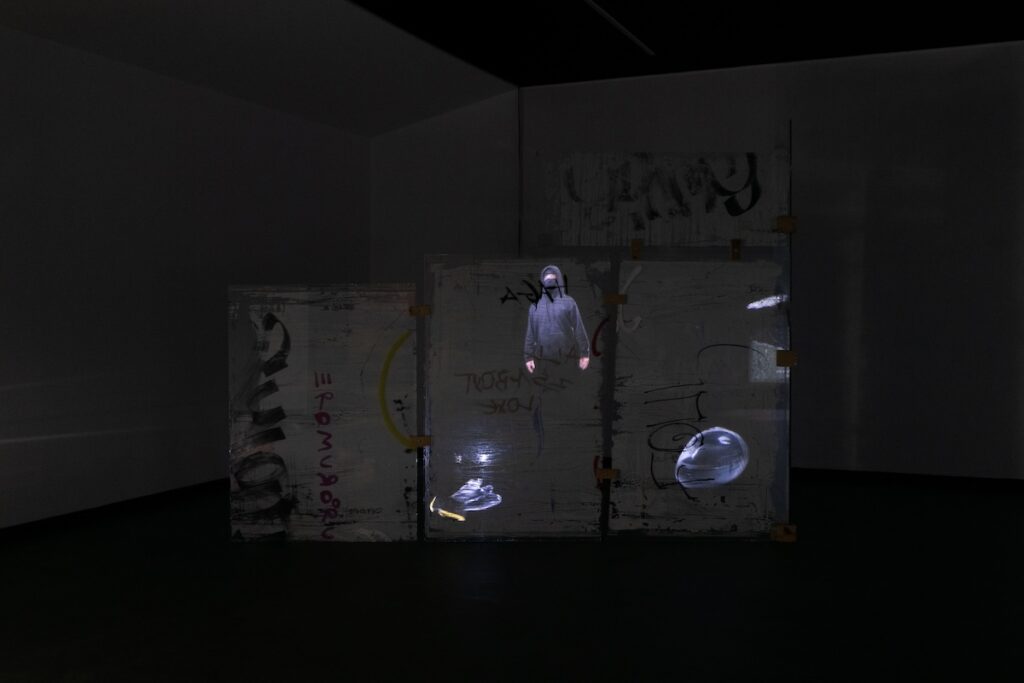
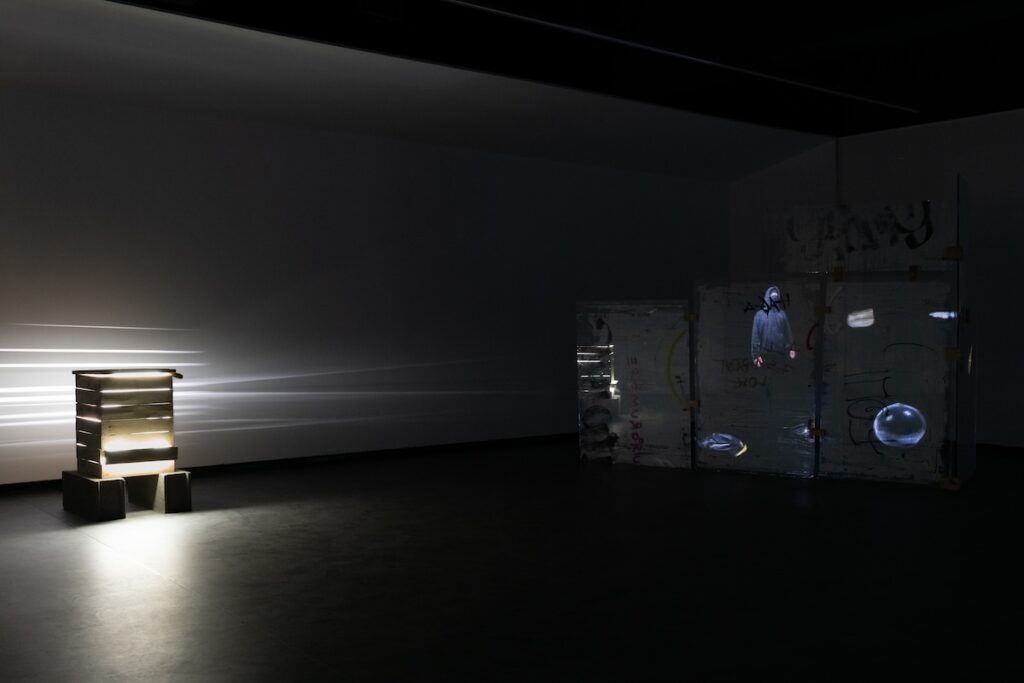
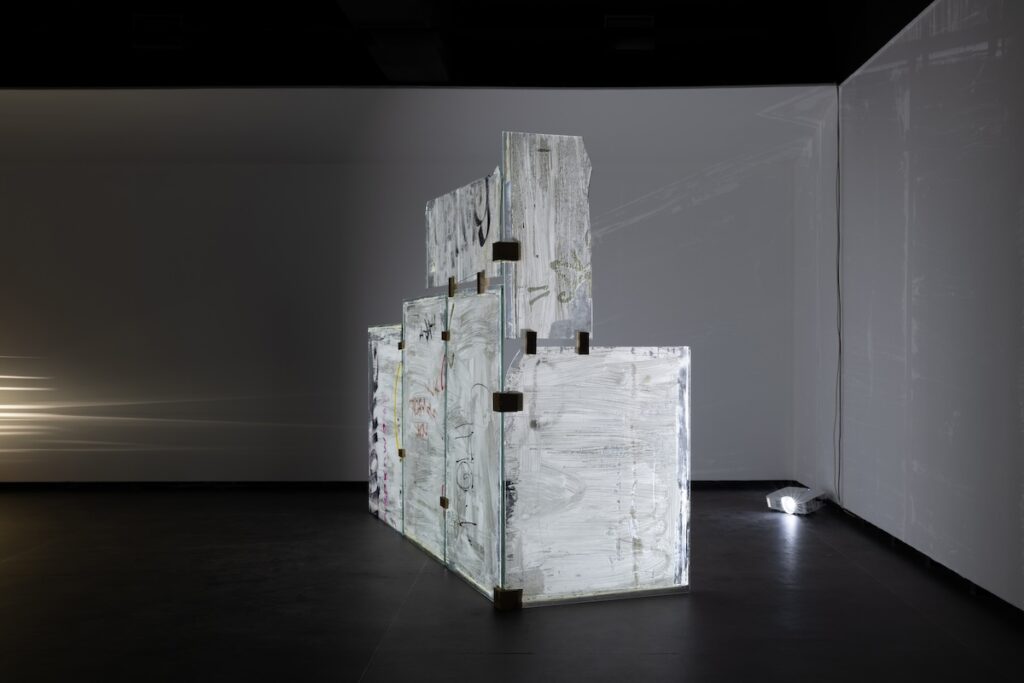
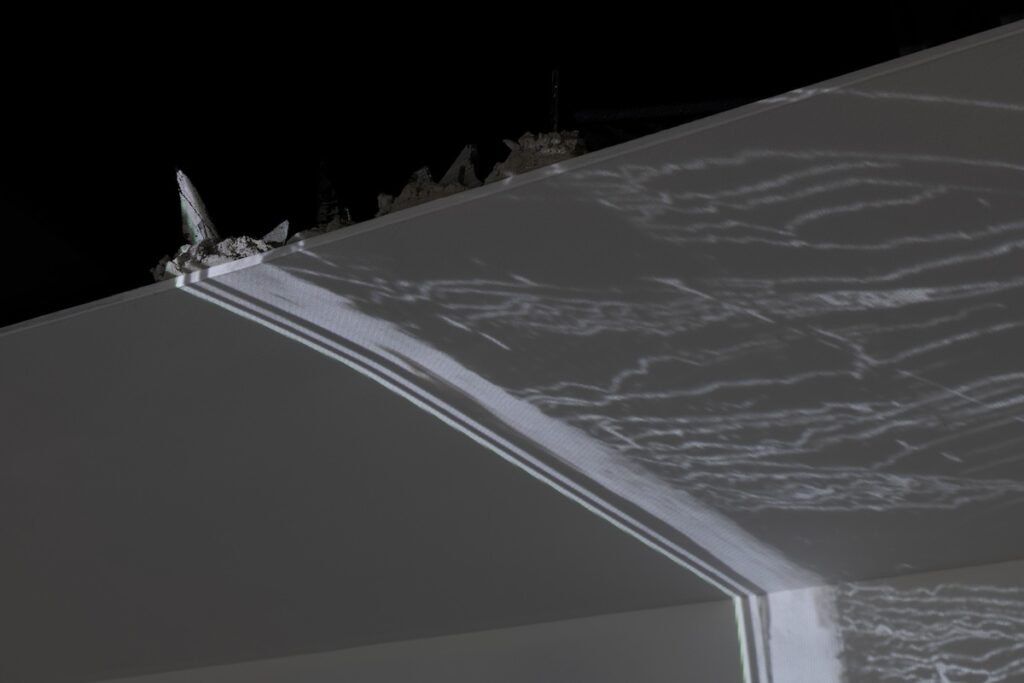
The installation Wall thus occupies a particular place in the exhibition because it makes explicit certain questions that span the artist’s entire oeuvre. Through projection on glass recovered from an old display case, painted and graffitied, the piece wavers between sculpture and moving image, between physical presence and digital representation, and alternates between moments when the object affirms itself as a sculptural structure and others when it transforms into a surface of projection. This oscillation continues a question that is already present in the other pieces: the instability of categories and functions. Text and sound are also subjected to this logic. The text written by the artist and read by another voice, in a deliberately imperfect English, introduces to the language a strategy similar to that found in the materials. Just as the glass preserves its fractures, language too preserves is deviations. The error ceases to be an inadequacy to become a way of producing meaning.
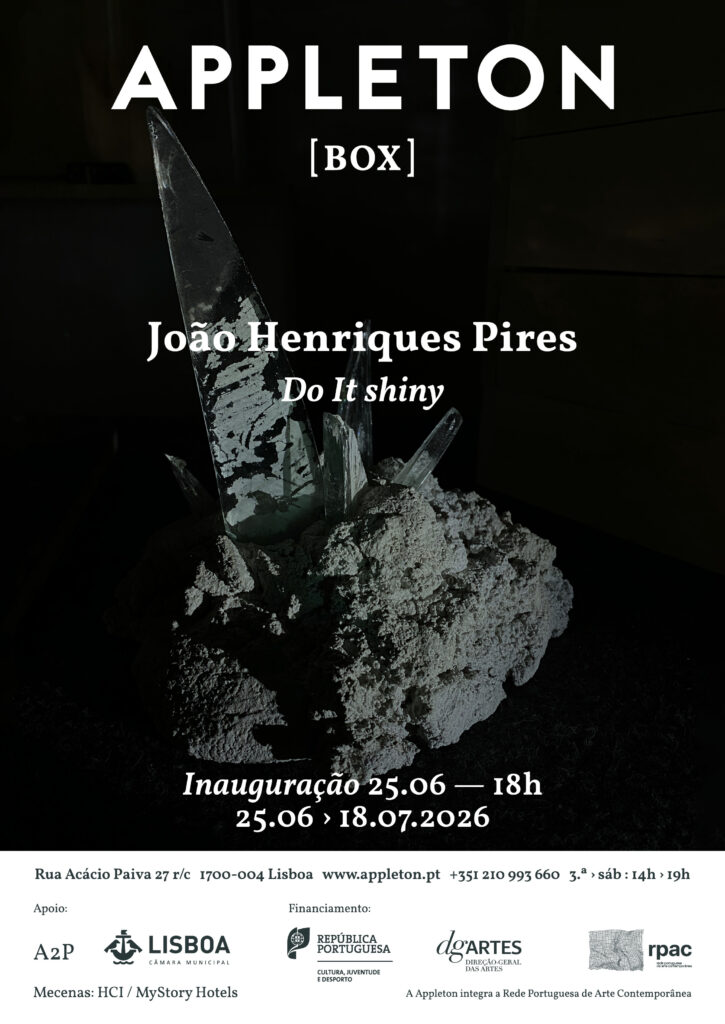
As we move around ‘Do It shiny’, we are enveloped by careful lighting, the sound atmosphere and the many references that the artist seeks to introduce to the viewer’s perception. Beneath the apparent formal containment of the works, there is an aspect of restlessness and urgency that pervades the exhibition: ‘Johny, there’s no peace in submission!’ (in Screen) might be the most explicit autobiographical reference to that urgency. And when we come across 1 of 100, modestly installed in the room, that urgency, along with the idea of permanence, is formally reaffirmed: cement and glass establish a relationship of dependence between vulnerability and resistance, since the small sharp fragments find stability in the small bases of solidified sand.
With ‘Do It shiny’, the artist João Henriques Pires is able to speak to us of the next day, of remains, of marks, of abandoned structures, of the traces of an action, an archaeology of absent events. Glass shards become sculptures. Display cases turn into projection surfaces. Functional objects become speculative artifacts. Fragments take on new purposes. Imperfect languages become vehicles of communication.
The works of João Henriques Pires seem to be built of forms of resistance. Between rural and urban, artisanal and technological, scarcity and imagination, the artist offers a reflection on matter’s ability to survive, to adapt and take on new meanings. His sculptures make memory visible without erasing the history of materials, the accidents and imperfections that they carry, transforming the vestige into a form of presence.
Vera Appleton, june 2026
[1] Underground Resistance. Liner notes. Revolution For Change, Network Records / Underground Resistance, 1992.


 /
 /
