


SQUARE
—
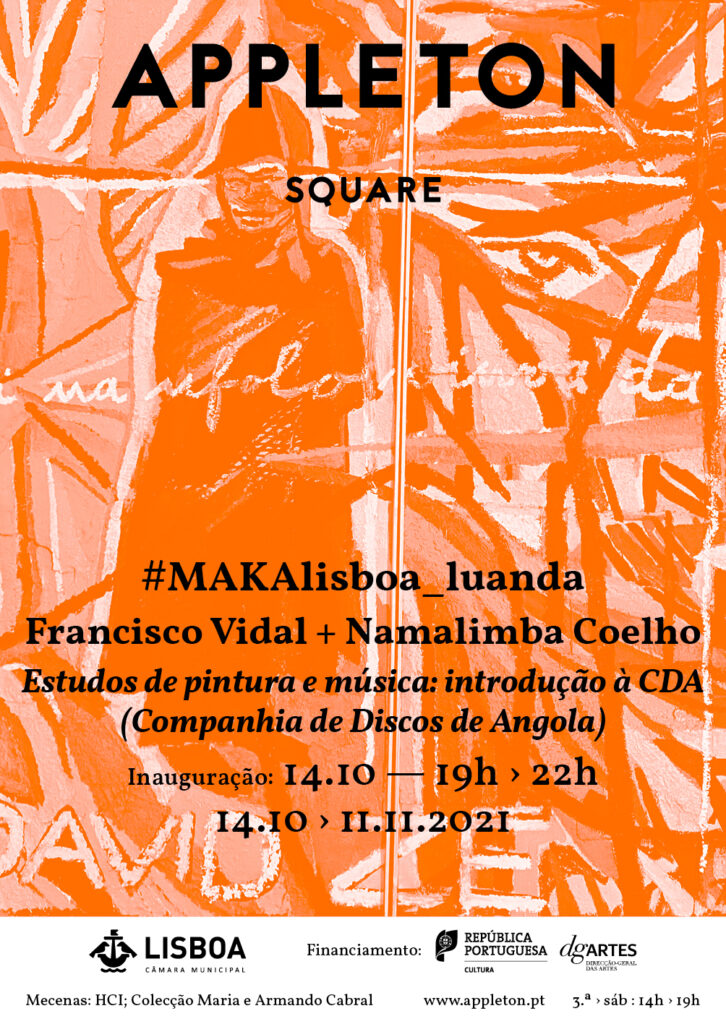
#MAKAlisboa_luanda Francisco Vidal + Namalimba Coelho — Studies of painting and music: Introduction to the CDA (Companhia de Discos de Angola)
“Good music, in good company” was the motto with which, every night, the author of the memorable radio programme “Café da Noite” welcomed listeners. “It was the first voice to break the ‘blackout’ to say that there had been a revolution in Lisbon and that the regime had fallen, on 25 April 1974. It used the aerial of Rádio Ecclésia, Angola’s Catholic broadcasting station, in Luanda. From 1964 the transmission would open, night after night, with an editorial feature that tried to tackle servitude, racism, illiteracy, and suburban poverty. … The author of the 40,001 programmes was journalist Sebastião Coelho. He read his shortest editorial, 20 seconds, on 25 April. After almost 30 years of ‘getting around censorship’, he had difficulty writing freedom.”
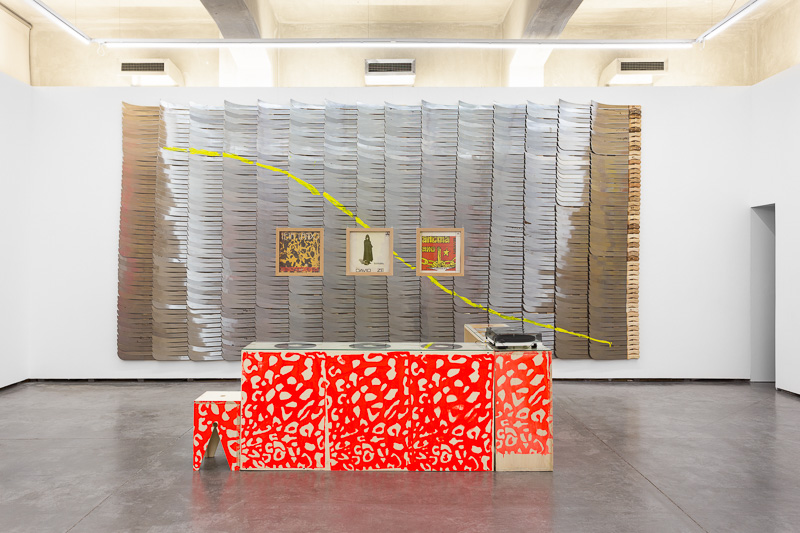
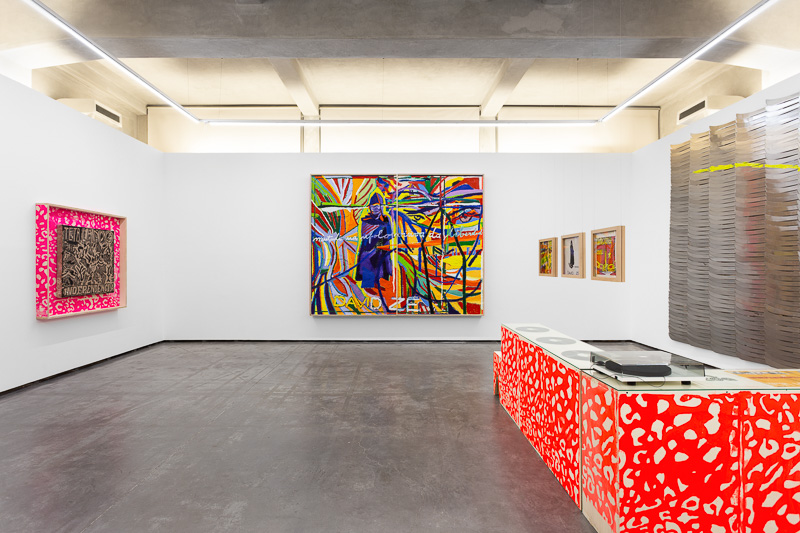
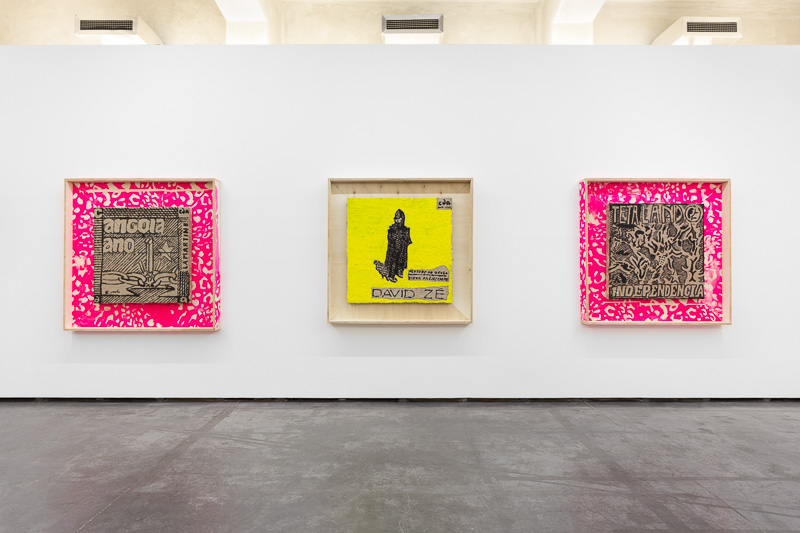
This time and mode are revisited in this exhibition through a visual and sound conversation between #MAKAlisboa and the legacy of the Companhia de Discos de Angola (CDA), which, in an introduction to the theme, gives rise to a choreography between painting and Music x Memory x Manifesto x Moment of Afrikan Kulture and Art (aka MAKA), as a motto to tell and to sing the history and stories of radio and record, in this context of the Angolan Revolution. Considering the density of the theme, the choice was between the presentation and representation of three classic albums of the CDA which, in the run-up to independence (1974/1975), gave voice and sound to the revolution and to the liberation movements, using as poetic weapons Angolan popular music and the national languages: Angola — Ano 1, by Carlos Lamartine; Mutudi uá Ufolo, Viúva da Liberdade, by David Zé; and Independência, by Alberto Teta Lando. These three LPs, by emblematic figures of protest music, stood out in music history as discographical references of the period of political song. They are the sound and visual portraits that give voice and body to this encounter between painting, Angolanness and memory.
It would be inconceivable to present this discographical trilogy without touching on the history of radio broadcasting, which, in turn, intersects and merges with the history of the country itself, as it would be to reconstruct Angola’s musical past and the legacy of the CDA without mentioning the contribution of Sebastião Coelho (Huambo, 1931–2002), one of the mentors of this musical and cultural revolution, journalist, pioneer of radio in Angola and of transmissions in the national languages, historian of urban popular music, founder of Fonográfica, Estúdios Norte and the CDA, and producer and editor of these three LPs and a hundred other records that tell the story of Angolan popular music in the 60s and 70s—which I had the privilege of inheriting, together with the book Angola, história e estórias da informação [Angola, history and stories of information], from 1999. This book, together with the collection of vinyls, constitutes a legacy of invaluable knowledge, as it is the result of the compilation of various studies and reports produced by the author for the state of Angola between 1974 and 1977. It is therefore a unique contribution to the understanding and historical, cultural, and political reconstruction of the period under colonial rule, oral literature and the Portuguese language. I am particularly interested here in the chapters dedicated to the importance of radio for the historiography of the record and for the musical and cultural revolution, with a particular focus on these three LPs of protest music—all of them produced by Estúdios Norte and released by the CDA, in Luanda, after a long struggle for autonomy of Angolan culture and identity, for freedom and independence.
STRUGGLE FOR THE SOUND EXPRESSION OF ANGOLANNESS: from radio to records (1960–1975)
The dissemination of Angolan music through radio broadcasts and the production and release of records were fundamental to honouring this mission of empowering new sound narratives in the context of the time. “Radio occupies, in its own right, a prominent place with regard to the evolution and dissemination of African popular music. It was the catalyst that opened the way to artistic growth.”[1] “I was concerned that Angolan music didn’t have status or influence. When it began to feature in radio transmissions, it was just another feature, entitled Rhythms of Angola, with a limited number of minutes, in amongst the general programming. Changing the status quo became my personal project.” Thus came the turning point in the history of Angolan music, the first steps being the production of three radio broadcasts, to this end, by Sebastião Coelho—a pioneer in the dissemination of African identity, culture, and music, and presentation in national languages.
The first broadcast was “Cruzeiro do Sul” (1960), a bilingual programme, in Portuguese and Umbundu, in which Angolan themes occupied all spaces, both spoken and musical, constituting a complete reversal of what had come before. Thus began the process of massification of Angolan popular music, in which Judite Luvumba and José Castro would become the first black announcers and presenters of Angolan radio. “It was only in Huambo, it was only in Umbundu, but it set the precedent for the rest of the country. The new radio of Angola was born. In response to this initiative, my work with Rádio Clube do Huambo was suddenly interrupted, due to the intervention of the PIDE (Portuguese secret police). After the ‘rest’ period I spent in Pensão de São José, the famous prison in São Paulo, the PIDE forbade me from returning to Huambo and made me settle in Luanda.”He was imprisoned there for five months.
Once released, but confined to Luanda, in 1964, he produced “Tondoya Mukina O Kizomba” (There’s a party in our house), the second programme with the aim of disseminating Angolan music, presented in Kimbundu and Portuguese, broadcast on Rádio Clube de Angola. “As a result of its immediate success, the studio programme projected onto Luanda’s artistic landscape and triggered a boom in demand for performances by local artists. That was the beginning of what I consider to be the golden age of Angolan music, which ended when the local art scene’s process of continuous growth was suddenly interrupted in 1974.”
That was also the year when the aforementioned “Café da Noite” came into being, with the motto “Good music, in good company”. Broadcast on Rádio Ecclésia for ten years, it became the first classic programme in the history of Angolan radio that systematically included music from Angola in its daily editions, which until then had been limited to the musseques (slums). Equally, it was the first voice to break the “blackout” to announce that there had been a revolution in Lisbon. It was a “very popular radio programme, produced by Estúdios Norte, in Luanda, whose editorials marked important paths in a policy of Angolanness”.The presenter would end each broadcast with the word “Mungweno” (“Until tomorrow”, in Kimbundu).
These programmes were fundamental stages of radio dissemination of Angolan popular music and of the large-scale promotion of Angolan artists. This was the basis of the national discography which, in the meantime, led to the need for the creation of the Companhia de Discos de Angola and of Fonográfica in 1973, beginning a new chapter in the recorded production and dissemination of music. Estúdios Norte, founded in 1964, were trusted by artists, thanks to years of working with them to disseminate these voices. There was, however, a need to consolidate in Angola the whole technical process that would allow for the production, release, and distribution of one to three new records a week. Hence the creation of a global project formed by these three companies—Estúdios Norte (recording and production), CDA (release and distribution), and Fonográfica (manufacture and pressing)—which in 1977 became the number one Angolan record label, responsible for three out of every five records sold in the country being Angolan.
THREE CLASSIC RECORDS OF THE ANGOLAN REVOLUTION
INDEPENDÊNCIA x Teta Lando, 1974
Distinguished with the “Gold Record” in 1974, the LP Independência, by Alberto Teta Lando (1948–2008), with Carlitos Vieira Dias’ group Merengues, became one of the most important albums of militant political song, with the track “Angolano segue em frente”—the last before Teta Lando’s exile in France. The artist was one of the most prominent composers and performers of Angolan popular music, singing both in Portuguese and Kikongo, his native tongue. The text on the back cover of the record recalls: “1961 was the year of breaking the chains of colonial oppression. The people overflowed with the desire for freedom and the Angolan jungle was alight with hope. Struggle and pain no longer meant despair, because every fallen Angolan was simply an anonymous hero of independence. On this long-play, which is the CDA’s first release, free song is the expression of an artist who is the voice of the people. It is the amalgamation of the bitter hours we must forget, with the hours of great joy that are anticipated in the star of the liberation movements. Teta Lando is the artist the people chose. Nobody could sing independence better than he could.”
MUTUDI UA UFOLO / A VIÚVA DA LIBERDADE x David Zé, 1975
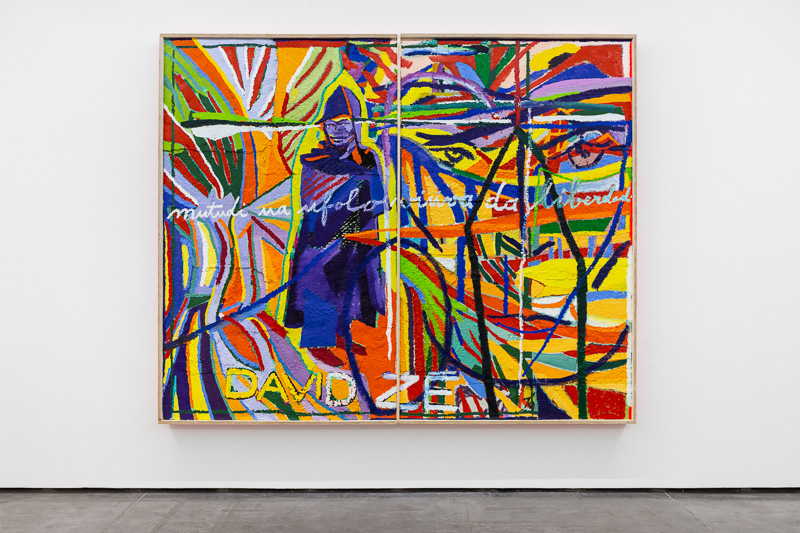
David Gabriel José Ferreira (1944–1977), better known as David Zé, distinguished himself as one of the mythical and militant musicians of the Angolan Revolution, killed on 27 May 1977, at only 32 years old. He was one of the main singers of the Angolan revolution for independence, having released only fourteen singles and a single LP, in 1975, accompanied by Conjunto Merengue, entitled Viúva da Liberdade—this would become a providential album in the history of protest music, with lyrics that portrayed the everyday life of the Angolan people during the troubled period the country was going through at the time, sung in Portuguese and Kimbundu. On the back cover we read the following message: “Between two guerrilla actions, David Zé forgets the heat of the battle to envelop in a song of hope all the suffering of the Angolan people. This is why his songs are powerful and in his voice there is a dawn of glory. He sings to explain to the people to stay strong and determined, committed to and consciously participating in the struggle for total independence. His songs speak of war, but bring peace to the hearts of all the women who have lost sons or fiancés and husbands in the maelstrom of fighting; it is the message of victory that will reward ‘Mutudi ua Ufolo’, that is, ‘the Widow of Freedom’.”
ANGOLA — ANO 1 x Carlos Lamartine, 1975
Composed of twelve tracks of a political nature, “the first LP recorded by an Angolan artist was released in November 1975, to mark Angolan Independence Day. It included ten new songs by Carlos Lamartine (1943), performed by the artist himself, accompanied by Conjunto Merengue. It had the generic title Angola — Ano Zero, and today constitutes a discographical relic. For technical reasons few copies were made, and the first hundred were numbered and identified with a special stamp. … as there wasn’t a single cover designer in Luanda at the time and because it was urgent, I also had to take on this task. On a white background I drew the outline of some scaffolding with letters sketched in red, black, and yellow, suggesting the flag, and included the title—’Angola — Ano Zero’.”The message on the back cover recalls: “Independence is not given; it is won, and the heroic Angolan people know this well. It was through armed struggle that they won their independence, with their perseverance and the sacrifice of many beloved sons. Struggle, hope, and several of these heroes are evoked in this LP, which, sooner or later, will be enshrined as a classic piece of the Angolan Revolution. … And time and things past will gain a new dimension, finding the paths of Africa and the world.”
VISUAL AND MUSICAL MANIFESTOS
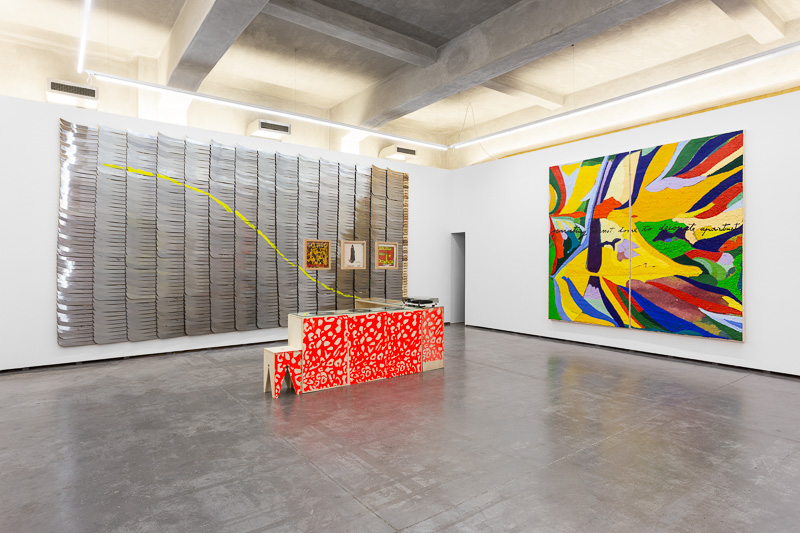
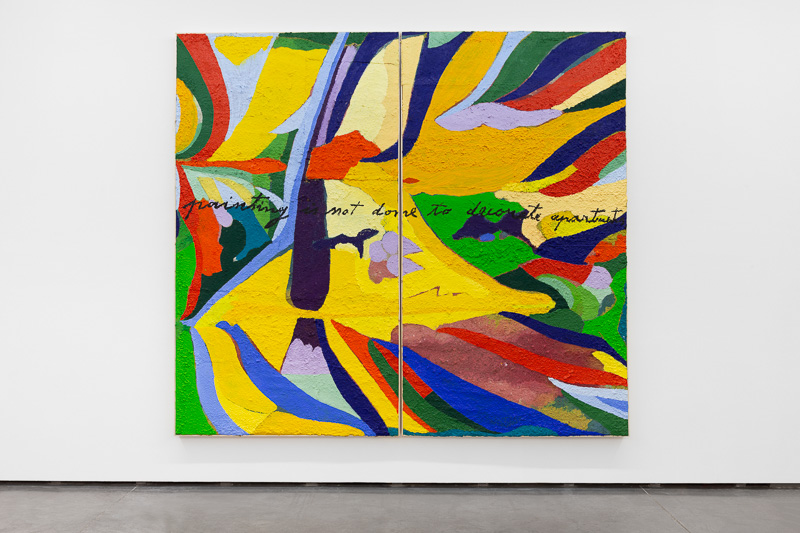
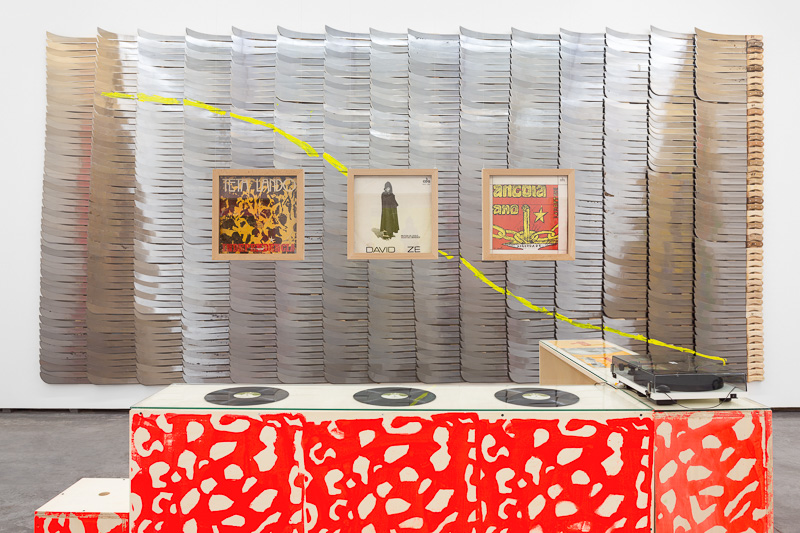
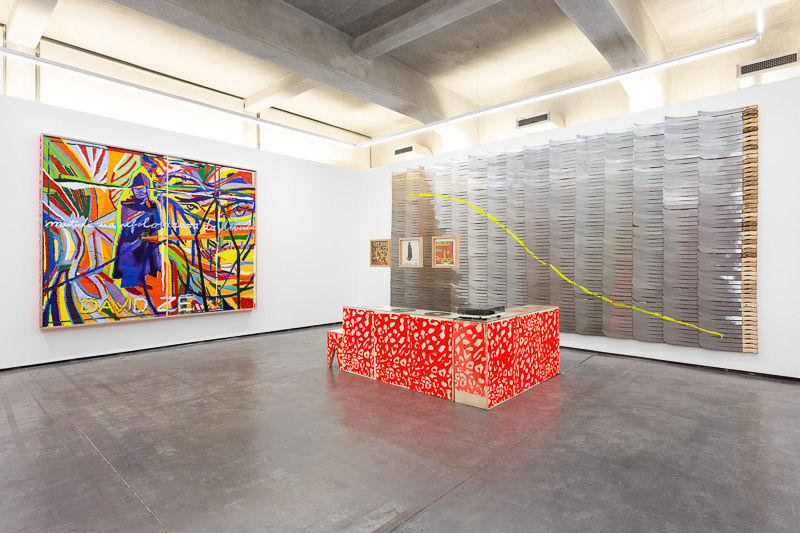
The paintings that pay tribute to these three albums are the result of a dialogue between the essence of vinyl and the visual language of record covers, deliberately created with text and thought. Form is also celebrated here, exploring the square as a common and dominant geometric figure in the various elements that shape the exhibition—from the architecture of the space and the record covers to the frames of the canvases and machetes. Sculpture, here represented by the wooden structure, invokes boîtes-en-valise as a motto to exhibit the vinyls activated by the record players on either side of them, in dialogue with the three suspended frames that exhibit their respective covers. These painting-sculptures constitute visual manifestos that shape music and memory, through these lines, forms, and colours.
In this context, dedicated to the reflection and expression of legacy, exalting the role of vinyl and oil painting (a technique that is over 500 years old) is inevitable, as they are last opponents of the technological dictatorship, in which the CD became obsolete, in contrast to vinyl—which, despite the space that digital imposed, is a landscape that was reborn and conquered new horizons. In an era dominated by globalisation, trivialisation, reproduction, copying, counterfeiting, and imitation, we must celebrate what remains authentic in these intersections of medium and matter, time and space. More than contemporaneity, both painting and vinyl claim and prove their timelessness and resilience—both in technique and in matter, invoking the human gesture to give body and voice in this space of struggle for critical and constructive thought.
Music, activated through these vinyls, as a sound expression of empowerment of the cause of national liberation and the achievement of independence, establishes a metaphorical and symbolic dialogue with the machetes, which, as a technical support of these paintings, are, in essence, tools of agricultural labour, but also instruments of struggle of the African liberation movements.
It is around this dialectic, of visual and sound portraits-manifesto, that painting and music assert the power of art as poetic and timeless weapons to elicit a reflection about memory, cultural identity, legacy, and revolution.
The eleventh of November, the day this exhibition ends, will mark 46 years of Angolan independence. Almost a quarter of a century later, it is time to reflect and act on the legacy of the much suffered and projected revolution, to acknowledge and honour the values and privileges that our ancestors so arduously and historically fought for, having combined the ferocity of weapons and machetes with the word, poetry, music, and critical and constructive thought—they are the origin of our freedom. Using the tools we have at our disposal in the present, as the CDA did for the revolution in its time, is our legacy.
“Without creation there is no culture, which survives in roots and is held in the hearts of the people and in the soul of each of us, in our inspiration and in our work to put Angolan popular music in its rightful place in the African and global contexts.”
Namalimba Coelho
#MAKAlisboa_luanda, 2021
#MAKAlisboa is a project by Francisco Vidal and Namalimba Coelho. Maka, in Kimbundu, refers to a conversation that raises questions, a discussion that aims to be informative. Thus the M of #MAKA can take the form of Moment x Movement x Manifesto x Memory x Museum x Music, with the intention of proposing a visual, humanist and social conversation, as a symbolic space of expression and reflection, ethical and aesthetic, that uses the arts and the word as poetic weapons to challenge the limits of contemporary thought, decolonise mentalities, evoke memory, and deal with themes related to human rights. #MAKAlisboa is dedicated to all victims of injustice and oppression, to all who fight for freedom, equality, representativeness, and truth.
credits © bruno lopes

HCI / Colecção Maria e Armando Cabral /  /
/  /
/ 