Some say the world will end in fire,
Some say in ice.
From what I’ve tasted of desire
I hold with those who favor fire.
But if it had to perish twice,
I think I know enough of hate
To say that for destruction ice
Is also great
And would suffice.
Robert Frost, 1920
Lisbon, April 8, 2021
My dear friend,
This poem about the end of the world is over a hundred years old, so you can see how this topic is nothing new. I don’t know how you would have imagined it while you were around, but given the whole context of climate change, it’s easier for me to imagine an ending of explosive heat rather than ice. Meanwhile, I observe a world that is less inclined to affection, faster to anger and hatred, and increasingly distant from the need for presence and therefore colder, a condition made all the worse by this pandemic.
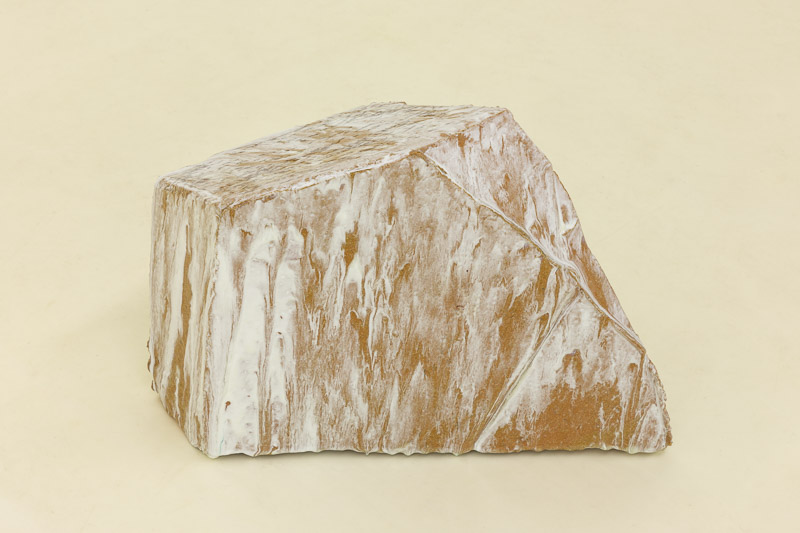
But I am not writing to you because of all that, but rather because I stumbled upon you again, just like in your studio in Alandroal when I literally tripped over one of your “DNA stones” and almost fell on the floor. I remember being mortified that I had almost stepped on one of your works, but you just laughed and calmly said not to worry, that the work hadn’t been made by you but by chance, that it was just a stone covered in the left-over paint while you worked on your paintings.
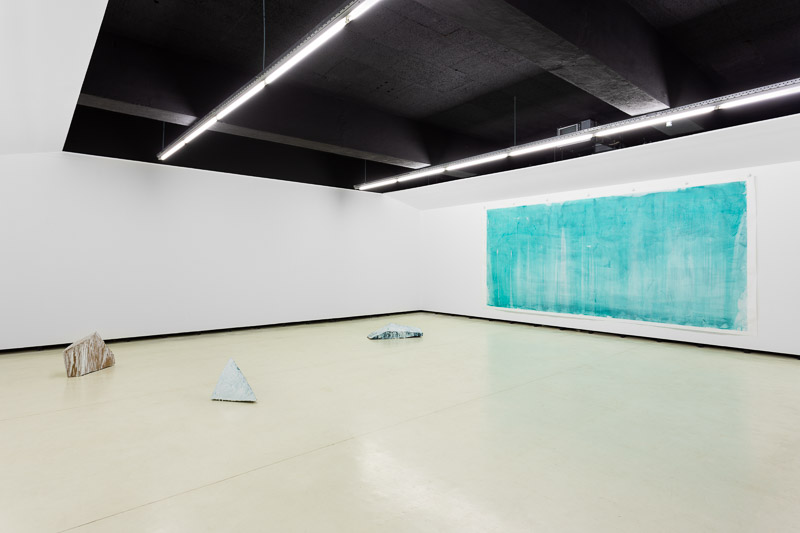
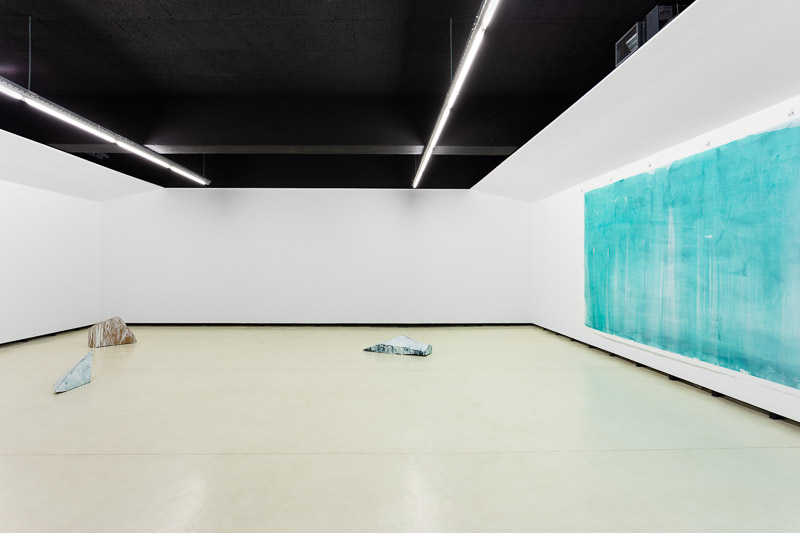
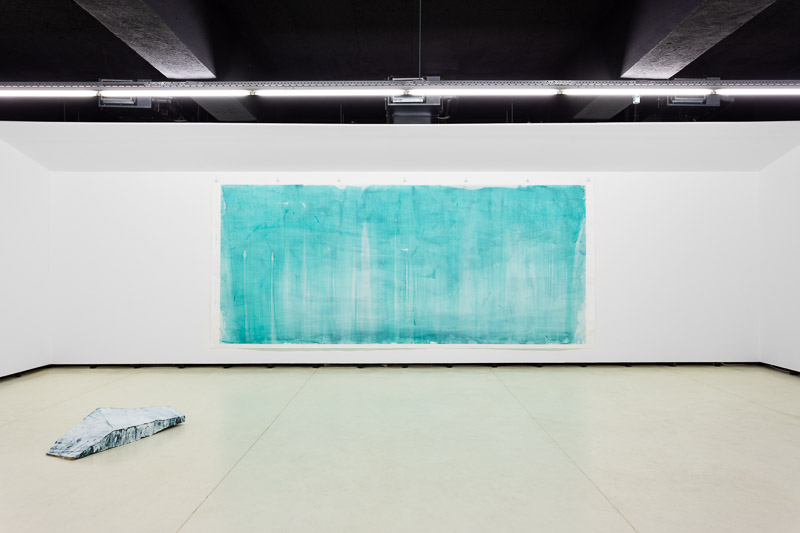
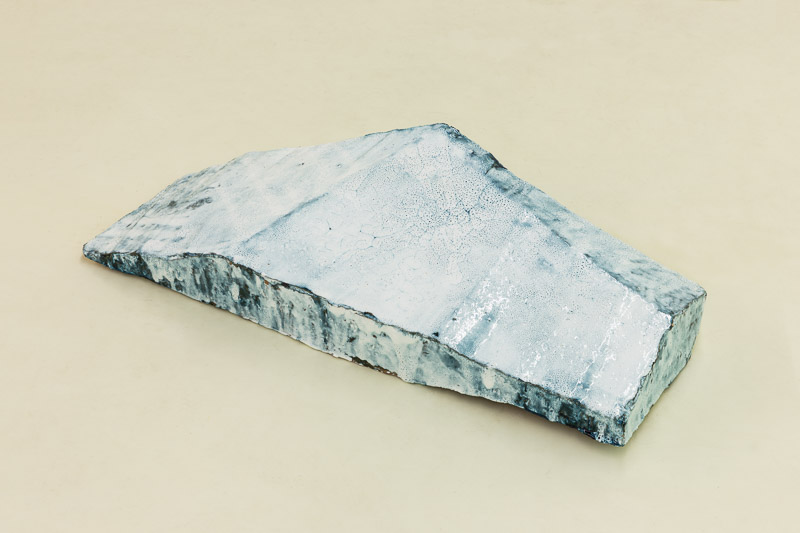
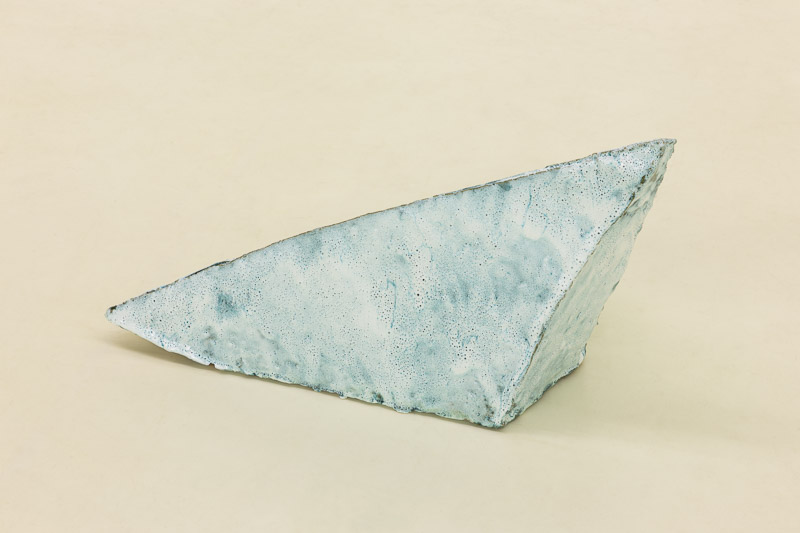
But let me start again. I opened this letter with Robert Frost’s poem because I stumbled upon you when I got better acquainted with the artwork of Maria Ana Vasco Costa, whose exhibition is opening now at Appleton and is called “Ice Ice Baby”, in an ephemeral homage to the hip hop song which marked mine and the artist’s generation. “Ice Ice Baby” because when we enter the room, we feel the cold and emptiness, transported to Antarctica and its glaciers; we find a landscape and an environment that may or may not be similar to that prophesised ending of white and icy light.
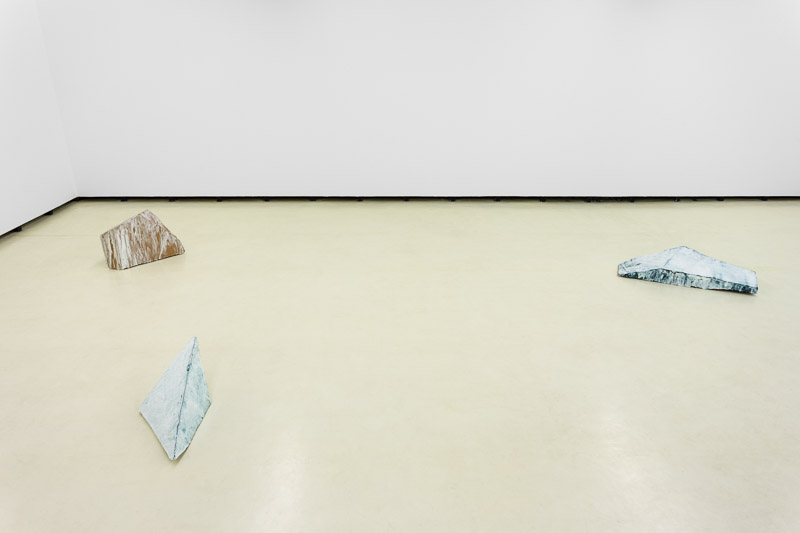
My first encounter with Maria Ana and with you happened back when I was visiting her first solo exhibition “Água d’Alto”. At one point, as I was stepping back to better observe a watercolour she had placed on the wall, I almost fell over when I felt one of her sculptures touching the back of my leg. Maria Ana didn’t notice, and nothing actually happened, so I kept the secret to myself and smiled at what brought back a sweet and happy memory. In that exhibition the floor sculptures were also similar to stones, but this time, rather than a work of chance, they were the centrepieces. The drawings on the wall were reflections on paper of the artist’s ceramic creations.
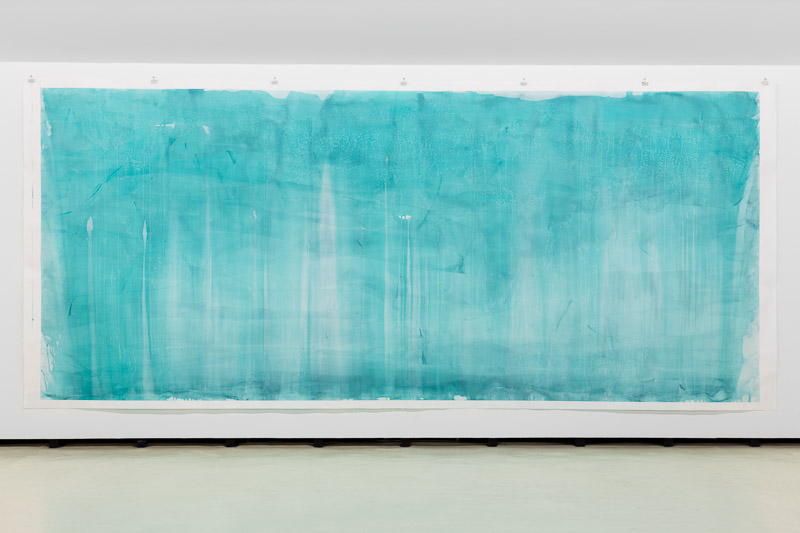
It was only later on that the similarity to your work became more obvious. It was when I visited her studio that I realised that the sculptures grew smaller so that the drawings she calls “Glaze drawings” could grow larger. These drawings that freeze a moment, impressionistic in a literal sense, now took on an almost transcendent depth, in contrast to the glazed ceramic sculptures, connected to the earth, becoming ground and reference to space and life for the artist.
With this change I was again reminded of your “DNA stones” and your paintings – landscapes that swallow us up and hypnotise us: on the one hand the sculptures Maria Ana has installed in Appleton’s room reveal her artistic DNA, which is inevitably linked to the materiality of ceramics, but not necessarily to the sculptural object; on the other hand, we are confronted with a large-scale “Glaze Drawing” that freezes a moment of total mastery of space.
It is these formal approximations and curiosities or coincidences that have led me to write to you about this encounter. In the period of production and assembly I spoke with Maria Ana about her deep connection to nature, about the issue of movement in her work, the importance of “capturing a moment” that is “frozen” in the work she creates, and, in this specific case, of her interest in the materiality of ceramics, in the reflections and colours that the glaze gives it, and in the appropriation of paper to apply that finish, transforming it into a new subject, and thus exploring new possibilities within a technique she has mastered. Quite apart from these more specific issues, Maria Ana speaks a lot about spirituality in her relationship with her work. This also made me think of you. Just like in yours, I found in her work that depth and capacity to transport us to a moment that is far beyond us, that transcends us. Who knows, maybe that icy, empty end, or the other hot, explosive one where there is no space left between us.
“Ice Ice baby,” the song, is now a memory of a happy time filled with bright colours and close rhythmic bodies. A time that seems very distant from this minimalist “Ice Ice baby”, but that we hope to live again, before the world ends, in some form.
Missing you deeply, my dearest friend.
Com um beijo daqui para o teu Céu
Vera
P.S. You would enjoy visiting this exhibition. For sure you wouldn’t stumble at all, but maybe the three of us would have a laugh at my secret.



 /
/  /
/ 