“We are programmed to receive.
You can check out any time you like,
But you can never leave…”
~ The Eagles, Hotel California
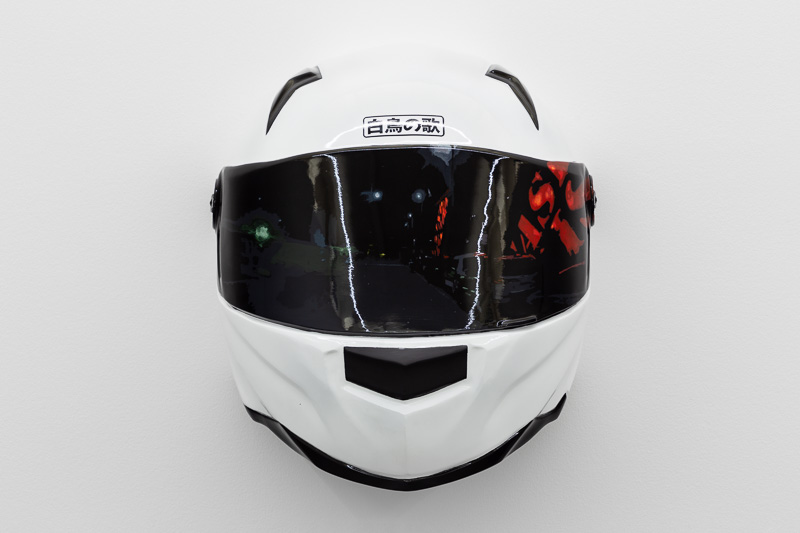
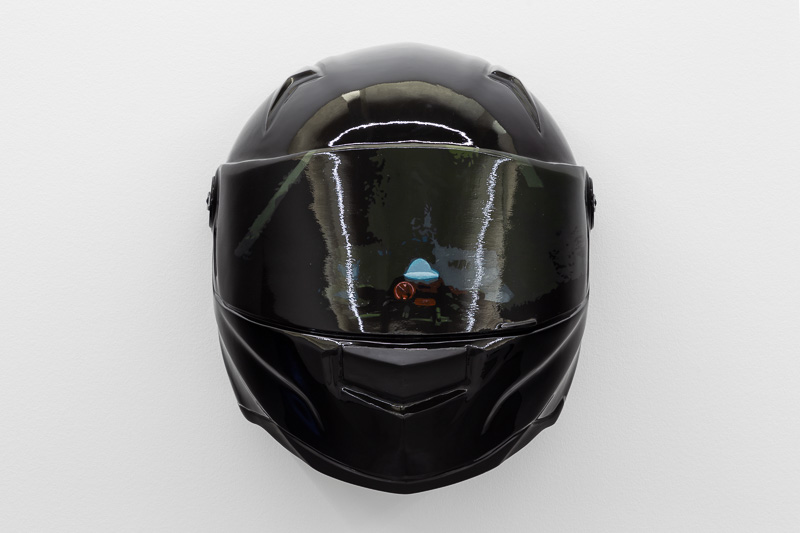
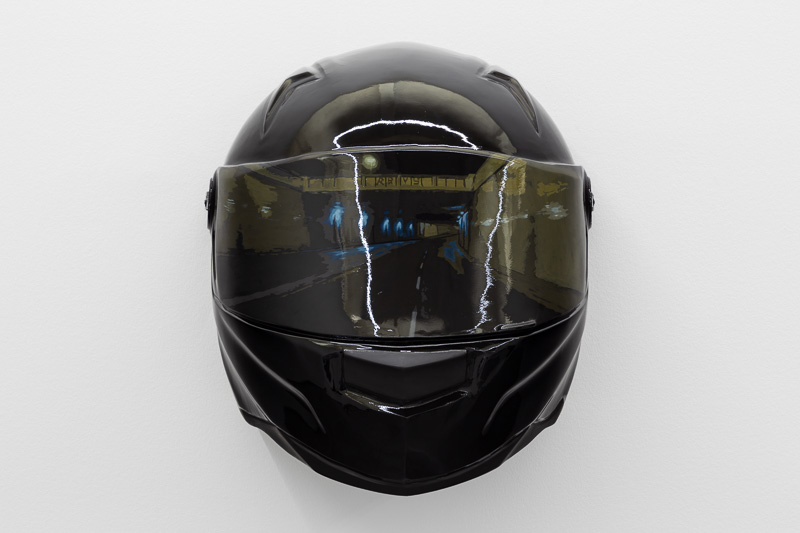
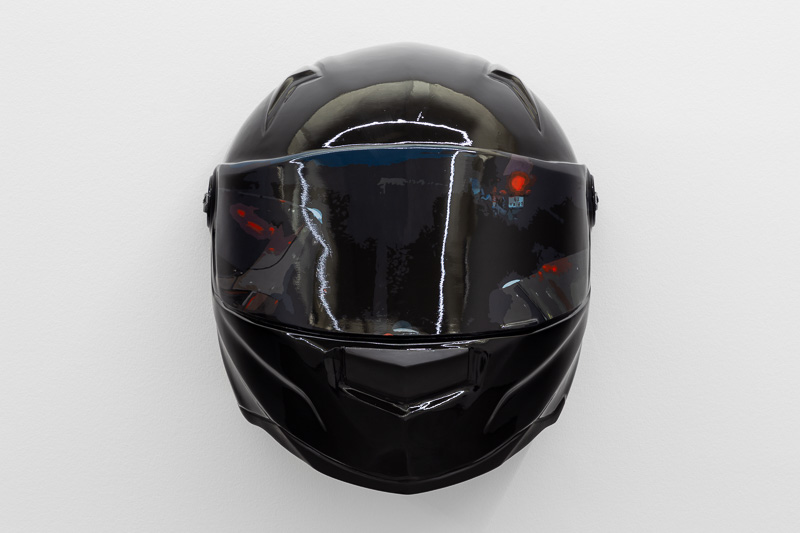
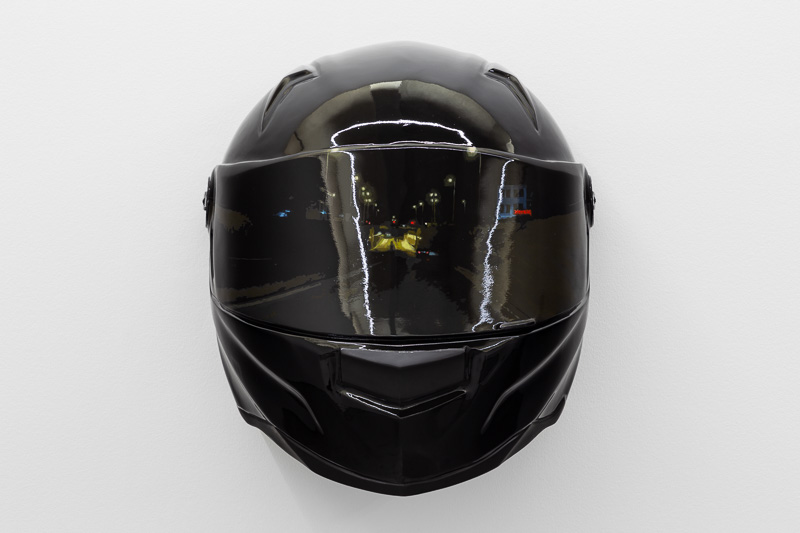
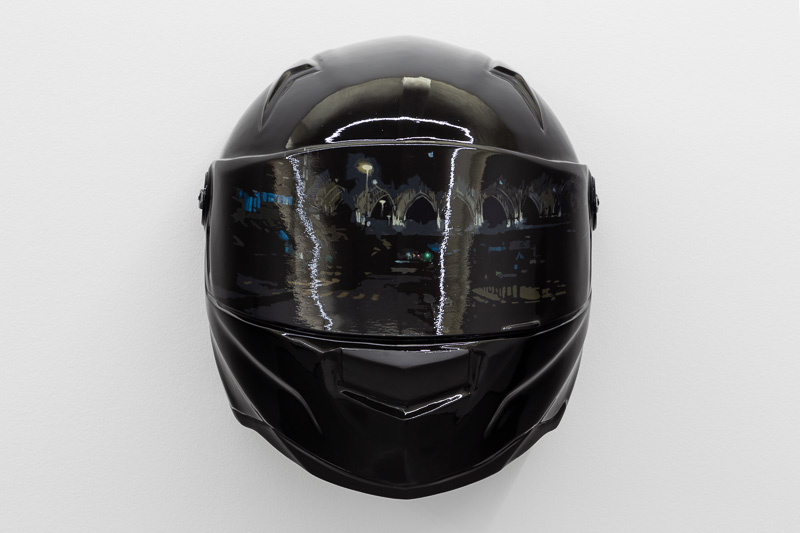
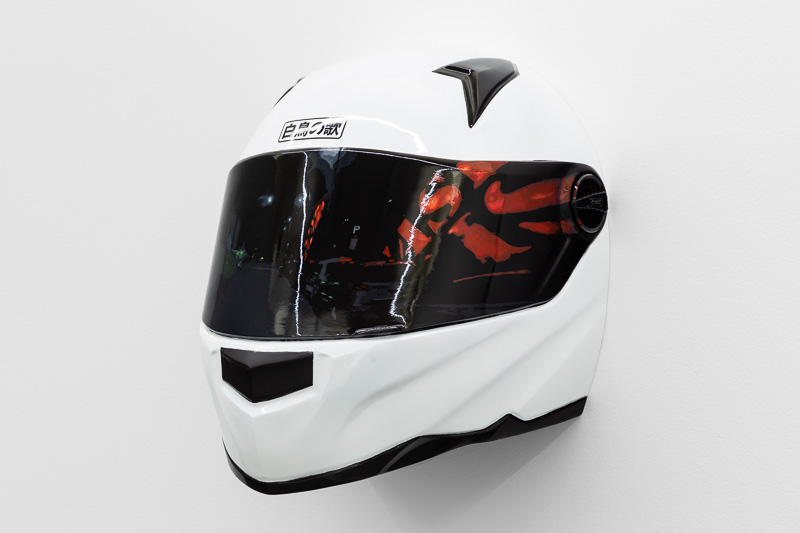
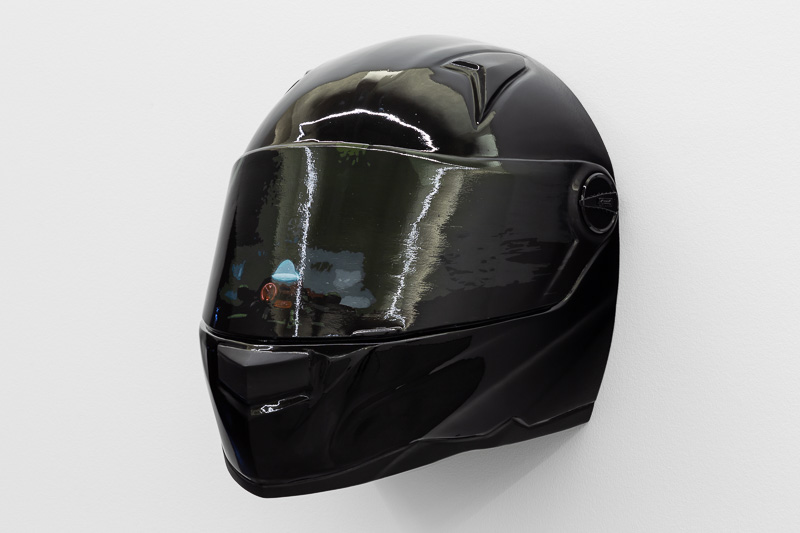
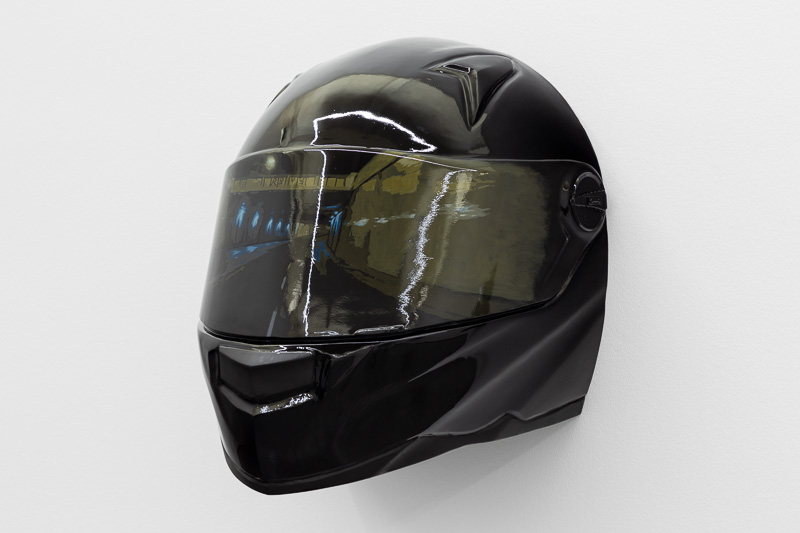
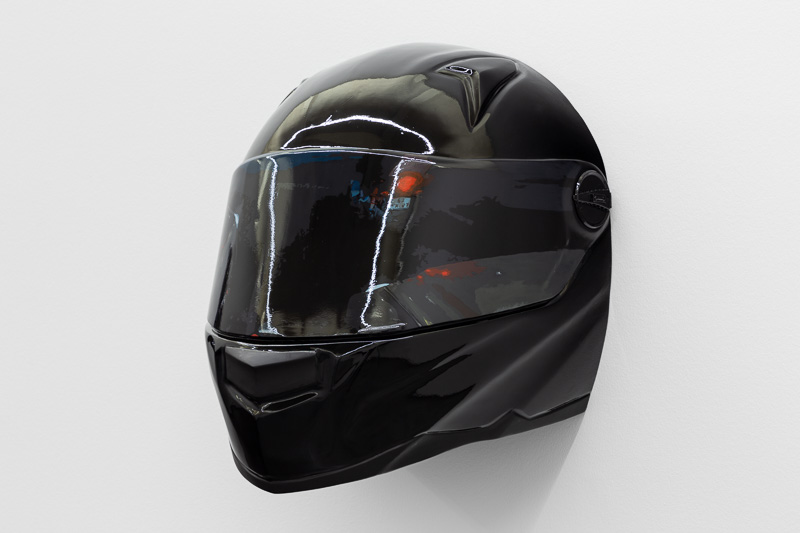
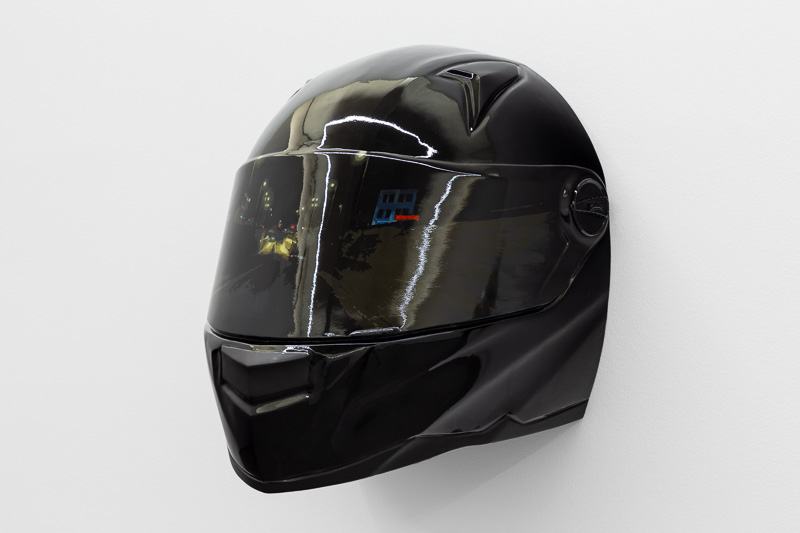
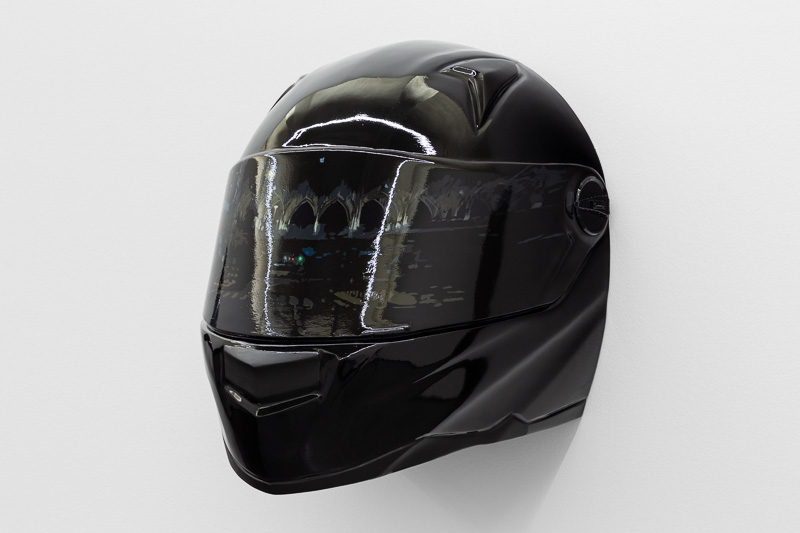
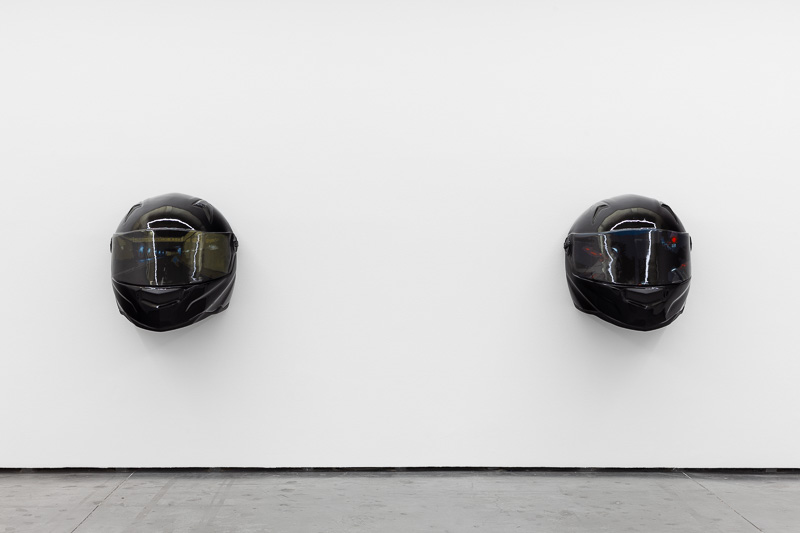
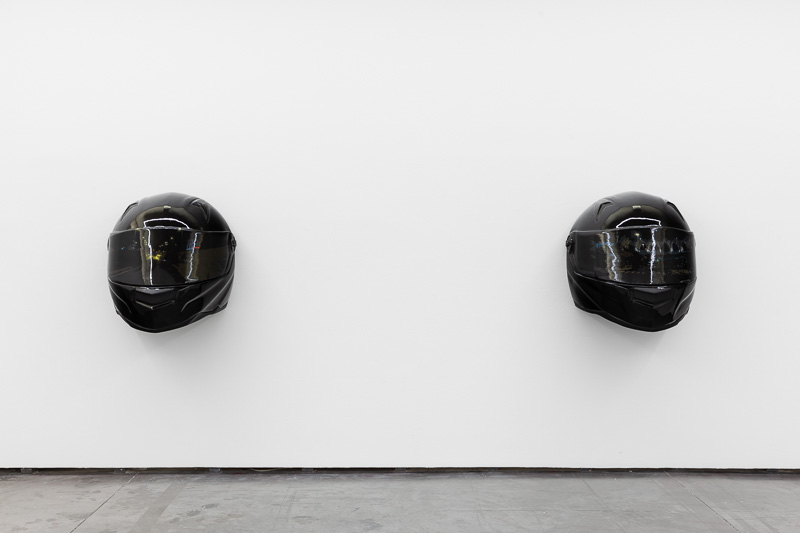
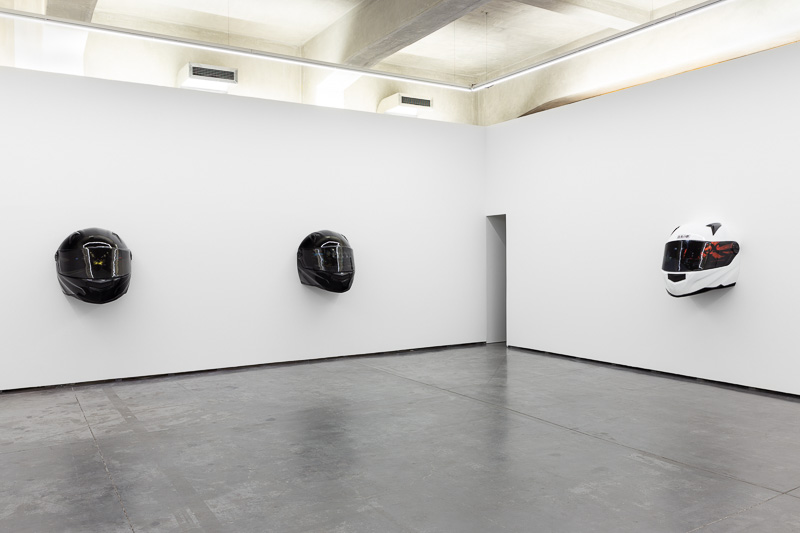
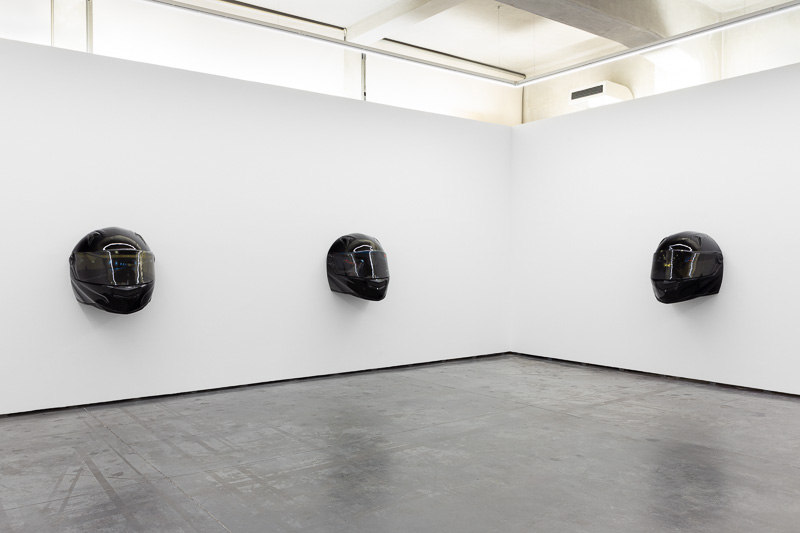
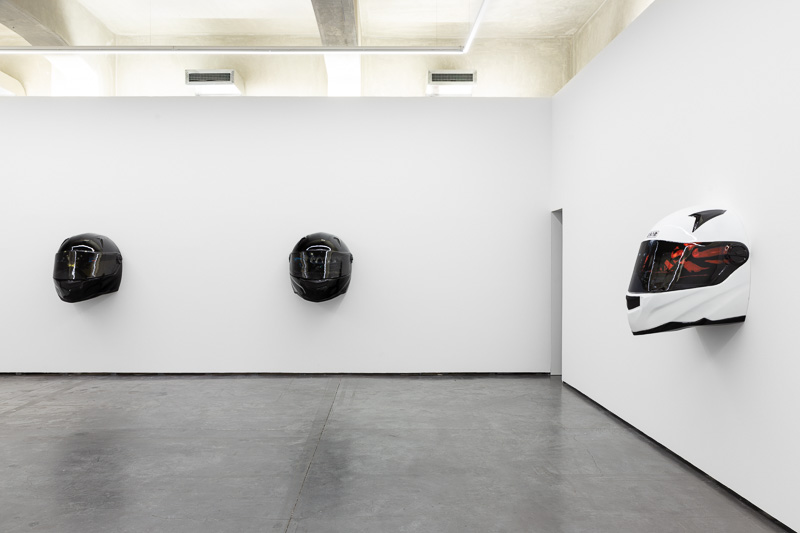
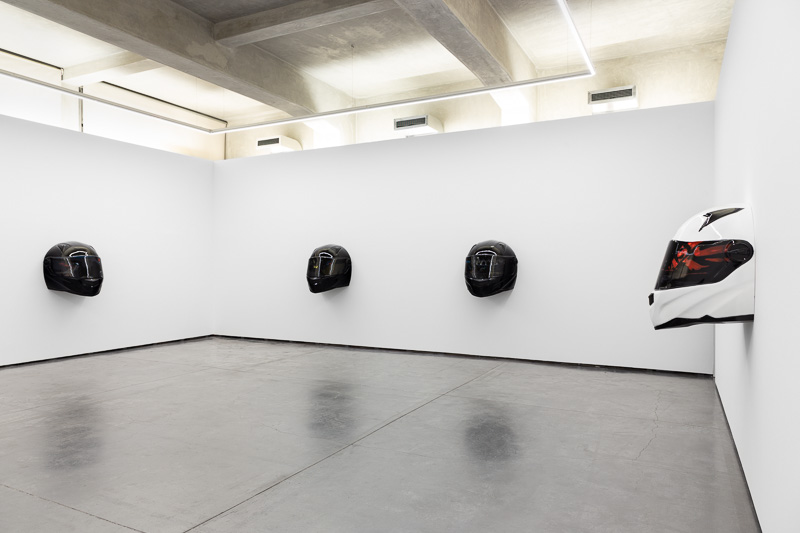
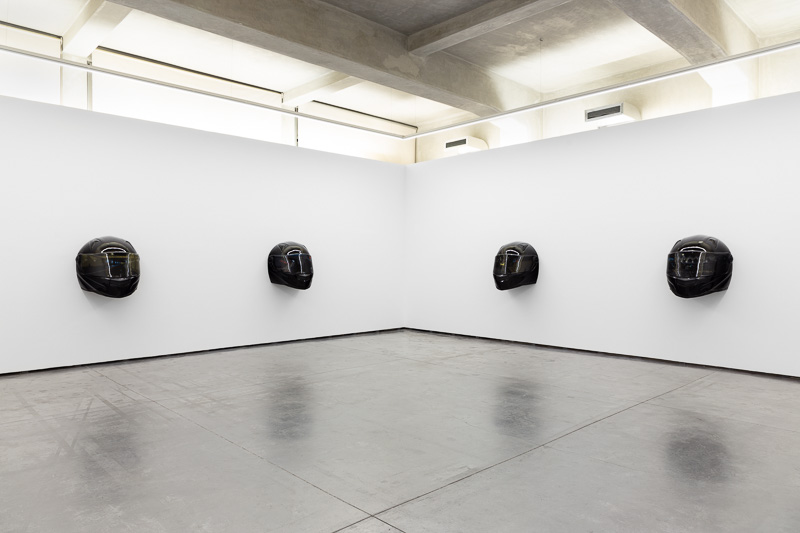
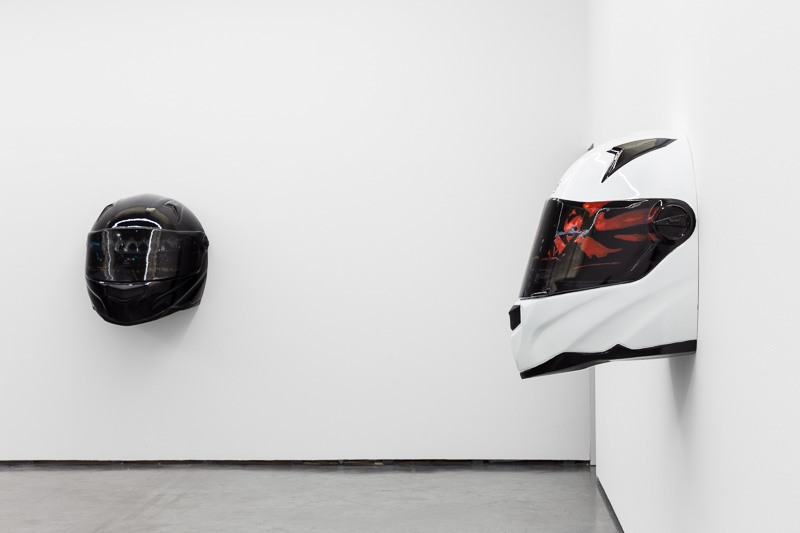
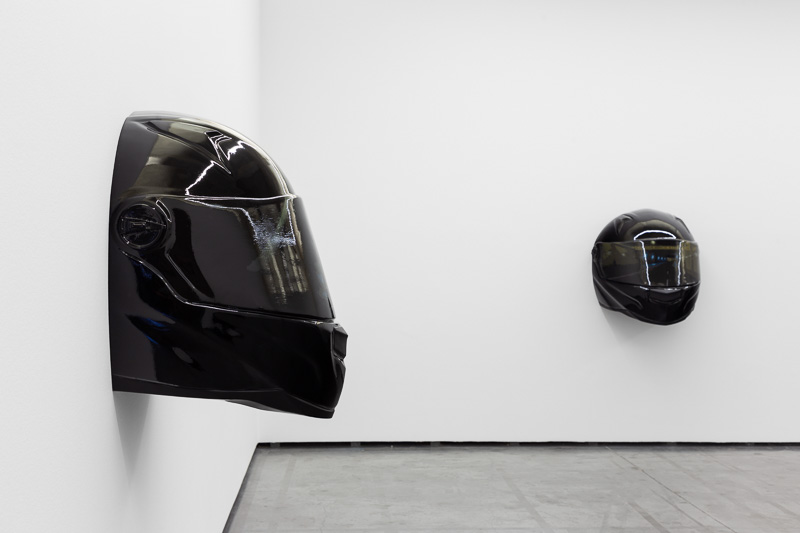
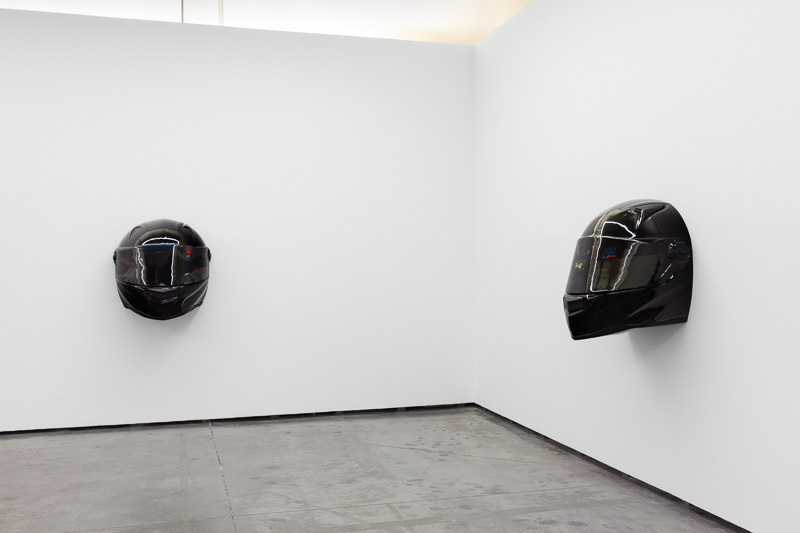
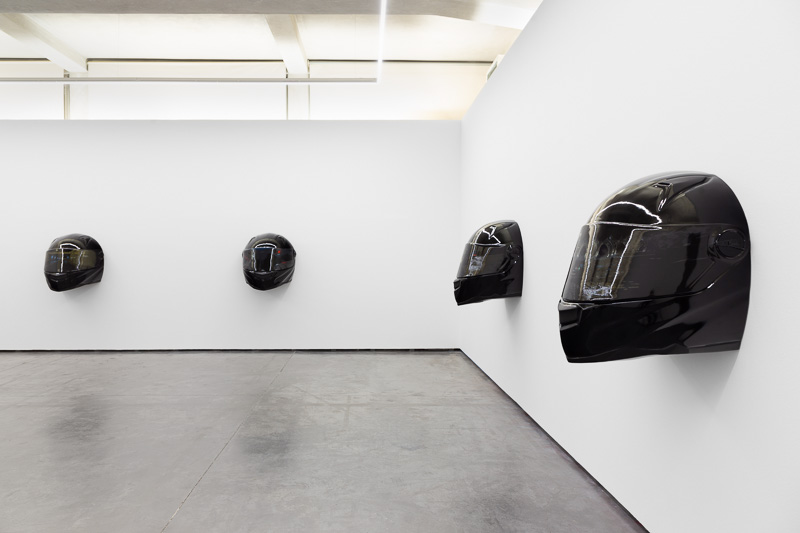
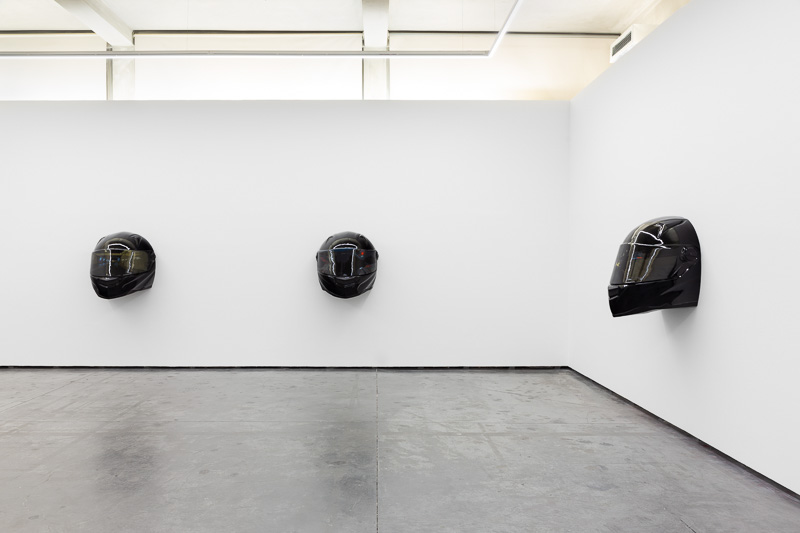
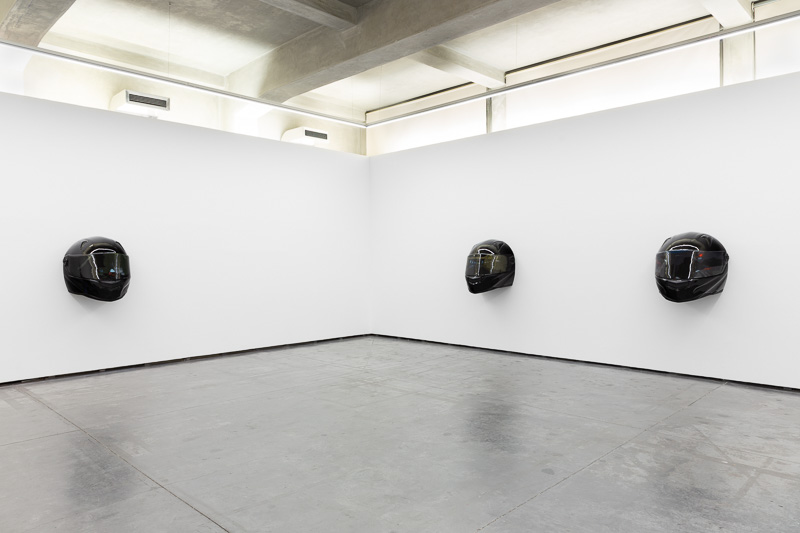
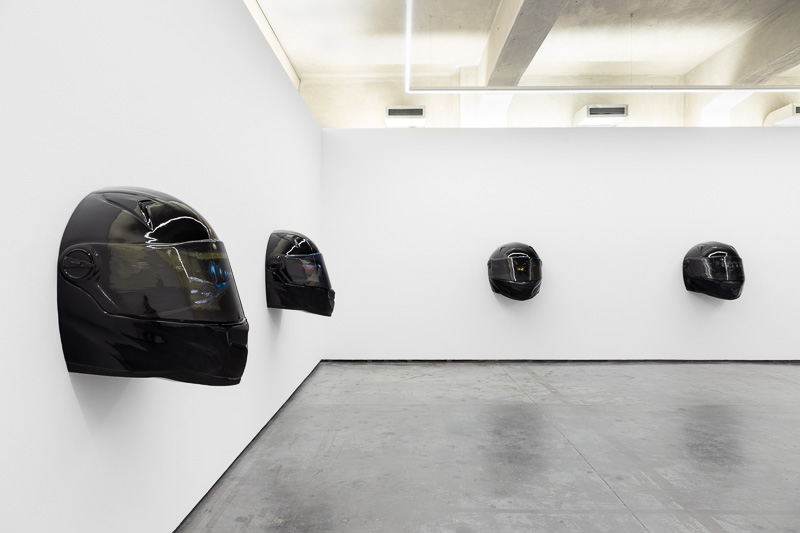
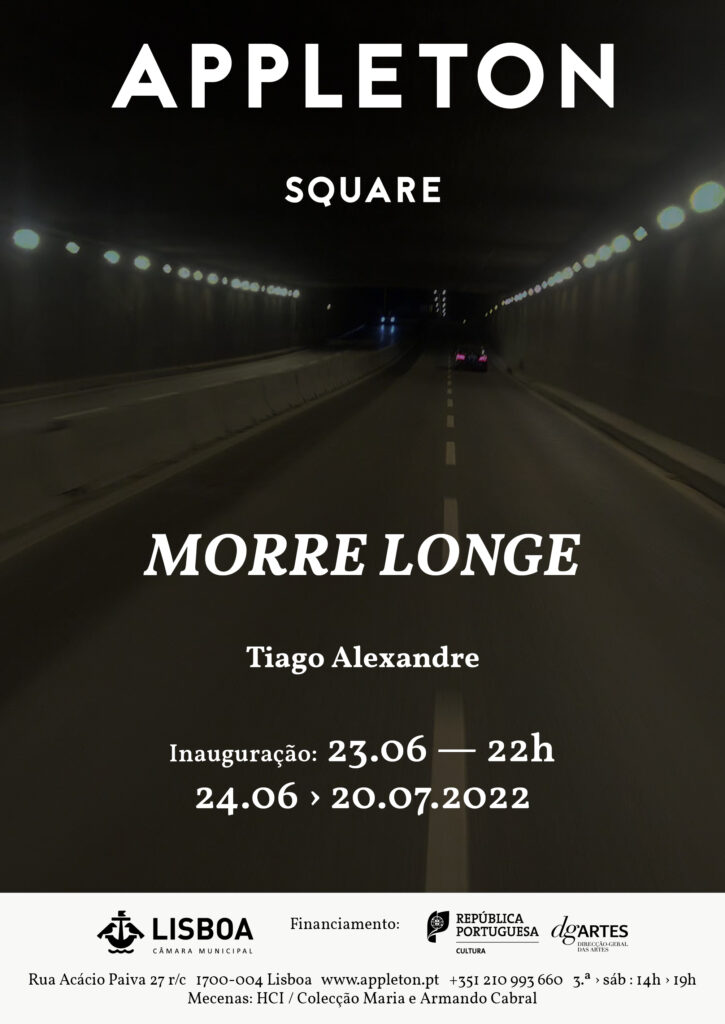
Six oversized motorcycle helmets are spread throughout the space. Each one has a painting on its front screen, the images depicted in the paintings come from video stills. The film, from which they are taken, Tiago Alexandre, explains was shot by himself sitting on a motorbike, speeding across town, from his home to the Lisboa Casino and back. Alexandre continues – ‘on the way there the ride is filled with life, adrenaline, frenzy, hopes and certainties. The way back is also at high speed, but desperation is the core feeling, together with shame and despair, the speed is now suicidal.’
Tiago Alexandre’s artistic practice takes inspiration in realities of everyday experience: street life, household objects, motorcycle culture, consumerism, are some of the subjects he non-willingly discovered and transmuted through many medias and experiments. His are works that mirror contemporary daily life. Understanding is the primary material and then plaster, paint and all other media he brings on board. Ultimately content is always the human imagination.
The helmets in a way, one can say, represent anonymity. Like a mask, they cover identity and blur personality, empowering the secrecy by hiding what lies behind. At the same time, they block what comes from the outside, noise, distractions, like a protective capsule, or an isolation artifact.
The works in this exhibition represent the frozen and suspended time, as well as anxiety, together with a longing hope. They reflect the denial of the nature of a compulsion that makes the work capable of being read as a story of modern estrangement. We love that which destroys us, because in that destruction we truly feel alive. We are constantly lost between the pursuit of pleasure, to which one risks life, character, and reason; and the desperate attempt to escape torturing (good and bad) memories and an ultimate sense of insupportable loneliness – felt by every human being at some point in life and finally, a dread of some strange looming fate – death of course, what else?
Hope comes through in a small sticker that the last helmet in the exhibition holds, in Japanese language it reads: ‘The Swan Song’, a reference to an ancient belief that the white swan lives completely mute throughout its life but can make a beautiful and sad song before it dies. Obsession is a trait unique to human being, be there no doubts, for some more intense for others milder, but it does come to all at some point. The beauty is that we learn to live with it and through it, at high speed for sure – defying laws of gravity and with our helmets on.
~ Luiza Teixeira de Freitas



 /
/  /
/ 