Adelita Husni-Bey’s practice is developed around pedagogical processes and forms of play, where the methods and structures of collectivization around the topics of urbanism, labour, education, and law are experimented with. These often result in documental registers and installation formats of collaborative co-creation. Working with different societal groups, among them students, schoolchildren, activists, athletes, and others, her projects are the result of an intersectional dialogue with agents across various fields, where the commoning limits of politics are discussed and challenged. Through transdisciplinary forums and investigative workshops, Husni-Bey’s collaborative and research-based practice provokes a wider debate upon the conditions of labour, cohabitation and the ecologies of care. Participants in the workshops are part owners of the artwork and receive a share of profits in perpetuity.
Artist’s note about the work:
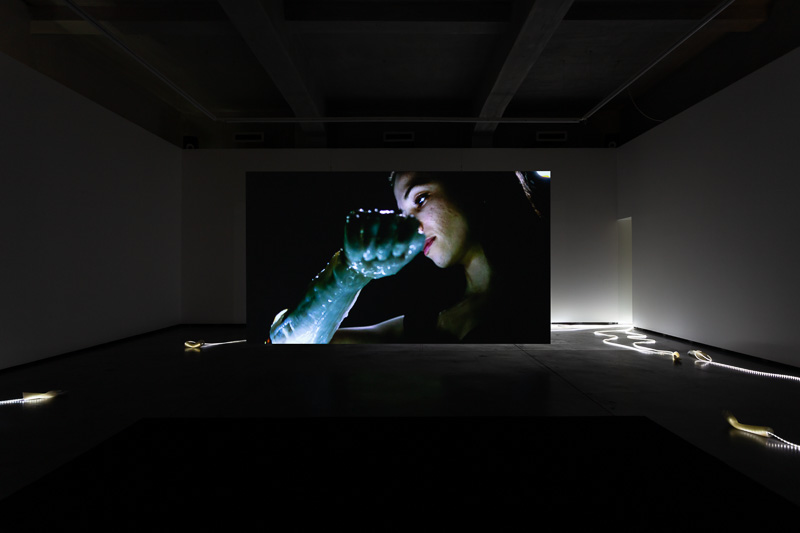
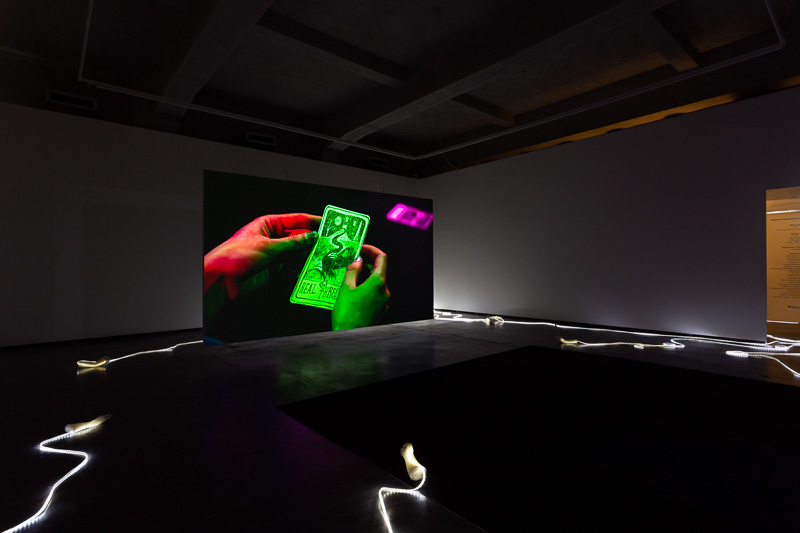
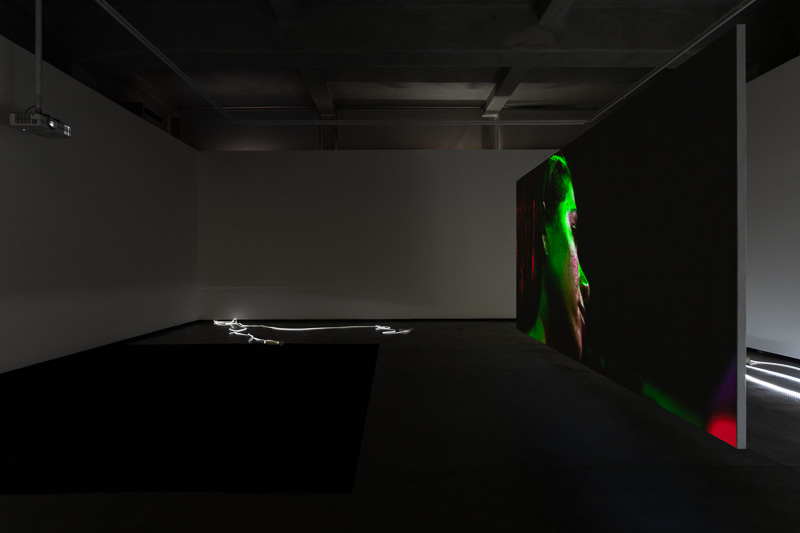
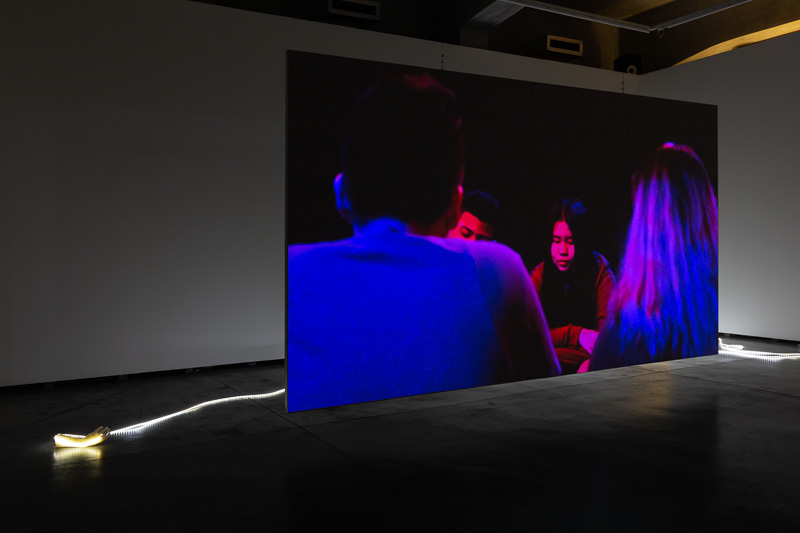
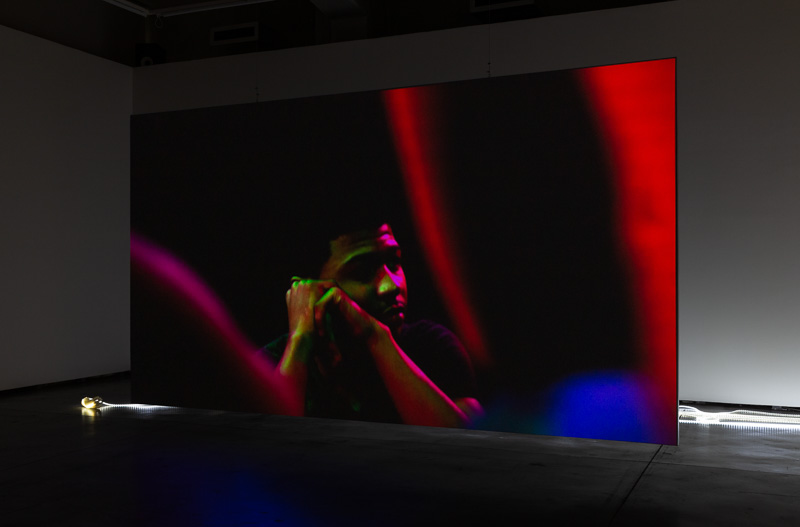
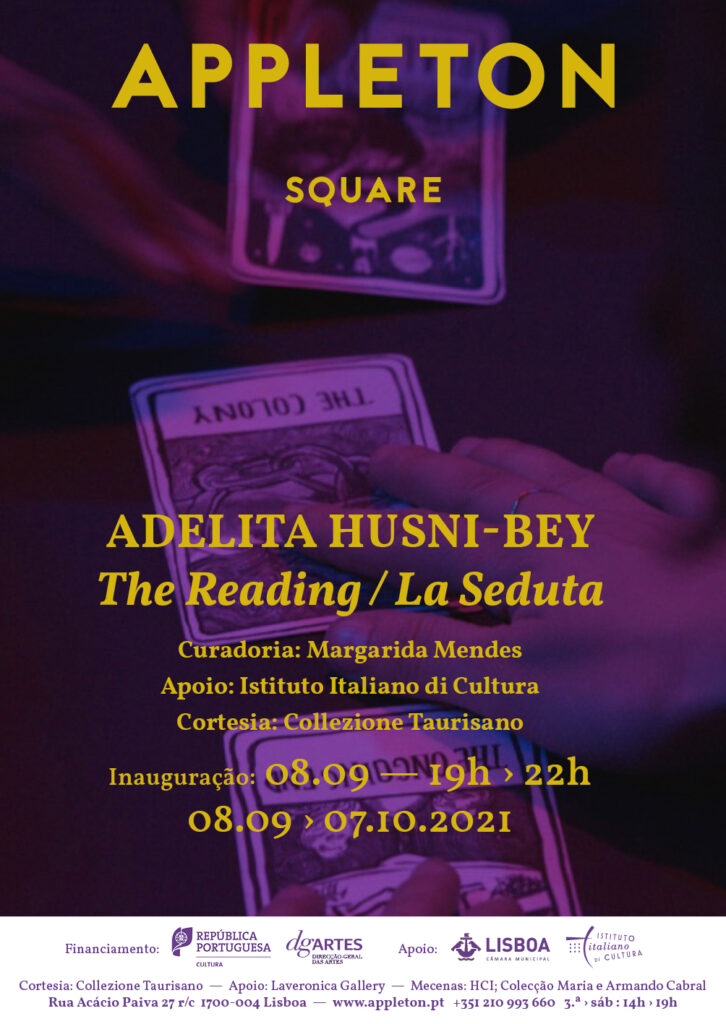
“Tarot reading could be construed a pedagogical practice, as the reader and the participants collectively develop a narrative to understand, analyse and overcome the obstacles presented to them by their question. “The Reading” chronicles a tarot reading session driven by a shared notion of protection and reparation, reflecting on the uneven distribution of the toxic effects of industrialization on social and ecological relations. In preparation for the tarot reading session theorists Hannah Black, Evan Calder Williams, Julian Noisecat and Elizabeth A.Povinelli were invited to elaborate, in dialogue with the participants, on the 10 cards created for the workshop: Extraction, Soil, The Ongoing End, Dirt, Vulnerability, Value, The Colony, Abstract Threat, Simulation, Real Threat. These themes were elaborated through research conducted on Standing Rock, the indigenous protest against the laying of the Dakota Access Pipeline north of the Standing Rock Reservation, carrying crude oil under the Missouri River, but also reflect on larger issues, such as the permeability of borders, simulation and the function of different perceptions of threat. In turn the participants authored and performed a series of performative scores based on Theatre of the Oppressed exercises guided by the artist.
The cards reflect the operation of the Major Arcana in a standard tarot deck in that they illustrate an archetypal situation that readers have to interpret in relation to the card’s position and in relation to their chosen question. The way cards are spread ascribes a temporal or relational position to each card, such as ‘recent past/ present’,
‘how we see ourselves’, ‘how others see us’, ‘obstacles’, ‘hopes and fears’ and an ‘outcome’. The question, collectively chosen by the participants, was ‘what is our spiritual tie to the land?’ and in turn generated debate around what ‘land’ one was referring to, who this ‘we’ constituted.
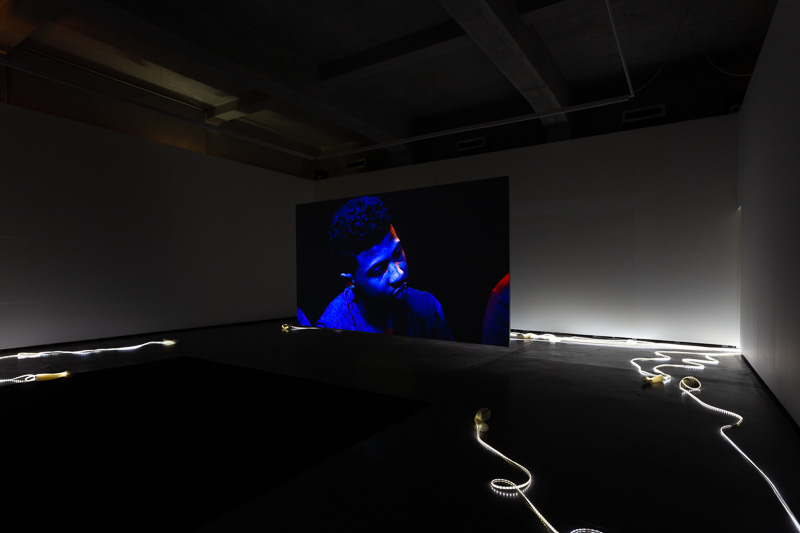
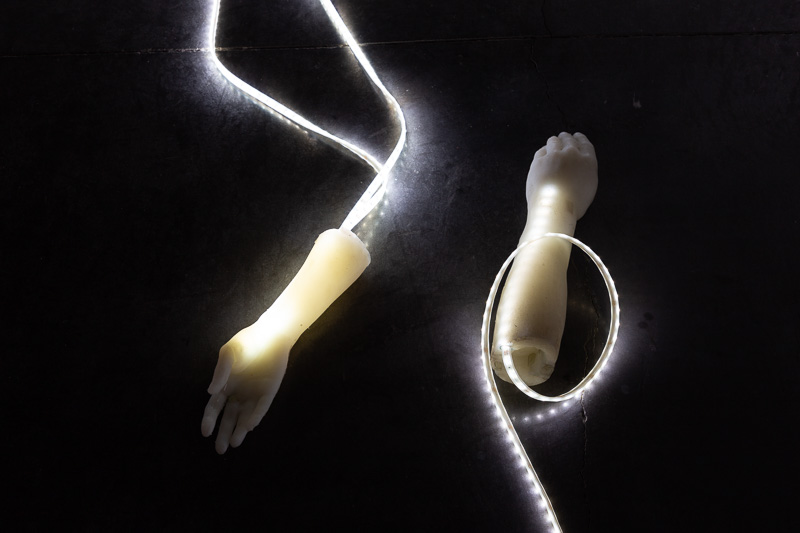
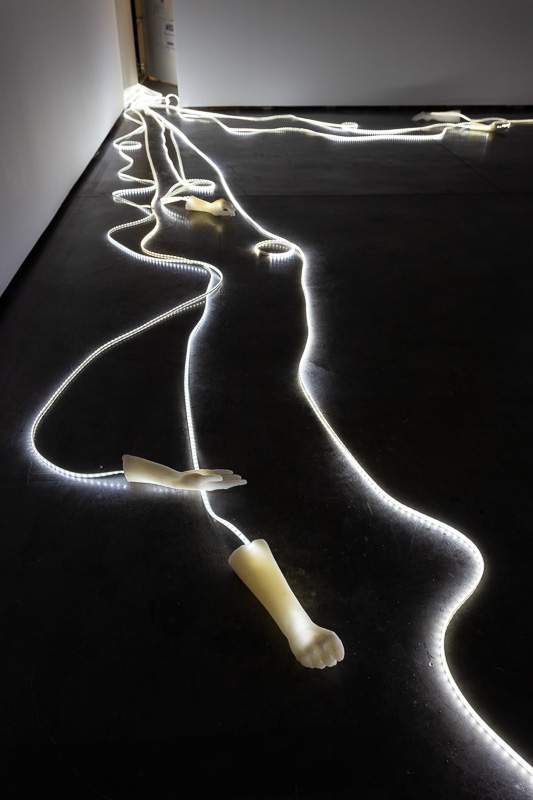
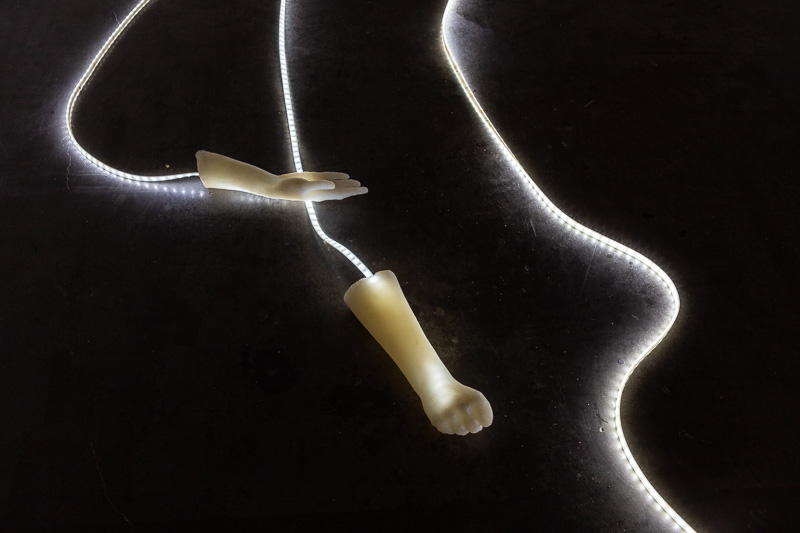
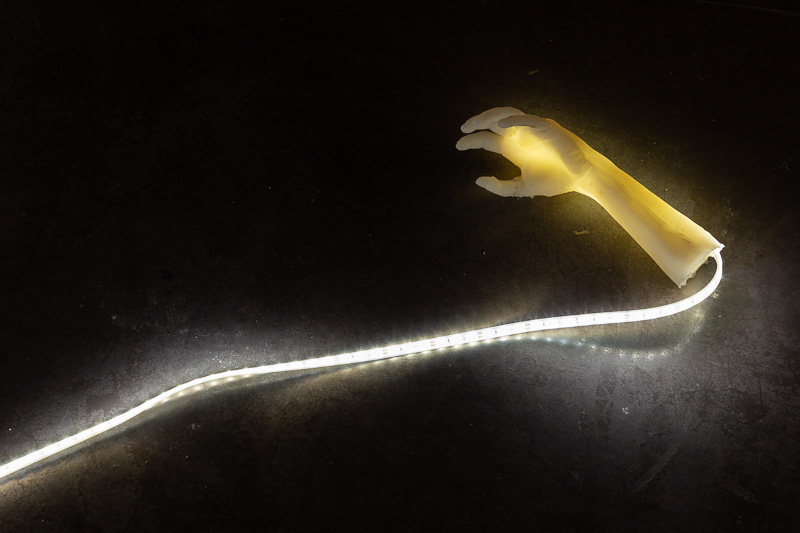
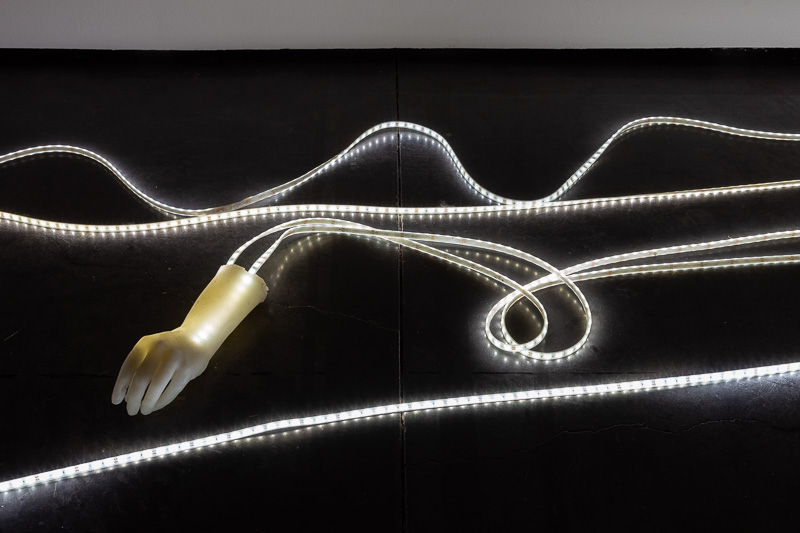
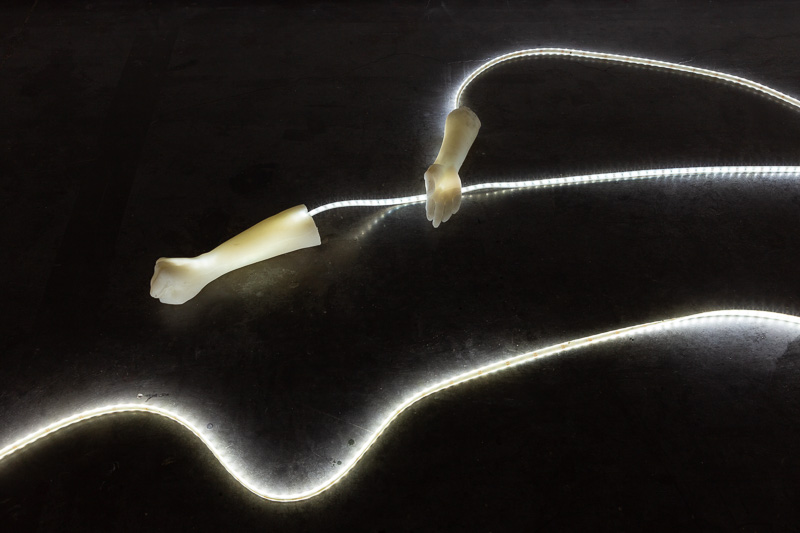
The silicone props snaking through the space were fabricated with everyday electronic components and echo the props used in the workshop and film, alluding to a future populated by technological prosthetics as extensions of the human body and its capacities.”
“The Reading / La Seduta” was commissioned for the 2017 Venice Biennale Italian Pavilion, curated by Cecilia Alemani on the topic of magic. When I first encountered it, the work strongly resonated with the challenges that Portuguese activist collectives were then having as they tried to imagine post-extractivist futures and struggled to cancel the sixteen fossil fuel drilling concessions that were planned along the coast. Today those concessions have ceased to exist, but new ones for lithium mining have been leased on the northern regions of the country, endangering the wellbeing of ecosystems. The economic recovery plan drafted for the country, while ceasing further investments on fossil fuels, has shifted its aims towards other forms of land and ocean-based mining, perpetuating the extractive rationale as an excuse to sustain the energetic transition.
To challenge the dominating economic models that encircle the present energy transition, acts of visionary planning and communal debate upon the archetypes and edifices of society are absolutely crucial. More than ever, forms of collective imagination and storytelling are needed, so that societal purpose is redirected towards reengineering earthly futures.
Biography of the artist
Adelita Husni-Bey is an artist and pedagogue interested in anarco-collectivism, theater, law and urban studies. She organizes workshops, produces publications, radio broadcasts, archives and exhibition work focused on using non-competitive pedagogical models through the framework of contemporary art. Working with activists, architects, jurists, schoolchildren, spoken word poets, actors, urbanists, physical therapists, athletes, teachers and students across different backgrounds the work focuses on unpacking the complexity of collectivity. To make good what can never be made good: what we owe each other.
Recent solo exhibitions include: White Paper: On Land, Law and the Imaginary, Centro de Arte dos de Mayo, Mostoles, A Wave in the Well, Sursock Museum, Beirut, 2016, Movement Break, Kadist foundation, 2015, Playing Truant, Gasworks, 2012. She has participated in Being: New Photography 2018, MoMA, 2018, Dreamlands, Whitney Museum, 2016, The Eighth Climate, 11th Gwangju Biennale, 2015, Really Useful Knowledge, Reina Sofia museum, 2014, Utopia for Sale?, MAXXI museum, 2014 and has held workshops and lectures at ESAD Grenoble, 2016, The New School, 2015, Sandberg Institute, 2015, Museo del 900, 2013, Temple University, 2013, Birkbeck University, 2011 amongst other spaces. She is a 2012 Whitney Independent Study Program fellow, a 2016 Graham Foundation grantee and has represented Italy at the Venice Biennale of Art, 2017 with a video rooted in anti-extractivist struggles.
The Reading / La Seduta, 2017, installation, 4K video, 7.1 dolby surround, 15:33 min, silicone and electronic components.
Workshop framework and tarot card design: Adelita Husni-Bey Workshop participants: Tina Zavitsanos (tarot reader), Gus Moran, Nia Nottage, Farhan Islam, Nudrat Mahajabin, Katya Dokurova, Char-lotte Lewis, Sandra Wazaz, Shao Lei, Amir Akram, Amanata Williams DP/ Producer: Charles Billot/Iniveway
Sound: Florent Barbier
Score: Eugene Wasserman
Editing: Adelita Husni-Bey
Video post-production: Laser Digital Film s.r.l
Courtesy Collezione Taurisano
Support Laveronica Gallery
Main Support Instituto Italiano de Cultura
Appleton is financed by República Portuguesa – DGArtes and Câmara Municipal de Lisboa



 /
/  /
/ 