Aquarelle: one can almost hear the brush moving across the paper, which seems to tremble at its touch, absorbing diluted pigment in successive, transparent washes. The word evokes an extended gesture of colour—light, fluid, almost suspended.
Perhaps it is precisely this promise of lightness that makes the encounter with Bruno Cidra’s works so unexpected. The sculptures and reliefs brought together by Appleton Square for his solo exhibition do not immediately reveal their origins in paper.
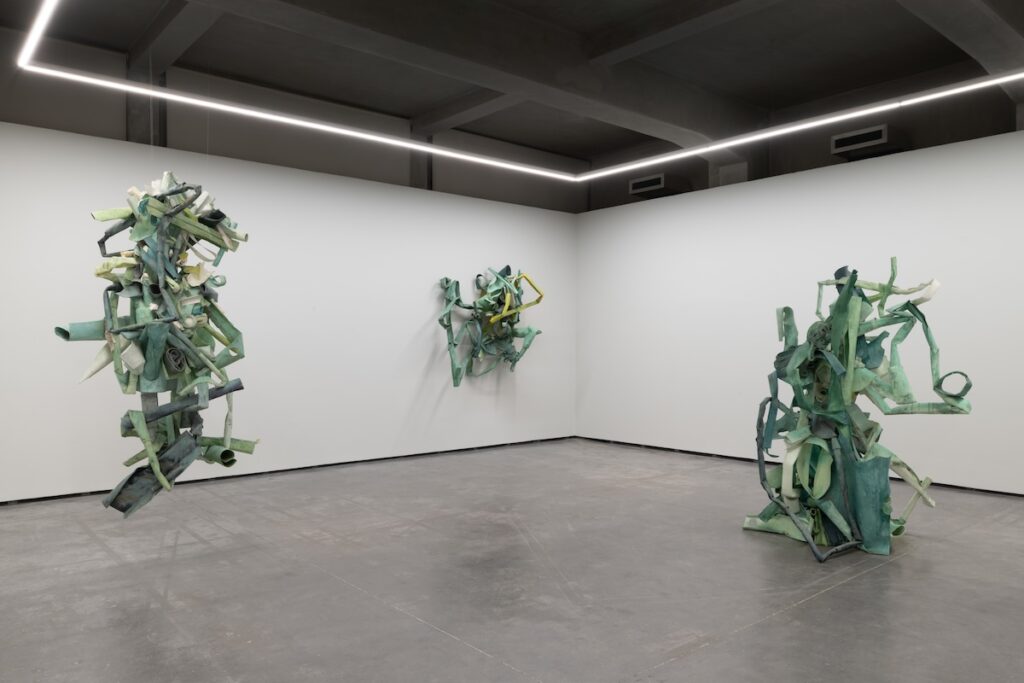
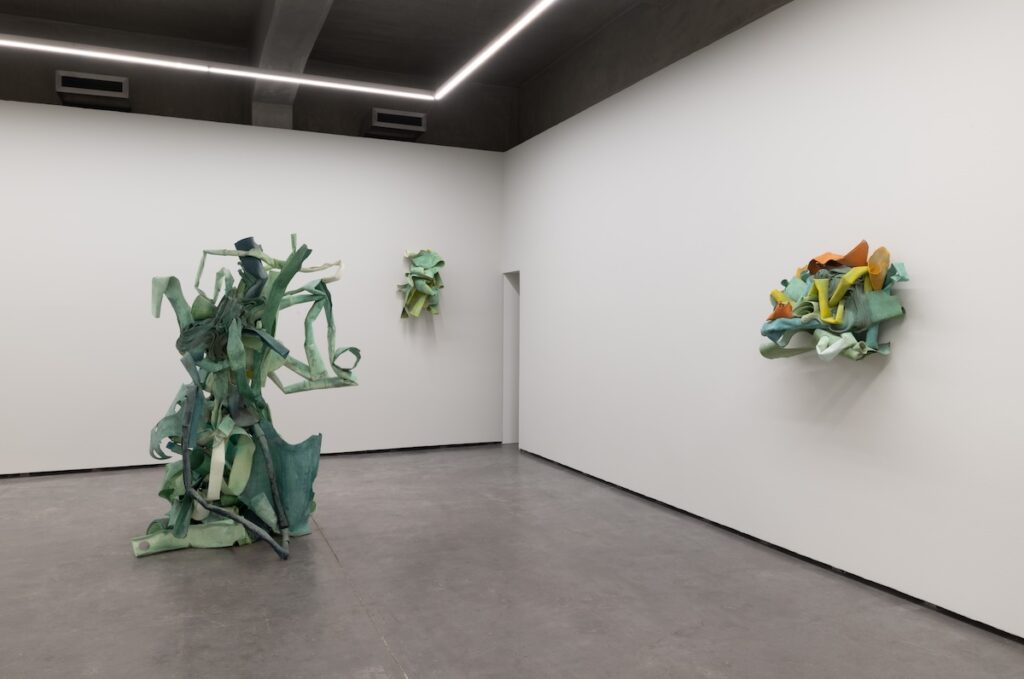
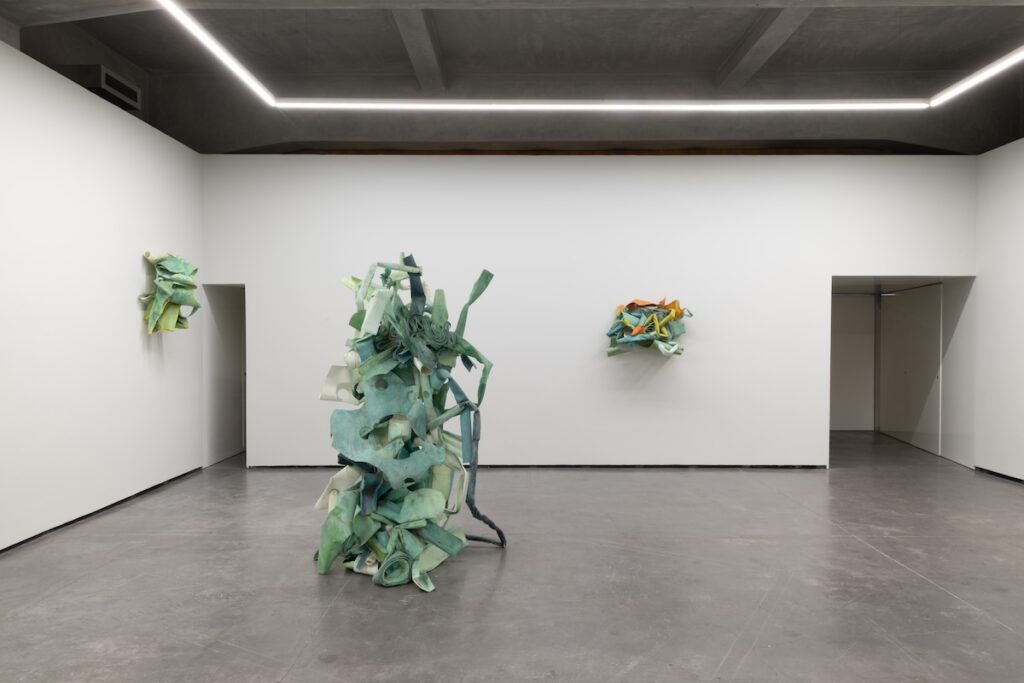
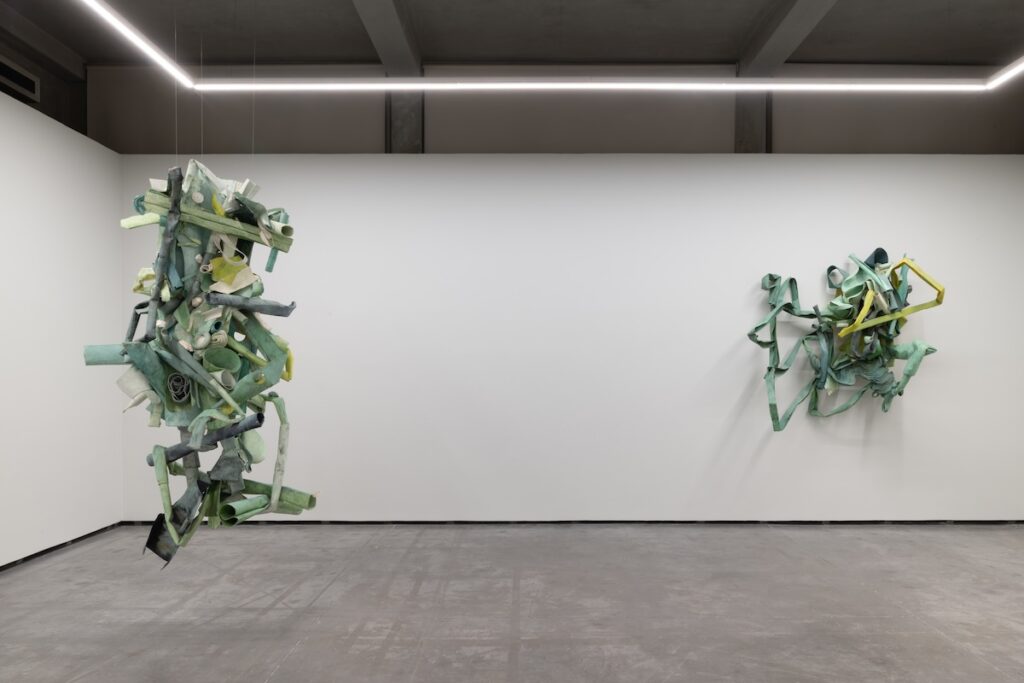
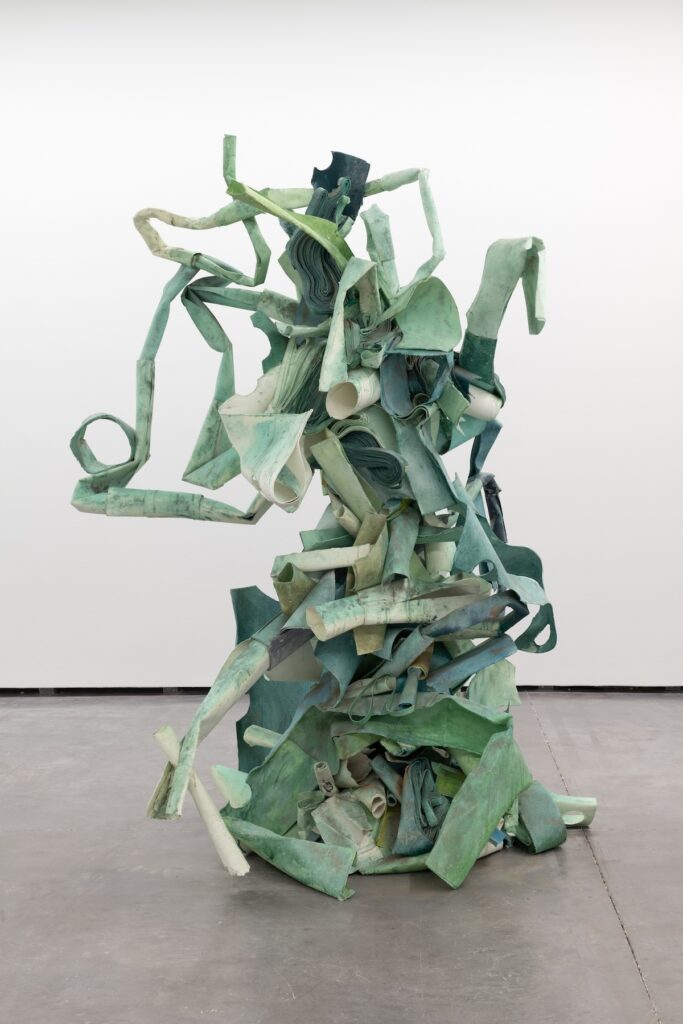
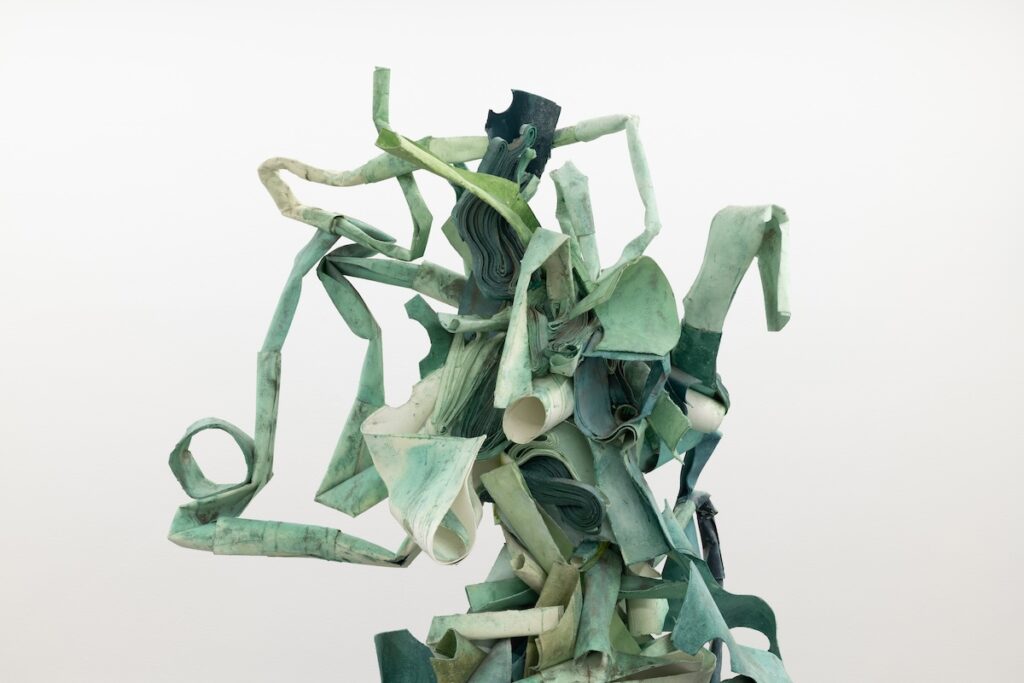
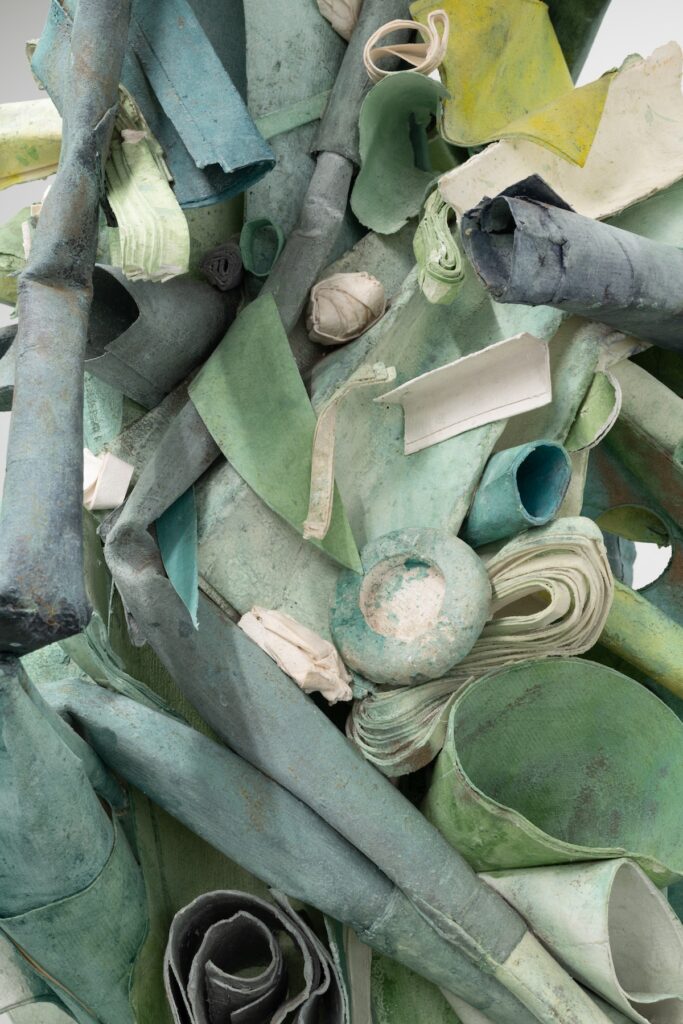
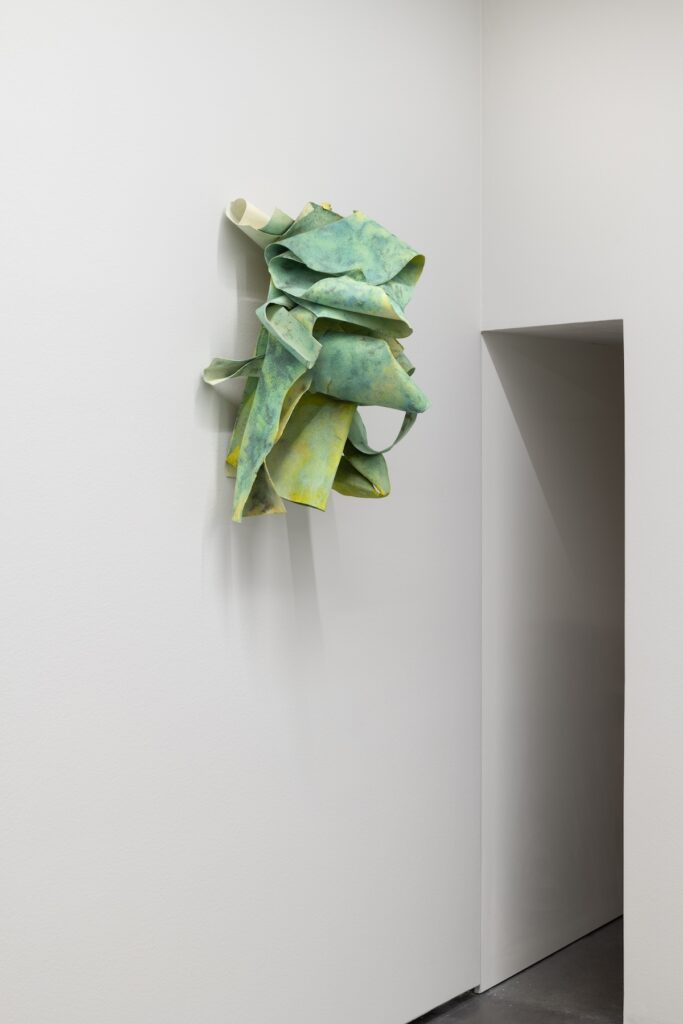
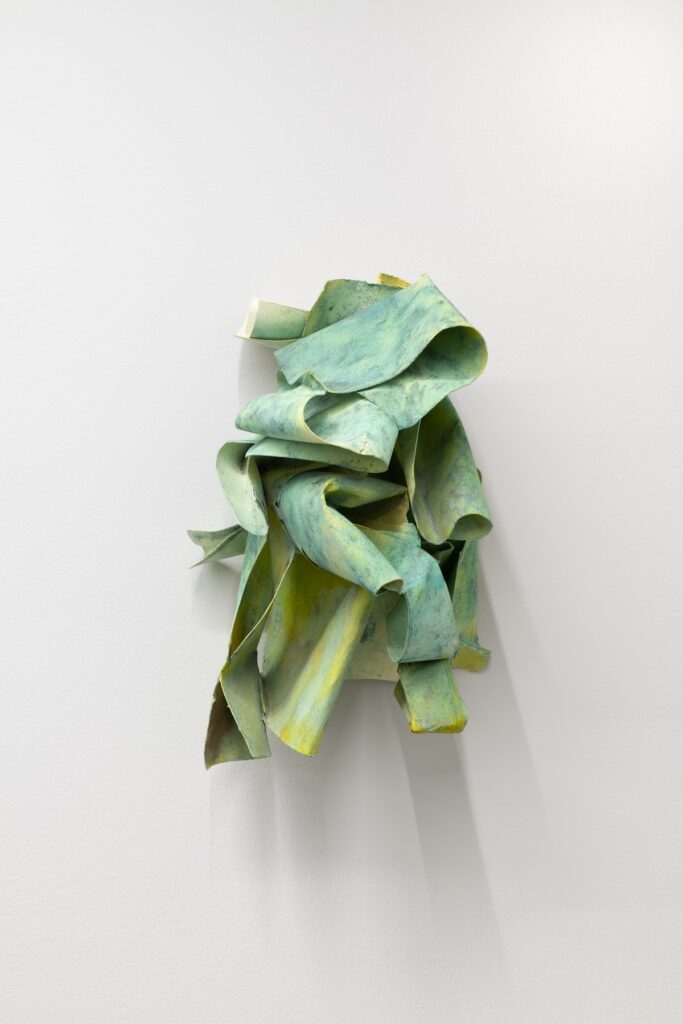
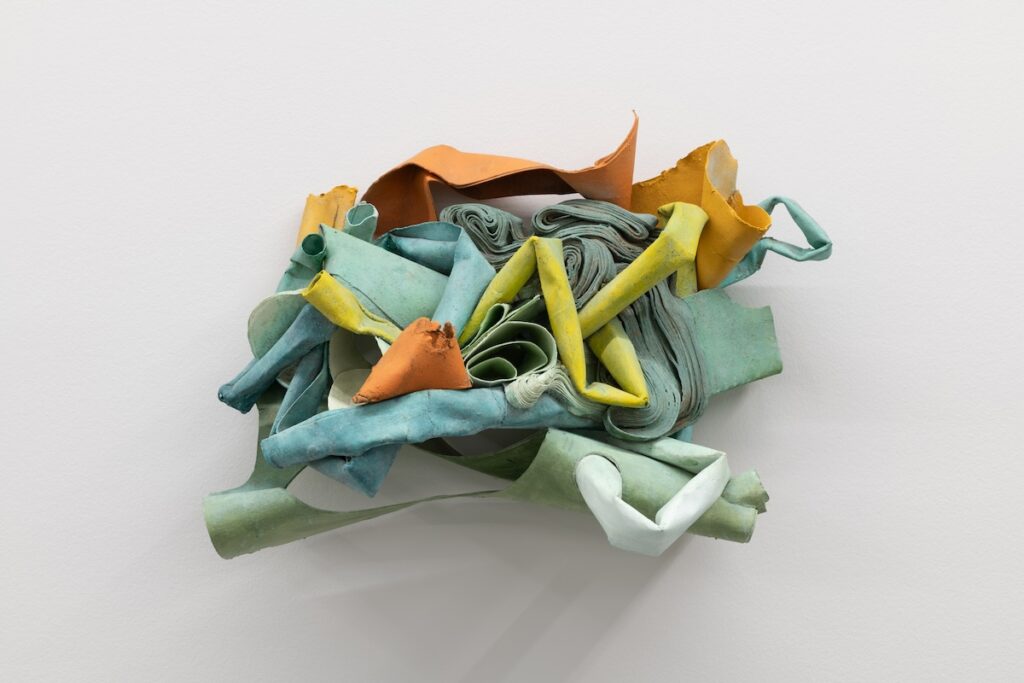
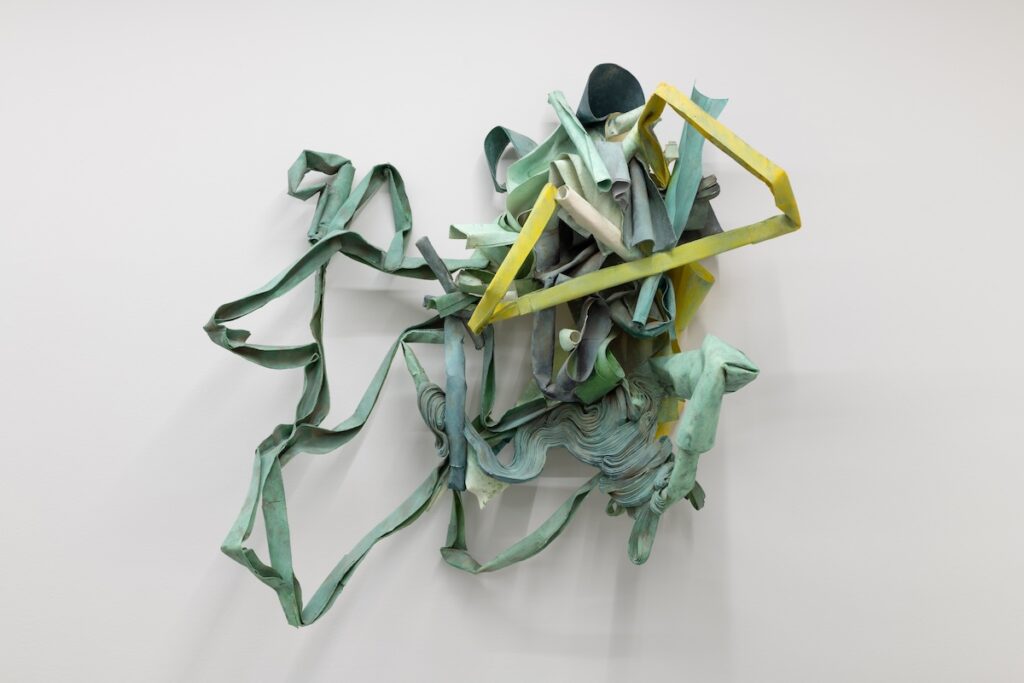
Made of papier-mâché, Cidra’s works transform the sheet beyond its two-dimensional condition. Soaked in glue, coloured, folded, cut, rolled, layered and joined together, paper acquires volume and resistance. A simple and fragile material becomes capable of producing complex, spatial structures.
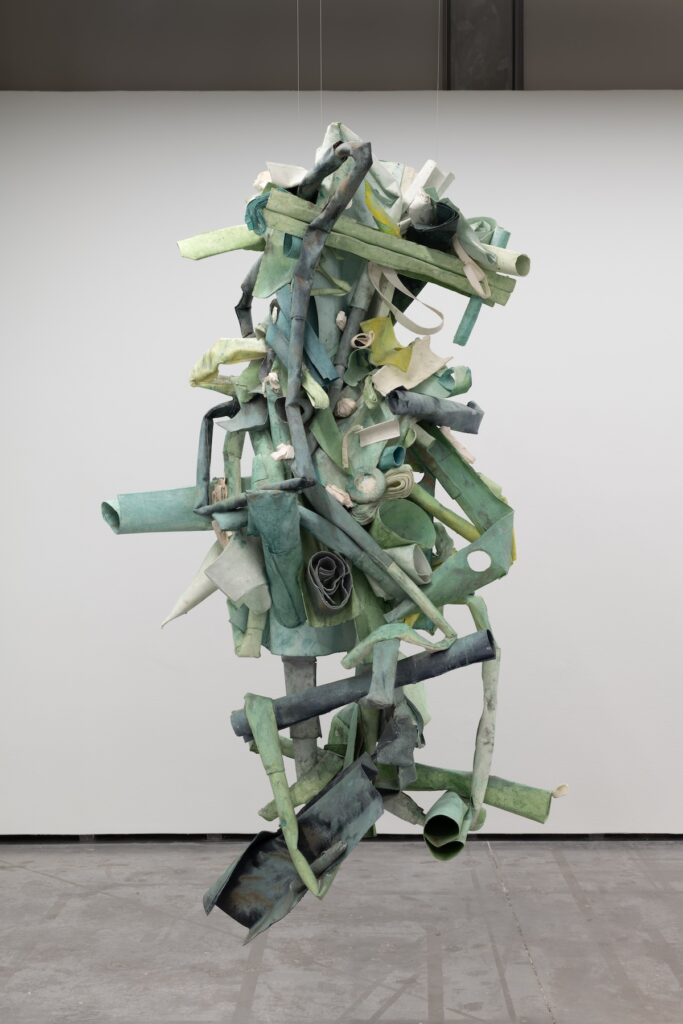
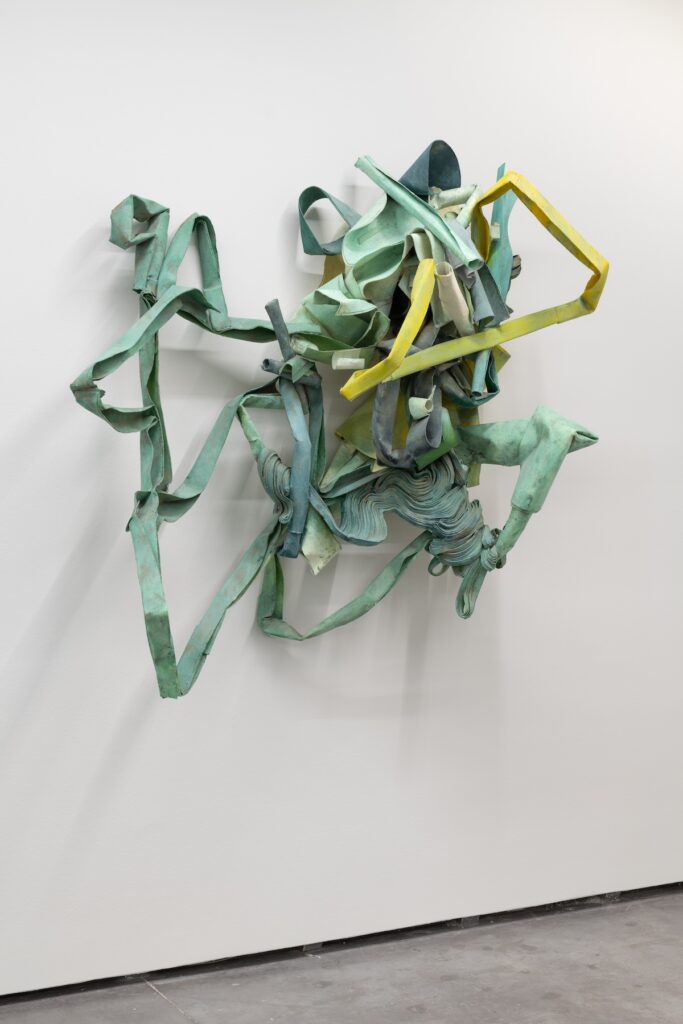
Some of the wall-based works extend into space as tangles of forms resembling pipes, fragments of objects or pieces of fabric, held together around centres of tension. Others take the form of large-scale sculptures, suspended or placed on the floor, whose structures unfold in all directions.
Cidra does not construct a figurative world so much as assemble an ambiguous repertoire of industrial forms: pipes and conduits, discarded materials, fragments of tools and implements whose original functions have been lost. Disassembled and reassembled, these elements become part of entirely non-functional configurations.
The restricted palette—a constant in Cidra’s practice—reinforces this mechanical imaginary. Greens, ochres, verdigris, browns and greys, together with the tubular forms of the sculptures, recall metals and oxidised surfaces. Yet the works are never entirely mechanical. Their curved lines, irregular accumulations and shifting balances also give them an organic, sometimes almost anthropomorphic quality.
It is perhaps this intersection between a mechanical or industrial imaginary and the biomorphic and anthropomorphic character of the larger compositions that brings to mind visionary figures imagined long before the birth of cybernetics. One example can be found in Giovanni Battista Bracelli’s unusual series of engravings, Bizzarrie di varie Figure (1624): fantastical human figures constructed from kitchen utensils, springs, boxes and chains. These imaginary, boneless beings—reduced to an extreme degree of schematisation—are striking not only for their inventiveness but also for their formal balance. Surprisingly close to modern robots, they have led Bracelli to be regarded as an unusual precursor to the experiments in deformation pursued by the historical avant-gardes.
Cidra’s sculptures are similarly poised between the mechanical and the organic. They may recall organisms such as plants and insects and at the same time imaginary machines and robots, yet they are produced through decidedly modest means: paper, glue, pigment and manual processes. Their apparent complexity emerges from folding, layering, joining and accumulation rather than from industrial production. Cidra’s futurist imaginary is constructed through elementary materials and the accumulated traces of manual labour.


 /
 /
