This exhibition primarily focuses on the significance of stone.
Stone is a solid and compact substance that forms rocks; it is also light, malleable, and capable of building meaning.
But, on the other hand, it also tells us about hunting.
The word ‘hunt’ comes from the Latin ‘capto’, which means to catch, to grasp. In Prehistory, our ancestors used stone as an essential tool for hunting, sharpening it to create knives and spears that guaranteed success in capturing prey. Inherent in this act of grasping is a predatory intention, of control, but conversely, of connection with one’s nature, physical or spiritual.
Eduardo Freitas appreciates duality, double meaning, and play. And it is no coincidence that ‘game’, ‘jogo’ in the Portuguese language, is also synonymous with hunting. The ancestry of the stone, an ally of hunters, is the point of this installation. ‘Kill two birds with one stone’ could be the invitation to now look at his ‘Natureza-Morta’.
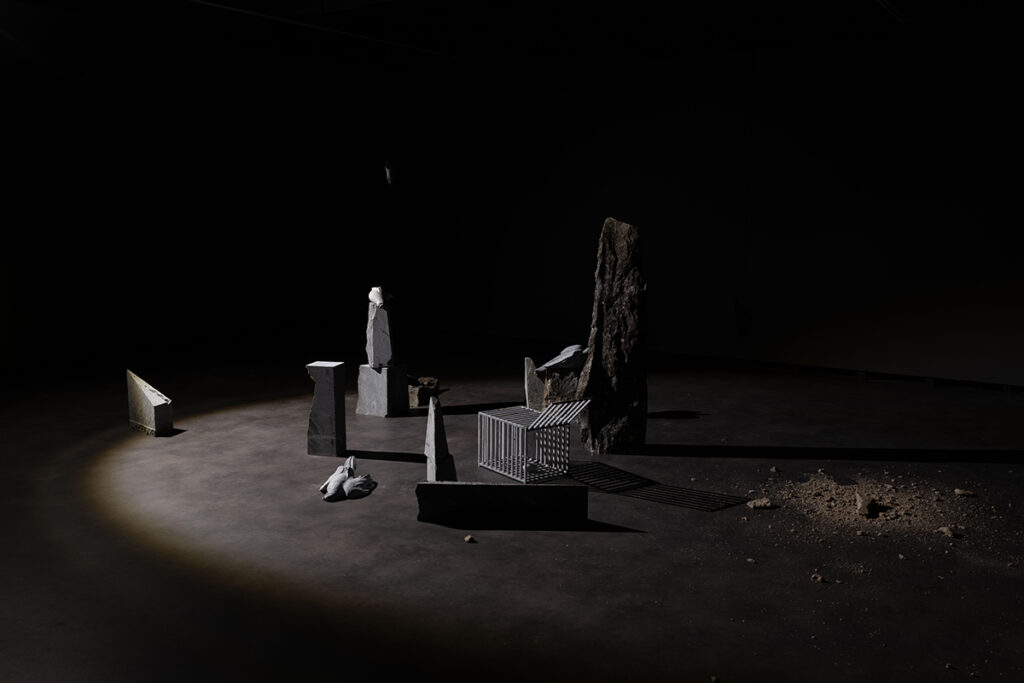
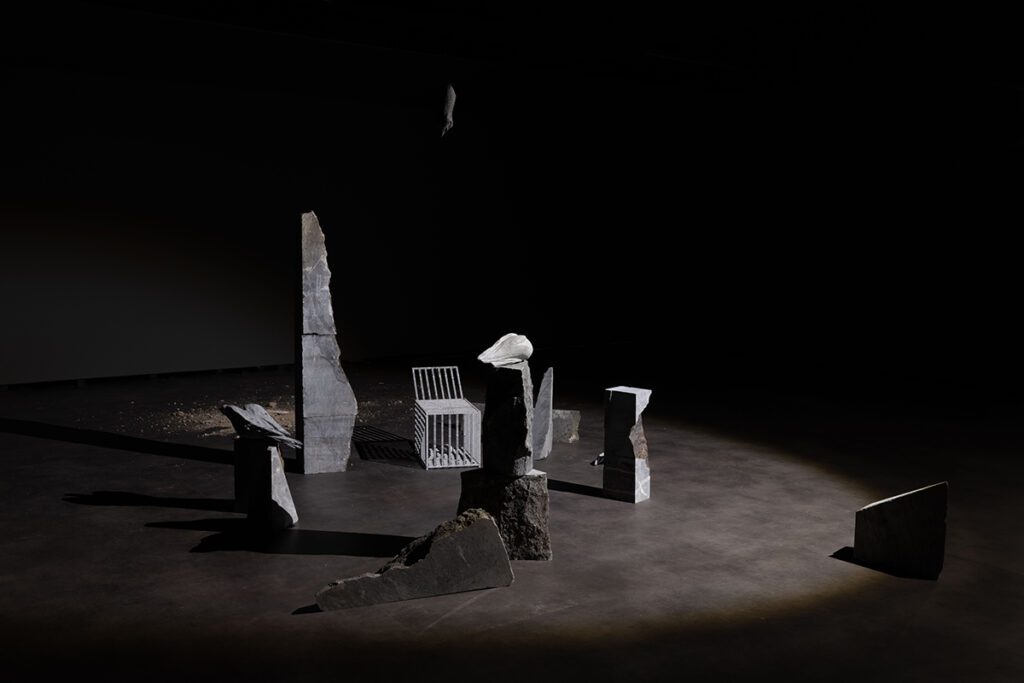
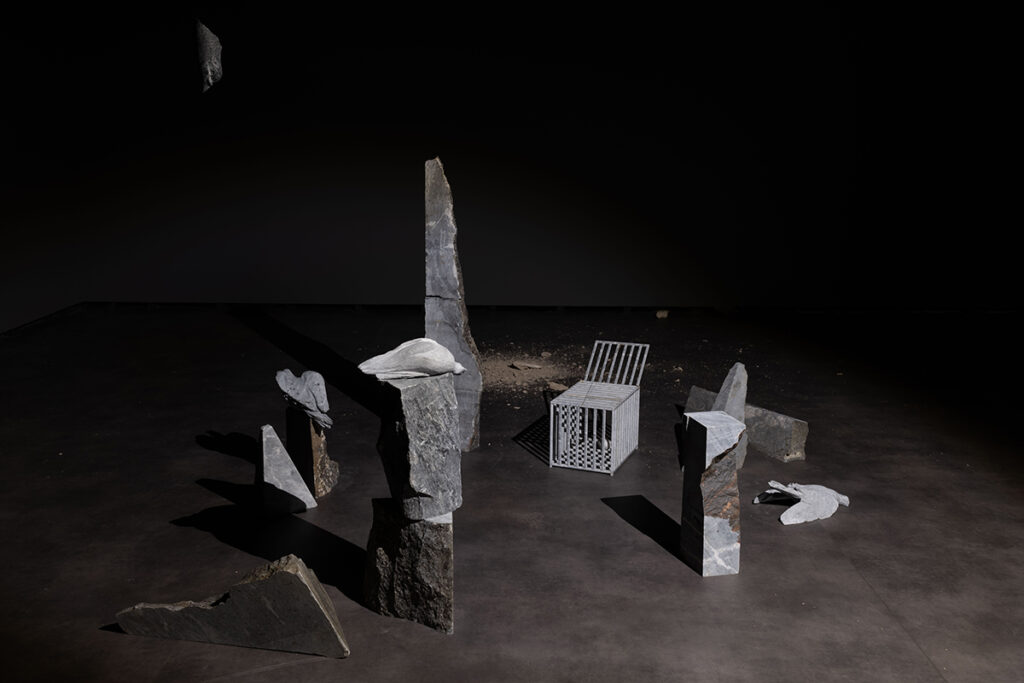
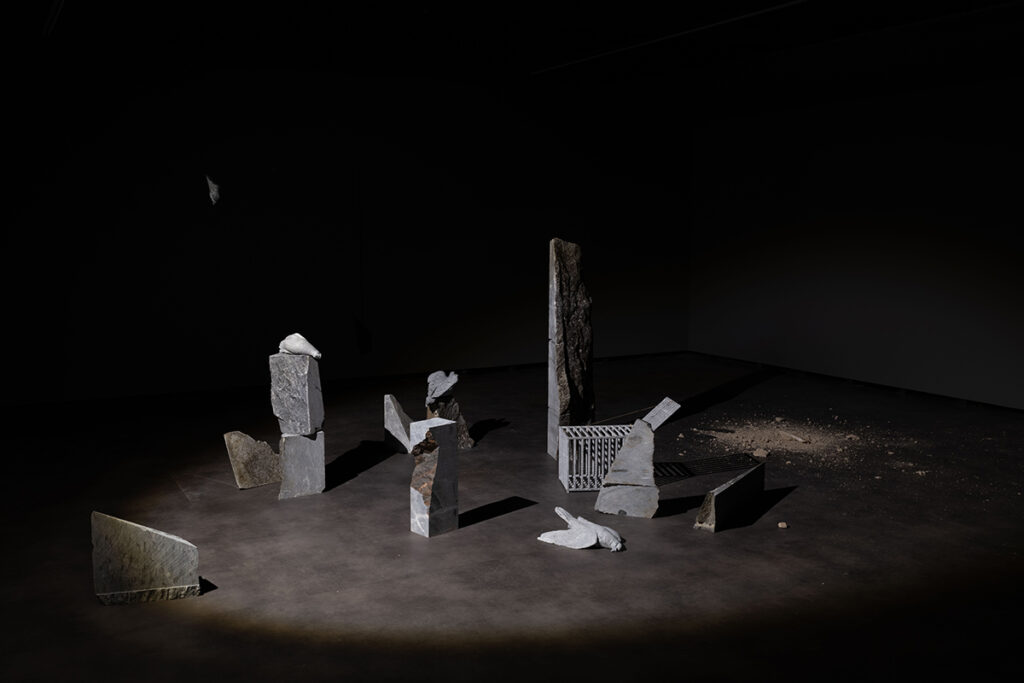
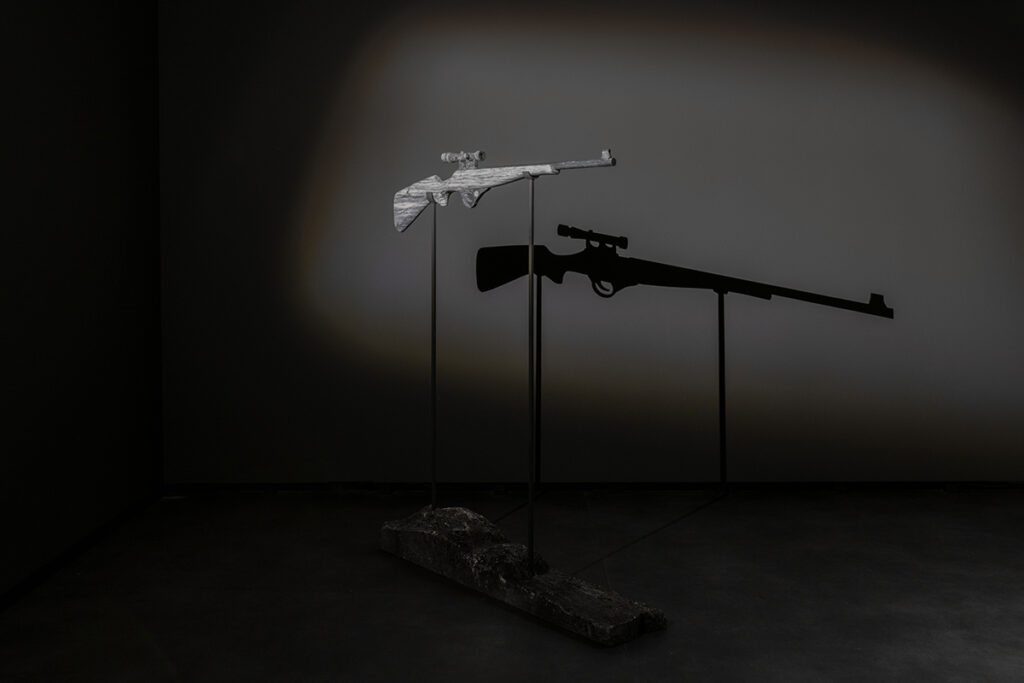
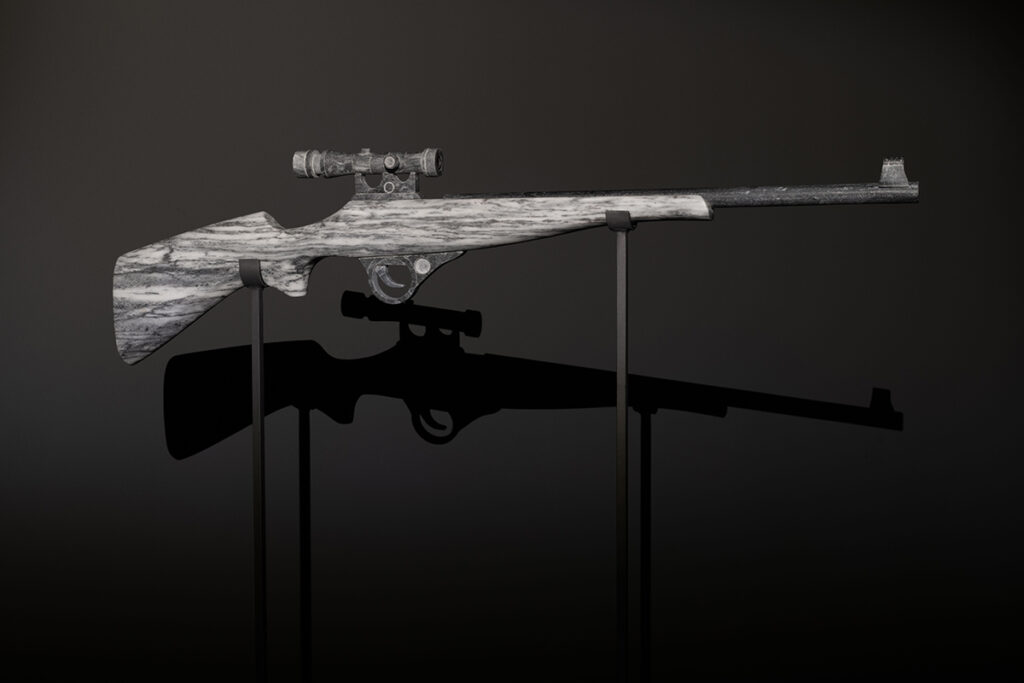
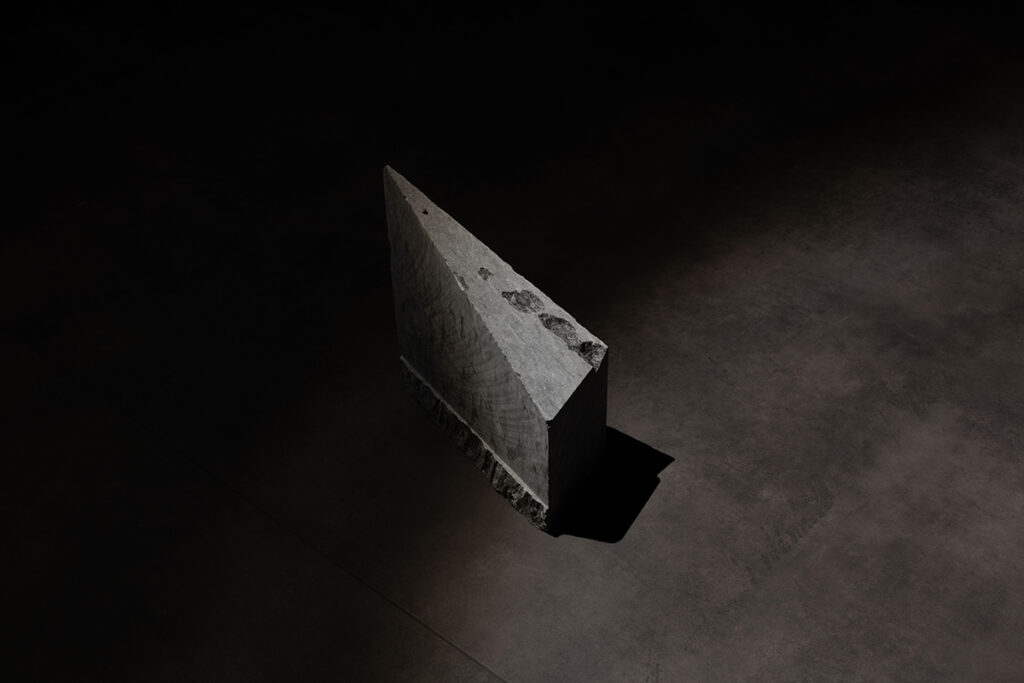
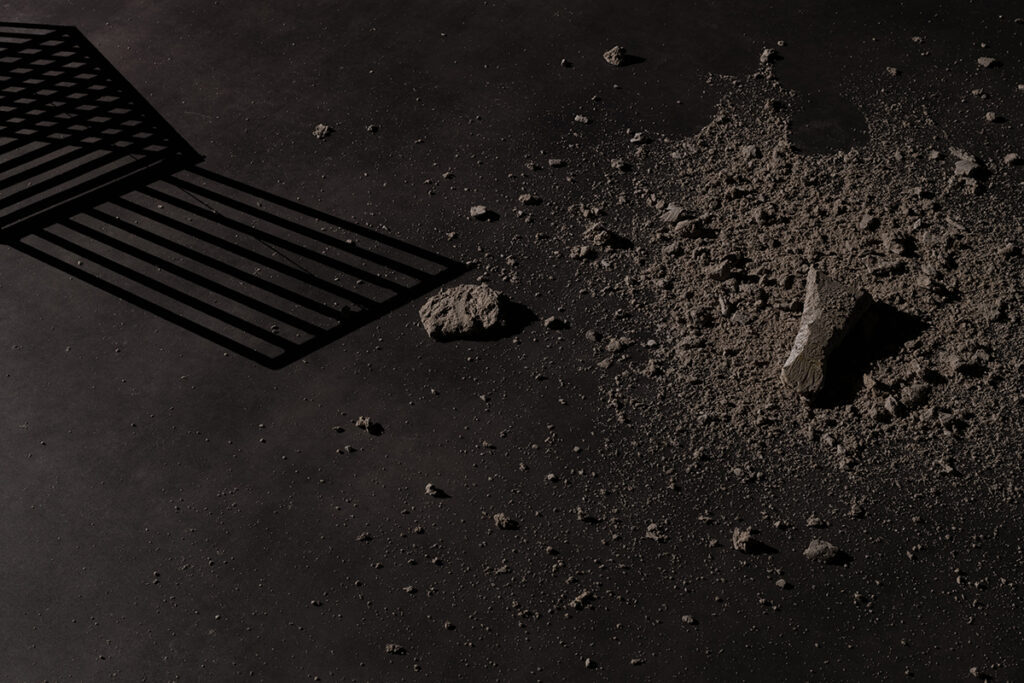
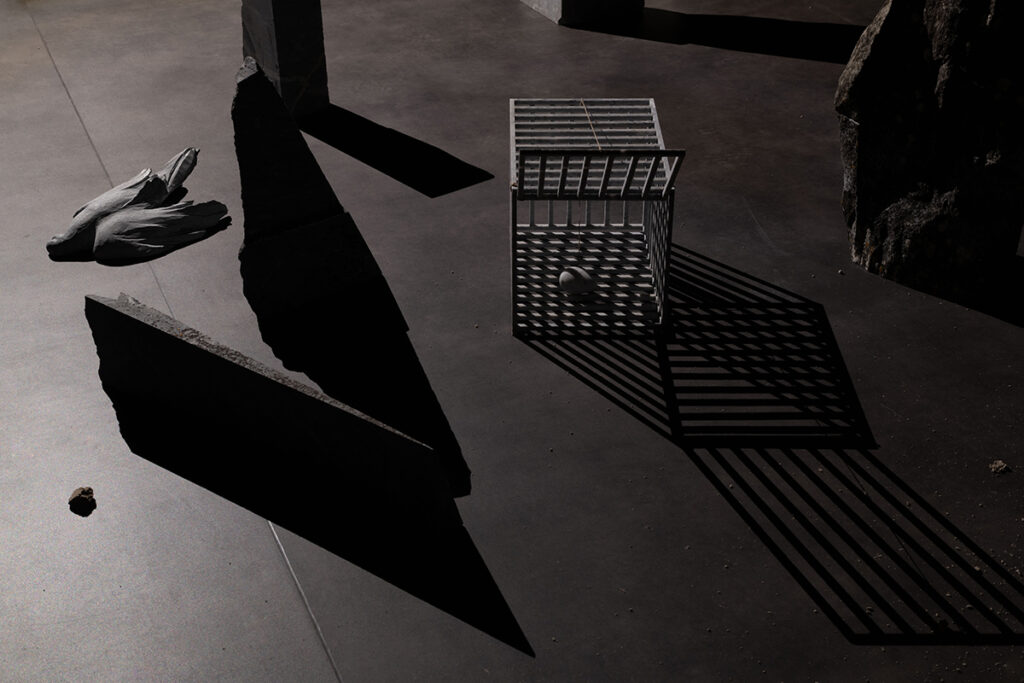
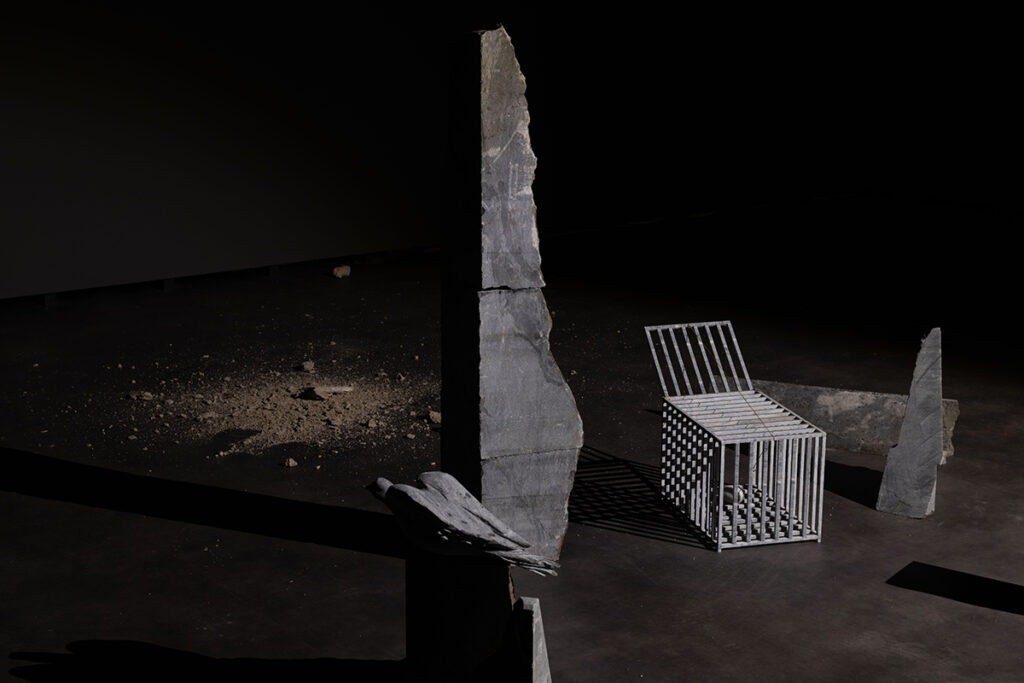
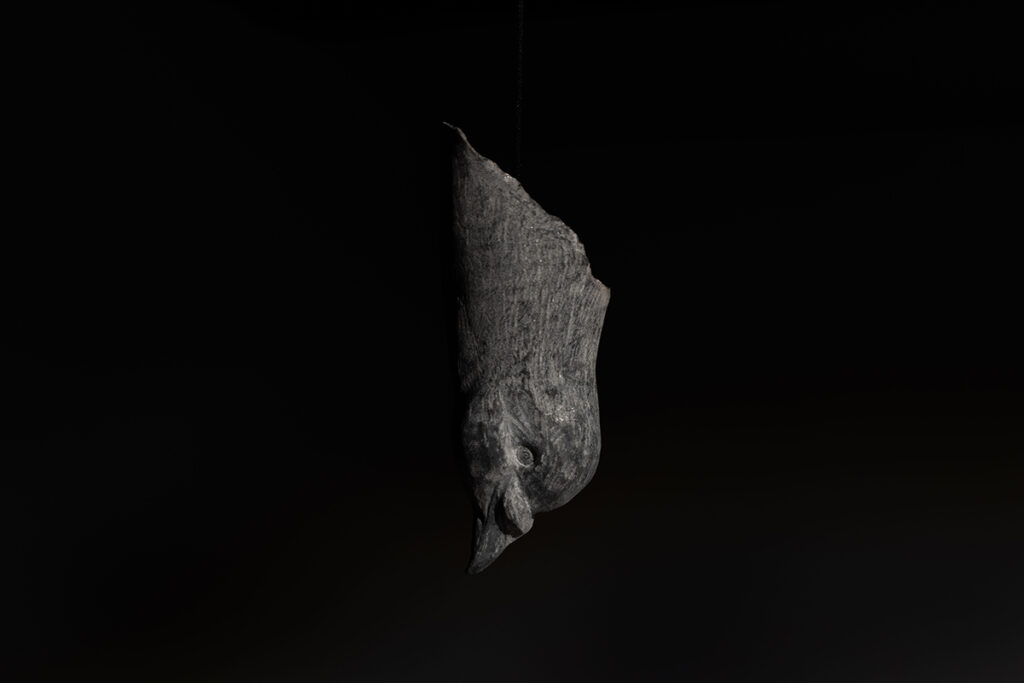
Natureza-Morta, 2023-24
Marble from Pardais, Vila Viçosa
Variable dimensions
‘Still Life’ was a recurring typology in Art. For centuries, it represented everyday life and its domesticity, while also serving as a valuable resource for studying composition, light, shadow, color, and texture in painting. As a portrait, it symbolizes a nature where human presence is absent. In this context, Eduardo Freitas proposes a reinterpretation of traditional genre paintings through stone.
Eduardo Freitas develops a comprehensive and heterogeneous practice, characterized by a consistent system of interdisciplinary research and experimentation. His works are always presented as a series of actions, creating a negotiated relationship between sculpture and performance. Eduardo Freitas’ current proposals could not be dissociated from a practice that he has been developing, in recent years, in the stone sculpture department of Pó de Vir a Ser, located in the old Évora Slaughterhouse.
The massive and sudden presence of pigeons in the former slaughterhouse began an exploration of the rituals and acts of ‘hunting’. For the exhibition space, he brought a set of stones that emerged from the ground and gained verticality. With the pigeons that invade them, they form a centrality that oscillates between the material and the immaterial. Every stone carries not only the history of its formation but also the imprint of the forces that shaped it. The ability to sculpt and manipulate the stone reveals an unexpected subtlety, in an evident contrast between the rigidity of the material and the lightness it expresses. In a predatory attempt to catch and seize, a dialogue and reflection on weight and gravity, as well as lightness and balance, emerges in this ‘Still Life’.
The creation project received support from the Foundation for Science and Technology and the Pó de Vir a Ser Association in Évora.
Eduardo Freitas (Brazil, 1990) Lives and works in Portugal since 2017.
He is a PhD student in the Contemporary Art course at the University of Coimbra (FCT Scholarship), and completed his master’s degree in Artistic Practices in Visual Arts (2019), at the University of Évora.
He regularly participates in both collective and individual exhibitions: XXIII Cerveira International Art Biennial (Cerveira, PT 2024); Planta de Emergência (Project With Scheduled Date and Time), Oficinas do Convento in partnership with Associação Pó de Vir a Ser, Osso – Associação Cultural e Maus Hábitos (Montemor-o-Novo, Évora, Caldas da Rainha and Vila Real, PT 2024 ); En.talho, Galeria Municipal (Montemor-o-Novo, PT 2024); Em.prego, La Junqueira Artists Residency (Lisbon, PT 2022); Tracing the Infrathin, Galeria Monitor (Lisbon, PT 2022); Em Tempos de Opacidade, Cultural Action Center (Maringá, BR 2022); Young Art Competition/Award Fundação Millenium BCP (Lisbon, PT 2020); Memórias Disruptivas, Museum of Contemporary Art of Paraná (Curitiba, BR 2019).
His work has been awarded numerous times, nationally and internationally. Among the artistic residencies he has carried out, the continuous collaboration with the Associação Pó de Vir a Ser (Évora) in recent years stands out.
Eduardo Freitas’ proposals explore hybrid artistic languages to address issues related to the body, work, materiality, tradition, and intersubjectivity. The artist, who in his childhood and youth, alongside his artistic studies, lived and worked in the restaurant industry, brings to his work the imagery of food, dining rituals, and the act of eating and cooking as artistic actions. From this perspective, Eduardo creates “sculptural actions” that enhance the connection between the public and his artistic practice, forging a link between his personal experiences and the memories, stories, and places of others.



 /
/  /
/ 