The future is not archived
Those familiar with Gisela Casimiro’s work will know that producing records is a constant in her activity as a poet and artist. Much of her output is based on observation of the everyday. This exercise may be a tautological impulse, but demonstrates how the artist adopts an archaeological methodology based on an aesthetic and civic awareness of the world around her. Gisela Casimiro is not unaware. On the contrary, through her collecting, she finds a means of establishing the narrative of her own poetics.
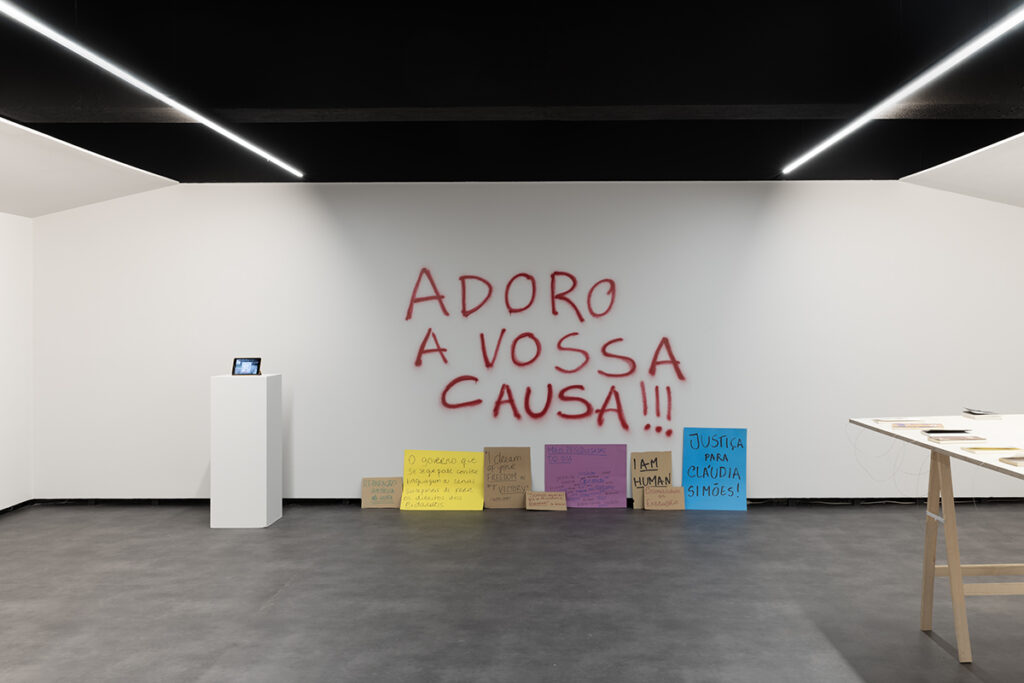
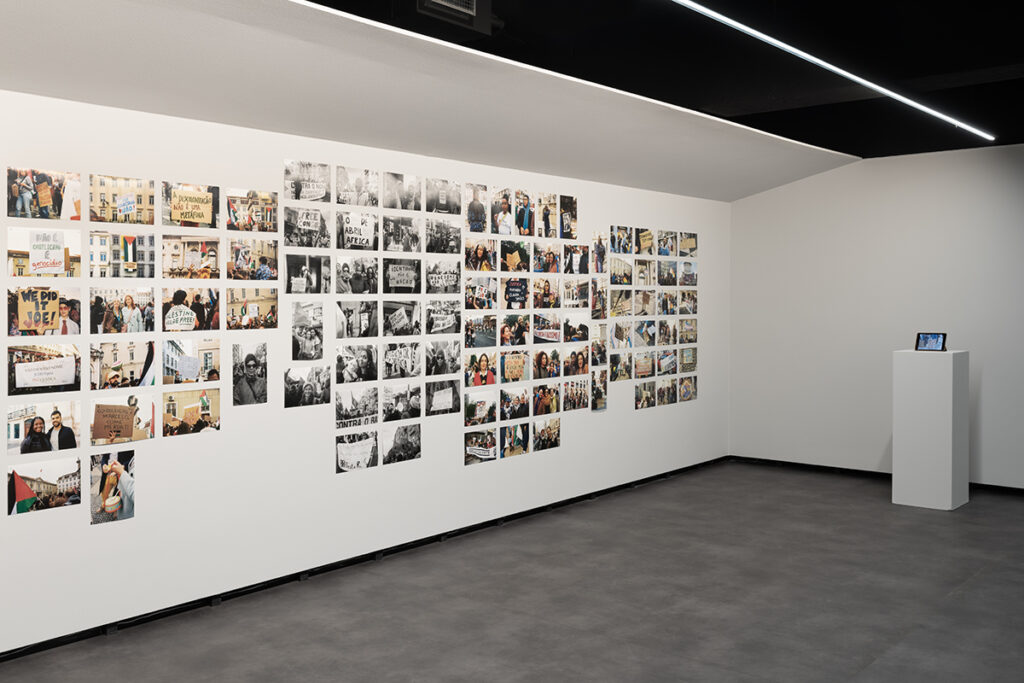
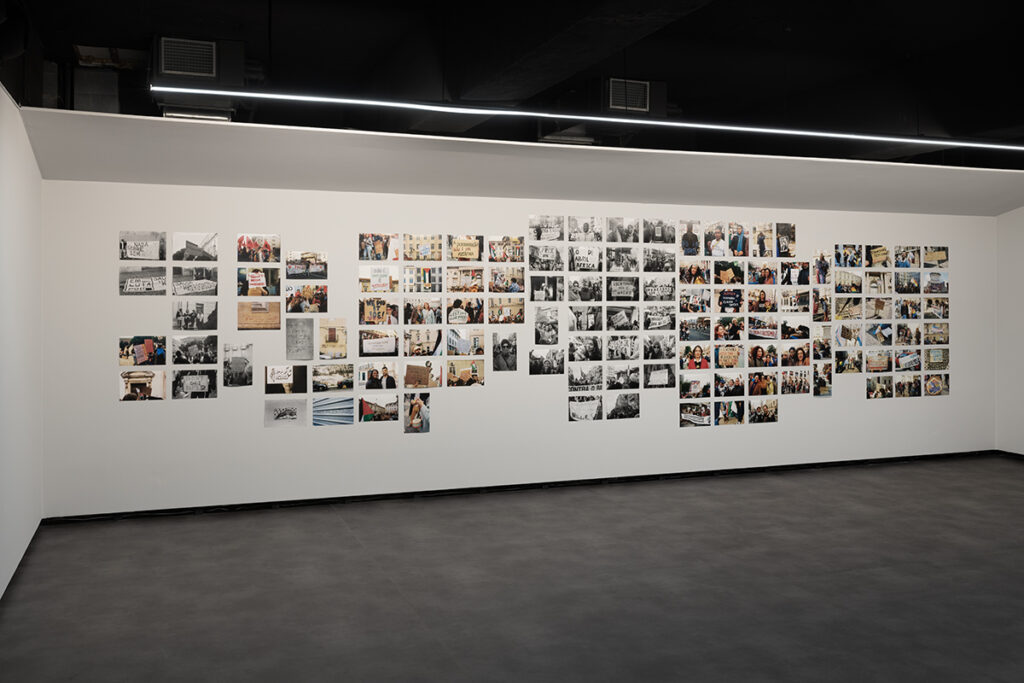
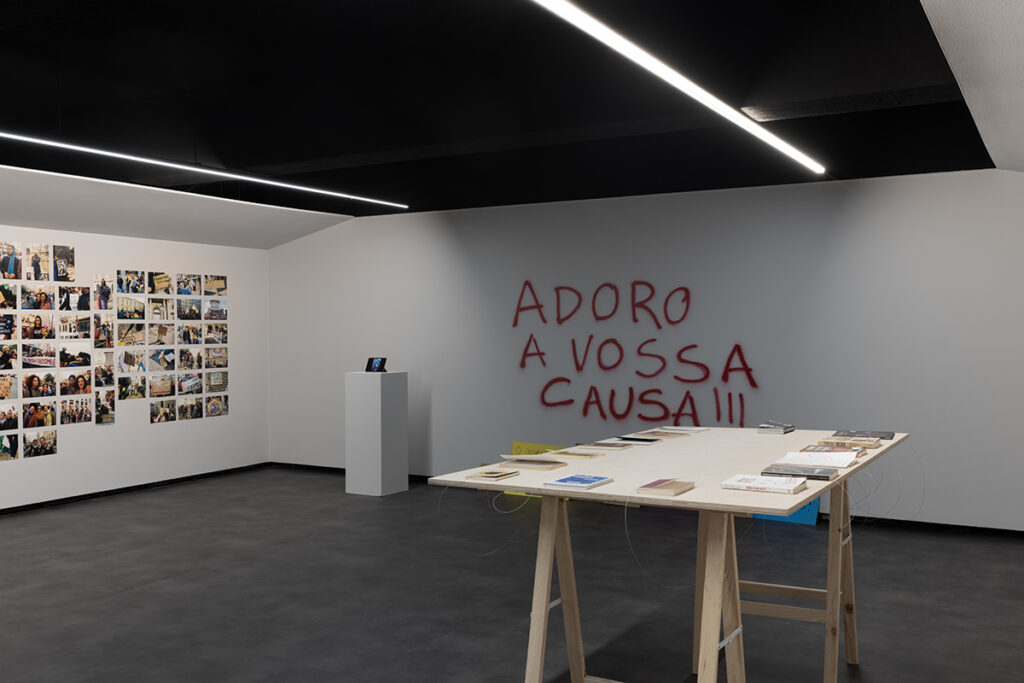
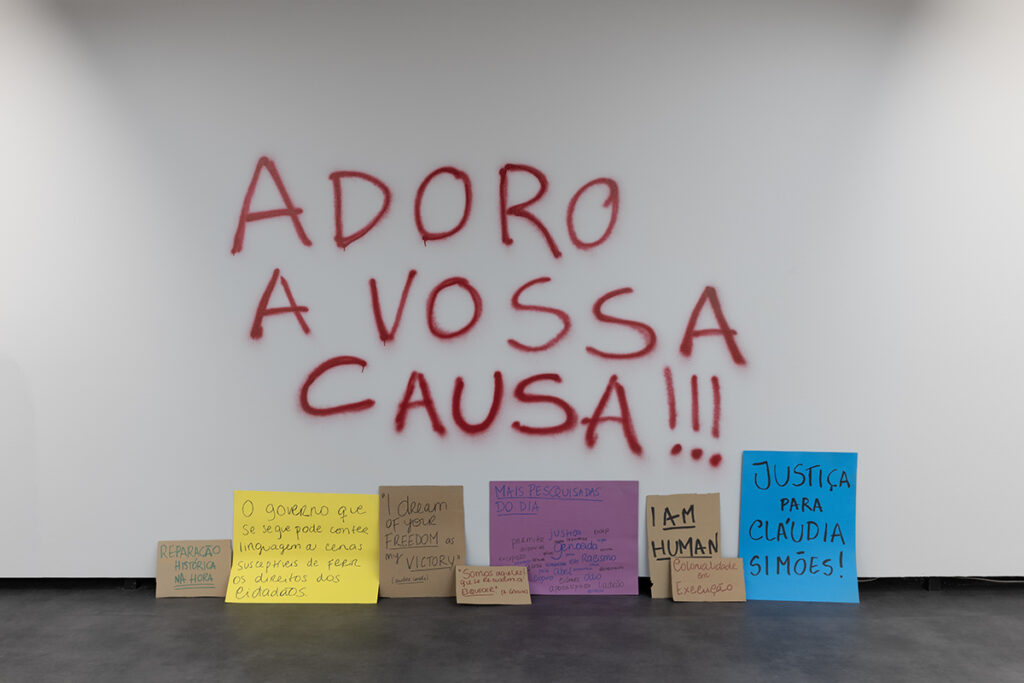
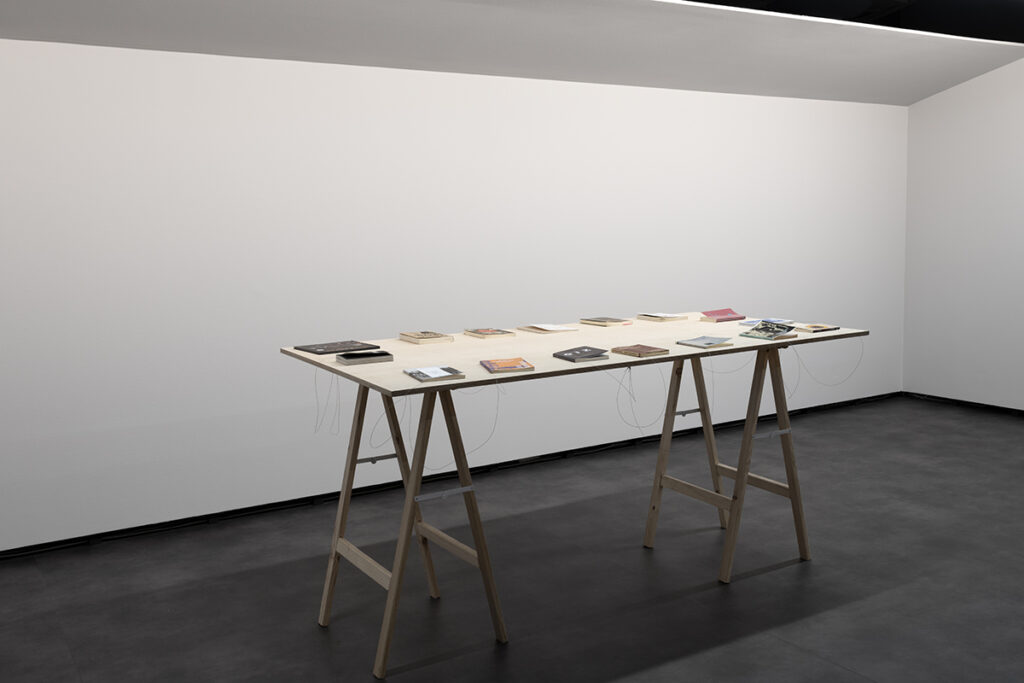
The exhibition ‘In this new picture your smile has been to war’ portrays a part of this undertaking. The artist brings to the gallery the art of the archive as a fundamental element for the production of autonomous discourses that acknowledge the deficiency caused by the documentary under-representation of the work of Black artists in the construction of their own inventories.
It is axiomatic to say that autonomy is part of the artist’s role as archivist, in other words, that which, through the exercise of compilation, allows her to establish a unique way of formulating her explanation of the world. Even though this collection is merely a fragment of memory that attempts to eliminate or lessen collective forgetting of a certain time or event, the art of the archive is still able to preserve a multiplicity of statements, thus fulfilling its discursive function.
Although the archive is by no means definitive (it remains subservient to the subjectivities of those who read it), it still has virtue as a tool that allows for various interpretations. The archive also becomes autonomous. Even if it is created with little regard for chronology, the archive is by no means linear. It contains the singular manifestation of the physical presentification of historical information that is often forgotten, lost or simply omitted. The archive reveals a presence. The archive is a message. The archive is a voice.
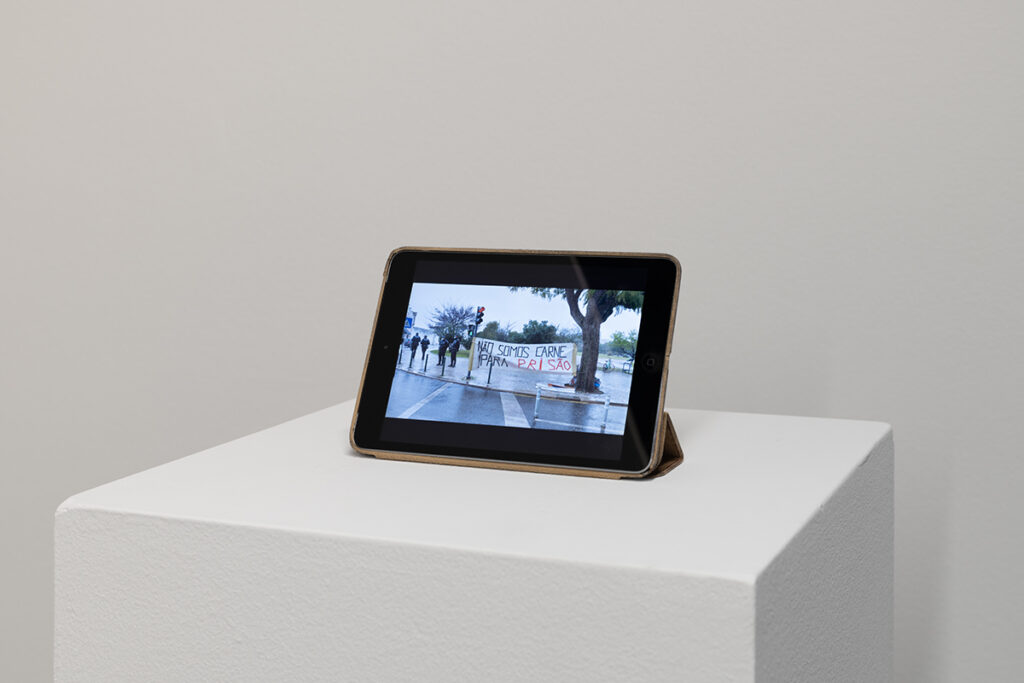
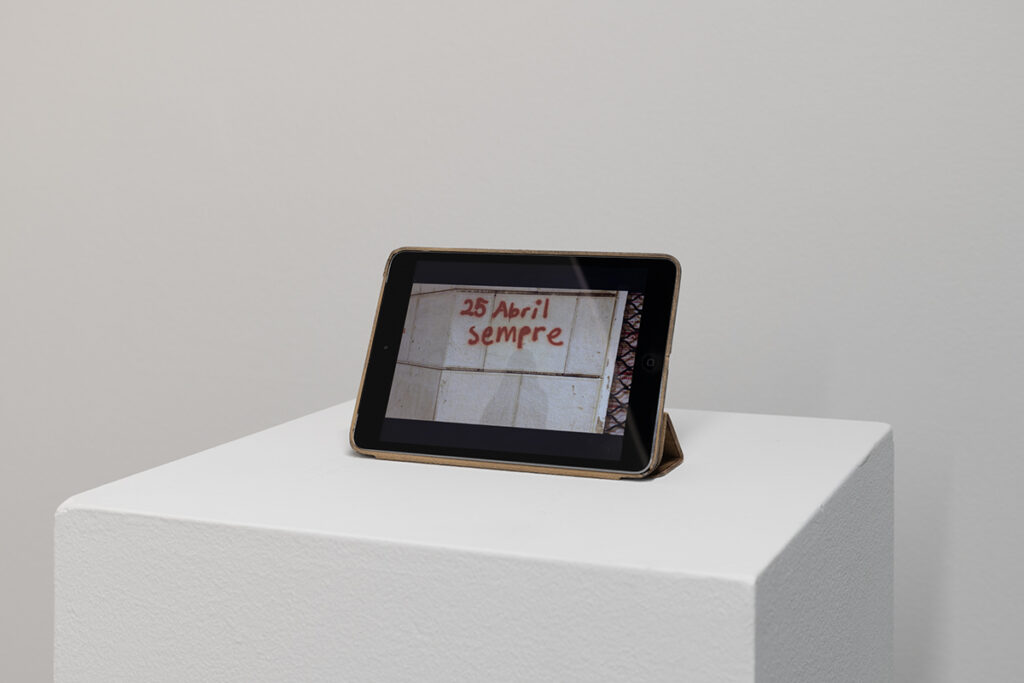
In Gisela Casimiro’s work, the practice of record-making using photography as a systematic form of action expresses a desire and an urgent need to keep in mind the themes present in the imagery of the street. Here, ephemerality – that phenomenon seen as an imminent threat to memory – is an element that is objectified through her intense practice of collecting. This accumulative task resurrects the artist’s role as a social agent who keeps pace with the time in which they live, making art not just an object for no-strings enjoyment, but a tool of historical reparation.
The street is also a place regarded as so common and trivial that it is often forgotten. The hustle and bustle, the time schedules and the hypnosis of mobile phones form a chorus to prevent us from paying attention to what the walls are shouting. Gisela Casimiro has a careful gaze. Her work is an exercise in social excavation of the street, in a quest to establish a movement of mnemonic recovery of the role of the public space as a structural element of social struggles. It is the street that speaks and, here, it is Gisela who listens.
In ‘In this new picture your smile has been to war,’ the artist asserts herself by turning to cartographic authorship. Those who build memory possess the power to create their own history. If the archive is a place of ontological construction of an immanent past, it is through the anatomy of the street that the artist seeks to validate a narrative based on the idea of self-curatorship. She is her own curator. By documenting, she establishes the abundance of that which she decides can be seen, read and preserved. The archive shows her presence. The archive is her message. The archive is her voice. A voice at the forefront of the attempt to transform outdated narratives into fairer possibilities in a future that is not archived.
Rodrigo Ribeiro Saturnino (ROD)
Researcher and visual artist




 /
/  /
/ 