Marcello Caetano’s final speech in the National Assembly took place on 8 March 1974. The first words of the President of the Council of the Estado Novo were as follows: “There can be no doubt that the most serious problem currently facing the Portuguese nation is the overseas territories. Normally, the overseas territories would never be a problem for Portugal. For five centuries, Portugal has been a nation spread across several continents. It is in Africa, Asia, Oceania, and Europe, and will always find, in the natural genius of its people and in the traditional experience of its contacts, the appropriate solutions for the harmonious development of all its parts, the fraternal coexistence of all its children, and the enriching fusion of all its cultures. But at the present, this evolution of a multi-continental and multiracial society is being disrupted by growing adverse international pressure.”
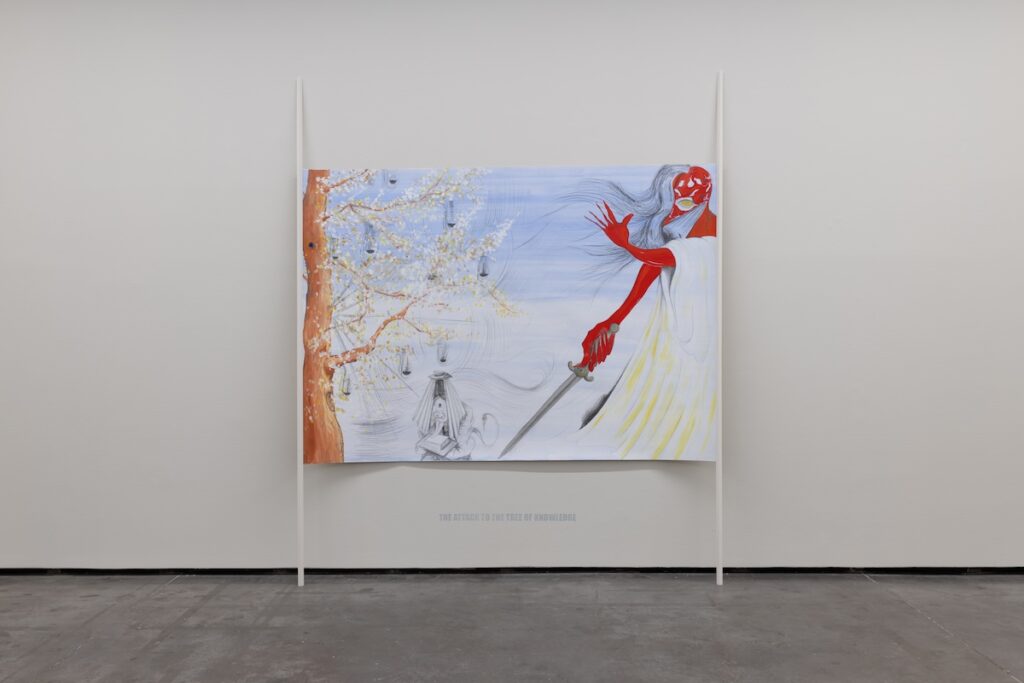
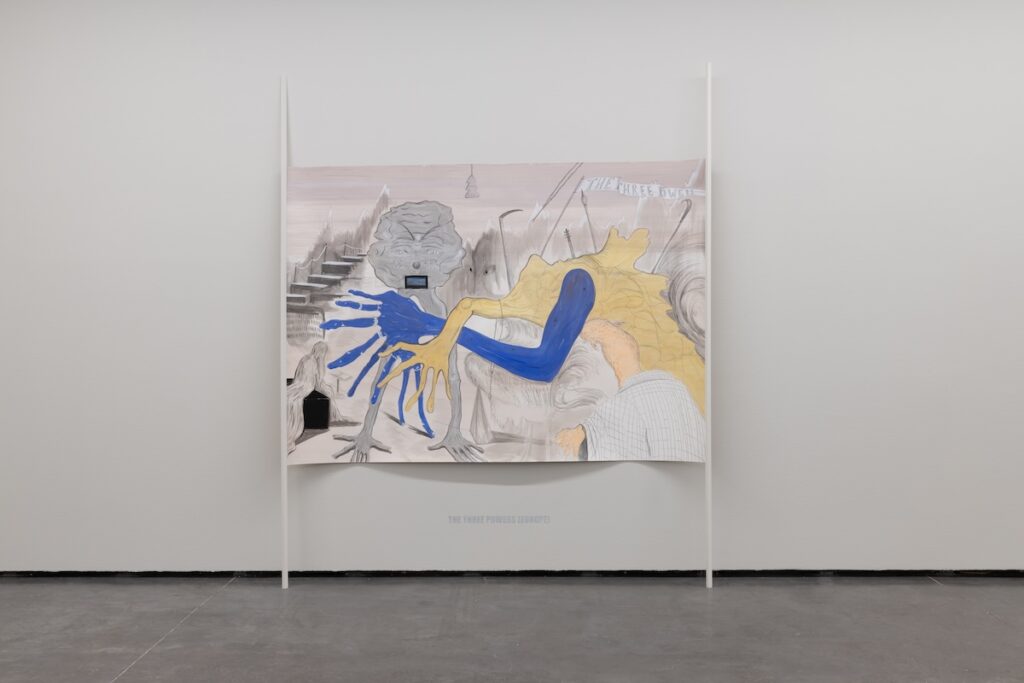
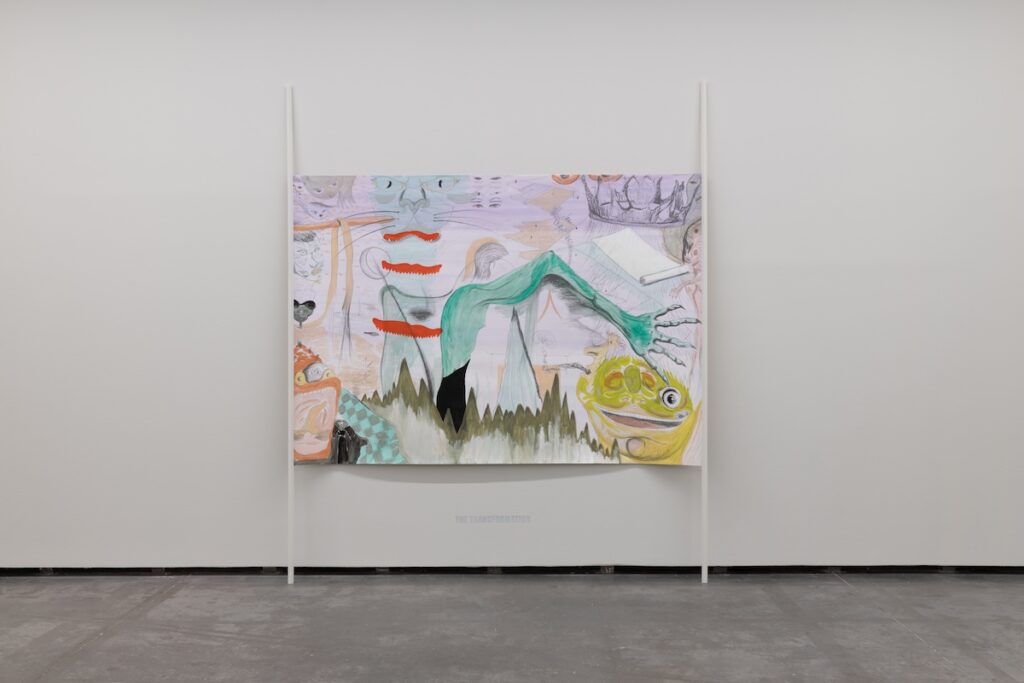
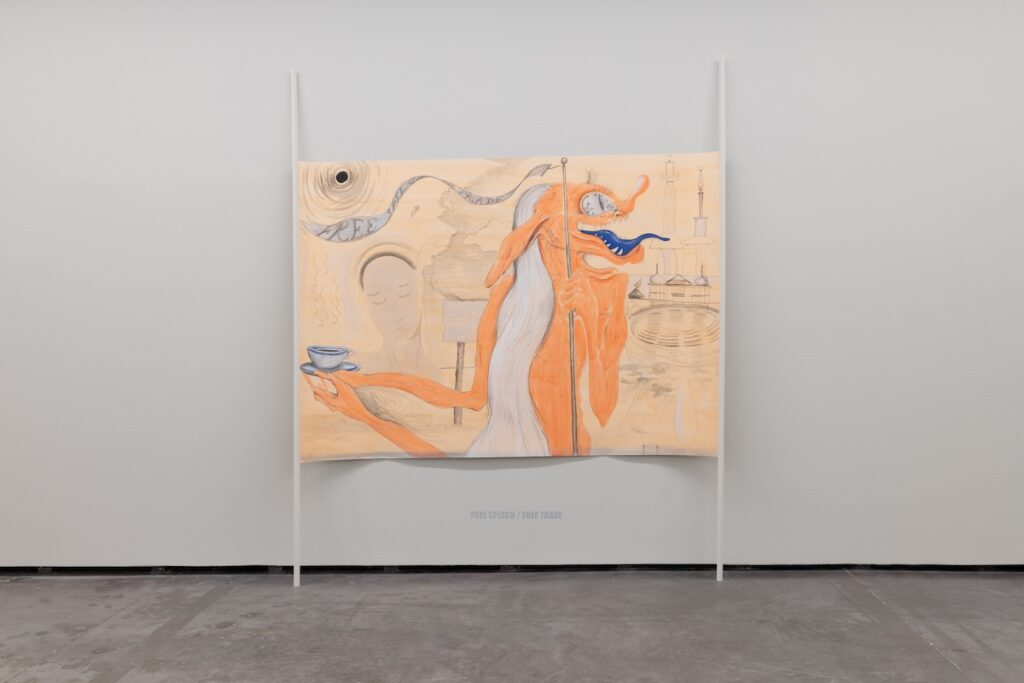
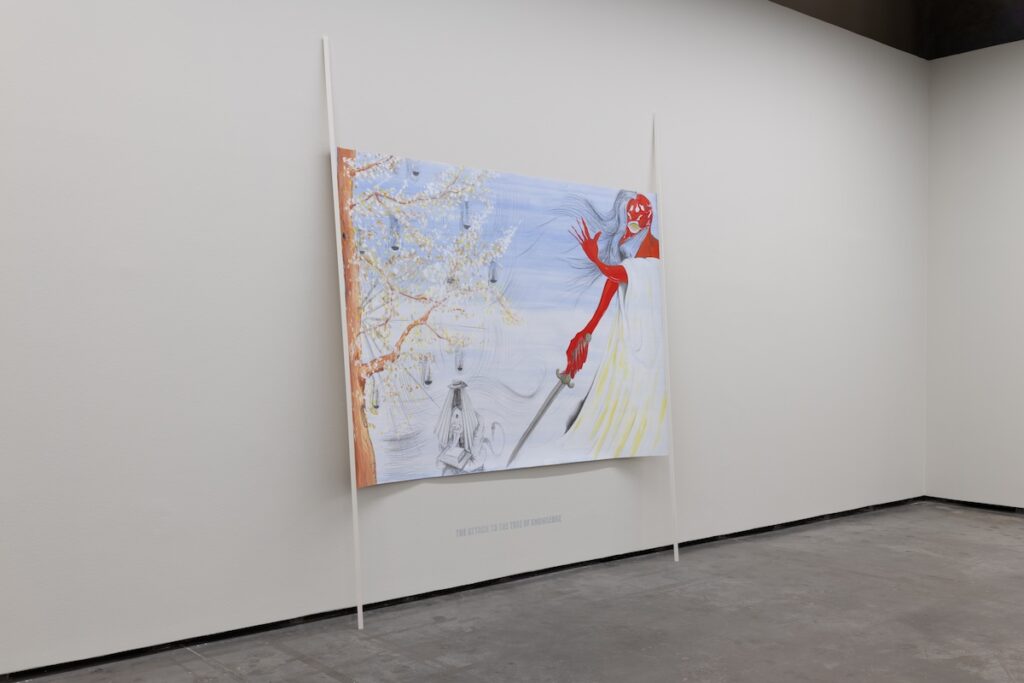
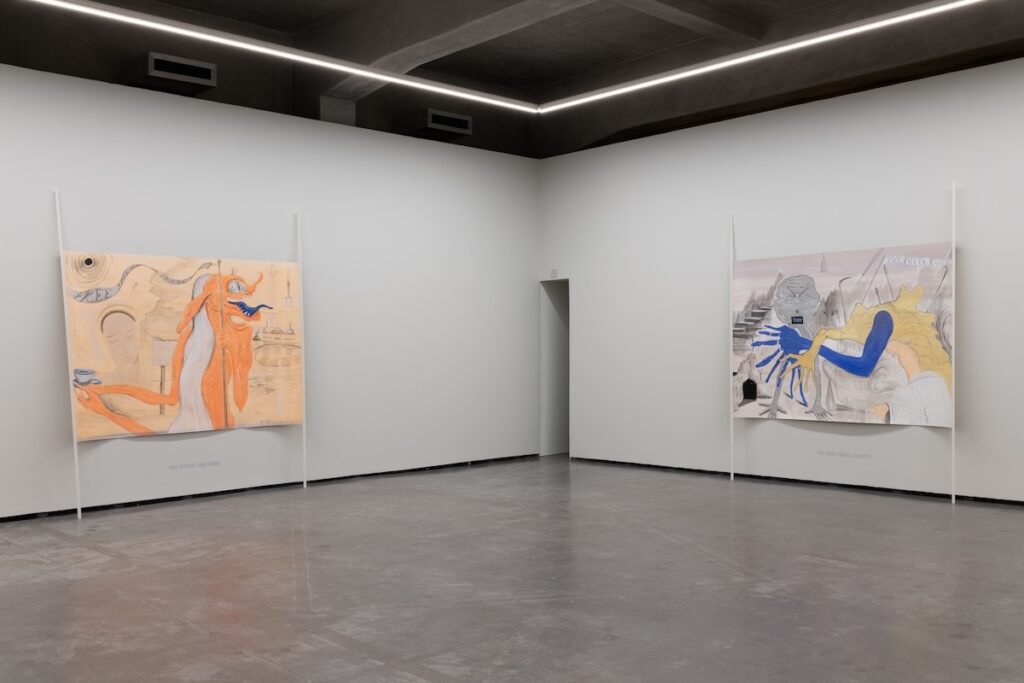
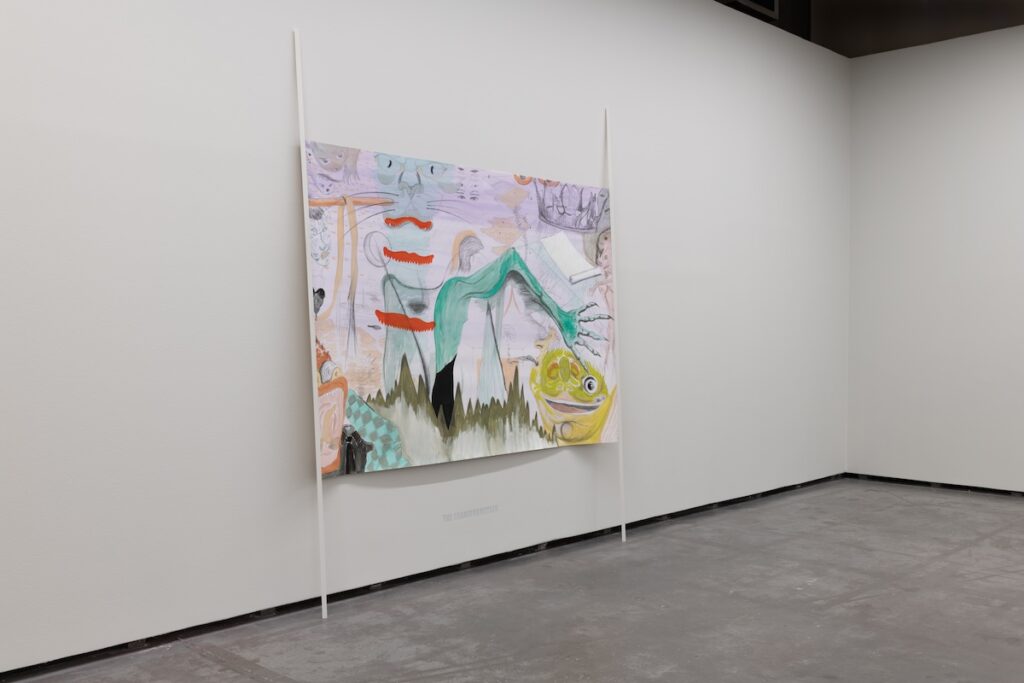
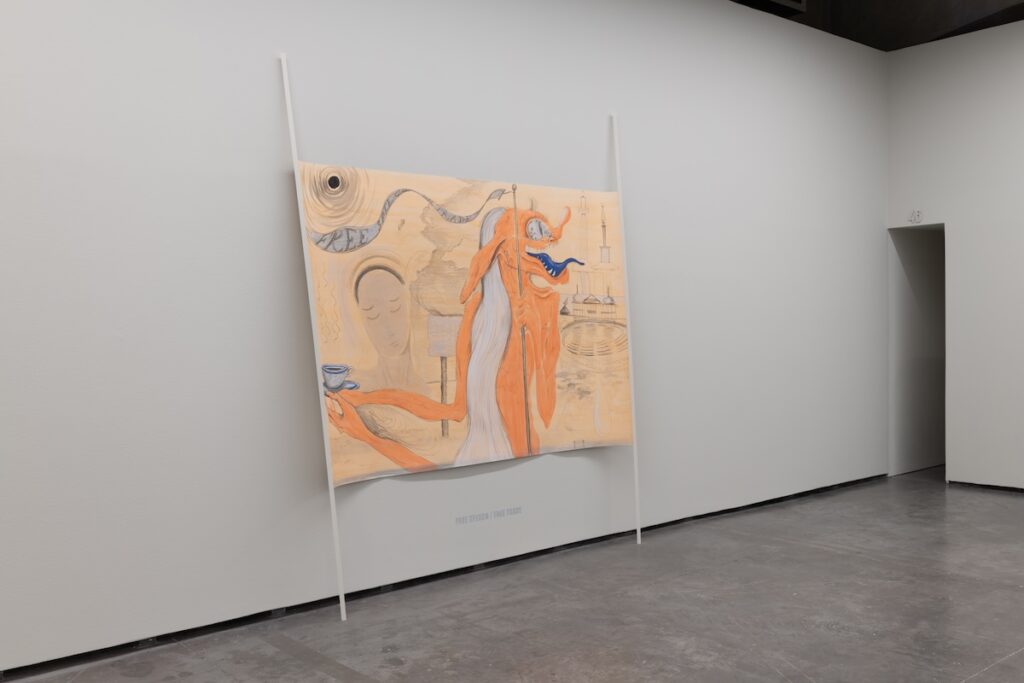
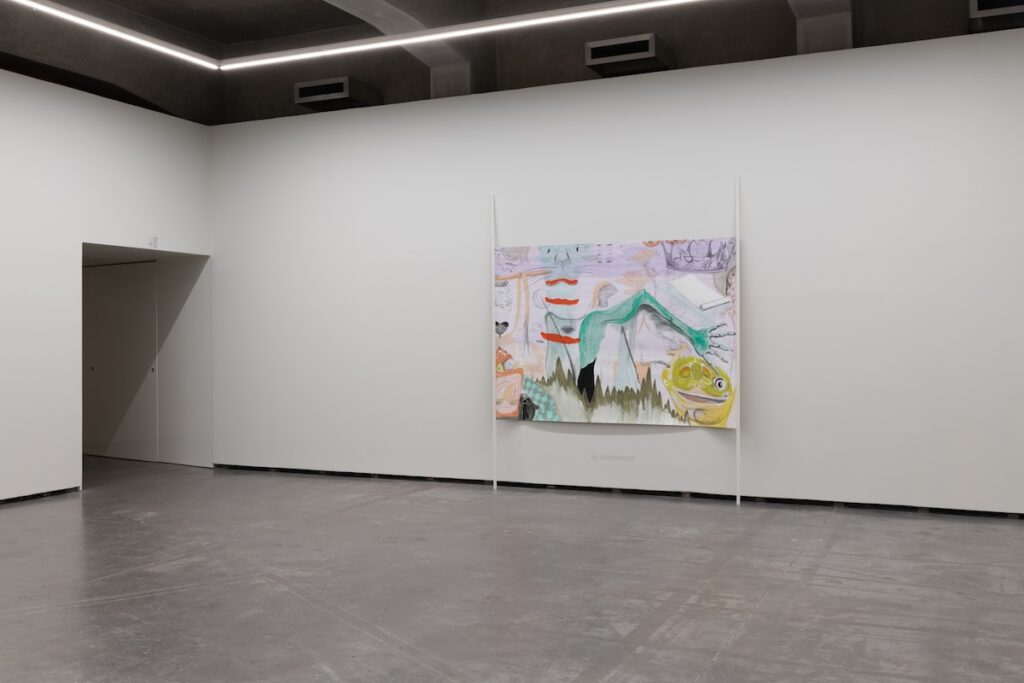
The exhibition brings together a collection of gouache and graphite drawings on paper—the largest I have ever made—over the last two years, at the Coruchéus Studios, here in the Alvalade neighbourhood. The series of works was defined by an approach to landscape that has always been present in my work. The horizontal format, to which I now return, had not been used for quite some time, a conscious decision due to its historical and evocative character. The compositions were made without a defined plan. Paper remains one of the most constant media in my work due to the possibility of direct and performative—sometimes violent—action in the act of drawing.
An introductory text such as this is an opportunity to demonstrate my ability to articulate my work in a poetic field that allows the viewer to enter the work in a transversal and comfortable way. But that is not relevant here. The place where we find ourselves always reveals its layers. We remain in the Alvalade neighbourhood. On one side is the church, on the other the National Library, guardians of tradition and writing, where silent books tell the story of a country that is becoming numb and entangled.
Marcello Caetano lived in the Alvalade neighbourhood when he went into exile in Brazil. His statements are those of someone who has always lived under an authoritarian and totalitarian regime, which he himself helped to create, someone who has lost touch with reality due to his blind and abstract devotion to the laws he himself had defined. His speech reflects the apathy of a diminished political class, governed by private interests, descended from an atrophied republic that never materialised. Hearing these statements today exacerbates, but also clarifies, the feeling of incapacity of the current rulers, who continue to discourse on identity narratives, where the epic tone is not lacking, but substance is.
The current state of politics and political discourse reveals the same lack of awareness of the past, a haughtiness towards the state of society in general, and makes artistic expression a necessary act of questioning the world and the narratives that are being constructed. Knowing how to articulate a discourse should not be a reason to convince others of our beliefs. Sometimes, our reflection, our ego, prevents us from seeing from the outside, from confronting the ridiculousness of life, or how fleeting everything is. The exercise is not to abandon critical thinking, and not to lose—in the streets and gardens that others help to build—our capacity for empathy and caring for others, without thinking that we know what is best or worst for them.
PB, August 2025
***
“The old world is dying and the new world struggles to be born: now is the time of monsters.”
Slavoj Žižek (2010) rephrases Antonio Gramsci
Dear Pedro,
The image—whether drawn, filmed, staged, or performed—has always been your primary field of action. Yet, your images never exist in isolation. As they collapse into flows of information, absorbing and consuming cues, formats, and languages from popular culture, propaganda, and the media, they cast a relentless shadow on the visual machinery of capitalist politics.
These flows keep your images unstable. Like vanishing Snapchats, they are ungraspable, offering only the promise of the next image. Together, they form a chain of desire—for more circulation, more loops, whether repetitions of the same, expanding in widening circles and shifting constellations, yet always stuck on repeat.
In previous works, you explored this in video assemblages or in spatial installations incorporating and lining up images next to one another. Often times snippets or retakes of these images would surface across different works and exhibitions, unsettling the meaning of the work altogether. As such, rather than seeking the fixity of representation, your images are workers in the ‘spirit shop’: the cinematic factory that makes the world’s capitalist desires go round. Your images are alive. They are secret agents with a plan. One could say they are monsters.
But what to do when images grow so monstrous that escaping what they represent becomes simply unbearable? When it becomes too cynical to merely reproduce and recirculate these ‘image-monsters’, much like the relentless images of starvation and genocide that inundate us today, yet only seem to reaffirm the collective paralysis of the status quo? With this in mind, I can’t help but wonder: shouldn’t we bring the monsters back to what they actually want to tell us?
Looking at your most recent drawings, I notice that, instead of inviting me to scroll on or move through space, they draw me in. The same density of references and information is present, but now sits within the image itself. The drawings are executed in landscape format, which is unusual for you: you have always favored the verticality and immediacy of the advertisement poster, book cover, or phone screen. Yet here, you turn to the more contemplative expanse of the landscape. I cannot hide my amazement and delight as I realize you have created a series of landscape drawings.
As I step into the thickness of these images, into their plots, I encounter familiar faces and references, in your characteristic trickery: the mountain as a stock chart, the tree bark as a lost ear, the desert beach, and nods to the European Parliament. Human-like figures, pseudo-animals, and—of course—monsters take center stage, accompanied by proverbs I have heard you speak before, rendered for the occasion on archaic banners. It feels as though you have poured your entire body of work into these landscapes, letting it collide with itself, and adapted it to the codes of traditional landscape painting: yet another loop, moving from popular culture to the fabricated mythology of capitalist politics. Folklore, you called it.
However, I know you well enough not to be fooled by your smoke screens, dear Pedro. I have called you an unreliable protagonist before. I understand that the instability you mimic so skillfully is, in fact, a mimicry itself. Yet from the shaky grounds you construct, a deep and genuine longing persists—a longing to understand how to remain truly present amid the instability of the world today.
I take another look at these drawings and begin to notice new things. Unfinished details, chance decisions, and makeshift compositions reveal a slowness and a sense of incompletion I had not encountered before in your work. As I study these images, I can see you drawing. I can see you observing the images yourself. I can sense your anger and anxiety as you look at yourself drawing these images. I can see you struggling with your own loops.
How do we find meaning on the slippery slopes that you know all too well? How to find words in the time of monsters? Perhaps it starts by allowing these monsters to speak back.
I think you did just that.
Warmly,
Els Silvrants-Barclay
PS: I still don’t like Rosalía. But did you check Dua Lipa’s last album?


 /
/  /
/ 