Tatiana Macedo (Lisbon, 1981) has been developing a body of work, which through the use of film, photography and sound, reconfigures places and reflects on the cultural and affective conditions of its protagonists, thinking in images the spaces and the architecture.
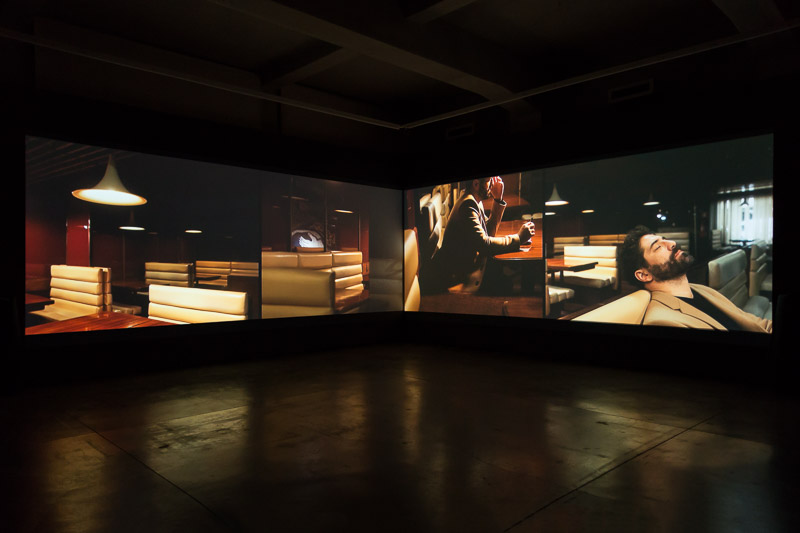
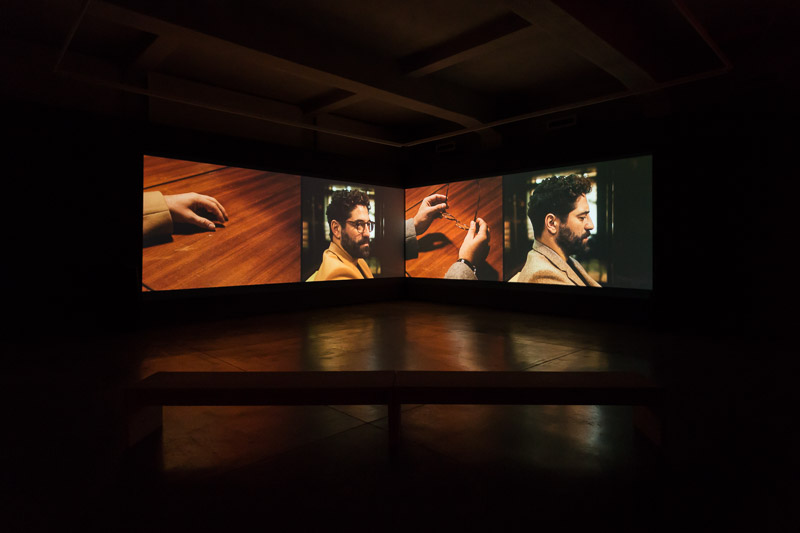
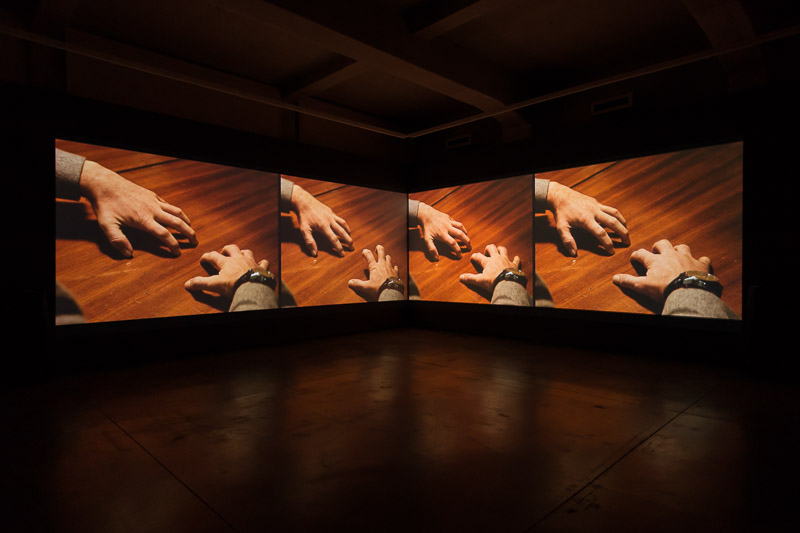
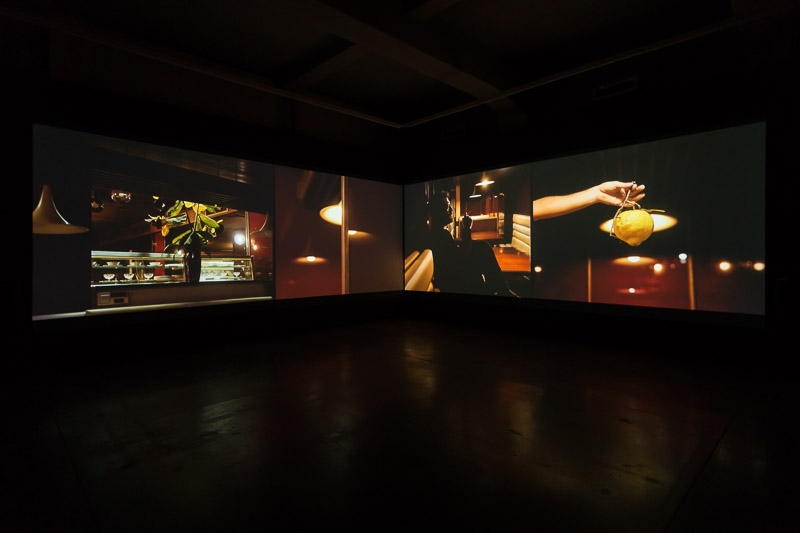
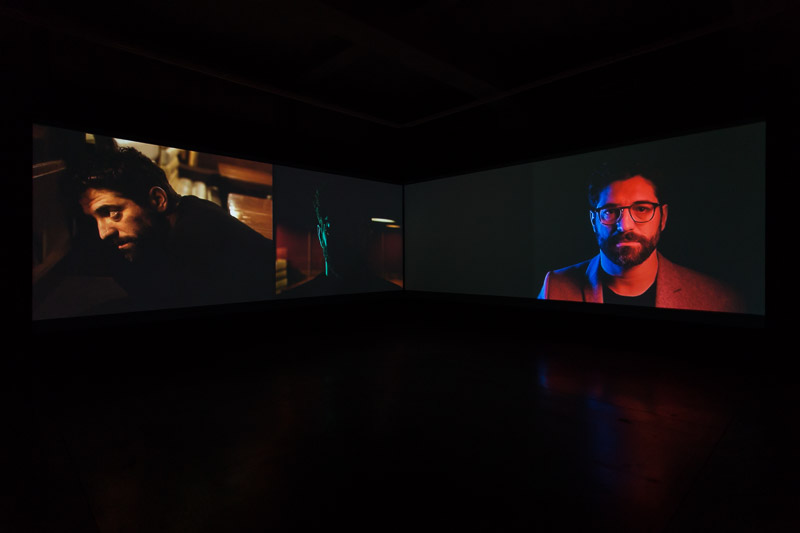
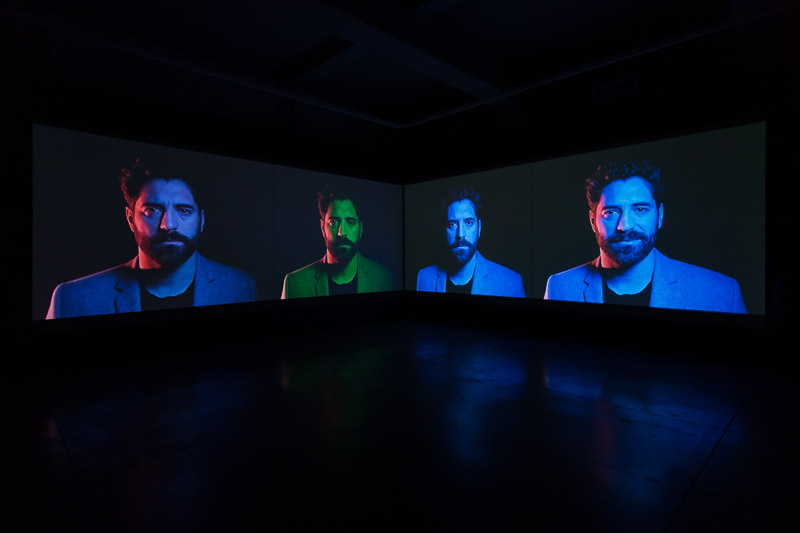
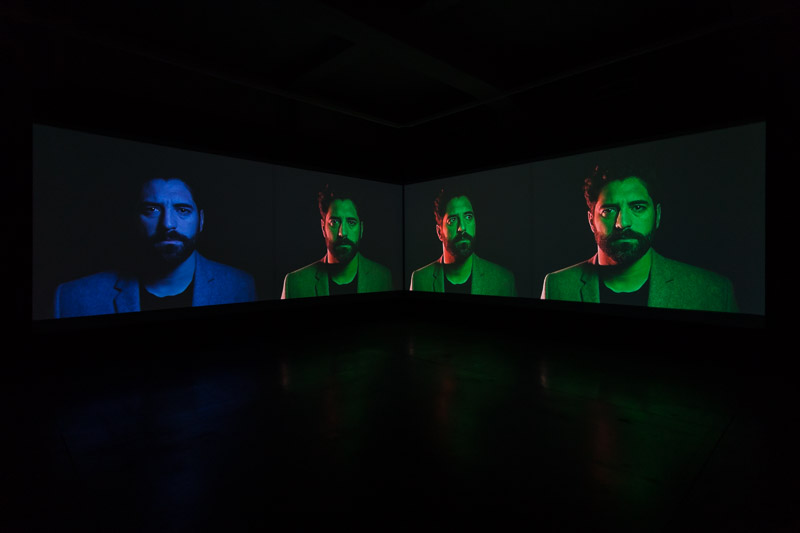
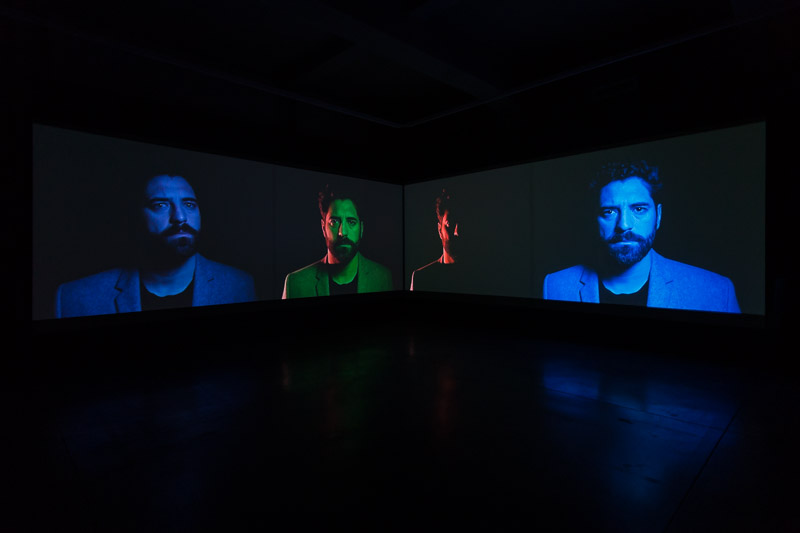
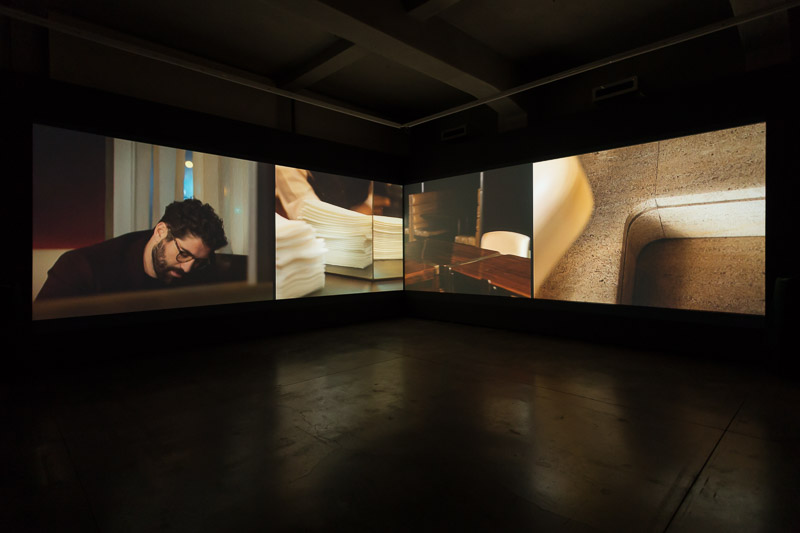
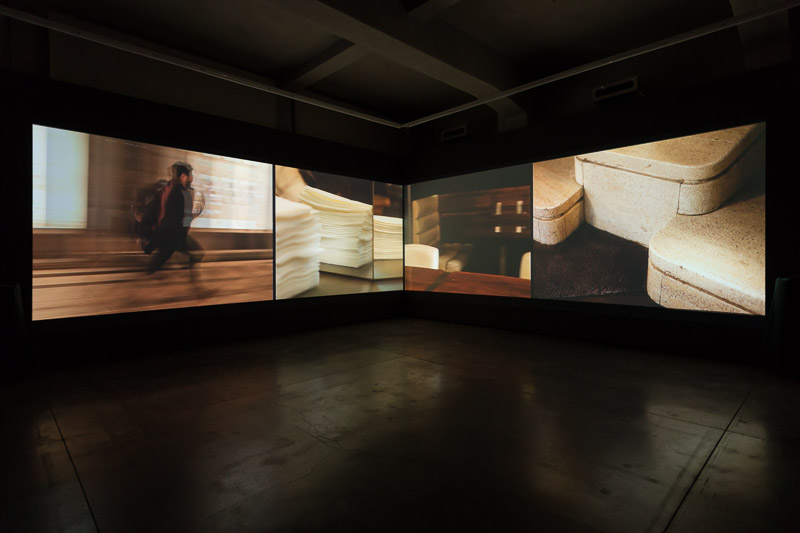
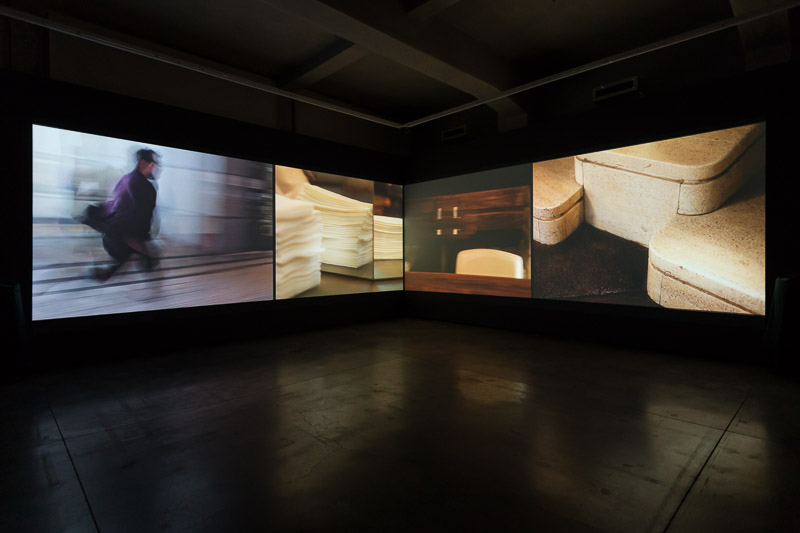
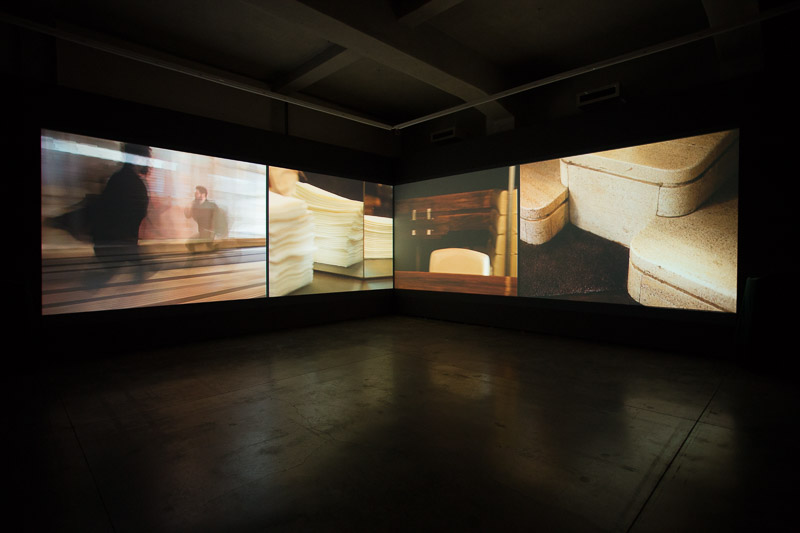
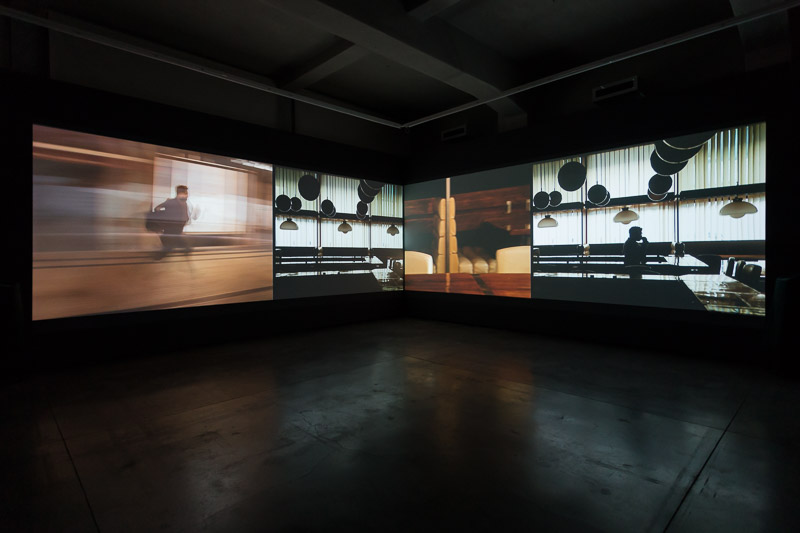
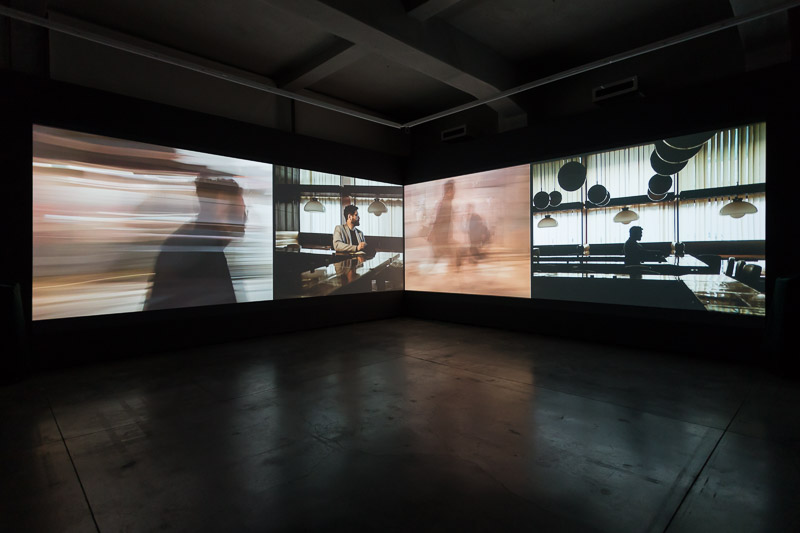
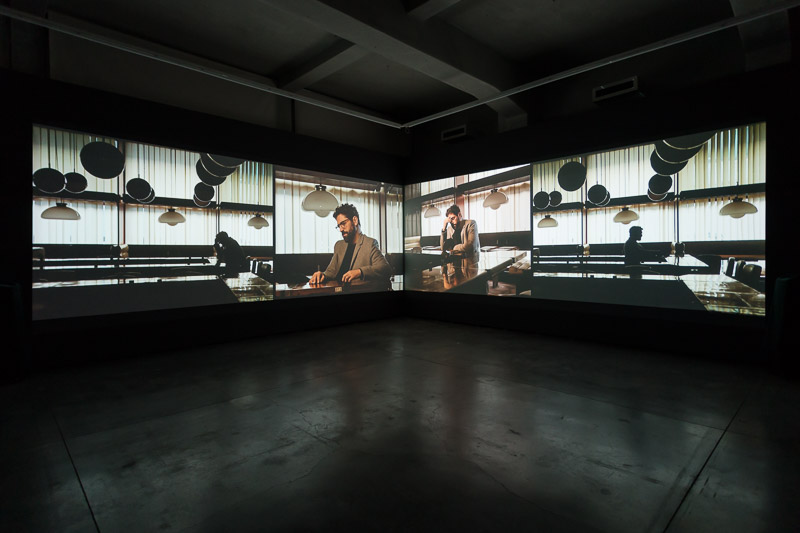
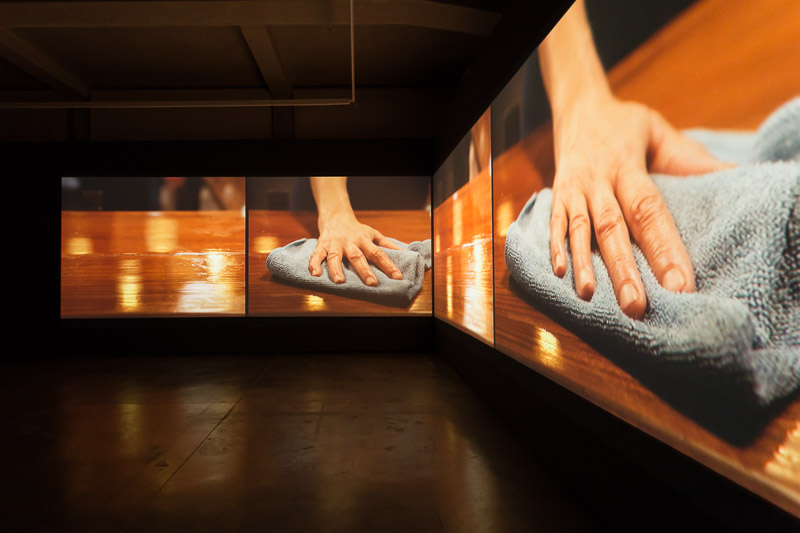
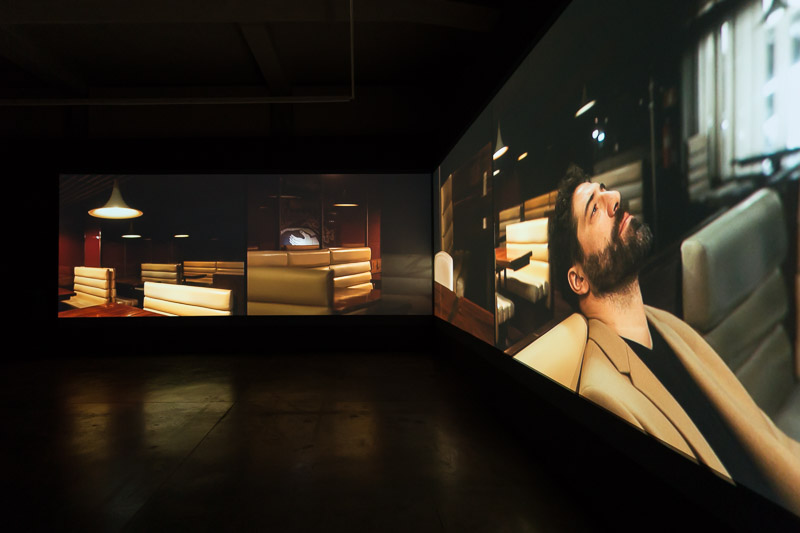
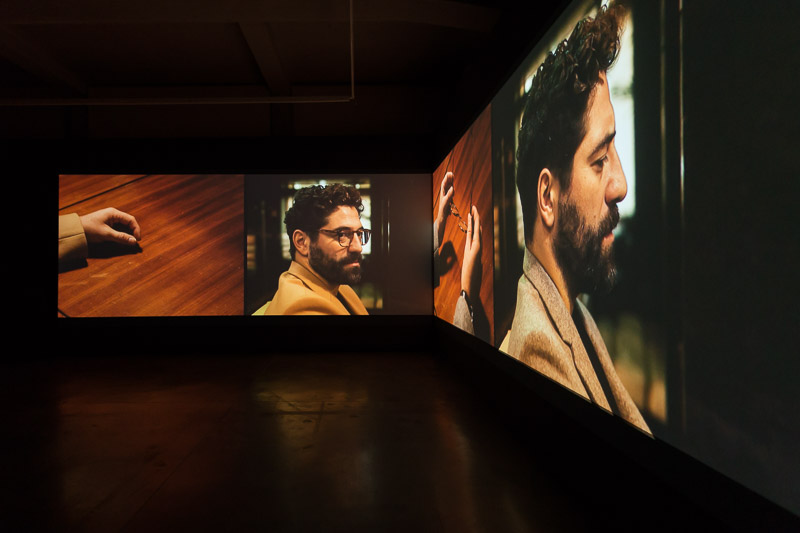
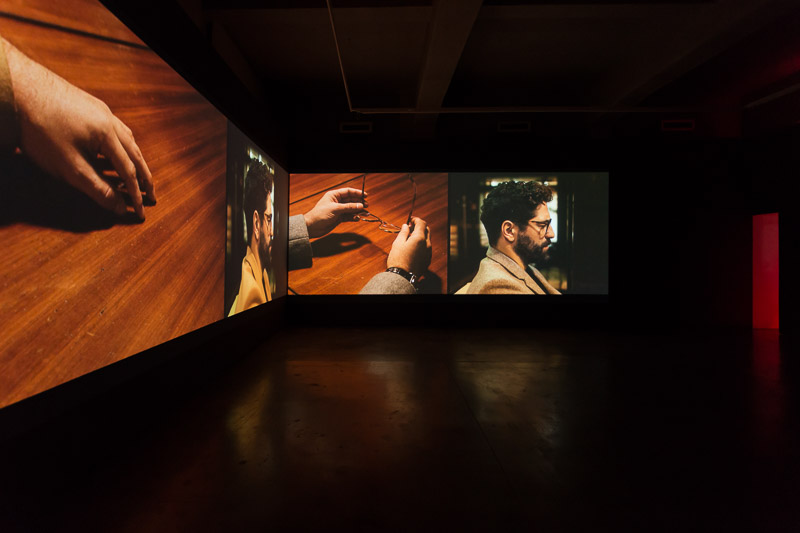
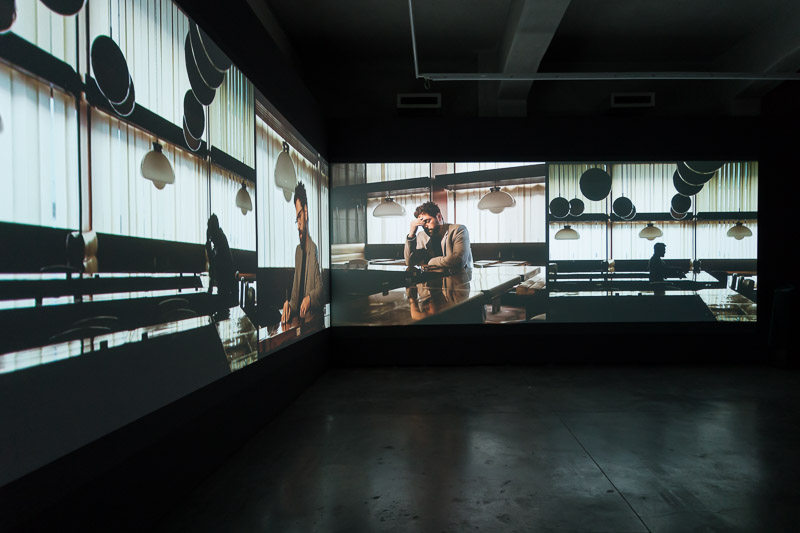
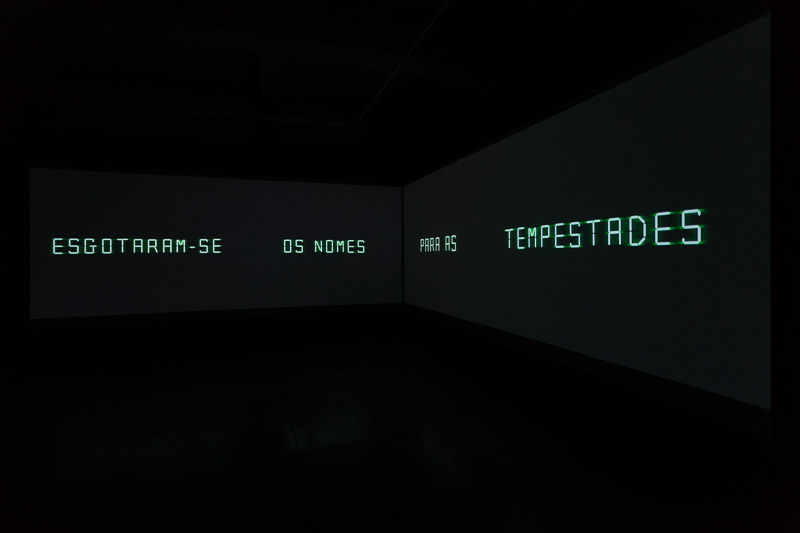
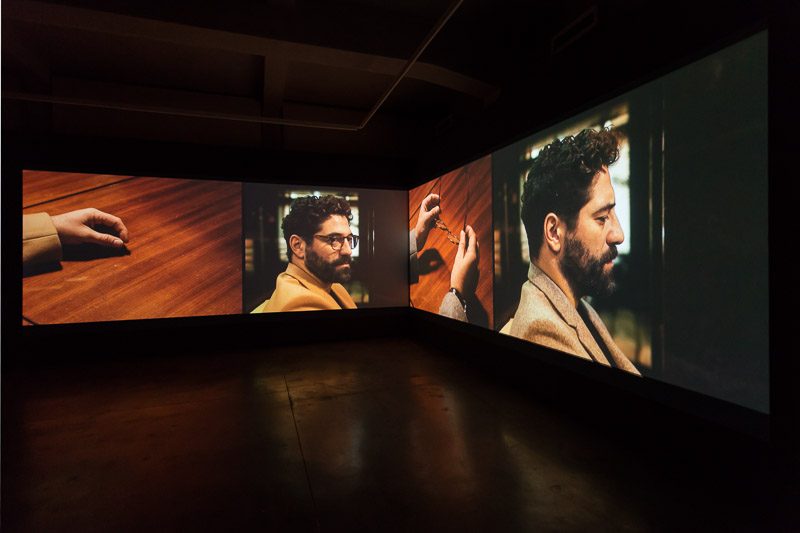
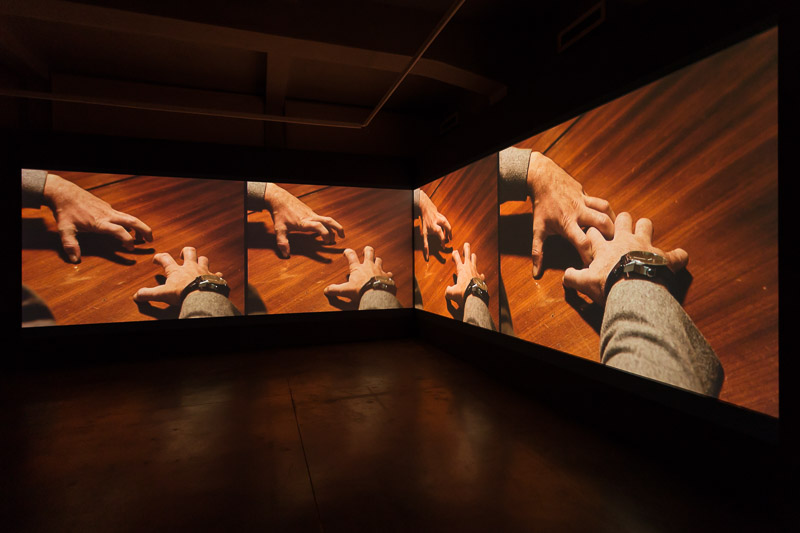
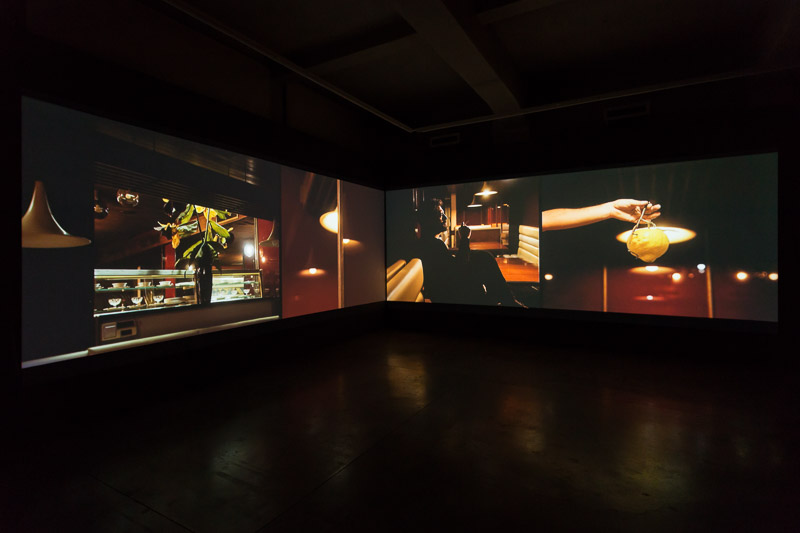
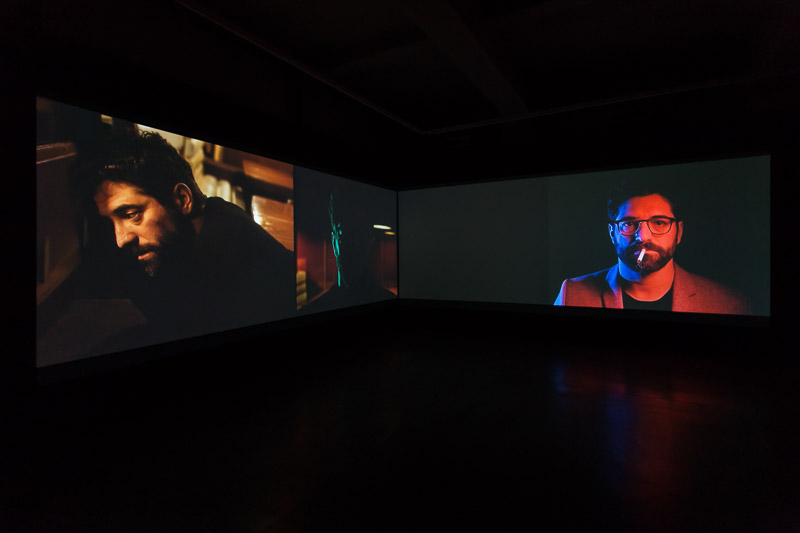
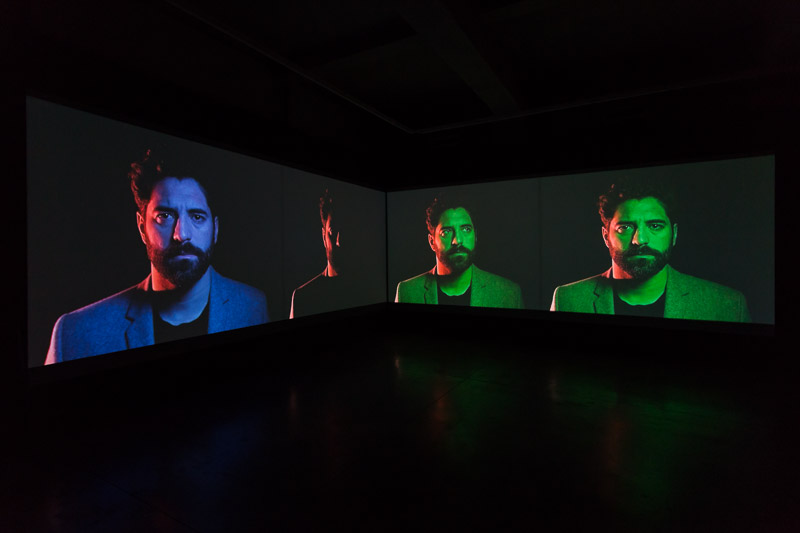
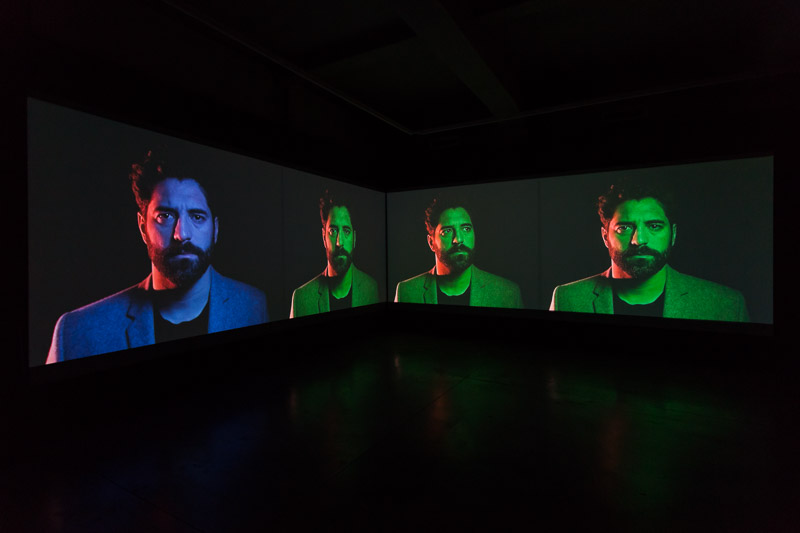
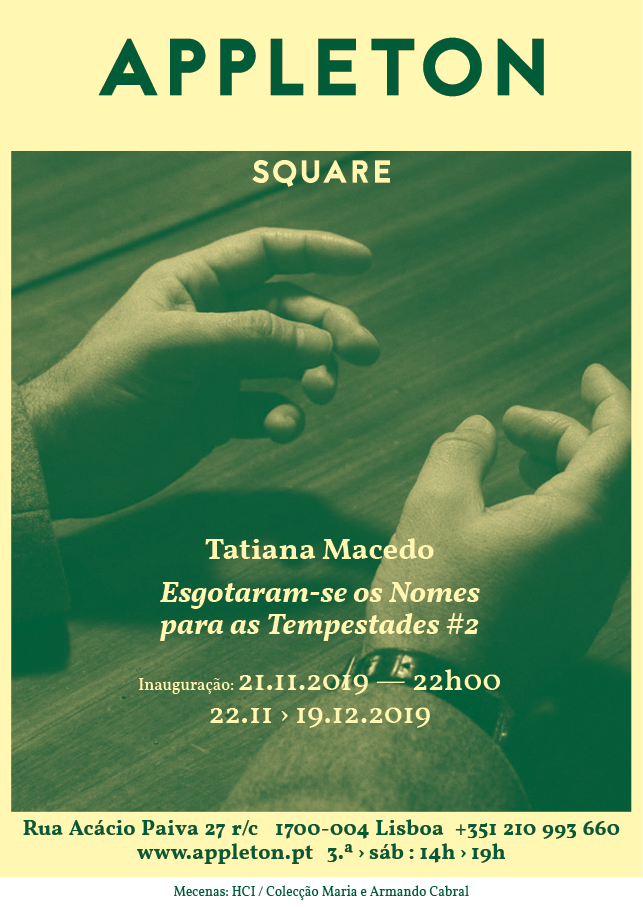
The project the artist is presenting at Appleton Square is a transformation of the piece she conceived for Culturgest Porto entitled Esgotaram-se os Nomes para as Tempestades / We Have Run Out of Names for the Storms. This is a 4 channels film, a vaguely dystopian vision of a near future, conceived from a dubious dialogue between a character – interpreted by the actor Nuno Lopes – and himself as a double, a Doppelgänger which, in offbeat, alternates a list of names (the storms) with commentaries that personify them, since they are people’s names, men and women. Shot at Confeitaria Cunha, in Oporto, it makes use of the notorious architectural space (designed by Victor Palla and Bento d’Almeida) as a place of memories from a time devoted to an auspicious idea of future, now failed, expressed in the melancholic monologue that the character maintains with himself. This narrative line, with its inherent drama present in the flux of invoked memories, appears punctuated by details from the place – the chairs, the bar, the floor – it’s wear and tear. This is the matter that Tatiana Macedo makes tangible, and that convokes the touch. That haptic character of these images – and their inherent sensuality – is meticulously construed, be it through the hand gestures repeatedly present in different forms (also in the cleaning procedures and the restaurant preps), or through its rigorous working of colour.
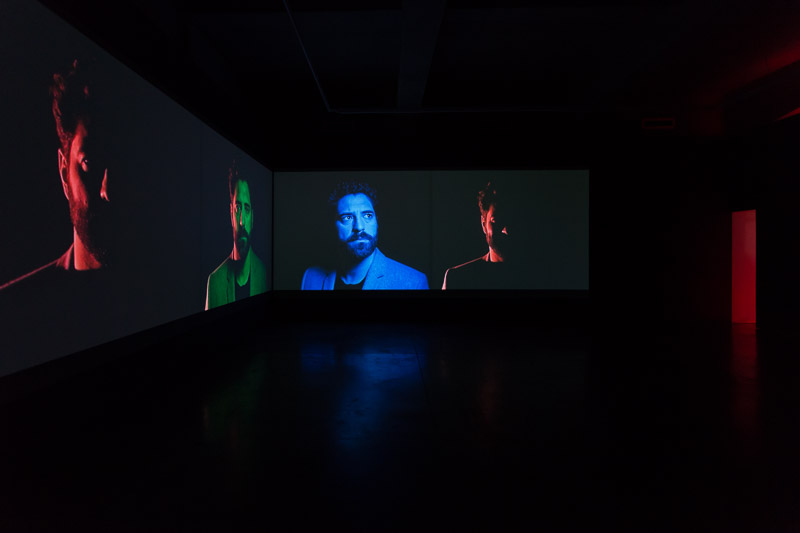
The atmospheric density of the film, its tone and ambience, is partly defined by a chromatics that draws back to a certain romanesque cinematic universe (or romantically dystopian), in which the references to Wong Kar-Wai in Chungking Express (1994), Léos Carax in Mauvais Sang (1986), Wim Wenders in Wings of Desire (Das Himmel Uber Berlin, 1988) or Ridley Scott in Blade Runner (1982) are perceptible in specific episodes – for instance in the explicit allusions to Carax – but mainly in a diffuse ambience but chromatically saturated, that alludes to a certain cinematography from the 80’s.
It is precisely that retrospective vision, or revelatory of a certain failed prospection of a foreseen future that spreads out towards a recent past and a near future (a narrative that situates itself in the future, with an imagery arising from the near past) materialized in the chromatic saturation, physical and immersive, as well as in the segments of original soundtrack that refer back to the electronic and ambient sounds of Robert Fripp.
When presented at Culturgest Porto, the four screens where facing each other in two pairs, surrounding the spectator, which necessarily obstructed the vision of the film as a whole. Nevertheless, in the version that is now being presented, the option to install the piece in two diptychs that come together in the corner of the room, enables a vision of the film as a whole, enhancing the repetitions, the dual character of the recurrent persona played by Nuno Lopes, the presence of details of the space and the narrative sequence.
The narrative modulations are now more visible and the phantom like invoking of the fragmentary memories makes it clear that its matter is the absence, the exhaustion, the tiredness and the disappearance. That such evoking arises from the storm’s names is not indifferent: it densifies the familiar and eroded character of the ambient not by invoking climate change but through personification. The names draw the personal field of loss, failure and, in that sense, melancholy.
In this piece, even more so than in others, the expanded cinema of Tatiana Macedo, departs from that same melancholy of the list and the index, from the small gesture and the rhythm of the discourse, to surround the spectator in a soaking light.
Delfim Sardo, 2019




 /
/  /
/ 