Eros and Thanatos, an individual exhibition by Vasco Araújo, consists of a new sculptural installation that seeks to reflect on contemporary human condition through the necessary revisiting of the past and the history of art, using disquieting figures from Greco-Roman mythology.
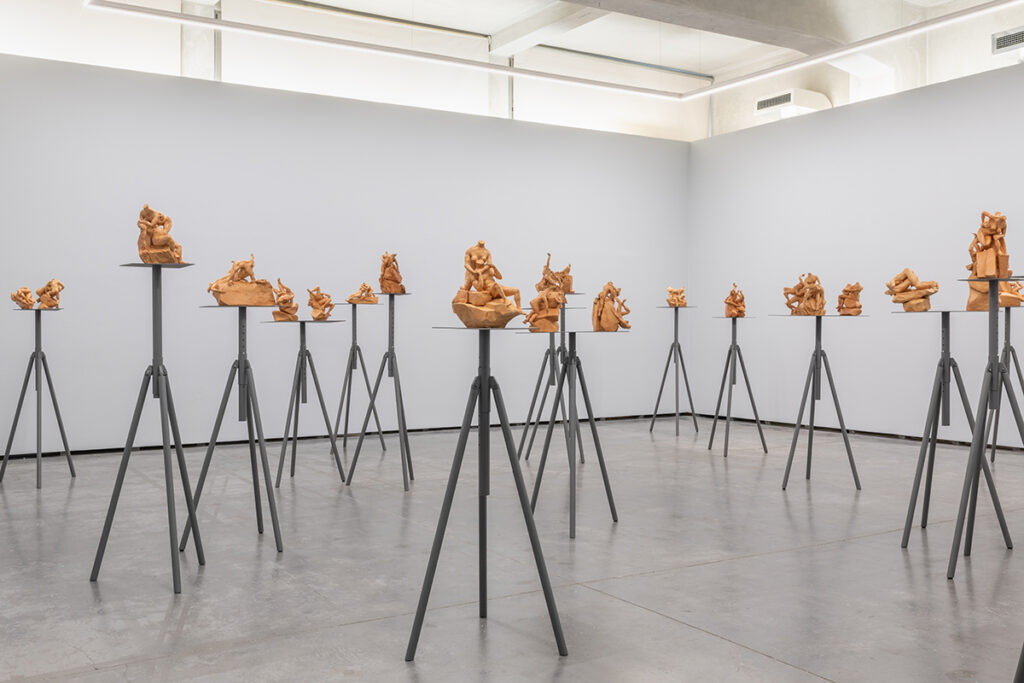
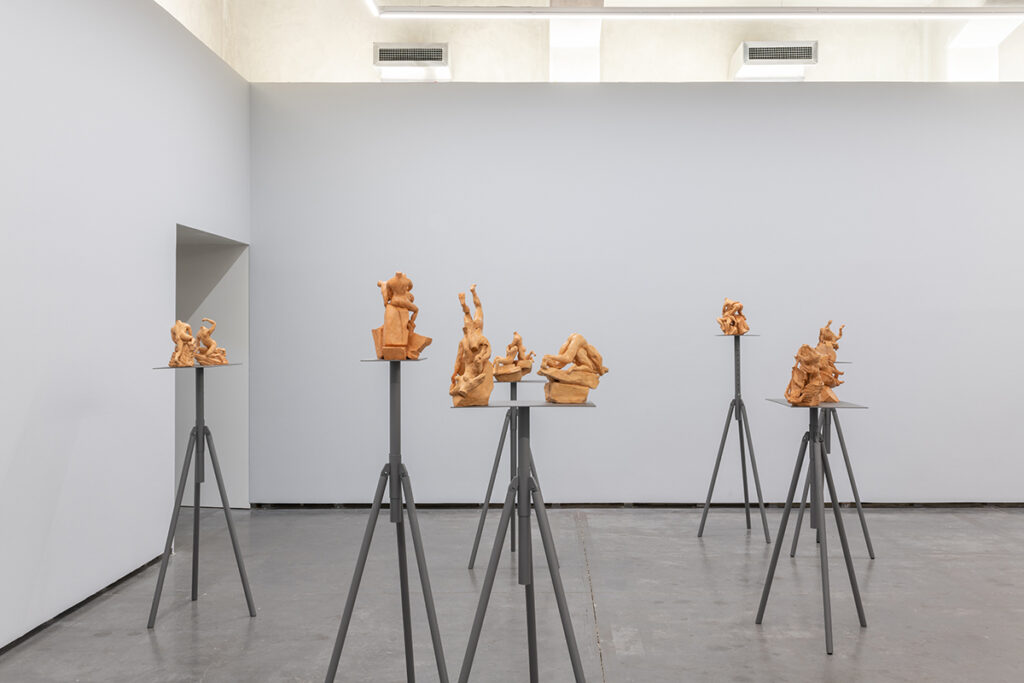
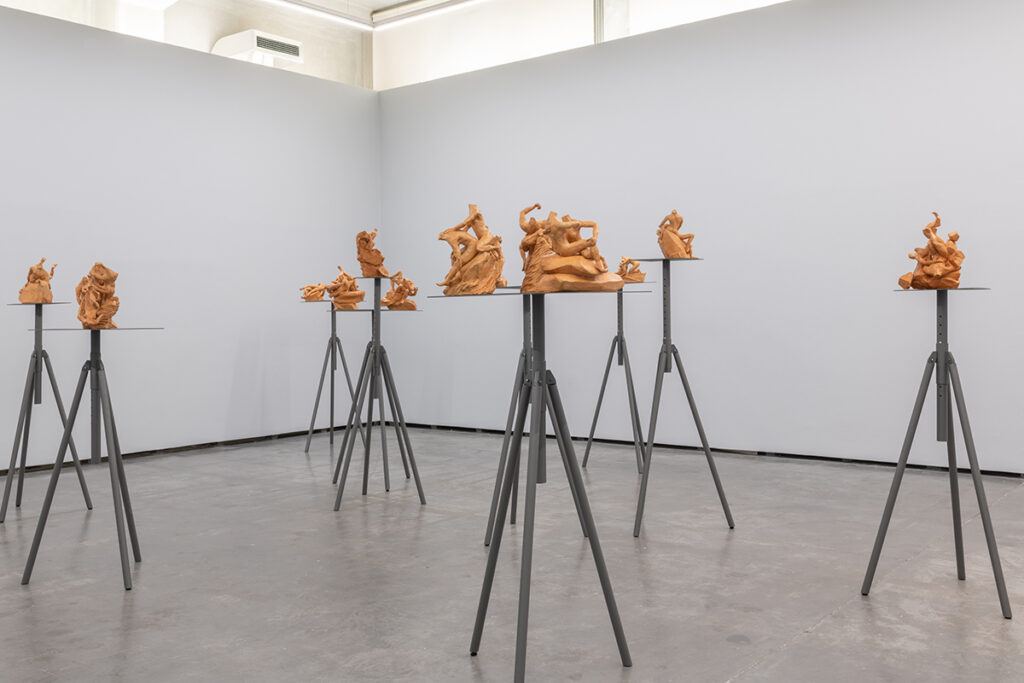
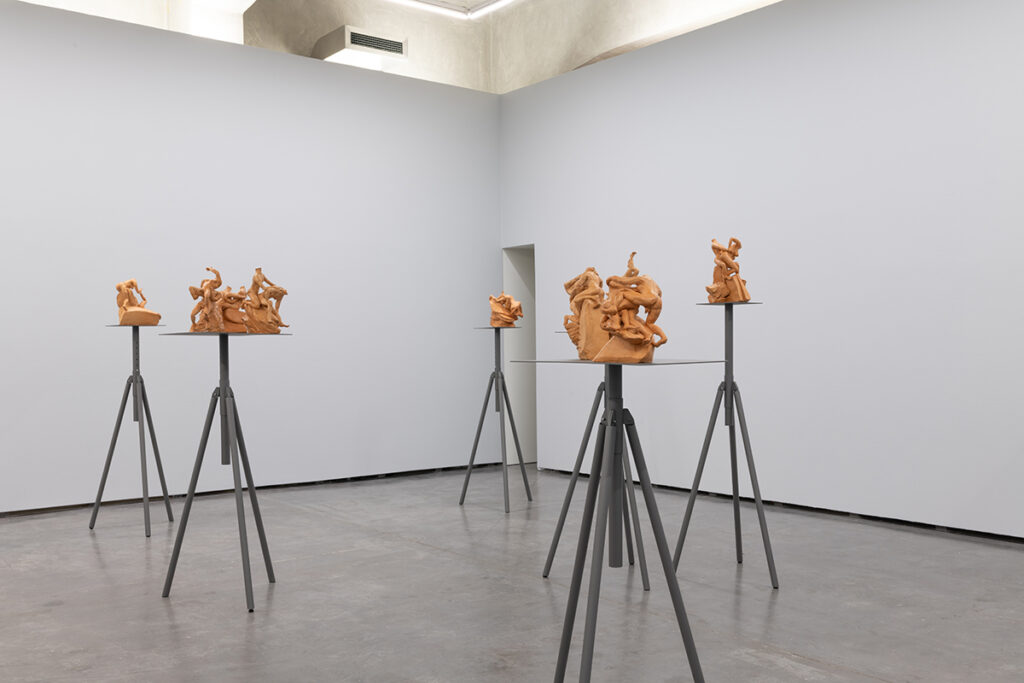
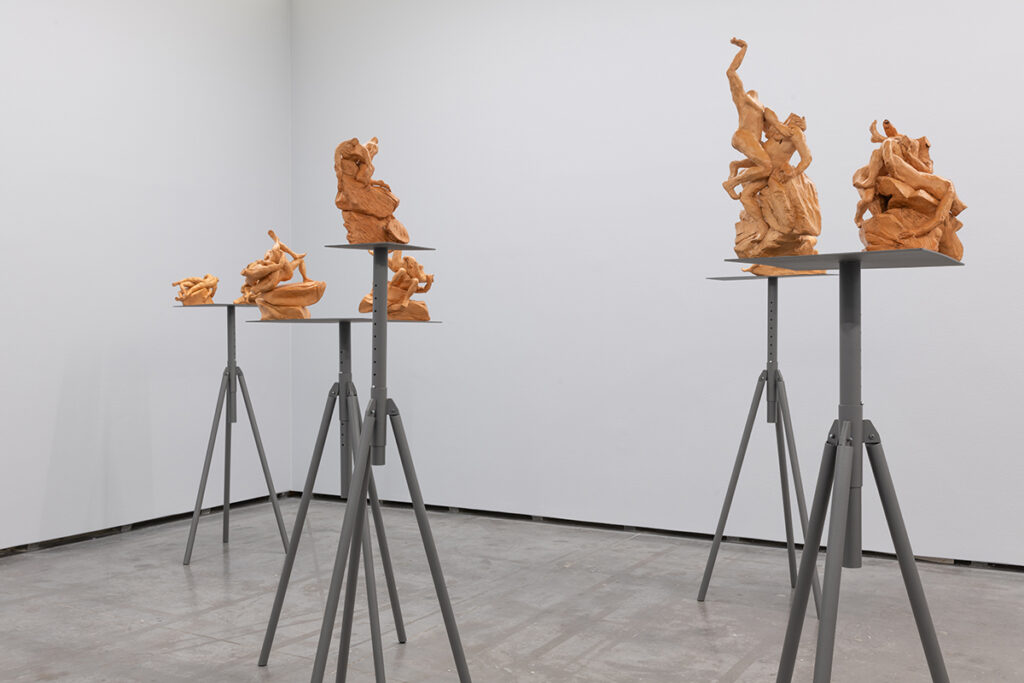
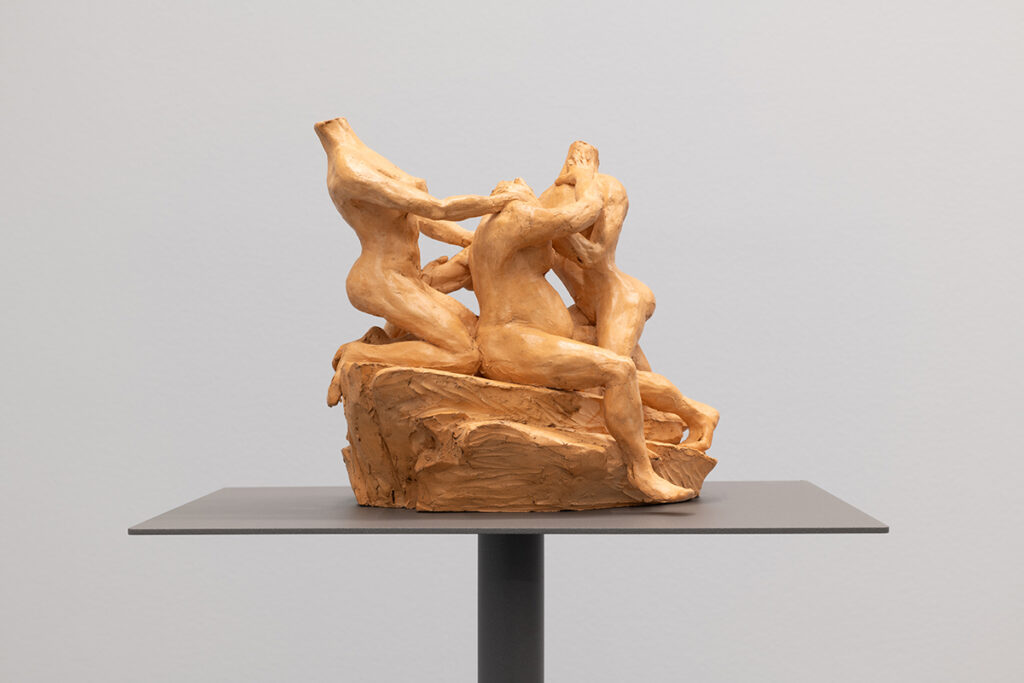
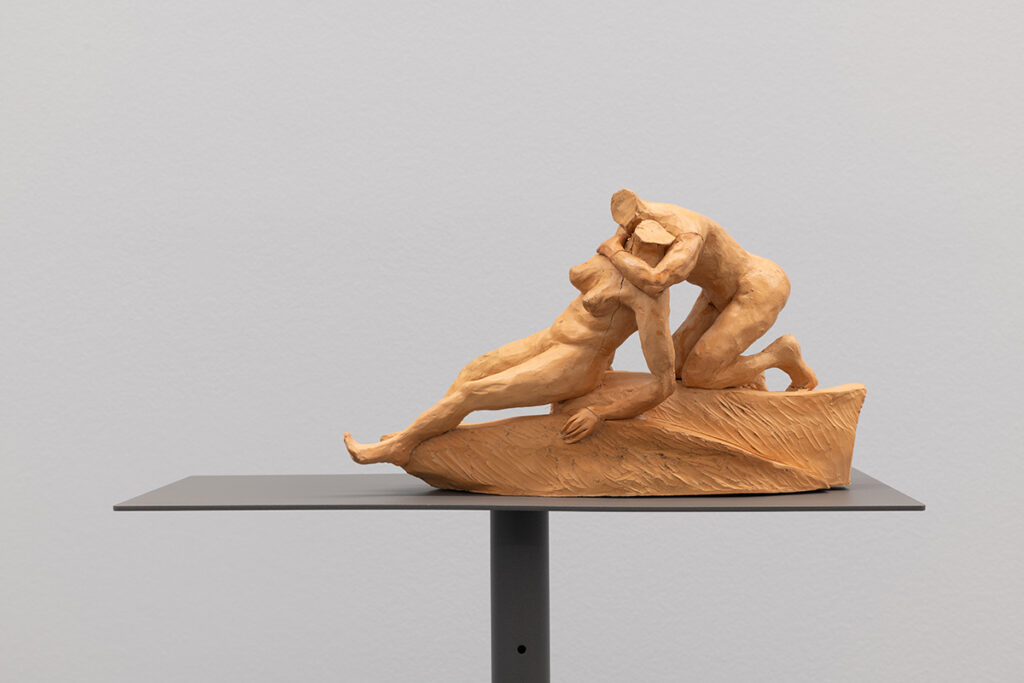
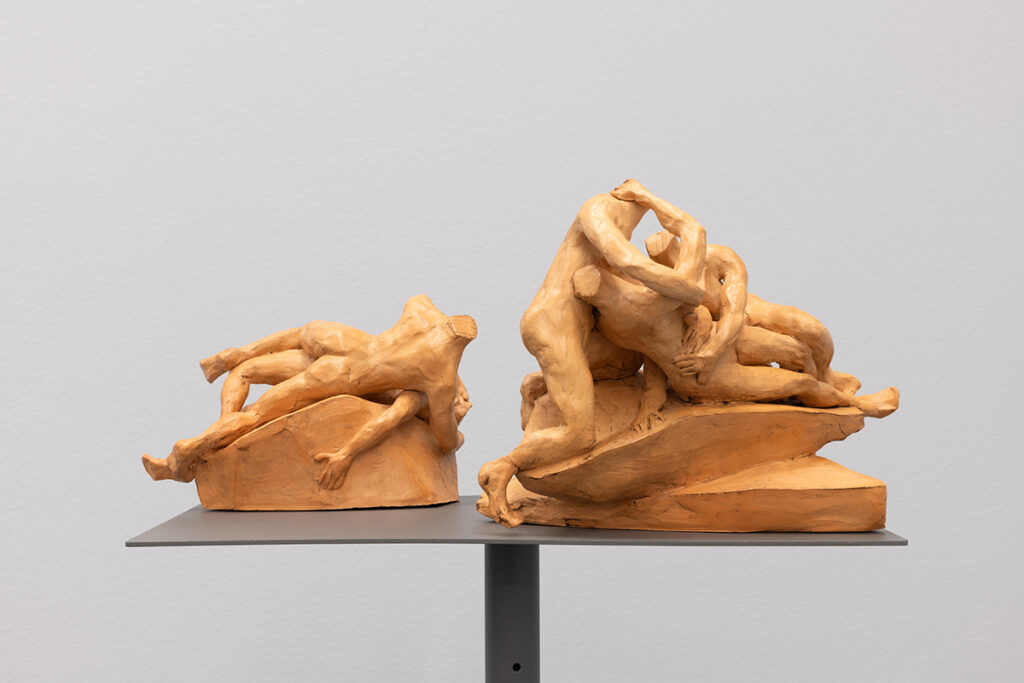
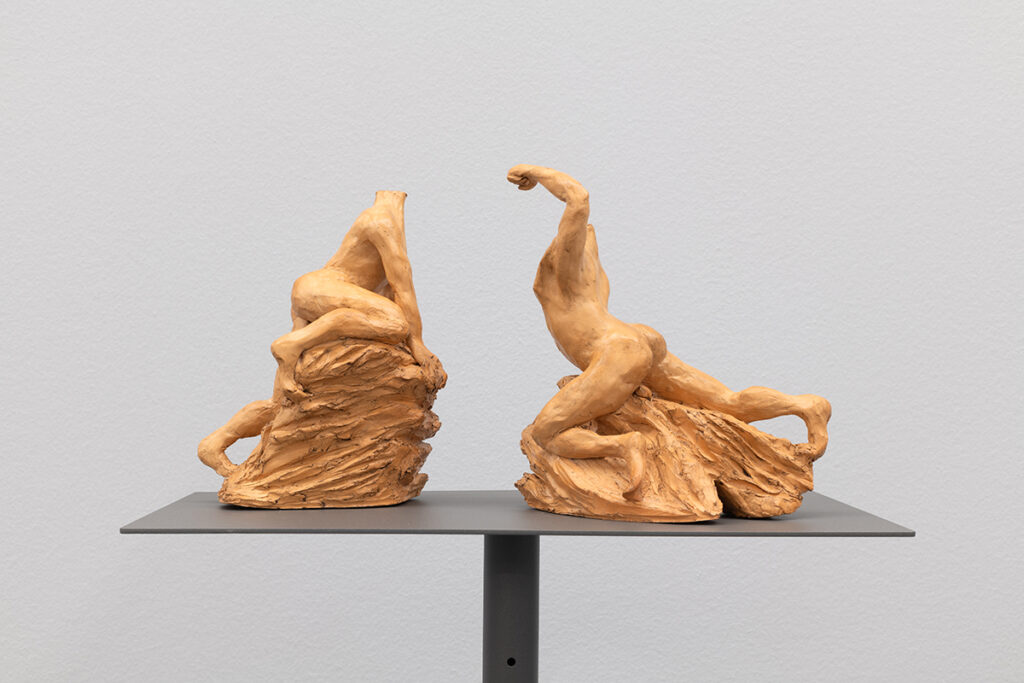
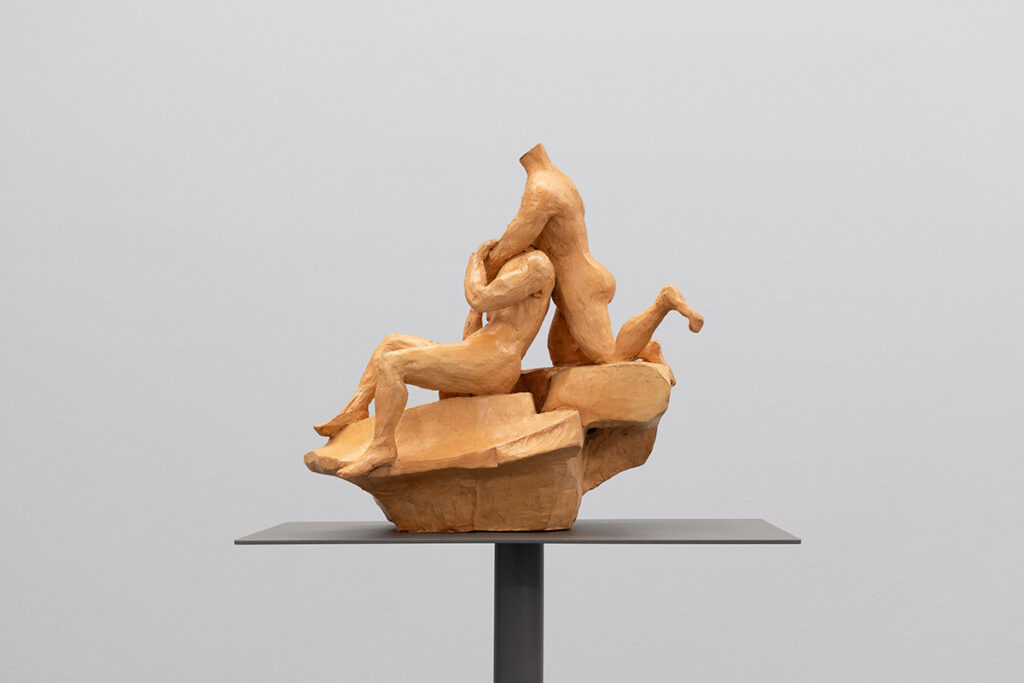
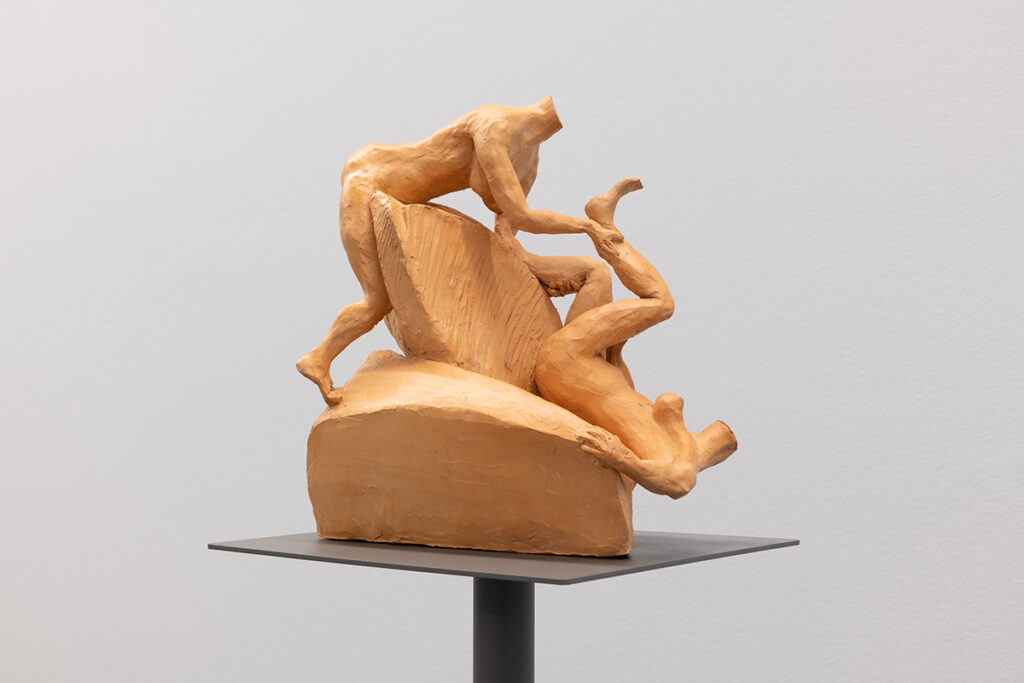
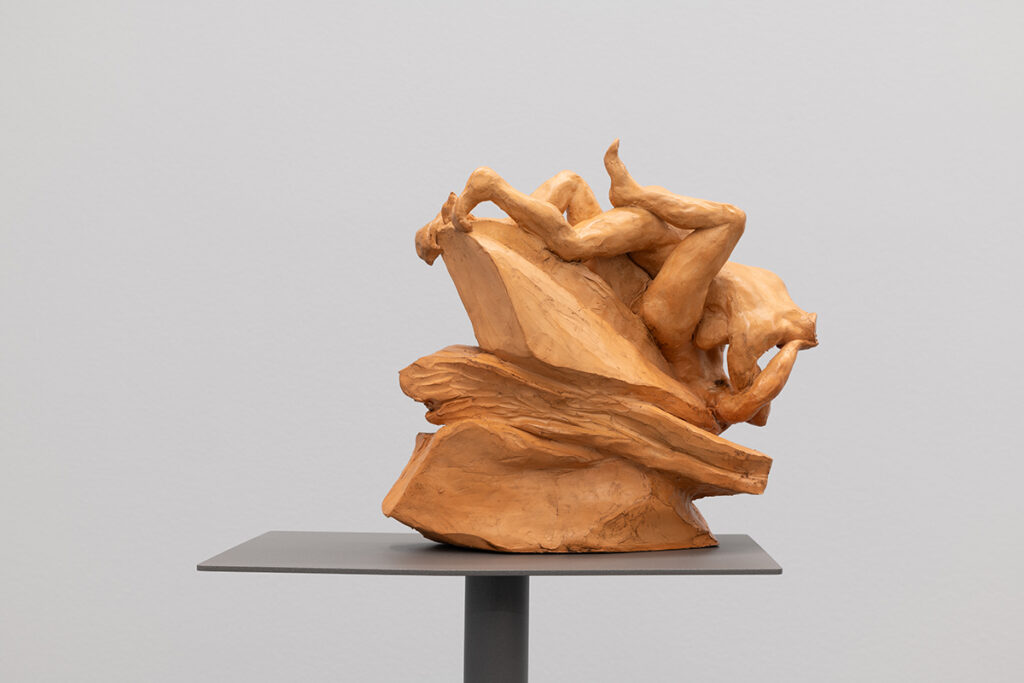
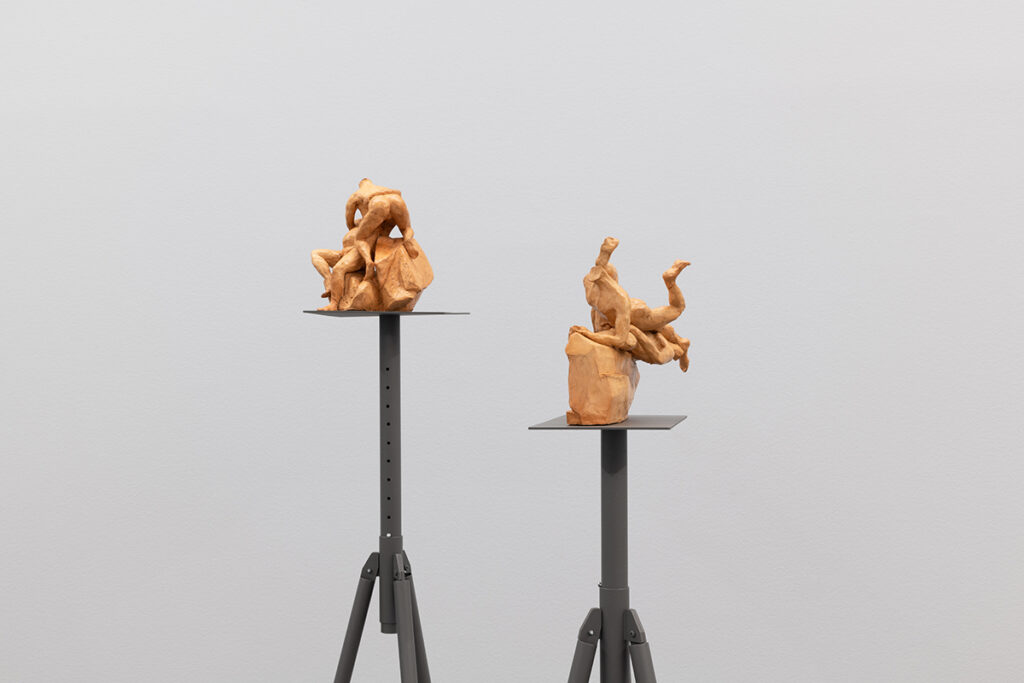
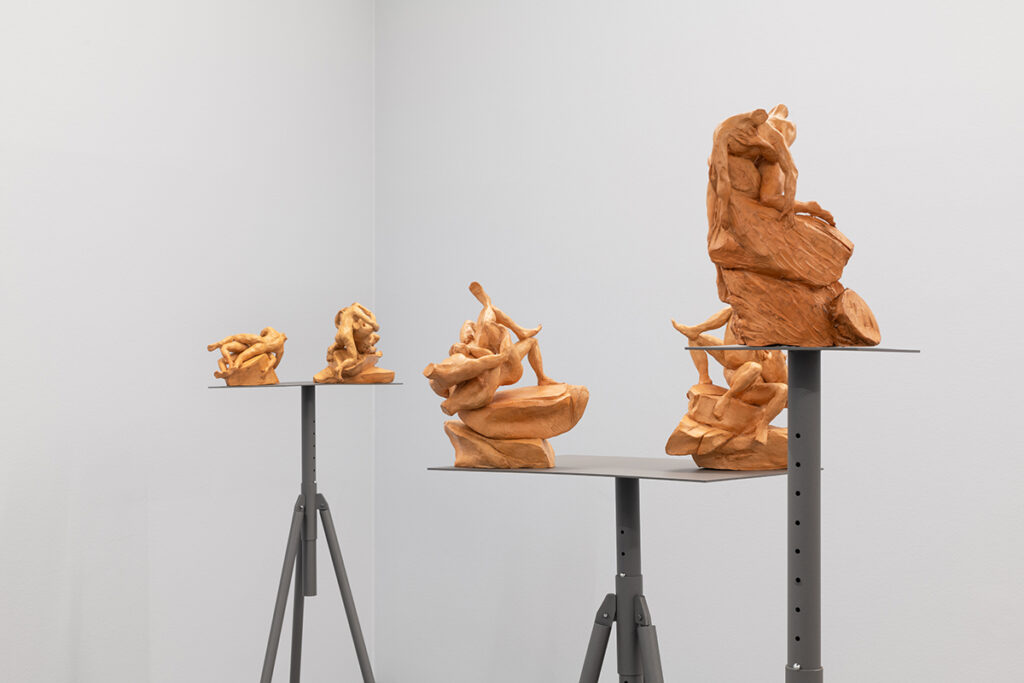
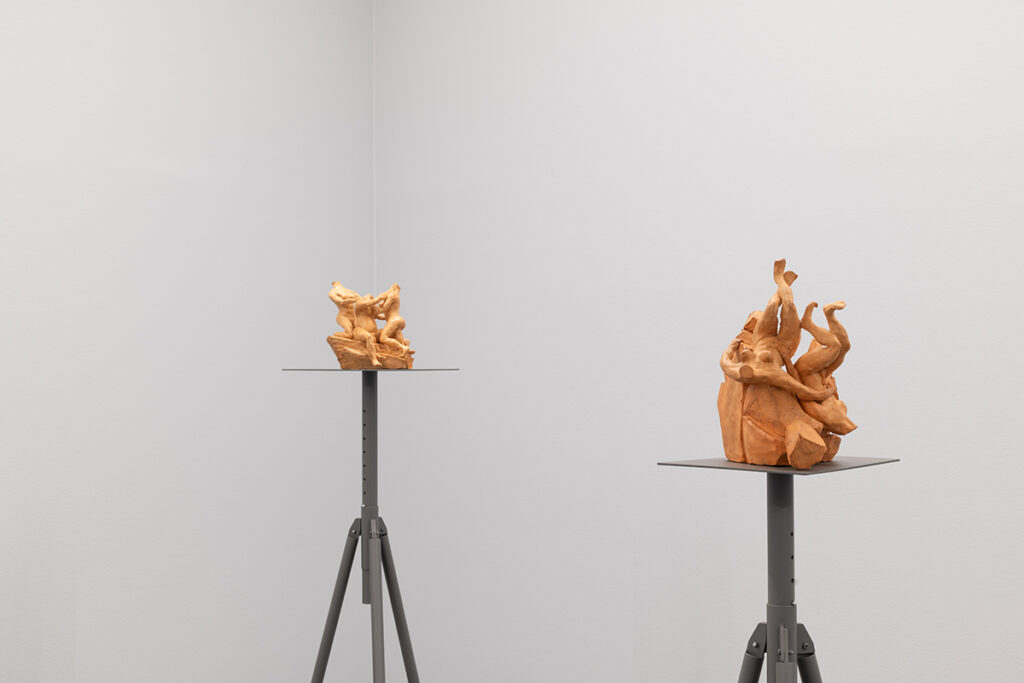
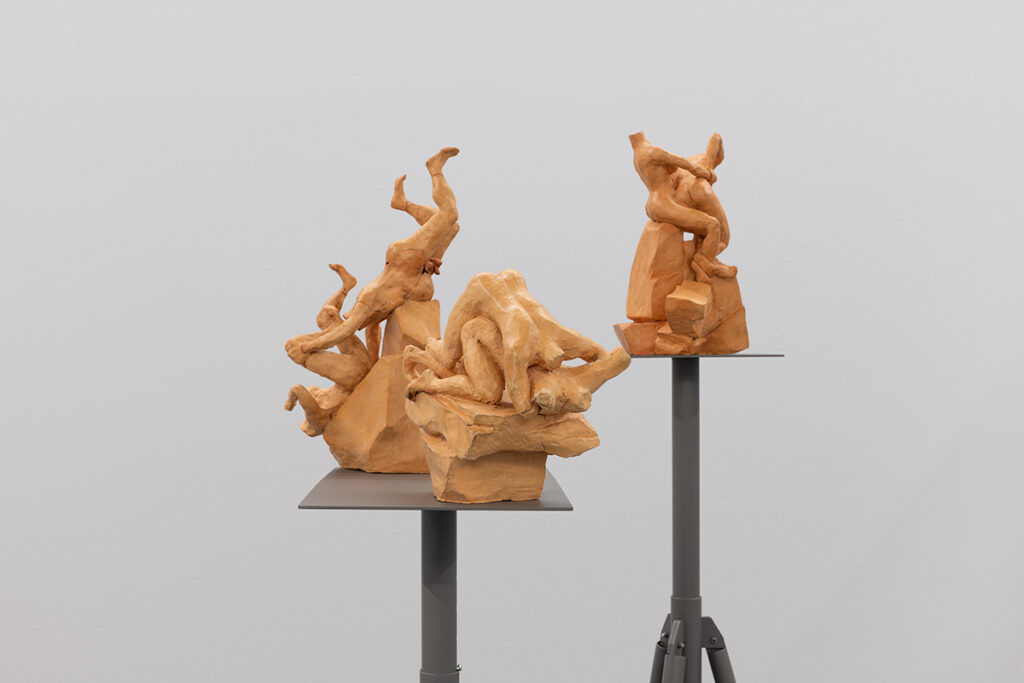
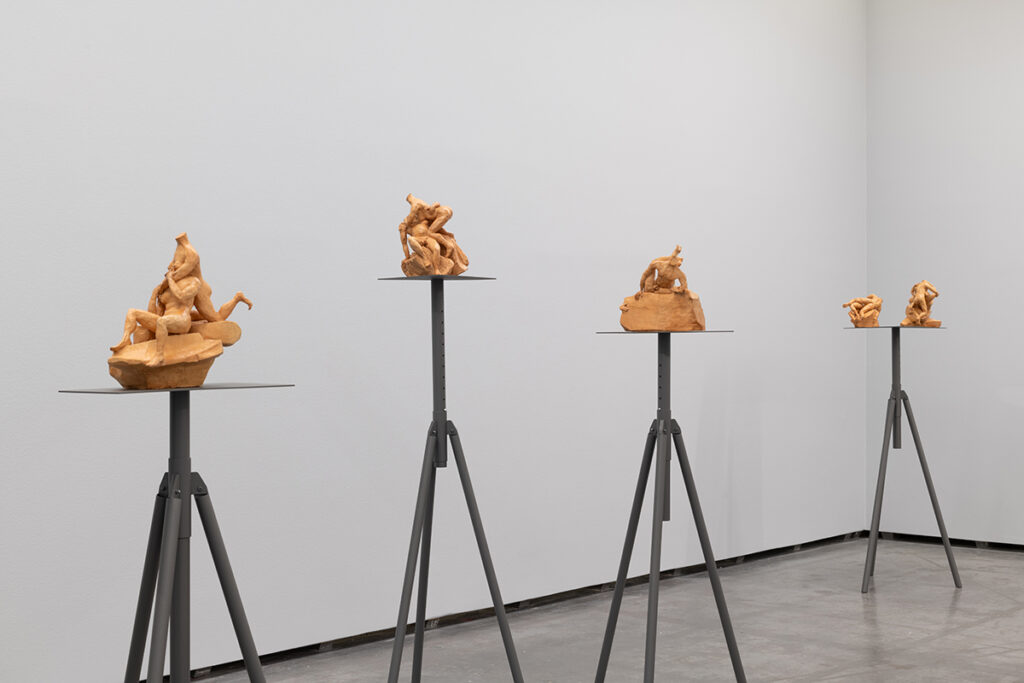
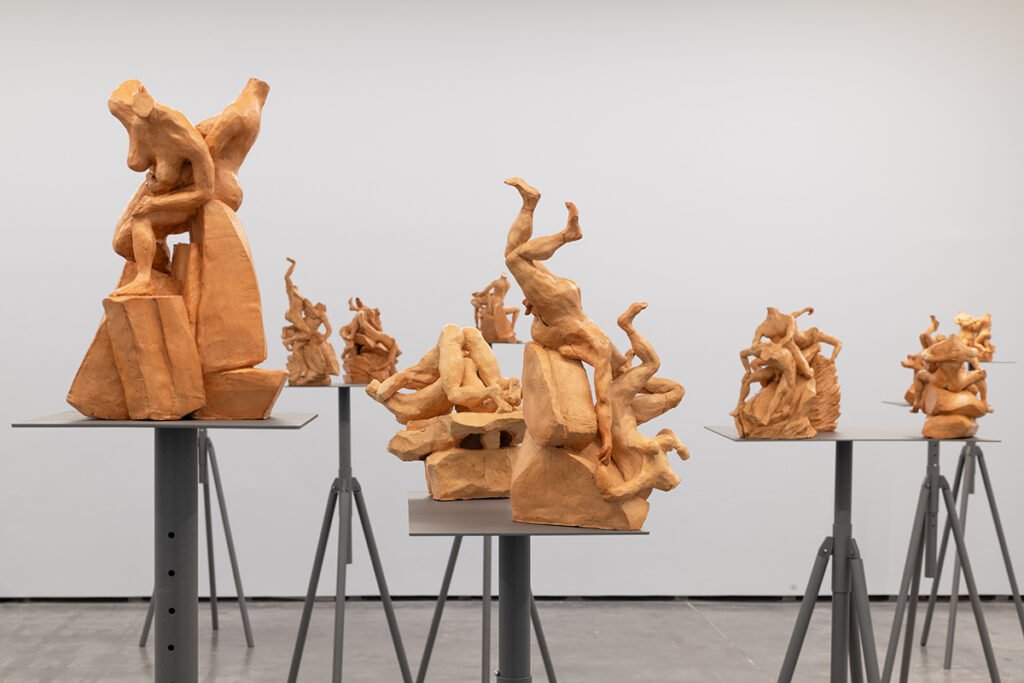
The installation comprises 24 sculptures in red clay (terracotta) placed on 18 metal sculpture tripods. These sculptures draw inspiration from the terracottas of the 17th-century Italian sculptor Gian Lorenzo Bernini, measuring approximately 40x45x45cm each. The figures are studies of various episodes from mythical scenes of Classical Antiquity, including Apollo and Daphne, Mercury and Battus, Hercules, Nessus, and Deianira, among others. Formally, they capture various actions, positions, and movements based seemingly on the seminal catalog of images from classical sculptures but in a way that seeks ambiguity of meaning, doubt, in a contemporary gaze regarding what is presented, oscillating between the ideas of life or death, love or violence, or even sex or abuse.
The concept of this work stems from the conceptualization of Eros and Thanatos, developed by Freud to illustrate his theories of instincts, explaining the psychic formation of all human beings of all genders. Eros and Thanatos correspond to the simultaneous coexistence of erotic desire and attraction to death. In other words, the life instinct corresponds to all internal drives that lead us to seek pleasure, create, and carry out projects, while the death instinct obeys the drive that leads us to seek isolation, stagnation, and acts of destruction and death.
The aesthetic and formal structure of this installation lies in the ambivalence of the figures’ actions, the violence of the presented images, the psychological emotions invoked, and the exaltation of bodies in conflict, questioning the relevance of images and stories from the past in shaping how we live, see, and feel the present. Eros and Thanatos also evoke the ideas of power, fragility, imbalance, or instability present in the confrontation between bodies, gender struggles, serving primarily to make us reflect on this set of themes that shape us and persist to this day.
Eros and Thanatos premises critical thinking about human behavioral codes that reflect the psychological, political, and social relationship of the individual in their diversity of gender, ethnicity, or social class. The performance of bodies, actions, gestures, established social forms is reconsidered through a formal and conceptual installative device associated with Greco-Roman mythology and the sculptural tradition of the 17th century, defining a distinctive aesthetic and discursive space. Drawing extensively from literature, philosophy, as well as classical studies (Ovid, Plato, Gian Lorenzo Bernini, Sigmund Freud, Cesare Pavese, José Pedro Serra, Frederico Lourenço), the artist aims to critically expose: the gaze upon the Other; the potential ambiguity of interpersonal relationships; the fragility of taken-for-granted systems; the construction of reality; the relationships between identity and power; sexuality and gender; virtue and the moral duty; the geography of affections and the impulses of desire and passion versus death.
In conjunction with this exhibition, a working/publication book will be released, featuring parallel images, sketches, drawings, and texts by Vasco Araújo, Cesare Pavese, Konstantinos Kavafis, and Luís Miguel Nava, distributed free of charge during the exhibition period.




 /
/  /
/ 